1. For tonight: how to find a bed
If you have nowhere to sleep tonight, the fastest and safest way is to dial 211. An agent identifies the nearest shelter for your situation — single man, single woman, family, youth — and tells you how to get there and what time to show up. 211 is free, confidential, in 200+ languages, day and night.
If you're in immediate danger — outside in extreme cold, ill, threatened — call 911. If you're fleeing domestic violence, call SOS violence conjugale at 1 800 363-9010 instead, which finds spots in protected shelters.
Emergency shelters require no immigration status and no long paperwork: the goal is to get you to safety tonight.
2. Main organizations by situation
Each region has its own resources, but here are the types of shelters and well-known examples, especially in Montreal.
- Single men: Old Brewery Mission and Maison du Père offer beds, meals and support.
- Single women: Le Chaînon and La rue des Femmes welcome women in difficulty, in a safe setting.
- Families: Mission Bon Accueil (Welcome Hall Mission) and other organizations have family-housing programs.
- Youth: specialized shelters exist for ages 12 to 30 depending on the city.
Outside Montreal, every major city has its own shelters — Québec, Gatineau, Sherbrooke, Trois-Rivières, Saguenay and others. Don't try to guess which one: call 211, which knows the spots actually available tonight and directs you straight there.
3. What to expect on arrival
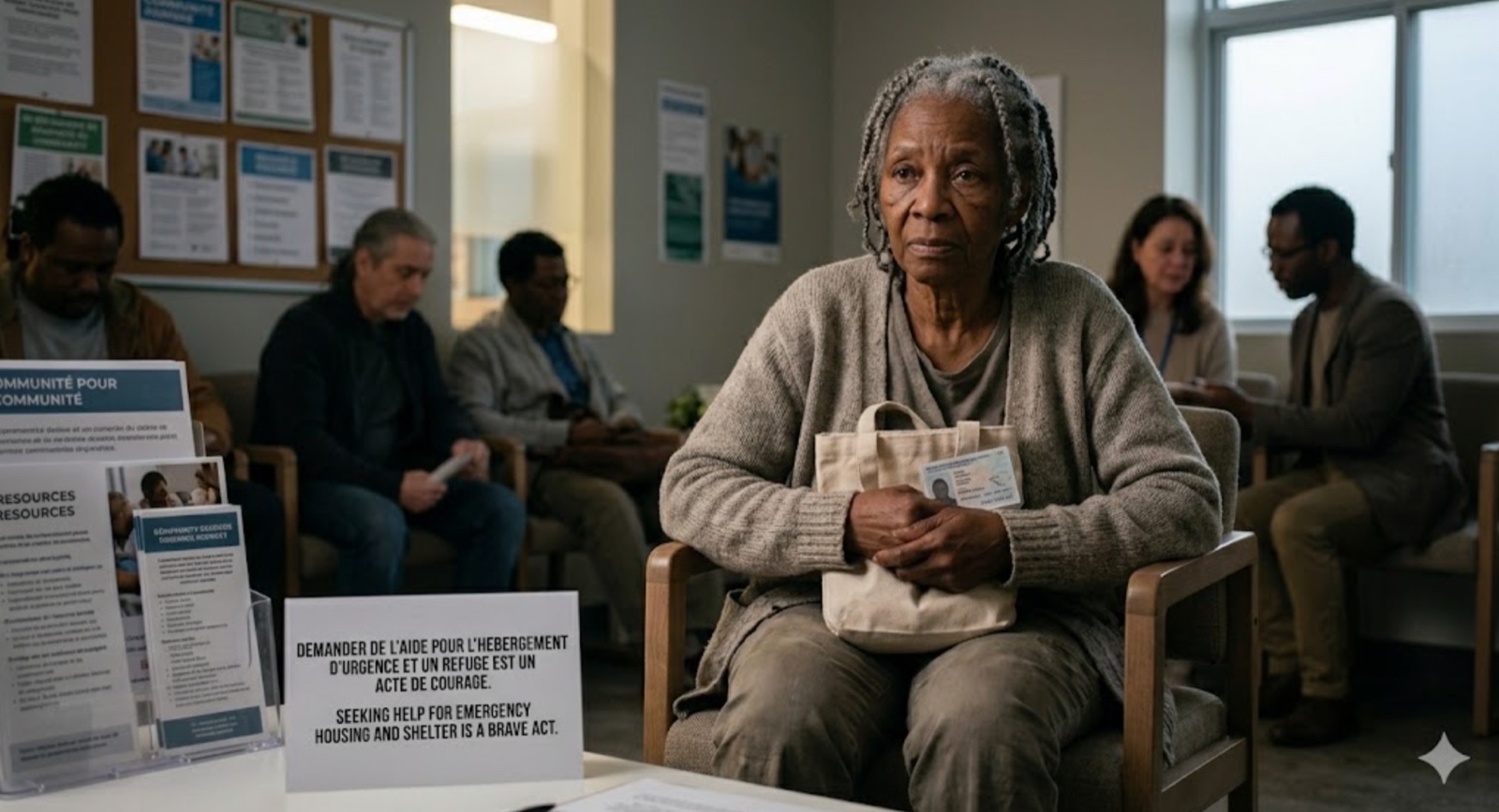
Arriving at a shelter can feel intimidating, but it works simply and humanely. At reception you'll be asked your first name and a few basics to assign you a bed; many shelters accept people even without ID. You'll get a clean bed, a shower, a hot meal, and often clothing or hygiene items. Workers are there to help, not to judge.
Most shelters operate night by night, but they can keep you several days and, above all, connect you to services to leave the emergency — a social worker, housing search, income support. If you have particular needs — health, a pet, a couple, reduced mobility — say so at reception or to 211: there's often an adapted solution.
4. Beyond the emergency: next steps
A shelter is a solution for tonight, not forever. While you're safe there, use the workers to build what comes next. The shelter's or your CLSC's social worker can help you apply for last-resort financial assistance if eligible, and find housing.
For affordable housing, learn about social housing (HLM, rent supplement) and the shelter allowance, which can sharply reduce your rent — we have detailed guides on both. A neighbourhood comité logement can also defend your rights if an eviction is involved.
Homelessness is almost always a period, not an identity: with the right support, you get out of it.
Frequently asked questions
Here are the most common questions about emergency shelter: whether you have to pay for a night, and what to do if every shelter is full.
Do you have to pay for a night in a shelter?
Emergency shelters are generally free, especially for a crisis night — no one is turned away for lack of money. Some longer-term or transitional housing may ask a modest contribution based on your income. Never stay outside in danger because you fear a cost — call 211 and ask, the front-line shelters are there for exactly this.
What if every shelter is full?
It happens, especially in winter and in big cities. Call 211 — it has real-time information and can point you to a place with space, an overflow site, or a warming centre. If you or someone is in immediate danger from the cold or violence, call 911. Don't give up after one full shelter; availability changes hour to hour.
See also
These related guides may be useful:
- Emergency help in Quebec — the 911 / 811 / 211 reflex when everything collapses.
- Social housing in Quebec — HLM and supplements to leave the emergency behind.
- Shelter allowance (Revenu Québec) — a monthly rent subsidy many people miss.
Official sources
For official, up-to-date information:
- 211 Québec — qc.211.ca or dial 211 — the best entry point to find a shelter tonight
- RAPSIM (Montreal network for single and homeless people) — rapsim.org
- Québec.ca — homelessness — quebec.ca
- SOS violence conjugale — 1 800 363-9010 — to flee violence
Shelter spots, hours and criteria change often — 211 has real-time, up-to-date information.
Author's note: needing a shelter erases nothing of who you are or what you're worth. It's one hard night in a journey that holds other, better ones. Get to safety first — one call to 211 is enough — then, tomorrow, with the workers' help, you look at what's next. One thing at a time.