1. If you're in crisis right now: three numbers
If you're reading this in a moment of panic, start here. Three numbers cover almost every emergency in Quebec — all free, confidential, and requiring no immigration status.
- 911 — immediate danger: violence, injury, fire, a threat to your life or someone else's.
- 811 — health and psychological distress: press 1 for Info-Santé, 2 for Info-Social, which gives psychosocial crisis support, day and night.
- 211 — everything else: food, housing, bills, financial help, organizations near you. Free, confidential, offered in 200+ languages, 24/7, everywhere in Quebec.
None of these calls appears in your immigration file. No one will ask for your papers to help you survive.
2. No food: eating this week
If the fridge is empty, help is closer and faster than you think.
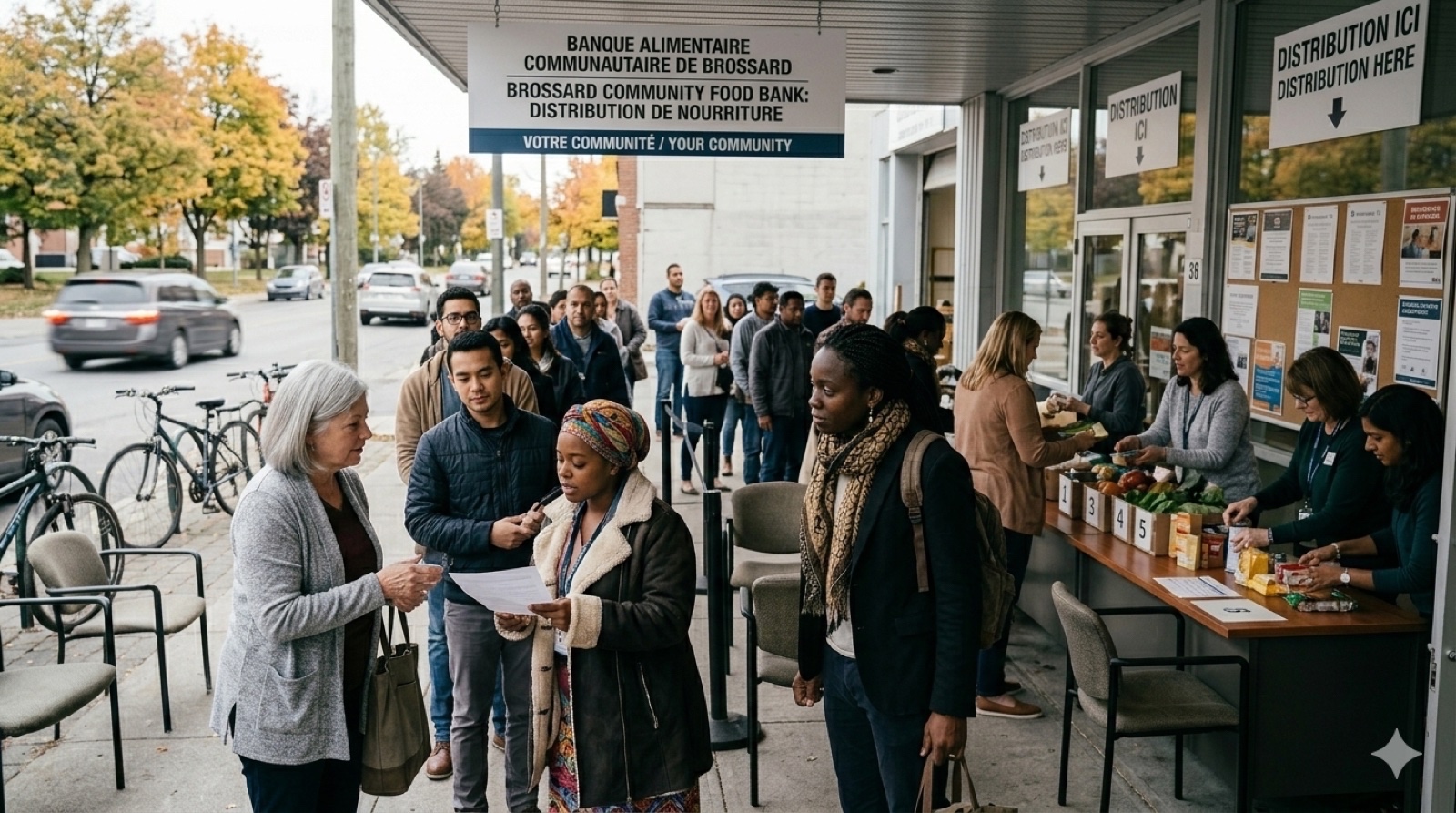
- Dial 211: an agent finds the nearest food bank or soup kitchen and tells you what to bring. Most organizations ask for no proof of status, and emergency access is possible even without complete documents.
- Your CLSC can also issue an emergency food voucher in a truly immediate crisis.
For the full picture — how to find your pantry, what you'll receive, and other help like collective kitchens — see our food-banks guide. The key point: getting food help is not a failure — it's exactly why the network exists.
3. No housing: tonight and this week
If you risk ending up on the street, or already are, two paths.
- For tonight: emergency shelters offer a bed, a meal and warmth, free. Dial 211 to find the nearest shelter for your situation — men, women, families, youth. Our shelters guide details the main organizations and how to access them.
- If you're threatened with eviction or in conflict with a landlord: don't leave before talking to a neighbourhood comité logement (housing committee). In Quebec a landlord cannot evict you themselves — only the Tribunal administratif du logement can, and the process takes time you can use.
If you're fleeing domestic violence, see section 4 — there are specialized shelters and a dedicated line.
4. In distress, or in danger from another person
A financial or housing crisis also drains your morale. If you're thinking about suicide, feeling overwhelmed, or someone is hurting you, specialized lines exist — free, 24/7.
- Suicidal thoughts or deep distress: call or text 988 (the Canada-wide bilingual line). In Quebec, 1 866 277-3553 (1 866 APPELLE) and suicide.ca with chat and text to 535353.
- Domestic violence: SOS violence conjugale at 1 800 363-9010 — confidential and bilingual, and it can even call a shelter for you.
Our crisis-line guide gathers all these numbers by situation. Asking for help with your mental health is as serious and legitimate as asking for help to eat.
5. No money: emergency financial help
Beyond immediate relief, some programs exist for people with little or no income.
- Aide financière de dernier recours (often called aide sociale / welfare), run by Services Québec: if you're a Canadian citizen, permanent resident, or asylum seeker, and have no job or sufficient savings, you may qualify — there's even a dedicated application form for asylum seekers. Exact eligibility depends on your immigration status and situation — check on Québec.ca or at a Services Québec office.
- Important: contrary to a common misconception, asylum seekers are generally eligible for welfare. It's people with other temporary statuses (closed work permit, study permit, visitor) who are generally not eligible, with limited exceptions — but they can receive help from community organizations and, for health, the federal Interim Federal Health Program.
211 and immigrant-welcome organizations can tell you what you're entitled to given your exact status, without judgment. Don't guess — ask.
6. The numbers to keep in your phone
Take thirty seconds now to save these numbers in your contacts. In a crisis you no longer think clearly; having them ready can change everything. The table below summarizes each number and when to use it.
| Number | For what | Availability |
|---|---|---|
| 911 | Immediate danger: violence, injury, fire | 24/7 |
| 811 (option 2) | Psychosocial distress, emotional crisis | 24/7 |
| 211 | Food, housing, bills, organizations | 24/7, 200+ languages |
| 988 | Suicidal thoughts (call or text) | 24/7, bilingual |
| 1 866 277-3553 | Suicide prevention in Quebec | 24/7 |
| 1 800 363-9010 | SOS violence conjugale | 24/7, bilingual |
If you remember only one thing: when in doubt, dial 211. The agent will listen, identify the right service and direct you, even if your problem fits no neat box. It's the most human entry point to Quebec's help network.
7. Frequently asked questions
Here are the questions people in emergencies ask most: whether you need status or papers, whether it's truly free, and whether calls are confidential.
Do I need immigration status to call 211 or go to a shelter?
No. The 211, emergency shelters, food banks and crisis lines help everyone, regardless of status, and don't report to immigration authorities. Some government financial programs (like welfare) do depend on status — but survival services don't.
Do these services cost anything?
No. 911, 811, 211, 988 and the crisis lines are all toll-free numbers. Shelters, food banks and soup kitchens are free. You never pay to ask for help.
What if I don't speak French or English well?
Say your language at the start of the call. The 211 operates in over 200 languages, and 911, 811 and several crisis lines use interpreters. Don't let language stop you from calling.
See also
These related guides may be useful:
- Emergency shelters — where to sleep safely tonight.
- Crisis lines — every crisis line, by situation.
- Food banks in Quebec — find free food assistance.
Official sources
For official, up-to-date information, see:
- 211 Québec — qc.211.ca or dial 211
- Québec.ca — last-resort financial assistance — quebec.ca
- 9-8-8 Suicide Crisis Helpline — 988.ca · suicide.ca — suicide.ca
- SOS violence conjugale — sosviolenceconjugale.ca
Programs, amounts and eligibility criteria change — always confirm with the official source or by calling 211.
Author's note: an emergency doesn't define who you are. Almost everyone who has succeeded in settling in Quebec went through a moment when everything seemed to collapse. What set them apart wasn't avoiding the crisis — it was reaching out. Quebec's network is built for this. Dial 211, breathe, and let someone help you see the next step.