Paperwork Simplified
Dossier34 guidesDocuments, official cards, government formalities.
For the whole province
These guides apply everywhere in Quebec, across the whole province — no matter your city.
Your first administrative steps
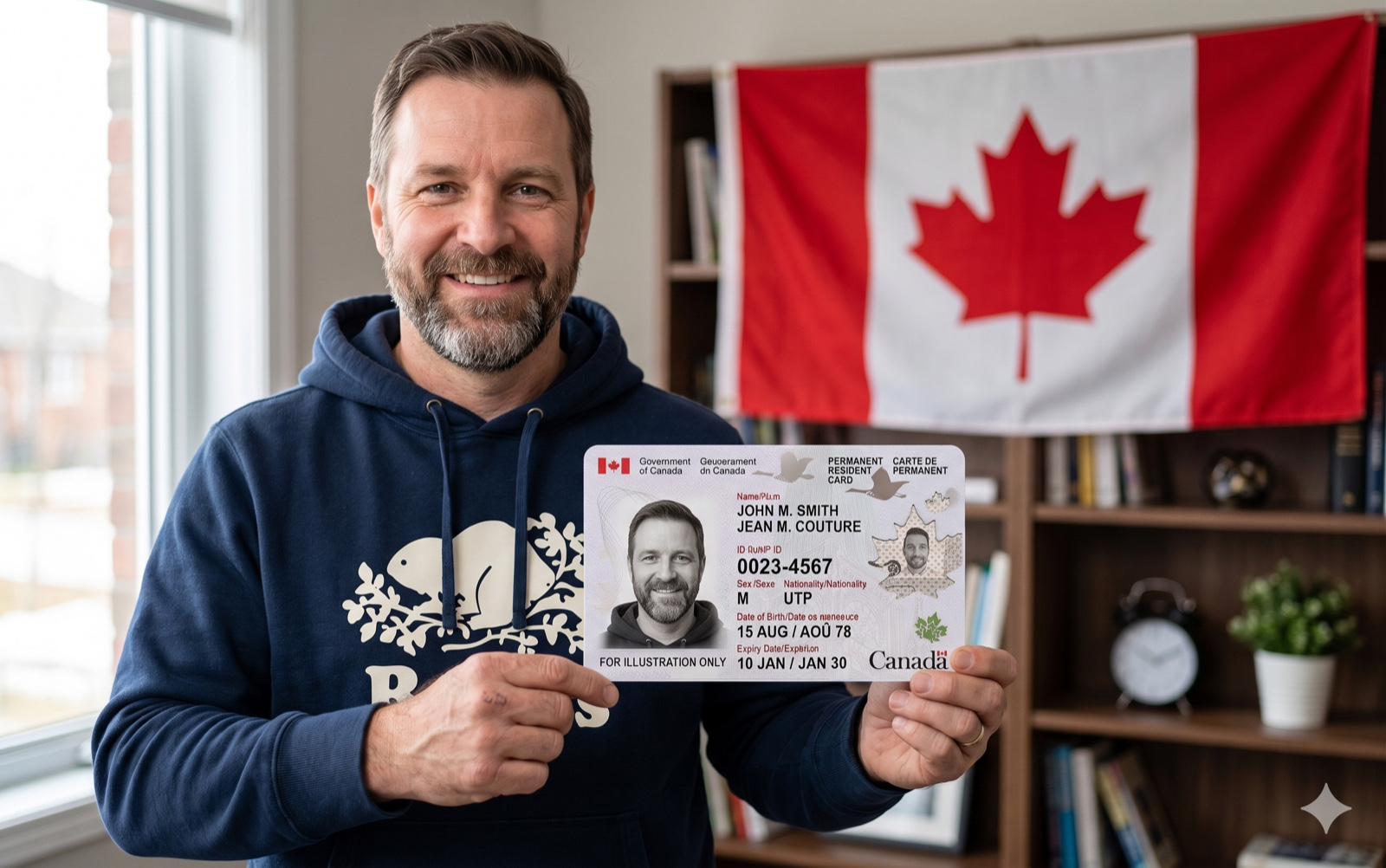
The SIN, RAMQ card, and driver's license — the three cards to obtain in your first weeks.
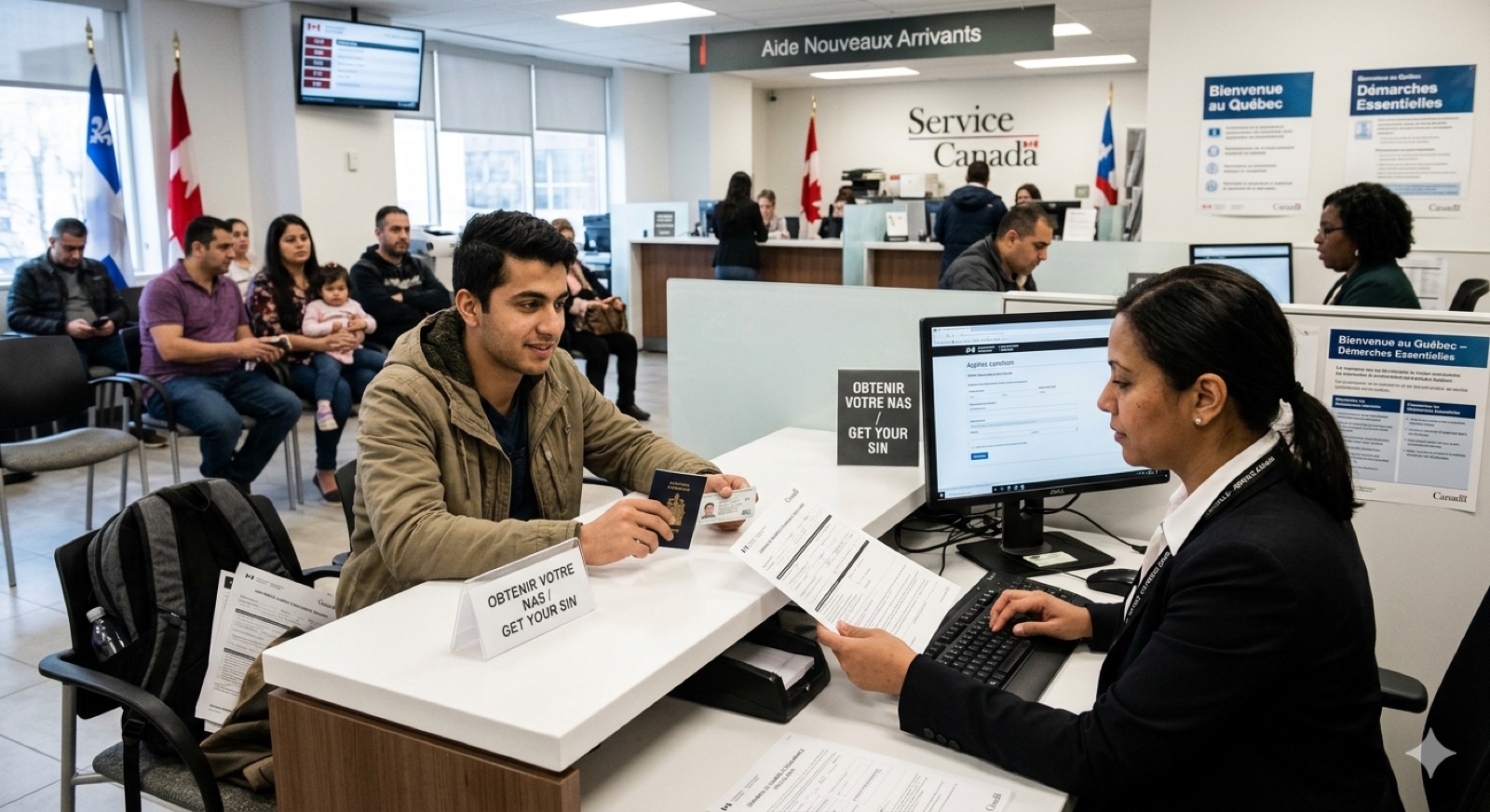
Get Your SIN in Quebec: Apply Online or In Person
How to apply for your SIN online or in person upon arrival — the first step in Canada.
The Social Insurance Number (SIN) is a 9 digit federal government number. It's required to: Work in Canada Receive government benefits Open a savings account or an RRSP Apply within your first days after arrival. It's the very first official step in Canada. Documents to bring: Permanent residents: passport + Confirmation of Permanent Residence (or PR card) Work / study permit: passport + valid ...
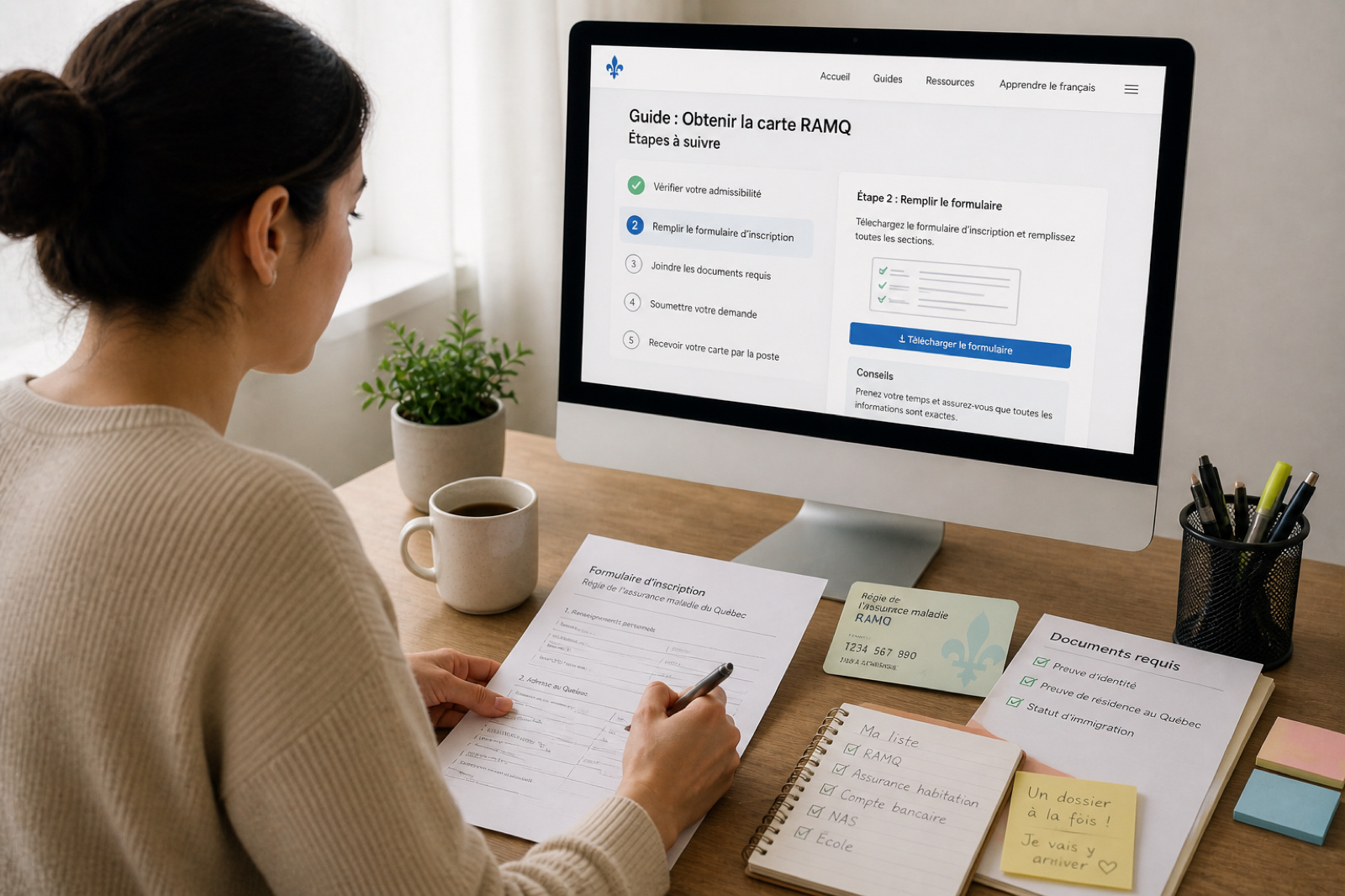
Register with RAMQ: Get Your Carte Soleil

Register with RAMQ online or by phone and get your carte soleil, step by step. The 3-month waiting period starts the day you register — don't delay.
The RAMQ is the Régie de l'assurance maladie du Québec. Once registered, you receive a health insurance card — also called the carte soleil. This card gives you access to medical care in Quebec. If you are a permanent resident, a Canadian citizen, or hold another status , you are eligible. You must also be present in Quebec at least 183 days per calendar year. The clock starts the day you REGIS...
Exchange a Foreign Driver's Licence at the SAAQ
How to exchange your foreign driver's licence for a Quebec one after you arrive, and drive in Quebec on an international licence.
The SAAQ is the Société de l'assurance automobile du Québec. It manages driver's licences, vehicle registration, and the public auto insurance plan. All drivers in Quebec must hold a valid licence issued or recognized by the SAAQ. If you are a new resident in Quebec, you can drive on your valid foreign licence for the first 6 months after settling in. After 6 months, you must hold a Quebec lice...
First Driver's Licence in Quebec: Courses and Exams
Never held a driver's licence? Here's the full path in Quebec — mandatory driving course, learner's permit, exams and probationary licence.
This guide is for you if you've never held a driver's licence, or if you can't have a foreign licence recognized. That includes young people growing up here, people who have never driven, and newcomers from a country without an agreement with Quebec who didn't hold their licence long enough. You start from zero, through the graduated licensing path. Note: if you already hold a valid licence fro...
Status & immigration
Permits, CSQ, permanent residence — getting, renewing and moving your status forward in Quebec, and knowing who can represent you.
The CAQ, Study Permit and Student Work in Quebec
The CAQ then the study permit, and the off-campus work rules — hour limit, SIN, risks.
To study in Quebec you need two separate documents, issued by two governments: The CAQ for studies — issued by the Quebec government The study permit — issued by the federal government of Canada The order is fixed: the CAQ first, then the study permit. CAQ for studies Study permit Issued by Quebec government (MIFI) Government of Canada (IRCC) Apply First Second Prerequisite Admission letter fro...
The Work Permit in Quebec: Process, Rights and Recourse
Closed or open permit, the LMIA, the CAQ, your rights as a worker and recourse in case of abuse.
There are two broad categories of work permit: The closed permit — tied to a specific employer The open permit — tied to no employer The open permit is intended, for example, for certain spouses of workers or students, and for graduates holding a post graduation work permit. Closed permit Open permit Authorized employer One only, named on the permit Any employer (with restrictions) Changing job...
PGWP: From Graduation to Permanent Residence
After a Quebec diploma — the post-graduation work permit, Canadian experience, then Quebec selection toward permanent residence.
You are finishing a study program in Quebec. What follows is not a direct jump to permanent residence: it is a sequence, and each step sets up the next. Study in Quebec Obtain a post graduation work permit (PGWP) Build Canadian work experience Be selected by Quebec, which produces the CSQ Finally obtain permanent residence, granted by the federal government This guide explains the logic of that...
The CSQ — Quebec Selection Certificate
The document by which Quebec selects you for permanent residence — who needs it, and how to obtain it.
The CSQ is the document by which the Quebec government selects you for permanent residence. Do not confuse the CSQ with the CAQ. The CAQ is a temporary authorization to stay, to study or work. The CSQ aims at permanent settlement. One is temporary, the other opens the path to permanent residence. For economic immigration, becoming a permanent resident in Quebec happens in two steps: Selection b...
Renewing or Extending Your Permit in Quebec
Renewing a study or work permit before expiry, maintained status, and the bridging open work permit while awaiting permanent residence.
A study or work permit has an expiry date. If you stay in Canada past that date, you must renew or extend it. The golden rule: start the process several months ahead, ideally 4 to 6 months before expiry. For a Quebec linked permit, the CAQ is renewed before the federal permit — Quebec first, federal second. Permit type CAQ to renew first? Recommended lead time before expiry Study permit (linked...
Immigration Lawyer or Consultant: Which to Choose?
The only three types of authorized immigration representatives in Canada, how to verify someone is in good standing, and how to avoid scams.
Choosing someone to help with an immigration step is a big decision: a good representative can make the difference in a complex file, while a fake consultant can cost you thousands of dollars and jeopardize your application. The first thing to know: in Canada, only three types of people can represent you for a fee. This guide explains which ones, how to verify, and how to spot scams. In Canada,...
Identity & immigration
Documents proving who you are and your right to be in Quebec.
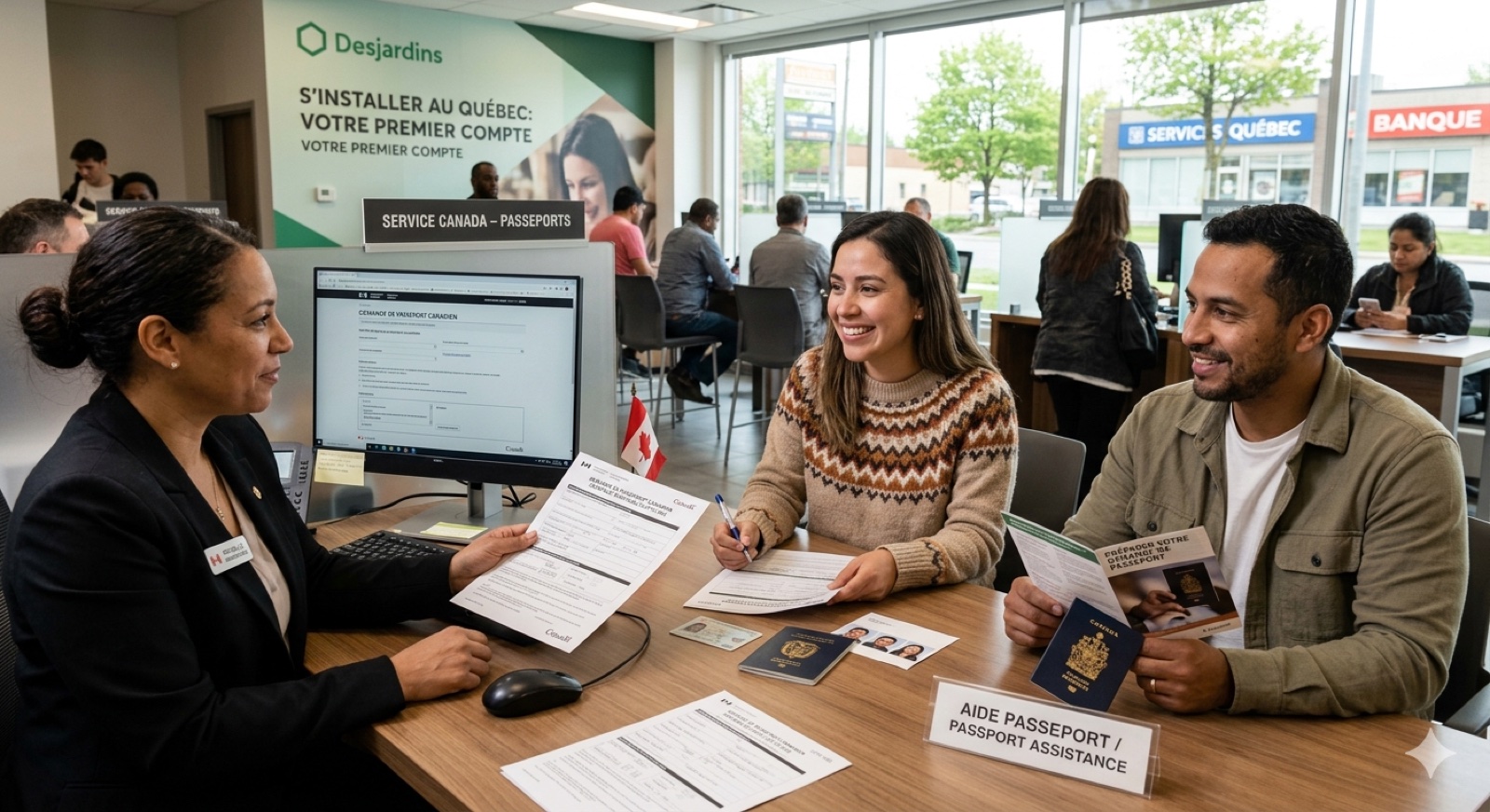
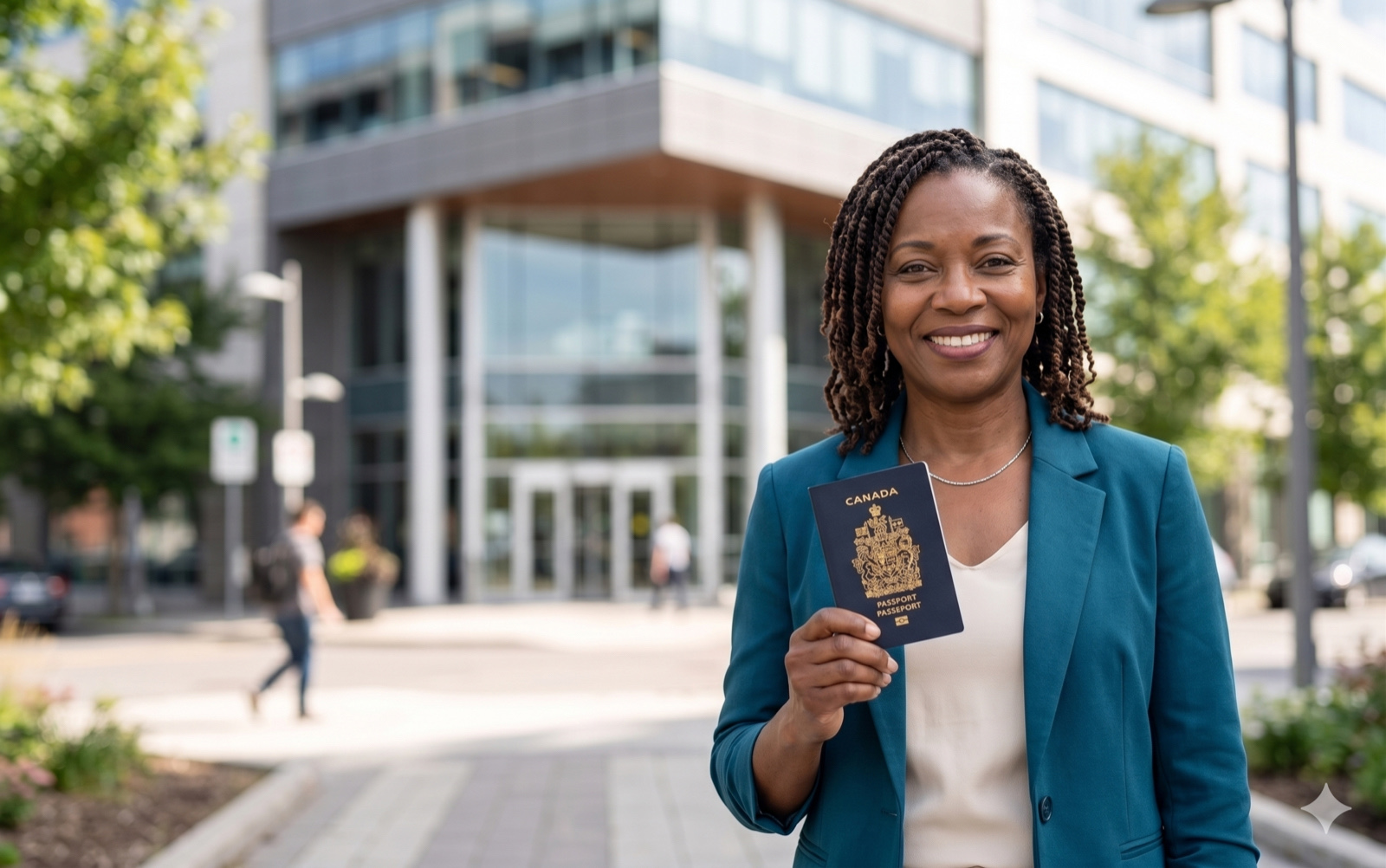
Applying for a Canadian Passport in Quebec
Conditions, documents, and timelines for your first Canadian passport after citizenship.
Only Canadian citizens can hold a Canadian passport. Permanent residents: not eligible, they travel with their origin passport + PR card See our if not yet a citizen Required documents: A completed form Citizenship certificate or Canadian birth certificate Photo ID (driver's licence, etc.) 2 passport photos meeting Canadian specifications A guarantor: a citizen who has known you for 2+ years Th...
Renew or Replace Your PR Card in Quebec
Renew an expired PR card or replace a lost one: documents, fees, IRCC processing times and what to do if you need to travel in the meantime.
The Permanent Resident Card (PR card) proves your status in Canada. It's mandatory for travelling abroad. Validity: 5 years in general. Renew your card once it expires in less than 9 months — or after it has expired. This is not a minimum lead time but a ceiling: if it expires in 11 months you cannot file yet ( ). Check the date on the back of your card. If your card expires during a trip, you ...
Canadian Citizenship: Application, Test and Ceremony
The conditions, steps, citizenship test preparation, interview and ceremony to become Canadian.
Canadian citizenship offers: The right to vote in federal, provincial, and municipal elections A Canadian passport — one of the most powerful in the world The unconditional right to remain in Canada Access to certain public sector jobs reserved for citizens You also keep your original citizenship unless your country forbids dual nationality. To apply for citizenship, you must: Be a permanent re...
Family Sponsorship in Quebec: Bringing Your Loved Ones
Conditions, timelines, and steps to sponsor spouse, parents, or children to Canada.
Conditions to sponsor: Canadian citizen or permanent resident At least 18 years old Residing in Canada (except citizens sponsoring a spouse) In Quebec: dual federal + provincial approval Categories of people who can be sponsored: Spouse, common law partner, conjugal partner Dependent children (generally under 22) Parents and grandparents (limited program with annual lottery) Brother / sister / ...
Voting in Quebec and Canada: Who Can Vote and How
Who can vote at each level — federal, provincial, municipal and school —, voter registration, and election day.
The right to vote in general elections is reserved for Canadian citizens aged at least 18 years old. Permanent residents cannot vote in elections, even after many years in Canada: this is one of the rare differences between permanent resident status and citizenship. The right to vote opens when you , after the oath ceremony. In Canada, you vote at three levels of government, in separate electio...
Official documents
Getting a foreign document recognized in Quebec: apostille, authentication, and translation by a certified translator.
Apostille and Document Authentication in Quebec
Since 2024, Canada issues apostilles: how to authenticate a Quebec document for use abroad, and recognize a foreign document here.
When an official document must be used in another country — a birth certificate, a diploma, a corporate document — the foreign authority wants to be sure it's genuine. That's the role of authentication. Since January 11, 2024, Canada is part of the Hague Apostille Convention, which greatly simplifies this process between member countries: a single certificate, the apostille, replaces the old le...
Certified Document Translation in Quebec
When and how to have an official document translated by an OTTIAQ-certified translator for your immigration and settlement steps.
For many steps in Quebec and Canada — immigration, diploma recognition, school registration, marriage — you'll be asked to provide your documents in French or English. But beware: you may not translate your own documents, and neither a family member nor your representative or consultant — even one who is a lawyer, notary or translator — may do it for you ( ). A friend who is neither can: they m...
Money, taxes & family benefits
Your annual tax obligations and the benefits you're entitled to.
Filing Taxes in Quebec for Newcomers
Understanding the federal + provincial double return and how to start.
In Canada, all residents must file a tax return every year — even with no work. It's the condition to receive the Canada Child Benefit, the Canada Groceries and Essentials Benefit (CGEB) — which replaced the GST/HST credit in July 2026 — and other benefits. In Quebec, you must file two returns every year: The federal return (T1) — for Canada Revenue Agency (CRA) The provincial return (TP1) — fo...
Family Allowances in Quebec and Canada: CCB and QFA
Financial aid for families with children: CCB, Quebec family allowance, and more.
In Quebec, families with children receive two stackable allowances: The Canada Child Benefit (CCB) — federal The Quebec Family Allowance — provincial, paid by Retraite Québec The CCB is a monthly and non taxable amount paid for each child under 18. The amount depends on your net family income. Check current figures on the Canada Revenue Agency website. The Quebec Family Allowance is added on to...
Quebec Declaration of Birth: Official Site, RAMQ, QPIP
Where to file the declaration of birth (Directeur de l'état civil, online or on paper), the 30-day deadline, then RAMQ, allowances and QPIP.
The birth declaration: Mandatory within 30 days of birth Automatically triggers several documents and programs Online or on paper at the Directeur de l'état civil du Québec Documents received automatically after the declaration: Official birth certificate SIN (Social Insurance Number) for the baby RAMQ enrollment (baby's carte soleil) Triggers the Quebec family allowance and the CCB — QPIP (pai...
Housing — signing a lease
The Quebec lease is unique in Canada. One provincial rule, but market conditions vary by city — see 'Guides by city' below for local housing info.
Leases in Quebec: Rules, Subletting and Assignment
Signing a lease in Quebec: the standard TAL lease, your rights, what a landlord cannot ask, and how subletting and lease assignment work.
In Quebec, all residential leases must use the standard form of the Tribunal administratif du logement (TAL). It's required by law. Security deposits are PROHIBITED in Quebec. The landlord can only ask for: The first month's rent at signing No post dated cheques may be required for subsequent months The landlord can ask for: Full name, previous address, phone, employer Credit check (with your w...
Tenant Rights in Quebec: What the Law Gives You
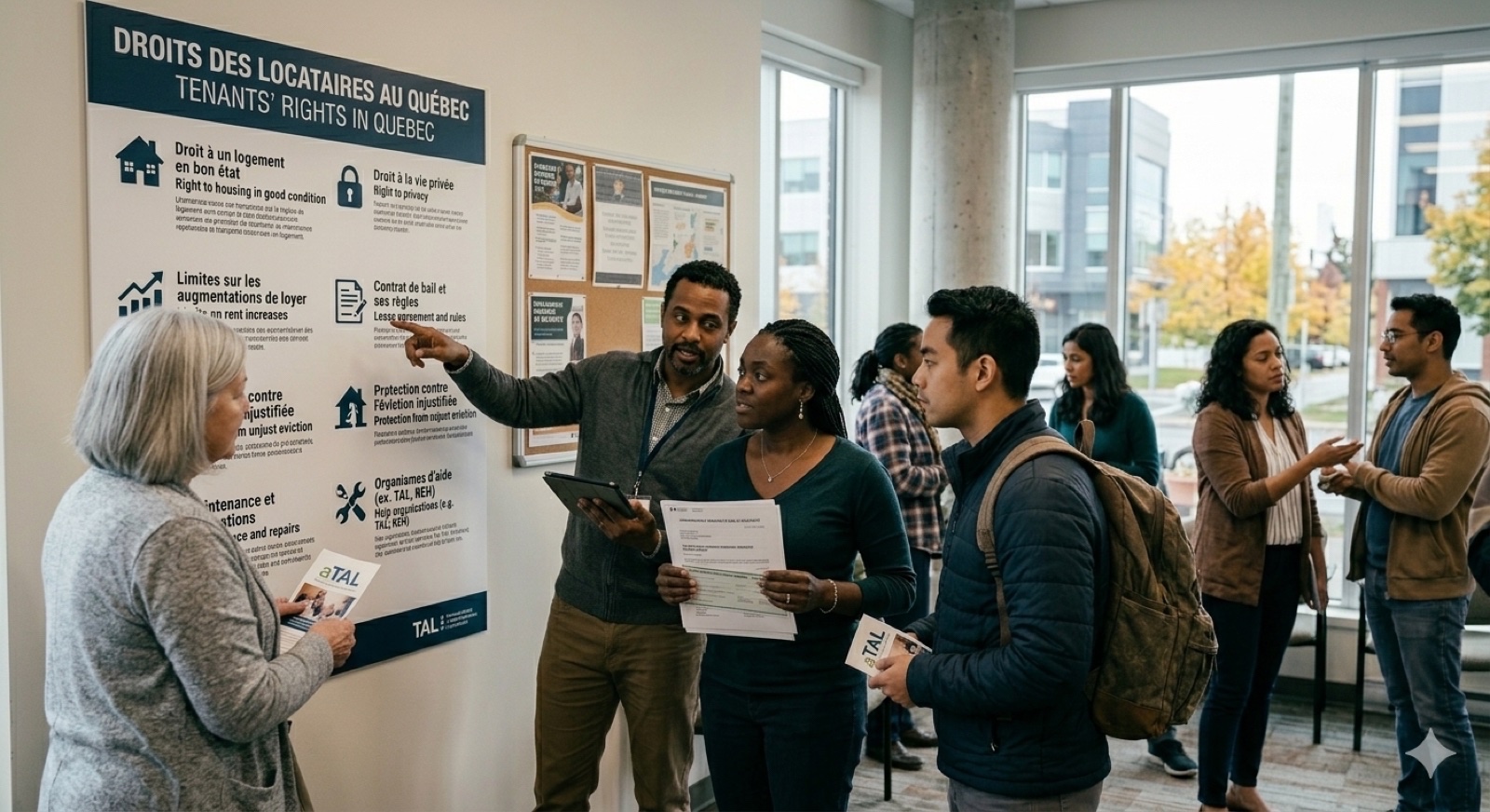
Rent increase, eviction, repairs: your recourse when something goes wrong.
In Quebec, the law strongly protects tenants. A landlord cannot evict you because they found a better tenant, raise the rent freely, or ignore an urgent repair. Many of these rights are automatic: they apply even if the lease does not mention them, and even if you signed a paper saying otherwise. This guide complements . The lease guide covers before signing; here we cover after — when the land...
Revenu Québec Shelter Allowance: A Monthly Subsidy
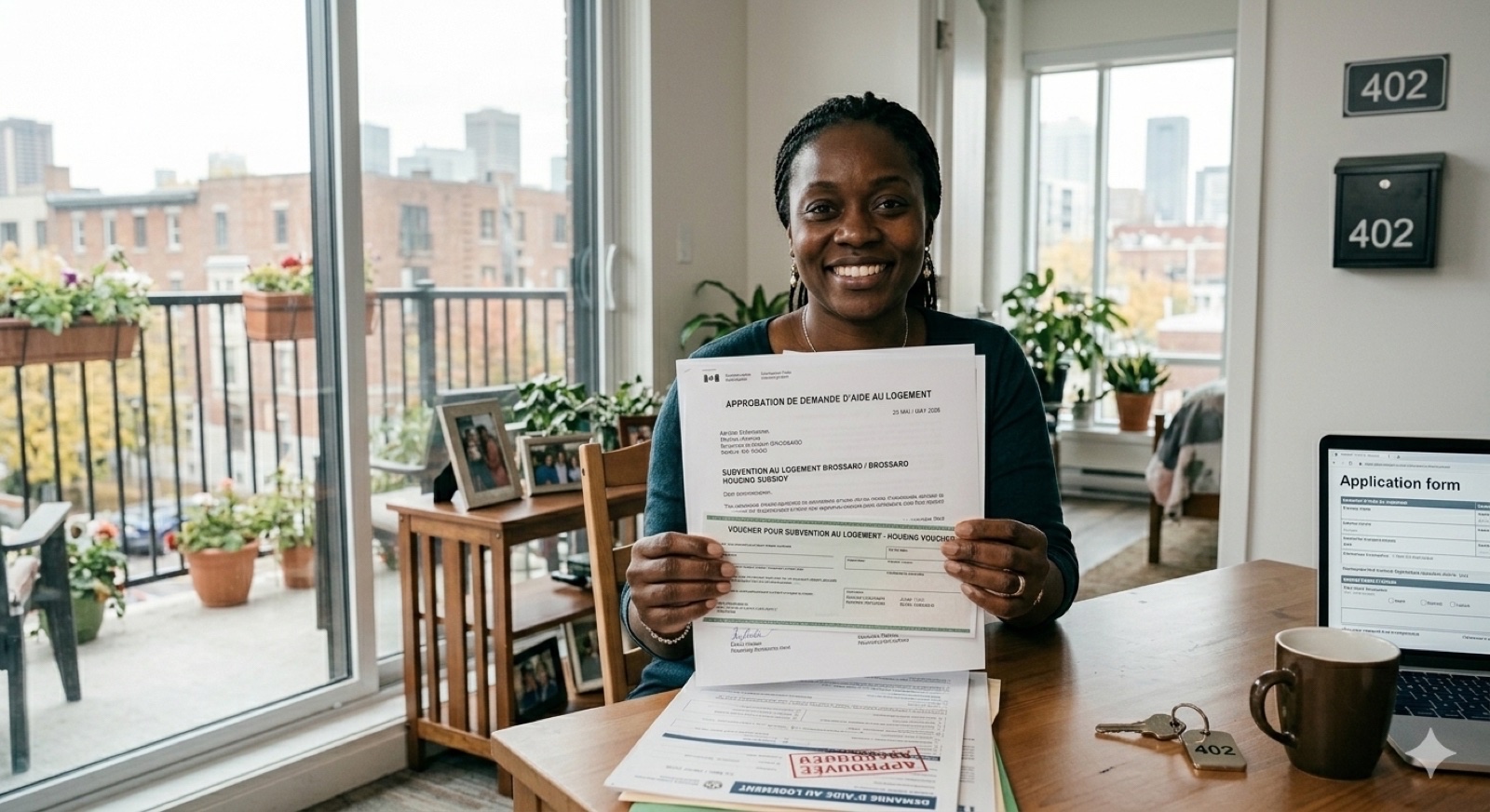
Revenu Québec's Shelter Allowance: who qualifies, how much you can receive each month and how to apply, step by step.
The Allocation logement is a provincial financial aid for low income individuals and families who spend a disproportionate share of their budget on housing. The program falls under the Société d'habitation du Québec (SHQ), but Revenu Québec is the one that manages it and pays it out. Eligible renters (and some homeowners) can receive a monthly maximum amount — verify the current maximum and thr...
Social Housing in Quebec: HLM, PSL, Affordable
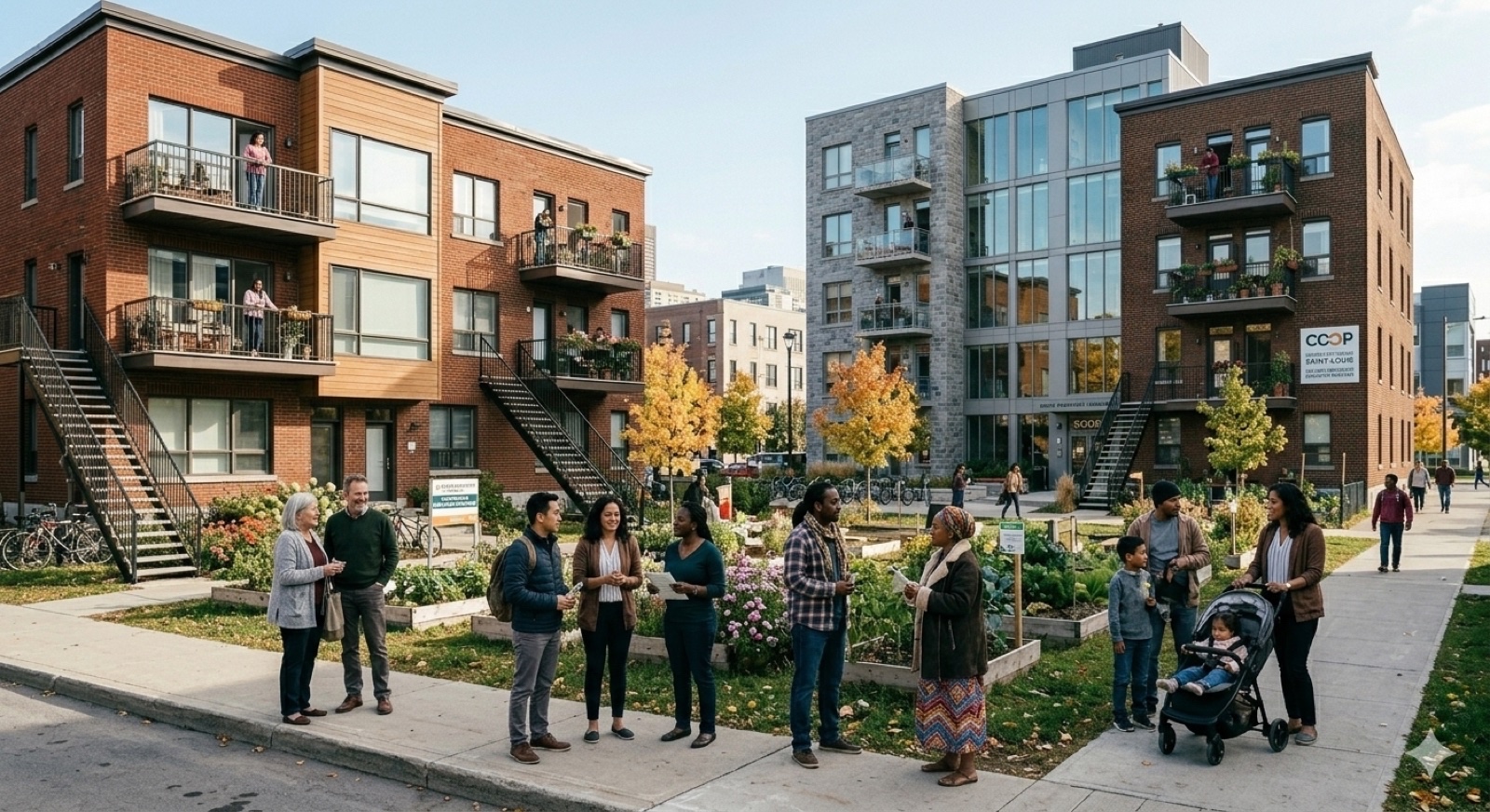
Three provincial programs, seven eligibility rules, a points-based wait-list: how to apply correctly.
Social housing in Quebec is overseen by the Société d'habitation du Québec (SHQ) and managed locally by municipal housing offices. In Montreal, it's the OMHM (Office municipal d'habitation de Montréal); each major city has its equivalent (OMH of Quebec City, OMH of Gatineau, etc.). When you apply for social housing, your file is considered for three distinct programs: HLM (Habitation à loyer mo...
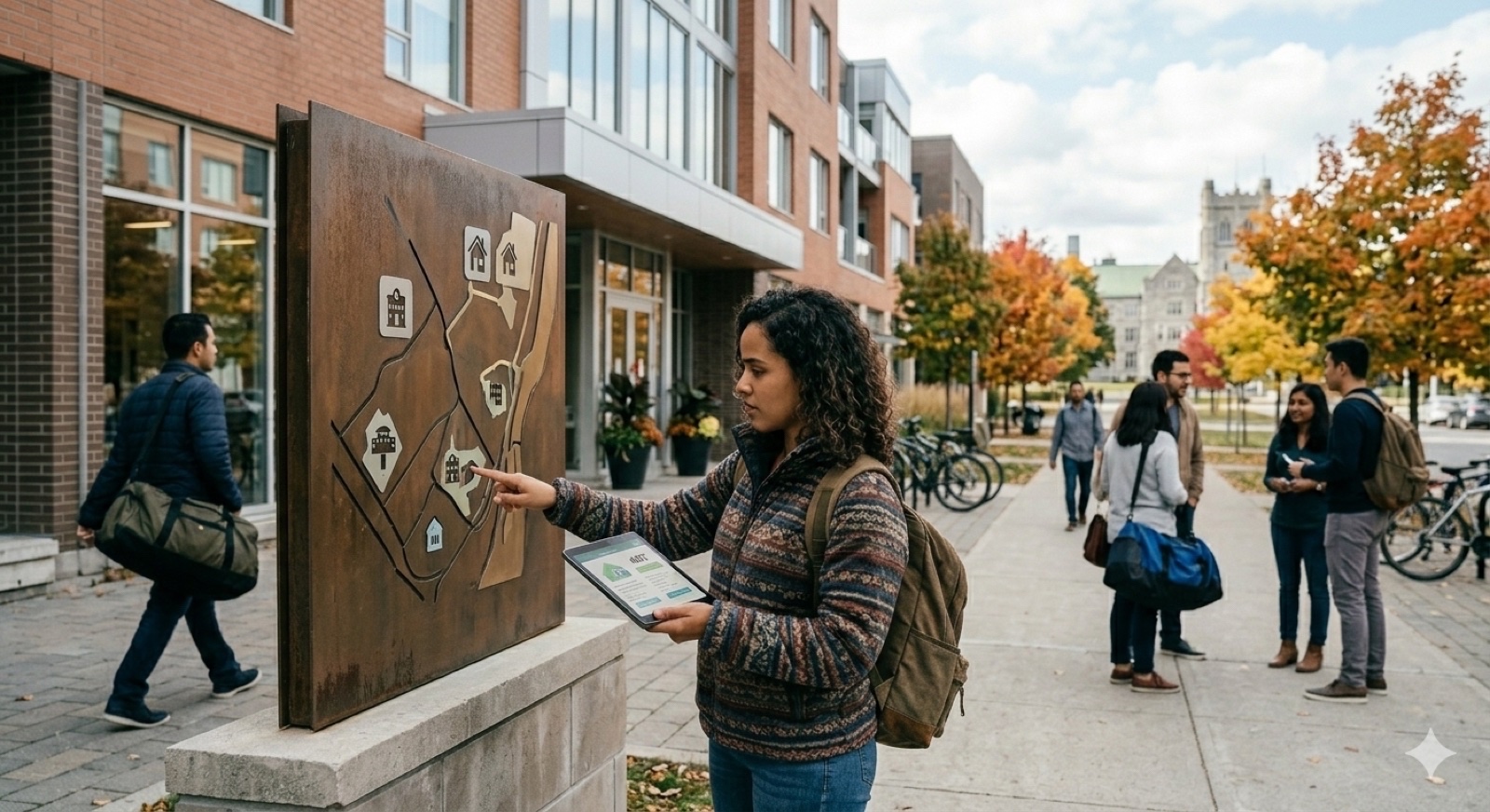
Finding Student Housing in Quebec
University residence, shared apartment or private studio — how a student finds a place to live, without getting scammed.
As an international student or someone from another city, you have three main ways to find housing: The university residence — accommodation run by the institution, on or near campus The shared apartment — an apartment shared with other people, where each pays their share The private studio or apartment — a place of your own, rented directly from a landlord No option is better in itself: it dep...
Enrolling your child in school, city by city
Enrollment steps and school service centres differ from one city to the next.
Registering Your Child for School in Bécancour
Enrolling your child in school in Bécancour: the Centre de services scolaire de la Riveraine, required documents, the welcome class and school transport.
In Quebec, public school is free and mandatory from age 6 to 16. The Centre de services scolaire de la Riveraine runs the French public schools, serving all of Centre du Québec. The Central Quebec School Board runs the English public schools. The Charter of the French Language — Bill 101 — restricts access to English public school. Generally, one parent must have received the majority of their ...
Registering Your Child for School in Brossard
The school system in Brossard, how to register your child, and what you need to know about welcome classes for newcomer students.
In Quebec, public school is free and mandatory from age 6 to 16. In Brossard, two school networks share the territory. The Centre de services scolaire Marie Victorin runs the French public schools — it's the default network for the vast majority of families. The Riverside School Board runs the English public schools, but access is restricted by law. The Charter of the French Language — often ca...
Registering Your Child for School in Gatineau
The CSS des Draveurs, Western Quebec School Board, and how to register your child.
In Gatineau, several School Service Centres run the French public schools: CSS des Draveurs (Gatineau sector, including Cantley and Val des Monts) CSS des Portages de l'Outaouais (all of Hull sector and Aylmer) CSS au Cœur des Vallées (Buckingham and Masson Angers) The Western Quebec School Board runs the English public schools. The Charter of the French Language — Bill 101 — restricts access t...
Registering Your Child for School in Laval
The Laval school centre, Sir Wilfrid Laurier English board, and how to register your child for the school year.
In Quebec, public school is free and mandatory from age 6 to 16. In Laval, two school networks share the territory. The Centre de services scolaire de Laval (CSS de Laval) runs all the French public schools — it's the default network for the vast majority of families. The Sir Wilfrid Laurier School Board runs the English public schools, but access is restricted by law. The Charter of the French...
Registering Your Child for School in Lévis
Enrolling your child in school in Lévis: the Centre de services scolaire des Navigateurs, required documents, the welcome class and the enrolment steps.
In Quebec, public school is free and mandatory from age 6 to 16. The Centre de services scolaire des Navigateurs runs the French public schools. English schools fall under the Central Quebec School Board. The Charter of the French Language — Bill 101 — restricts access to English public school. Generally, one parent must have received the majority of their elementary education in English in Can...
Registering Your Child for School in Longueuil
The CSS Marie-Victorin, the Riverside School Board, and how to register your child for the school year.
In Quebec, public school is free and mandatory from 6 to 16. In Longueuil, two school networks share the territory. The Centre de services scolaire Marie Victorin runs the French public schools. The Riverside School Board runs the English public schools, several of which are in Greenfield Park. The Charter of the French Language — often called Bill 101 — restricts access to English public schoo...
Registering Your Child for School in Magog
Enrolling your child in school in Magog: public, private or English options, the Centre de services scolaire des Sommets, documents and daycare costs.
In Quebec, public school is free and mandatory from age 6 to 16. The Centre de services scolaire des Sommets runs the French public schools. The Eastern Townships School Board runs the English public schools. Three main paths coexist in the region: the public French network of CSS des Sommets, the private network (annual fees), and the public English network reserved for families eligible under...
Registering Your Child for School in Repentigny
Enrolling your child in school in Repentigny: the Centre de services scolaire des Affluents, documents, the welcome class, enriched programs and transport.
In Quebec, public school is free and mandatory from age 6 to 16. The Centre de services scolaire des Affluents runs the French public schools, serving both the Repentigny and Le Gardeur sectors. English schools fall under the Sir Wilfrid Laurier School Board. The Charter of the French Language — Bill 101 — restricts access to English school. Generally, one parent must have received the majority...
Registering Your Child for School in Terrebonne
The Centre de services scolaire des Affluents and how to register your child for the school year.
In Quebec, public school is free and mandatory from 6 to 16. The Centre de services scolaire des Affluents runs the French public schools. English schools fall under the Sir Wilfrid Laurier School Board, but access is limited by law. The Charter of the French Language — Bill 101 — restricts access to English school. Generally, one of the parents must have received their elementary education in ...
Select your region
238 guides across 8 regions — pick yours:
The topic in brief
Understanding administrative steps in Quebec
In Quebec, your administrative steps follow a three-tier system worth understanding upfront. The federal tier (Canada) handles your resident identity — Social Insurance Number (SIN), Canadian passport, immigration status (permanent residence, citizenship, family sponsorship). The provincial tier (Quebec) handles health (RAMQ), driver's license (SAAQ), Quebec taxes, French language services, and family benefits. The municipal tier covers water, property taxes if you buy, and school enrollment.
This three-tier structure explains why you'll have multiple cards — one per tier — and why steps can feel scattered at first. The good news: almost everything is free or low-cost, and most steps can be done online or by mail.
The order to follow in your first weeks
Spend your first week on the SIN. Without it, you can't open a full bank account, work, or receive your first paycheques correctly. Service Canada issues the SIN on the spot in most major cities — bring your passport and immigration documents. Expect 10–15 minutes if everything is in order.
As soon as you have your SIN, file your RAMQ application. The waiting period is 3 months for most permanent residents and temporary workers — during this period you're not covered by public health insurance, so subscribe to private interim coverage or use your employer's if offered. The clock starts at your arrival in Quebec, not at your application — file early to avoid losing time.
Driver's license — a trap to avoid
If you have a foreign license, you have 6 months to exchange it for a Quebec license at SAAQ. After that, you must redo the theoretical and practical exams. Some countries (France, Belgium, Switzerland, Japan, several others) have a direct exchange agreement; for the others, the exchange requires at least the theoretical exam. Check your situation on saaq.gouv.qc.ca before the deadline.
Taxes — file even the first year
The most expensive myth for newcomers: "I arrived in September, I barely earned anything, it's not worth filing." False. In Canada, filing taxes opens rights — GST/HST credits, family allowance if you have children, quarterly GST. Even if you owe zero, file. The window runs February to end of April for the previous year's income. You file two returns: federal (Canada Revenue Agency) and provincial (Revenu Québec). Free software (UFile, TurboTax) generates both from the same input.
Status in Canada — PR, citizenship, sponsorship
If you're in Quebec on a temporary status (work permit, study permit), your next big steps will likely involve permanent residence (PR), either via the Quebec route (CSQ + federal selection) or via a federal route (Express Entry, Provincial Nominee Program, etc.). Once a PR, you'll be eligible for citizenship after roughly 3 years of physical presence. Sponsoring family members (spouse, children, parents) follows a separate path. These steps are the longest and most expensive of the journey — count 12 to 36 months depending on the route.
Documents to keep carefully
Throughout this process, keep your originals in a dedicated binder: passport, CAQ, letter of admission or work contract, PR confirmation, IRCC letters, MIFI letters, leases, paystubs, T4 / Relevé 1 tax slips, utility bills. You'll need them for every following step — keep everything, file everything.
Common mistakes to avoid
Delaying the RAMQ application
The 3-month waiting period starts at your arrival in Quebec, not at your application. The sooner you file, the sooner coverage begins.
Thinking the foreign license works indefinitely
After 6 months, you must start from scratch — theoretical and practical exams. Check your situation with SAAQ before the deadline.
Skipping the tax return in your first year
Even with zero or minimal income, filing opens GST/HST credits, the family allowance, and establishes your Canadian tax history.
Confusing federal vs provincial
Many steps exist in two versions — taxes especially. You often need to do both, not one OR the other.

Frequently asked questions
What should I do first when I arrive in Quebec?
+
What should I do first when I arrive in Quebec?
+Your SIN in the first week, then RAMQ and a bank account within the next two weeks. These three unlock almost everything else — work, housing, other administrative steps.
How long before I'm covered by RAMQ?
+
How long before I'm covered by RAMQ?
+For most permanent residents and temporary workers, the waiting period is 3 months from your arrival in Quebec. During this period, be covered by private insurance or your employer's plan.
Do I need to file taxes if I arrived mid-year?
+
Do I need to file taxes if I arrived mid-year?
+Yes. You file for the portion of the year you were a Canadian resident. Even with zero or minimal income, filing opens GST/HST credits, the family allowance, and establishes your Canadian tax history.
Is my foreign driver's license valid?
+
Is my foreign driver's license valid?
+Yes, for the first 6 months after your arrival. After that, you must exchange it at SAAQ. Several countries have direct-exchange agreements; others require a theoretical exam. Check saaq.gouv.qc.ca before the deadline.
When do I need an immigration lawyer?
+
When do I need an immigration lawyer?
+For simple cases (PR via Express Entry, citizenship application after 3 years of PR), a lawyer isn't necessary — the steps are done online. For complex cases (prior refusal, criminal record, humanitarian application, difficult sponsorship), consulting an immigration lawyer or licensed consultant (CRCIC member) can prevent costly mistakes.
Other topics
Browse all topicsFirst Steps in Quebec
Your first steps after arrival — housing, SIN, banking, phone.
ExploreWork & Career
Finding a job, Quebec-style résumé, French interviews.
ExploreDaily Life
Transport, local services, health, everyday life.
ExploreLocal Resources
Communities, welcome services, neighborhood resources.
ExploreIn the news
Recent changes that matter to newcomers.
Workplace health and safety: new protections in every workplace as of October 1, 2026
All employers must put prevention mechanisms in place. For a worker, that means a safer workplace and a say in safety.
Rent increases: a new calculation method since 2026
Quebec has modernized, for the first time in 40 years, how rent increases are calculated. Simpler, more predictable — here's what changes for you.
International students: 24 hours a week, the work limit not to exceed
With a study permit, you can work off campus up to 24 hours a week during study sessions. Going over that limit breaks your permit conditions.
From Bécancour to Trois-Rivières.
Housing, transit, local schools: every guide also exists for your city, with real addresses and figures.
7 regions · 18 cities
All cities