1. You are not alone, and you have nothing to be ashamed of
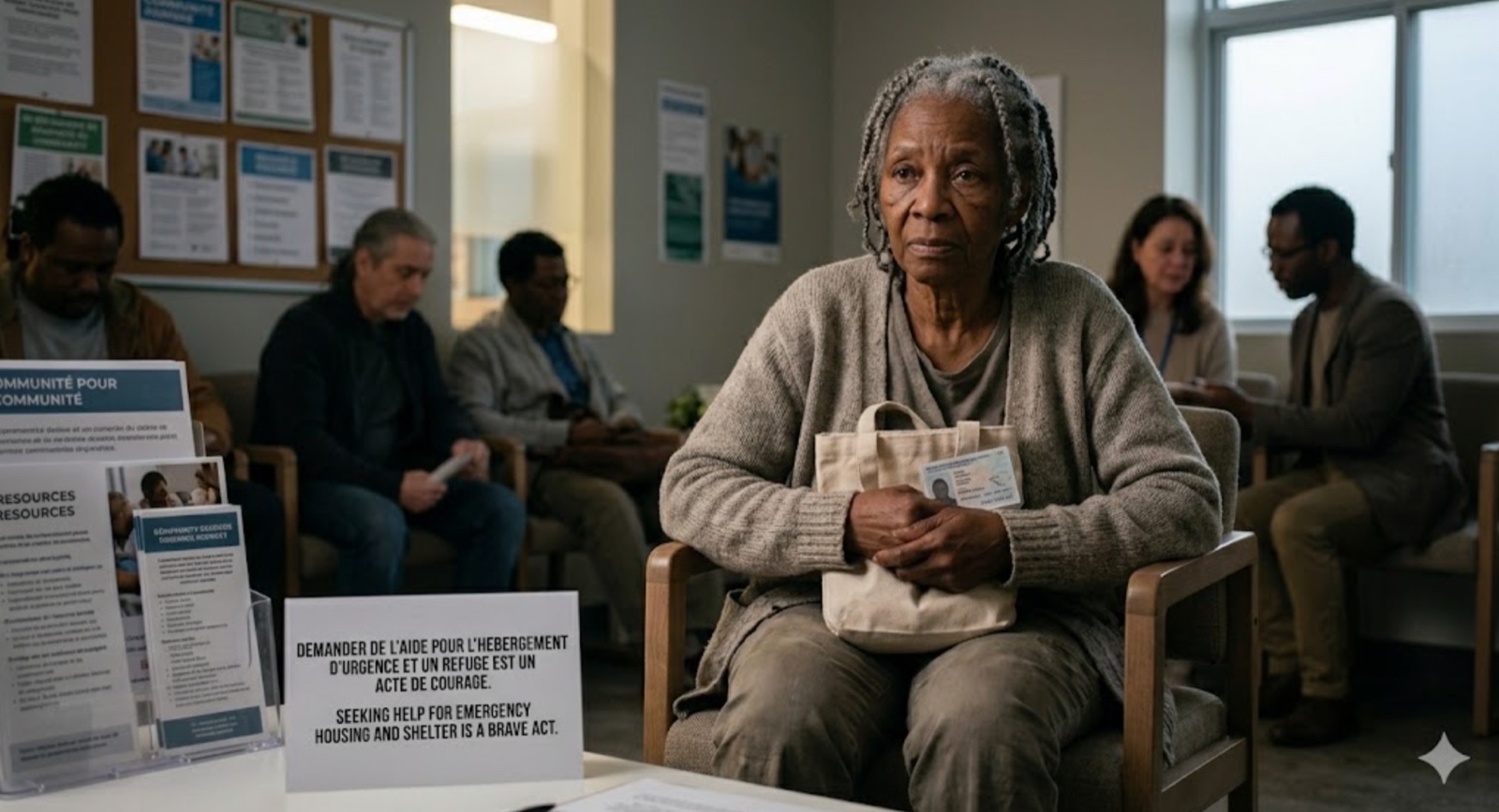
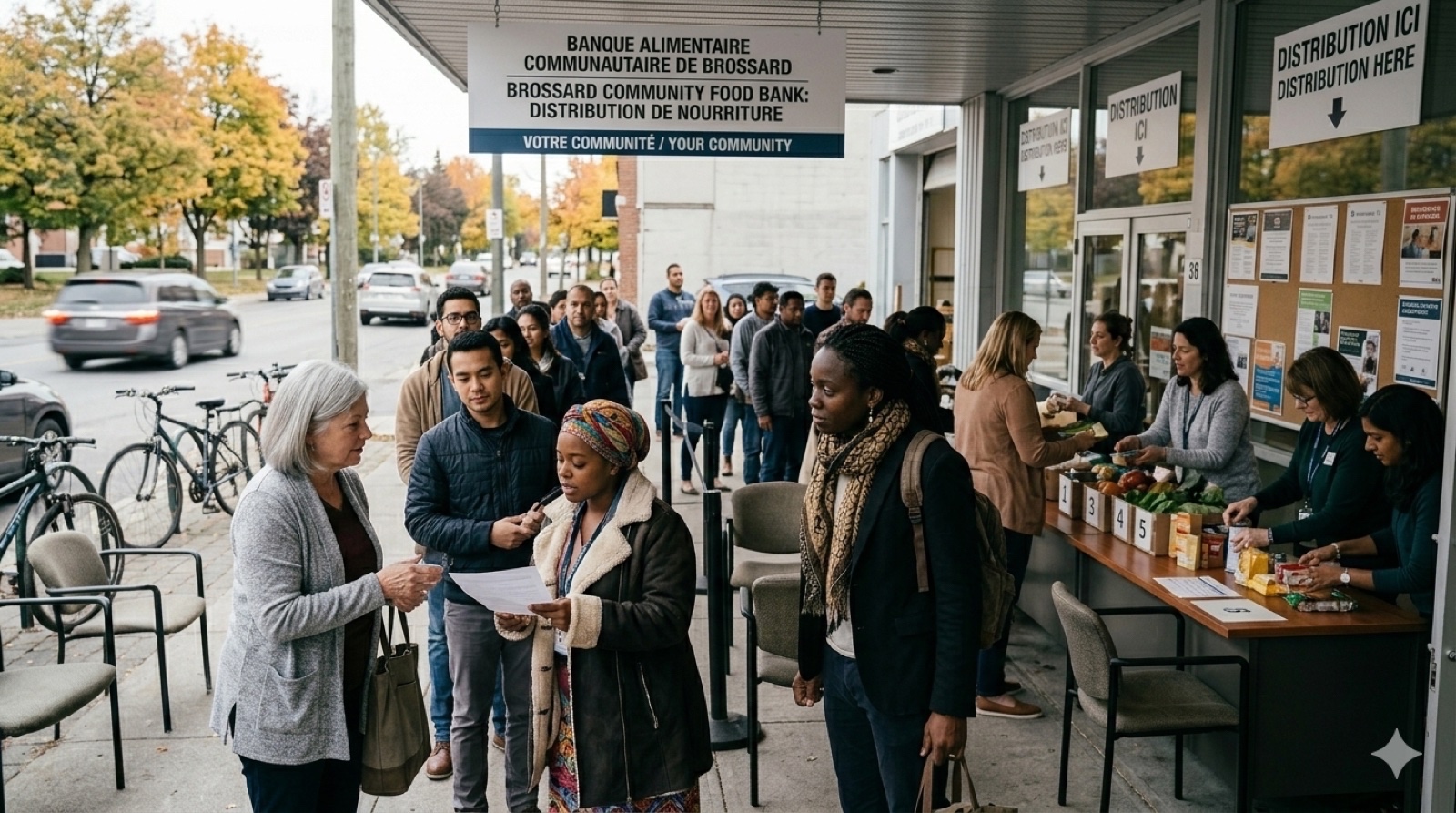
In Quebec, hundreds of thousands of people use a food bank each month. Students, families with children, minimum-wage workers, seniors, newcomers, people between jobs. Going for help is not a sign of failure — it's exactly why the network exists.
The organizations distributing food assistance do so without judgment and without questioning your right to eat. Most ask for no proof of immigration status; some ask for proof of income to calibrate the service, but emergency access remains possible without complete documents.
If you're reading this and hesitating, consider the step settled. The rest of this guide shows you how to find the closest food bank, what you'll be given, and what other resources exist alongside.
2. The provincial network: Banques alimentaires du Québec and the 19 Moissons
Quebec's food-assistance network is highly structured.
- At the top: Banques alimentaires du Québec (BAQ) — the provincial federation. BAQ coordinates, collects large-scale donations, and supports the regional Moissons.
- Regionally: 19 Moissons cover all of Quebec — for example Moisson Montréal for the island, Moisson Québec for the Capitale-Nationale, Moisson Estrie for the Eastern Townships, Moisson Lanaudière, Moisson Outaouais, Moisson Saguenay-Lac-Saint-Jean, and so on out to more remote regions.
Moissons generally don't distribute directly to the public. They supply local organizations — neighbourhood food pantries, community organizations, collective kitchens, parishes — which serve people in person. So you go to your local organization, not to the Moisson directly.
This system lets help be present everywhere in Quebec without forcing families to travel far.
3. How to find the closest food bank
Three quick ways to find a food pantry near you:
- Dial 211 on your phone — free, multilingual, available day and night. An agent will direct you to the closest organization and explain how to proceed. It's the fastest and most human method.
- Online via Banques alimentaires du Québec: visit banquesalimentaires.org — their postal-code search tool lists organizations serving your area. You can also go directly to your regional Moisson's site (for example moissonmontreal.org for Montreal), which maintains a directory of member pantries.
- Google or Google Maps: a last-resort but often effective method. Type « banque alimentaire » followed by the name of your city or neighbourhood (for example « banque alimentaire Hochelaga », « banque alimentaire Sherbrooke »). Many parishes, community organizations, and family centres appear in local results.
Call the organization before going to verify hours and whether an appointment is needed (more and more organizations have run by appointment since 2020).
4. What to expect on your first visit
Each organization has its own rules, but a few things are almost universal.
On arrival, you'll be asked your name, your address, the number of people in your household and their ages. This helps calibrate food quantity and respects the statistics the Moissons must track.
Some organizations ask for a simple ID (driver's licence, health-insurance card) and sometimes a recent proof of income (pay stubs, bank statement, social-assistance letter) to confirm eligibility. If you don't have these documents at your first visit, just say so: most will still give you emergency relief and ask you to bring the proofs next time.
What you'll receive: a basket or bag of basic foods — bread, vegetables, canned goods, sometimes meat or milk depending on what came in. Quantity depends on your household size.
Frequency: many organizations have a maximum frequency — for example once a month, or every two weeks. Check with your local organization to know how often you can come back.
For babies and young children: several organizations also have diapers, infant formula, and baby food on request. Mention your children's ages at registration.
5. Beyond food baskets: other food assistance
Food baskets are only part of the landscape. Several other resources can supplement or replace them depending on your situation:
- Soup kitchens — free hot meals on the spot, several times a week. Useful if you have no working kitchen or are in homelessness. In Montreal, look for Maison du Père, Accueil Bonneau, or Old Brewery Mission; elsewhere, ask 211 or your CLSC for regional equivalents.
- Collective kitchens — groups where you cook together while sharing costs. Food works out to about $2-3 per meal. Often a chance to meet people in addition to saving money.
- Breakfast and school-lunch programs — at many public schools for low-income families. Speak discreetly to your child's school or your CLSC; no judgment, it's designed for families in your situation.
- CLSC — can issue emergency food vouchers in a truly immediate crisis, and direct you to local resources.
- Parishes and community organizations — several have emergency counters open outside regular hours of food banks. 211 or Google finds them.
6. If you want to help rather than be helped
Quebec's food-assistance network runs almost entirely on donations and volunteers. If your situation improves, or if you're reading this guide to help someone else, here are three ways to help:
- Give money rather than food if possible. Banques alimentaires du Québec and the Moissons can buy in bulk at very low prices, so every dollar donated becomes several dollars of food. To donate, visit banquesalimentaires.org or directly your regional Moisson's site.
- Become a volunteer — distribution, sorting, delivery, reception. Your few hours a week make the network run. Sign up via your local pantry or your Moisson.
- Talk about it around you. Many people in need don't dare ask because they don't know the scope of the network or think there will be judgment. Sharing this guide or simply mentioning 211 in conversation can unblock someone you know.
Frequently asked questions
Here are the most common questions about food banks: whether you must prove your income, and whether your immigration status matters.
Do you have to prove your income to get help?
It depends on the organization. Some ask a few questions to confirm need; others give help with no proof at all, especially for emergencies. Don't let fear of paperwork stop you — call first and ask what to bring. If one place has conditions you can't meet, another nearby often doesn't.
Does my immigration status matter?
For food aid, generally no. Food banks and community kitchens help people based on need, not status — many serve asylum seekers, students and people without status. You do not have to explain your immigration situation to receive a food basket. If you're unsure, ask the organization or call 211.
See also
These related guides may be useful:
- Emergency help in Quebec — all your options in an emergency.
- Community organizations in Quebec — groups that can help you.
- Social housing in Quebec — low-rent and subsidized housing.
Official sources
- Banques alimentaires du Québec (BAQ) — banquesalimentaires.org
- Moisson Montréal — moissonmontreal.org
- Moisson Québec — moissonquebec.com
- Directory of regional Moissons — on the BAQ site above
- 211 Québec — dial 211 or 211qc.ca
- Your local CLSC — for emergency food vouchers and orientation
- Éducaloi — social rights — educaloi.qc.ca
Income thresholds, distribution frequencies, hours, and pantry addresses vary from one organization to another and change regularly — always confirm by calling the organization before going in person.
Author's note: the only truly irreparable wrong would be not to go. Food is a basic need Quebec society has organized itself to cover, and the network was built precisely for the hard moments we all face at one point or another — unemployment, illness, separation, recent arrival without a network. If you hesitate, start by dialing 211. One call, five minutes, no pressure. The network exists for you.