1. A modest but real subsidy, often missed
The Allocation-logement is a provincial financial aid for low-income individuals and families who spend a disproportionate share of their budget on housing. The program falls under the Société d'habitation du Québec (SHQ), but Revenu Québec is the one that manages it and pays it out.
Eligible renters (and some homeowners) can receive a monthly maximum amount — the amount and income thresholds are set by the program's normative framework, and the income thresholds are adjusted every year (official links below).
It's a modest subsidy compared to an HLM, but it's free to apply for and paid by direct deposit or cheque. Unlike the HLM — which can take years before a unit is allocated — there is no waiting list, and if you apply partway through the period, it is paid retroactively to October 1. If you're eligible, it's money sitting on the table.
2. Are you eligible? Four conditions
You must meet all four conditions:
1. Residency: live in Quebec and have filed a Quebec tax return for the previous tax year (or file it with your application). 2. Household composition: one of three categories — - Single person aged 50 or older - Couple where at least one member is 50 or older - Family with at least one dependent child (regardless of parents' age) 3. The 30% rule: your annual housing cost must equal at least 30% of your family income for the previous year. That cost is your rent plus fixed amounts Revenu Québec adds for electricity and heating (if they are not included in the rent) and for home insurance (how the percentage is calculated). 4. Liquid-asset ceiling: the combined value of your bank accounts, TFSA (CELI) and non-registered investments cannot exceed a ceiling set by Revenu Québec (measured at December 31 — the current figure is in Revenu Québec's eligibility conditions). RRSPs, the FHSA (CELIAPP) and other registered plans are excluded from the count.
Exclusions: you are not eligible if you already live in a fully subsidized unit (HLM), a hospital centre, a CHSLD (long-term care centre) or a maison des aînés, or already receive the Programme de supplément au loyer (PSL). Aids don't stack.
| Criterion | Required condition |
|---|---|
| Income | Under the ceilings set by the program (they vary by family situation and by the share of income spent on housing, and are adjusted every year — listed in the eligibility conditions above) |
| Housing costs | At least 30% of family income |
| Housing | Tenant, roomer or owner of the home you live in |
| Residency | Living in Quebec |
3. Three levels of aid based on your rent-to-income ratio
The amount you receive depends on the share of your income that goes to rent. The larger that share, the higher the aid. The program distinguishes three tiers:
- Between 30% and 49.9% of income on rent → aid is at the low end of the range.
- Between 50% and 79.9% → aid increases.
- At 80% or more of income on rent → aid reaches its maximum.
The exact amounts per tier and the corresponding income ceilings are set for each payment period by the program's normative framework. The current amount for each tier is published on Revenu Québec's payments page; the questionnaire on the eligibility page (linked above) tells you in a few minutes whether you qualify, no commitment.
4. How to apply
The application is done online or by mail.
- Online — log into the Mon dossier pour les citoyens portal on the Revenu Québec site. You fill out the form directly and upload supporting documents.
- By mail — fill out form LEX-165-V (Application for the shelter allowance) and mail it with supporting documents to the address shown on the form.
Documents to attach: if you rent, form LEZ-14 (Rent declaration), whose parts 1 and 2 you fill out yourself, plus a copy of your lease or renewal notice; if you have neither, have your landlord sign part 3. If you own your home, your municipal and school tax bills for the previous year and a document confirming the mortgage interest you paid (documents to provide). Online, you don't need to mail anything.
Important note: only one member of a couple can apply. The allowance is granted for one period (currently October 1, 2026 to September 30, 2027): to keep receiving it, you must file a new application every year. How often you are paid depends on the amount granted; an annual amount under $2 is not paid.
5. Renewal and follow-up
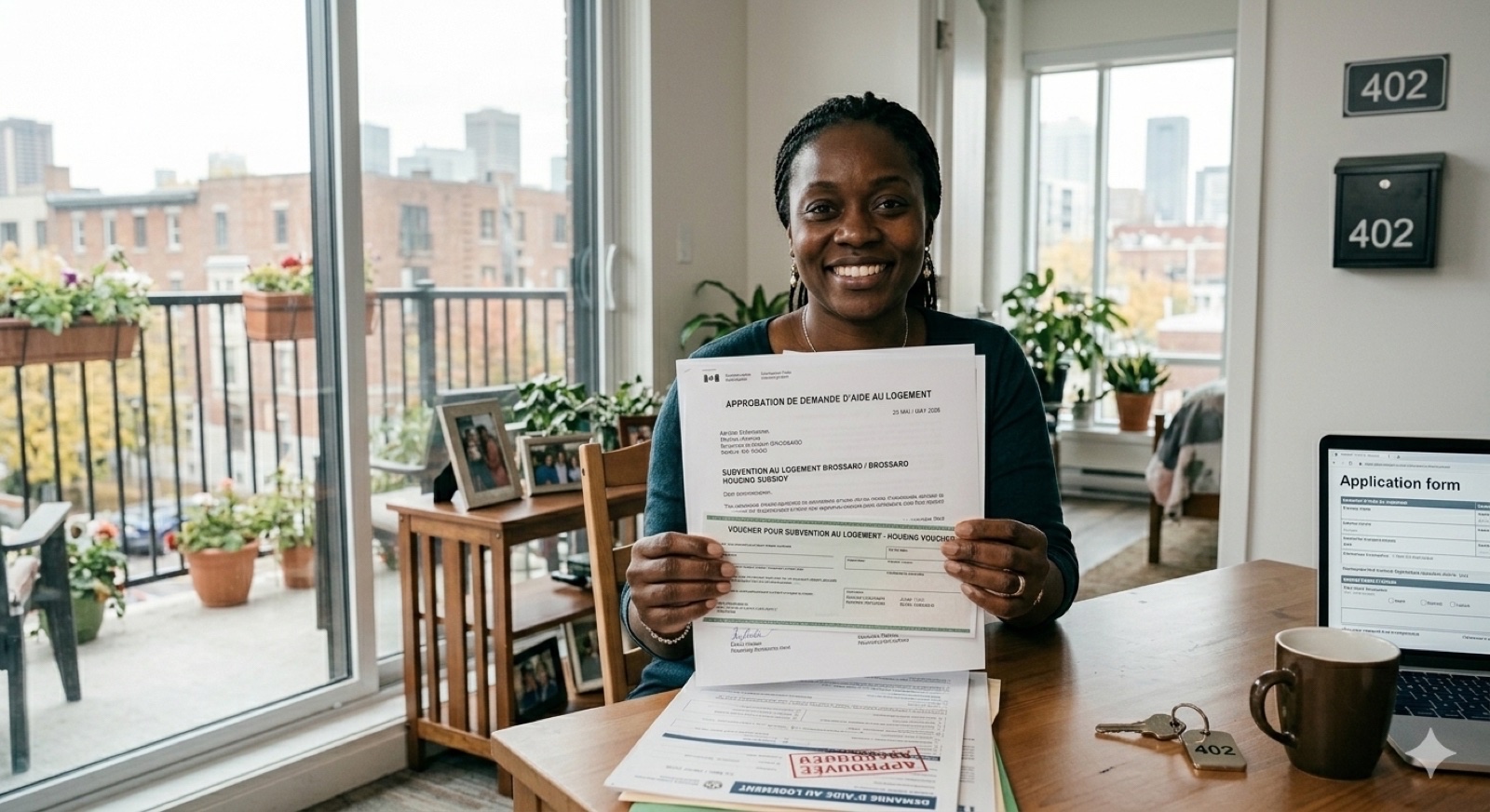
Once approved, the Shelter Allowance is not indefinite: you must file a new application every year to keep receiving it (for the October 1, 2026 to September 30, 2027 period, the deadline is September 30, 2027). In later years, send your new application by July 31 of the year the new period starts (July 31, 2027 for the period starting October 1, 2027), or your payments may be interrupted.
Three things to know:
- You must continue to file your Quebec tax return each year, otherwise payment will stop.
- Some changes must be reported to Revenu Québec without delay, by phone or by mail: a change in your rent or in the services included in it, a separation or a new spouse, a change in the number of people sharing the rent, leaving Quebec (changes to report). Failure to report can result in a repayable overpayment.
- If you move or your rent changes, tell Revenu Québec by a signed letter sent by mail, or by phone if no document is needed (how to report a change).
If your payments stop without notice, check Mon dossier first — the most common cause is a missing tax return.
Frequently asked questions
Here are the most common questions about the housing allowance: whether it reduces your other benefits, and whether you must renew.
Does the housing allowance reduce my other benefits?
The housing allowance is designed to add to your budget, not to cancel your other supports — but interactions with certain programs can exist depending on your situation. Don't guess: if you also receive social assistance or other benefits, check directly with Revenu Québec or a free budgeting service (an ACEF) before assuming one cancels the other.
Do I have to reapply every year?
Yes. Revenu Québec is clear about it: if you already receive the shelter allowance, you must file a new application every year to keep receiving it. For the October 1, 2026 to September 30, 2027 period, the deadline is September 30, 2027; if you are eligible, amounts are paid retroactively from October 1. In later years, send it by July 31 to avoid an interruption in payments. You reapply online in Mon dossier, or by mail.
See also
These related guides may be useful:
- Social housing in Quebec — low-rent and subsidized housing.
- Signing a lease in Quebec — understand and sign your lease.
- Tenant rights in Quebec — your rights as a tenant.
Official sources
All amounts, ceilings, form codes, and deadlines mentioned in this guide must be verified on the official site — they evolve each cycle.
Author's note: if you pay rent, file your taxes, and fall into one of the three household categories — check. Many eligible people don't even know the program exists. A few minutes on Revenu Québec's questionnaire cost nothing. If you find the procedure intimidating, Revenu Québec's customer service can walk you through it by phone.