
International student
Steps specific to international-student status, in the order they arrive — from the CAQ to the path to permanent residence after graduation.
La Vie au Québec
Simplifiez votre vie au Québec · Simplify your life in Quebec
vieauqc.com
International student
Steps specific to international-student status, in the order they arrive — from the CAQ to the path to permanent residence after graduation.
- 1
BEFORE ARRIVAL
CAQ + study permit
Quebec requires a CAQ (Certificat d'acceptation, ~$225, about 25 days) BEFORE the federal government approves your study permit (~$200, variable timelines). Order matters.
Read the CAQ and study-permit guideWithout a CAQ, your federal study-permit application will be refused. Start the CAQ application as soon as your school accepts you.
- 2
ON ARRIVAL
Activate your permit and get your student card
At the airport, the border officer hands you the physical study permit. Verify the conditions printed on the back. Then collect your student card from your school — proof needed for transit discounts, banking, and more.
See the first-week checklistAlso useful
- 3
FIRST WEEKS
Find student housing
University residence (often priority for international students), shared apartment, or studio. Aim for a 12-month lease to stabilise your residential address.
Read the student-housing guide - 4
FIRST WEEKS
Health coverage (RAMQ or private insurance)
Students from France, Belgium, Denmark, Finland, Greece, Luxembourg, Norway, Portugal and Sweden are eligible for RAMQ via a bilateral agreement. Others must subscribe to private insurance — often offered or billed by the university.
Read the RAMQ guideWithout a bilateral agreement, RAMQ does NOT cover you. Subscribe to private insurance BEFORE arrival to avoid a coverage gap.
- 5
FIRST MONTH
SIN — to be allowed to work off-campus
Without a SIN, you can't work off-campus or receive your paycheque correctly. Service Canada issues it on the spot — passport + study permit + 15 minutes.
Read the SIN guide - 6
FIRST MONTH
Student bank account + reduced-fare Opus card
All major banks offer a free student package. Bring passport, study permit, SIN, and student card. The Opus transit card moves to the student rate on presentation of your student card — 30 to 40 % savings on public transit.
Compare bank accounts - 7
DURING YOUR STUDIES
Off-campus work — the 24 hr/week rule
International students can work up to 24 hours/week off-campus during sessions, full-time during official breaks (summer, winter, reading weeks). Federal IRCC rule — check the exact conditions printed on your permit.
Read the off-campus work guideExceeding the limit puts your study permit at risk. Track your hours rigorously, month by month.
- 8
DURING YOUR STUDIES
Free French classes (if non-francophone)
The MIFI offers free French classes to non-francophone international students — part-time, compatible with studies. An attendance allowance is paid.
Read the Francisation Québec guide - 9
EVERY YEAR
Tax return (even with minimal income)
File your taxes every year before the end of April, even with zero or minimal income. Students are entitled to tuition and education credits — often a refund, and the opening of GST/HST credits.
Read the taxes guide - 10
IF YOUR STUDIES RUN LONG
Renew the CAQ and study permit
If your studies run past the expiry date of your documents, you must renew them — the CAQ first, then the study permit, in the same order as the initial application. File each application well before expiry.
Read the permit-renewal guideNever let a permit lapse. Studying or working on an expired permit puts your status at risk — file the renewal early.
- 11
AFTER GRADUATION
PGWP + path to permanent residence
The Post-Graduation Work Permit (PGWP) — an open permit — lets you gain Canadian work experience after your studies. That experience opens the path to permanent residence through Quebec selection (PEQ or PSTQ). Durations, the required French level and which program is open change often: verify the rules in force.
Read the PGWP and PR-path guide






In short
International student
Two layers of permission: provincial CAQ + federal study permit.
Work rules: 24 hrs/week off-campus during academic sessions.
Health coverage varies by country of origin: bilateral RAMQ agreement or private insurance.
Path to permanent residence after studies: PGWP then Quebec selection.
Steps are independent — except the study permit, which depends on the CAQ.
What's next?
You've finished settling in. Here's where to go next.
Frequently asked questions
In what order should I apply for the CAQ and the study permit?
+
In what order should I apply for the CAQ and the study permit?
+The provincial CAQ must be obtained BEFORE the federal government approves your study permit — without a CAQ, your federal study-permit application will be refused. Start the CAQ application as soon as your school accepts you.
Am I automatically covered by RAMQ as an international student?
+
Am I automatically covered by RAMQ as an international student?
+Only if you come from France, Belgium, Denmark, Finland, Greece, Luxembourg, Norway, Portugal or Sweden, through a bilateral agreement. Other students must subscribe to private insurance, often offered or billed by the university, before arrival to avoid a coverage gap.
How many hours am I allowed to work off-campus?
+
How many hours am I allowed to work off-campus?
+Up to 24 hours a week off-campus during academic sessions, and full-time during official breaks like summer, winter, or reading weeks. Exceeding this limit puts your study permit at risk, so track your hours rigorously, month by month.
Why do I need a SIN as a student?
+
Why do I need a SIN as a student?
+Without a SIN, you can't work off-campus or receive your paycheque correctly. Service Canada issues it on the spot with your passport and study permit, in about 15 minutes.
Do I need to file a tax return even with almost no income?
+
Do I need to file a tax return even with almost no income?
+Yes — file your taxes every year before the end of April, even with zero or minimal income. Students are entitled to tuition and education credits, which often results in a refund and opens access to GST/QST credits.
Is the free French course compatible with my full-time studies?
+
Is the free French course compatible with my full-time studies?
+Yes, the MIFI offers free French classes to non-francophone international students on a part-time basis, designed to be compatible with studies. An attendance allowance is even paid.
What should I do if my studies run longer than expected and my documents expire?
+
What should I do if my studies run longer than expected and my documents expire?
+You must renew the CAQ first, then the study permit, in the same order as your initial application, filing each request well before expiry. Never let a permit lapse: studying or working on an expired permit puts your status at risk.
What happens after graduation if I want to stay in Quebec?
+
What happens after graduation if I want to stay in Quebec?
+The Post-Graduation Work Permit (PGWP), an open permit, lets you gain Canadian work experience after your studies. That experience opens the path to permanent residence through Quebec selection, such as the PEQ or PSTQ — but durations and requirements change often, so verify the rules in force.
Topics
First Steps in Quebec
Your first steps after arrival — housing, SIN, banking, phone.
Explore
Paperwork Simplified
Documents, official cards, government formalities.
Explore
Work & Career
Finding a job, Quebec-style résumé, French interviews.
Explore
Daily Life
Transport, local services, health, everyday life.
Explore
Local Resources
Communities, welcome services, neighborhood resources.
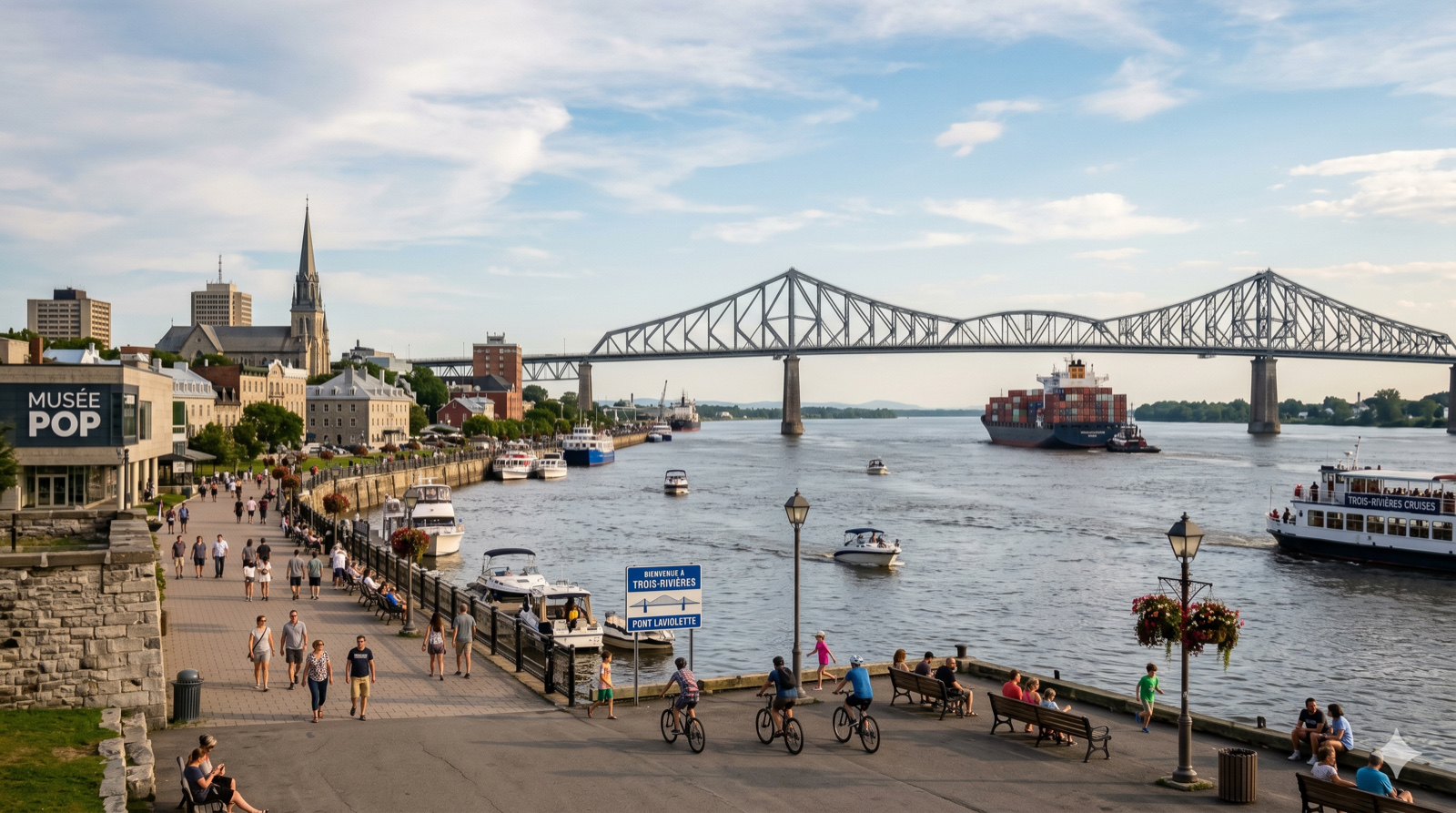
ExploreFrom Bécancour to Trois-Rivières.
Housing, transit, local schools: every guide also exists for your city, with real addresses and figures.



7 regions · 18 cities
All cities