Province-wide guides
Procedures and services that apply everywhere in Quebec, with no specific city.
Admin(20)
See all →Immigrant Family Budget in Quebec: The Real Numbers
Understanding the real expenses of an immigrant family in Montréal — rent, groceries, daycare, transit — and how to balance your budget in the first years.
Budget management is one of the most concrete challenges of the first year in Quebec. This guide gives you realistic 2026 figures for Montréal — rent, groceries, transit, daycare, insurance and leisure — so an immigrant family can plan with eyes open. These figures are realistic ranges, not absolute minimums or luxury maximums. Housing typically represents 30–40% of a family budget. In Montréal...
Renew or Replace Your PR Card in Quebec
Renew an expired PR card or replace a lost one: documents, fees, IRCC processing times and what to do if you need to travel in the meantime.
The Permanent Resident Card (PR card) proves your status in Canada. It's mandatory for travelling abroad. Validity: 5 years in general. Renew your card once it expires in less than 9 months — or after it has expired. This is not a minimum lead time but a ceiling: if it expires in 11 months you cannot file yet ( ). Check the date on the back of your card. If your card expires during a trip, you ...
Change of Address and Mail Forwarding in Quebec
How to notify the Quebec government, Canada Post and other organizations of your new address after a move.
After a move, there's no single button that notifies everyone of your new address. The Quebec government, the federal government, your bank, your employer and your insurers each keep their own file. Forgetting even one of these organizations can delay a refund, a renewed card, or an important document. The Quebec government offers a free service that sends your new address to seven ministries a...
Creating Your Online Government Account in Quebec
How to create a single account to access RAMQ, Revenu Québec, and other Quebec government services online.
The Quebec government groups access to several of its online services — including RAMQ, Revenu Québec, and Retraite Québec — behind a single login: the Government Authentication Service. You only need to create this account once; it then lets you sign in to every service that requires it. If you've heard of clicSÉQUR from a friend or an online search, know that this name is gradually being repl...
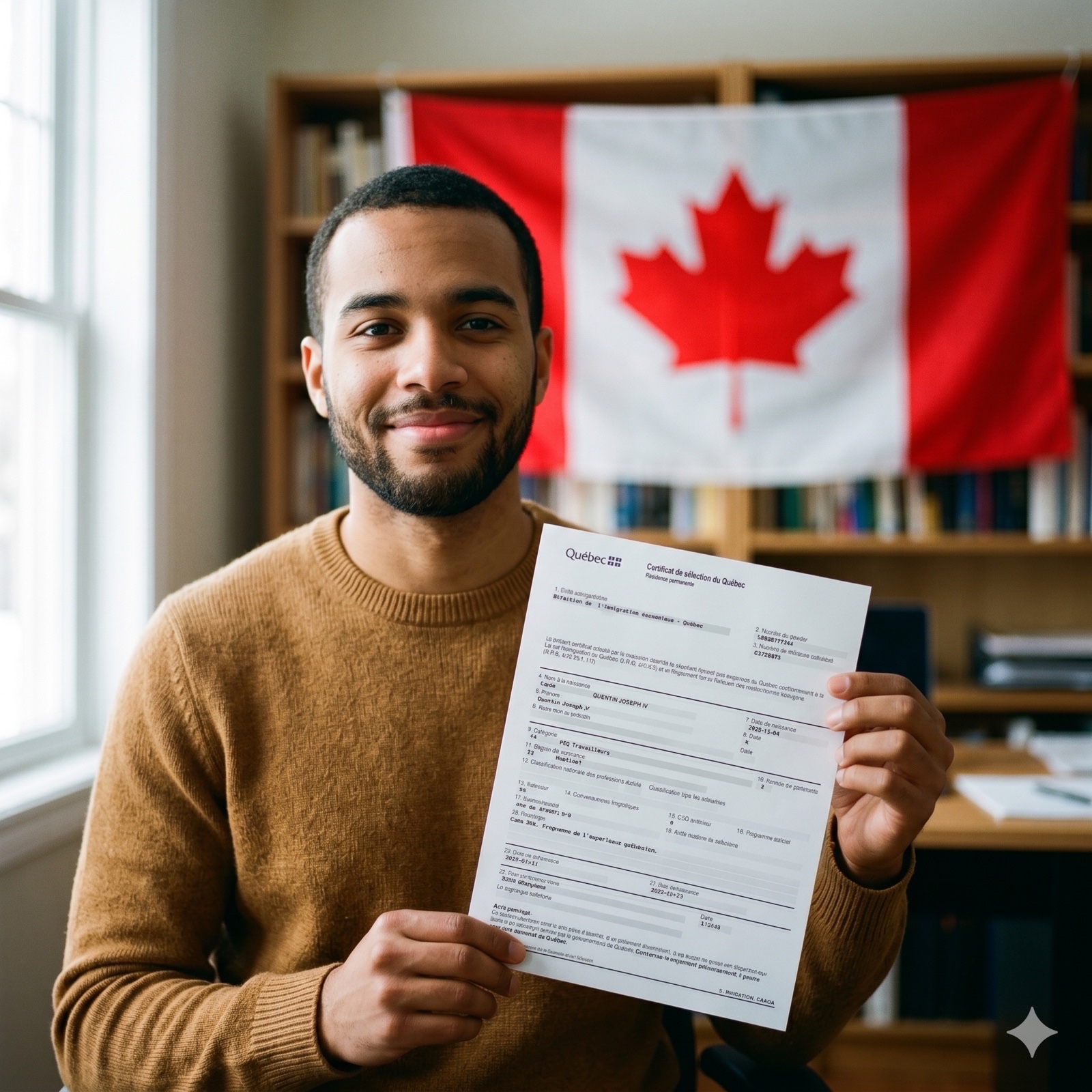
The CSQ — Quebec Selection Certificate
The document by which Quebec selects you for permanent residence — who needs it, and how to obtain it.
The CSQ is the document by which the Quebec government selects you for permanent residence. Do not confuse the CSQ with the CAQ. The CAQ is a temporary authorization to stay, to study or work. The CSQ aims at permanent settlement. One is temporary, the other opens the path to permanent residence. For economic immigration, becoming a permanent resident in Quebec happens in two steps: Selection b...
Canadian Citizenship: Application, Test and Ceremony
The conditions, steps, citizenship test preparation, interview and ceremony to become Canadian.
Canadian citizenship offers: The right to vote in federal, provincial, and municipal elections A Canadian passport — one of the most powerful in the world The unconditional right to remain in Canada Access to certain public sector jobs reserved for citizens You also keep your original citizenship unless your country forbids dual nationality. To apply for citizenship, you must: Be a permanent re...
Filing Taxes in Quebec for Newcomers
Understanding the federal + provincial double return and how to start.
In Canada, all residents must file a tax return every year — even with no work. It's the condition to receive the Canada Child Benefit, the Canada Groceries and Essentials Benefit (CGEB) — which replaced the GST/HST credit in July 2026 — and other benefits. In Quebec, you must file two returns every year: The federal return (T1) — for Canada Revenue Agency (CRA) The provincial return (TP1) — fo...
Quebec Declaration of Birth: Official Site, RAMQ, QPIP
Where to file the declaration of birth (Directeur de l'état civil, online or on paper), the 30-day deadline, then RAMQ, allowances and QPIP.
The birth declaration: Mandatory within 30 days of birth Automatically triggers several documents and programs Online or on paper at the Directeur de l'état civil du Québec Documents received automatically after the declaration: Official birth certificate SIN (Social Insurance Number) for the baby RAMQ enrollment (baby's carte soleil) Triggers the Quebec family allowance and the CCB — QPIP (pai...
Get Your SIN in Quebec: Apply Online or In Person
How to apply for your SIN online or in person upon arrival — the first step in Canada.
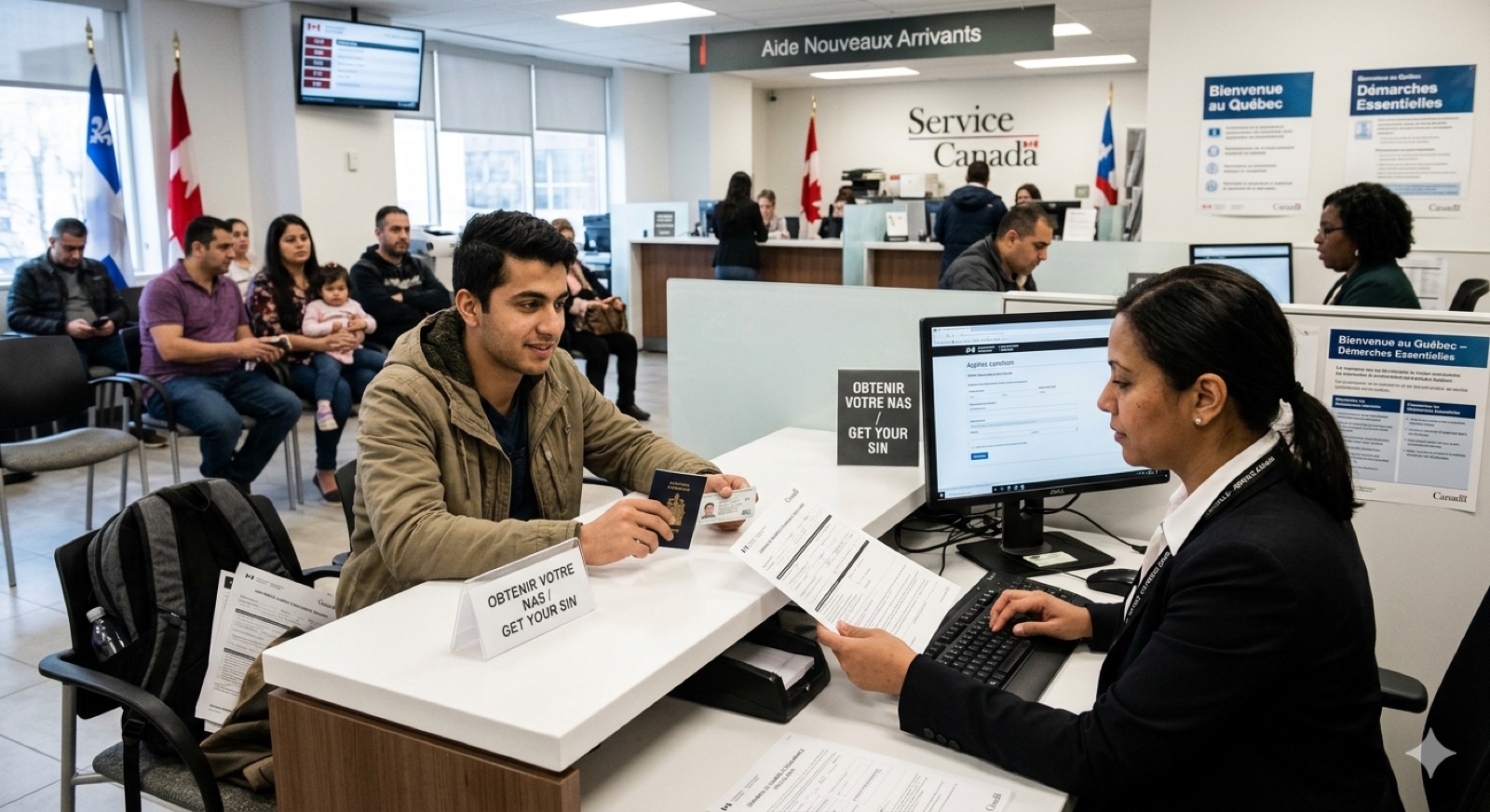
The Social Insurance Number (SIN) is a 9 digit federal government number. It's required to: Work in Canada Receive government benefits Open a savings account or an RRSP Apply within your first days after arrival. It's the very first official step in Canada. Documents to bring: Permanent residents: passport + Confirmation of Permanent Residence (or PR card) Work / study permit: passport + valid ...
First Driver's Licence in Quebec: Courses and Exams
Never held a driver's licence? Here's the full path in Quebec — mandatory driving course, learner's permit, exams and probationary licence.
This guide is for you if you've never held a driver's licence, or if you can't have a foreign licence recognized. That includes young people growing up here, people who have never driven, and newcomers from a country without an agreement with Quebec who didn't hold their licence long enough. You start from zero, through the graduated licensing path. Note: if you already hold a valid licence fro...
Family Sponsorship in Quebec: Bringing Your Loved Ones
Conditions, timelines, and steps to sponsor spouse, parents, or children to Canada.
Conditions to sponsor: Canadian citizen or permanent resident At least 18 years old Residing in Canada (except citizens sponsoring a spouse) In Quebec: dual federal + provincial approval Categories of people who can be sponsored: Spouse, common law partner, conjugal partner Dependent children (generally under 22) Parents and grandparents (limited program with annual lottery) Brother / sister / ...
Applying for a Canadian Passport in Quebec
Conditions, documents, and timelines for your first Canadian passport after citizenship.
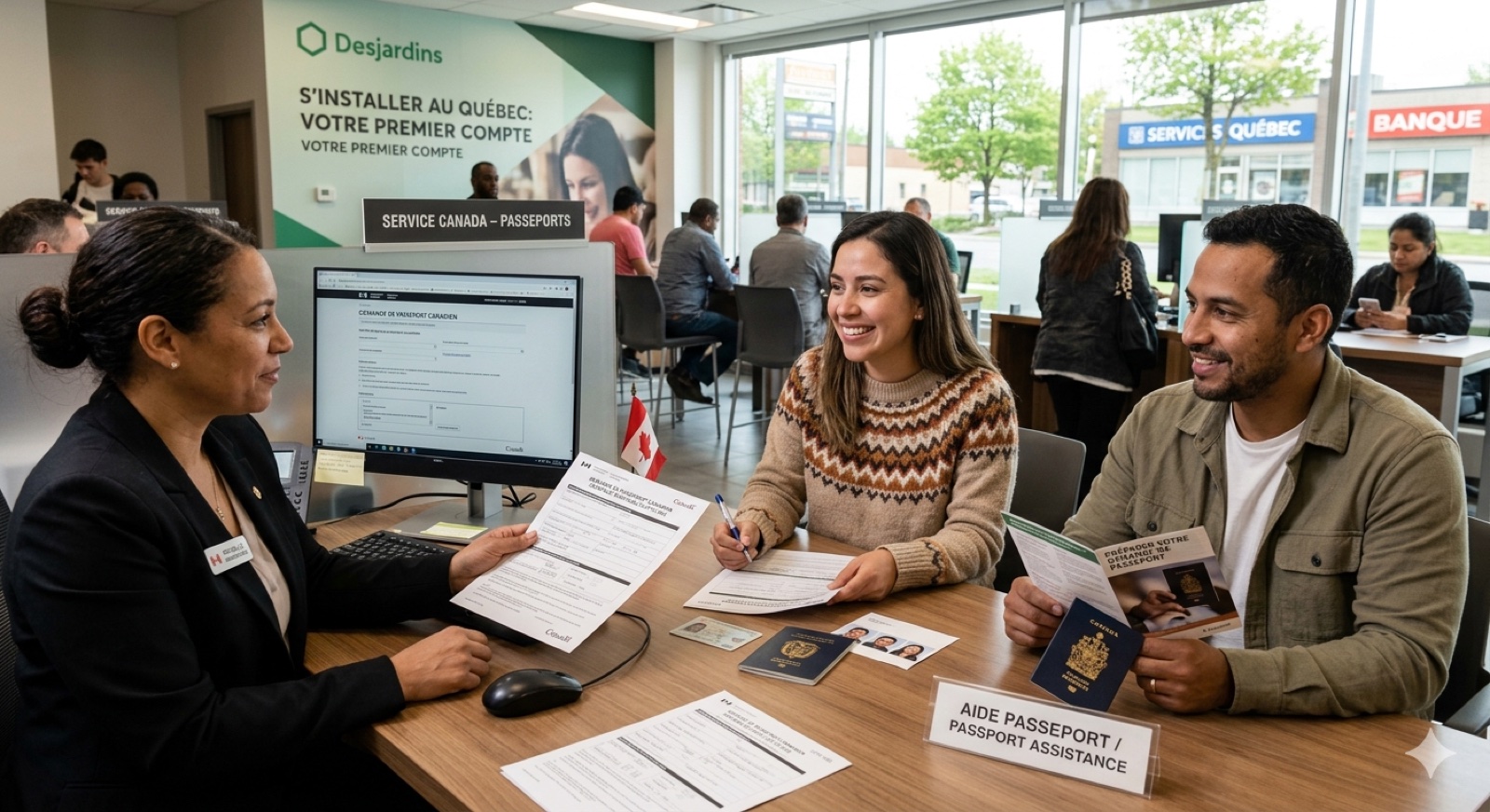
Only Canadian citizens can hold a Canadian passport. Permanent residents: not eligible, they travel with their origin passport + PR card See our if not yet a citizen Required documents: A completed form Citizenship certificate or Canadian birth certificate Photo ID (driver's licence, etc.) 2 passport photos meeting Canadian specifications A guarantor: a citizen who has known you for 2+ years Th...
The CAQ, Study Permit and Student Work in Quebec
The CAQ then the study permit, and the off-campus work rules — hour limit, SIN, risks.
To study in Quebec you need two separate documents, issued by two governments: The CAQ for studies — issued by the Quebec government The study permit — issued by the federal government of Canada The order is fixed: the CAQ first, then the study permit. CAQ for studies Study permit Issued by Quebec government (MIFI) Government of Canada (IRCC) Apply First Second Prerequisite Admission letter fro...
The Work Permit in Quebec: Process, Rights and Recourse
Closed or open permit, the LMIA, the CAQ, your rights as a worker and recourse in case of abuse.
There are two broad categories of work permit: The closed permit — tied to a specific employer The open permit — tied to no employer The open permit is intended, for example, for certain spouses of workers or students, and for graduates holding a post graduation work permit. Closed permit Open permit Authorized employer One only, named on the permit Any employer (with restrictions) Changing job...
PGWP: From Graduation to Permanent Residence
After a Quebec diploma — the post-graduation work permit, Canadian experience, then Quebec selection toward permanent residence.
You are finishing a study program in Quebec. What follows is not a direct jump to permanent residence: it is a sequence, and each step sets up the next. Study in Quebec Obtain a post graduation work permit (PGWP) Build Canadian work experience Be selected by Quebec, which produces the CSQ Finally obtain permanent residence, granted by the federal government This guide explains the logic of that...
Renewing or Extending Your Permit in Quebec
Renewing a study or work permit before expiry, maintained status, and the bridging open work permit while awaiting permanent residence.
A study or work permit has an expiry date. If you stay in Canada past that date, you must renew or extend it. The golden rule: start the process several months ahead, ideally 4 to 6 months before expiry. For a Quebec linked permit, the CAQ is renewed before the federal permit — Quebec first, federal second. Permit type CAQ to renew first? Recommended lead time before expiry Study permit (linked...
Exchange a Foreign Driver's Licence at the SAAQ
How to exchange your foreign driver's licence for a Quebec one after you arrive, and drive in Quebec on an international licence.
The SAAQ is the Société de l'assurance automobile du Québec. It manages driver's licences, vehicle registration, and the public auto insurance plan. All drivers in Quebec must hold a valid licence issued or recognized by the SAAQ. If you are a new resident in Quebec, you can drive on your valid foreign licence for the first 6 months after settling in. After 6 months, you must hold a Quebec lice...
Essential Government Websites in Quebec
The essential Quebec and Canadian government websites: main portals, specialized agencies, online accounts, phone lines and who does what.
Almost all errands pass through an official site. Learning to navigate these sites saves you hours and avoids scams. The 4 main portals: — provincial government — federal government — City of Montreal Your municipality's site (if outside Montreal) Specialized agencies: — health — licence, vehicle — provincial taxes — federal taxes — immigration and citizenship Mon dossier: Mon dossier RAMQ: hea...
Understanding GST and QST in Quebec
GST and QST explained: why the sticker price is never the price you pay in Quebec, the rates, what is taxed and how to calculate the total.
In Quebec, taxes are never included in the displayed price. GST: 5% (federal) QST: 9.975% (provincial) Total added: about 14.975% on top of the displayed price Quick calculation: displayed price × 1.15 approximate price at the register. $20 displayed → $23 $100 displayed → $115 $1,000 displayed → $1,150 Use the for a precise calculation. No taxes on: Basic food: fruits, vegetables, meats, milk,...
Voting in Quebec and Canada: Who Can Vote and How
Who can vote at each level — federal, provincial, municipal and school —, voter registration, and election day.
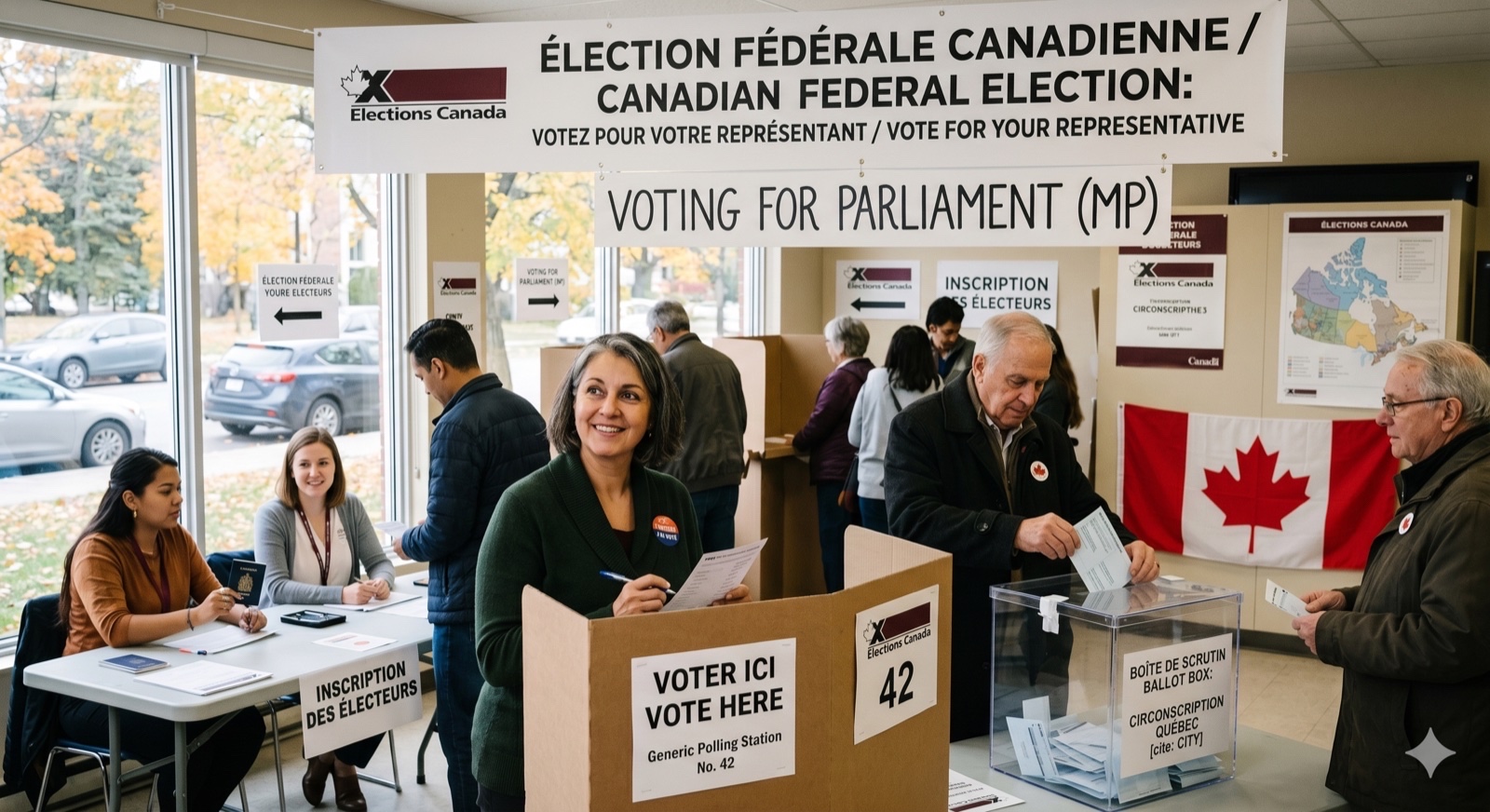
The right to vote in general elections is reserved for Canadian citizens aged at least 18 years old. Permanent residents cannot vote in elections, even after many years in Canada: this is one of the rare differences between permanent resident status and citizenship. The right to vote opens when you , after the oath ceremony. In Canada, you vote at three levels of government, in separate electio...
Health(8)
See all →Seeing a Doctor in Quebec: Family, Walk-in or Online
How to see a doctor in Quebec: family doctor, walk-in clinics, ERs, and telehealth.
To consult for free, you need your RAMQ card. : 3 months for new permanent residents. During this time, get private insurance. For an assigned family doctor, register with the GAMF. Wait time: sometimes several years. In the meantime, use the other options. To register, you need a valid RAMQ health insurance card and must not already have a family doctor. Register or by phone at 1 844 313 2029 ...
Going to the Dentist in Quebec
Dental care in Quebec: what the public plan covers (very little), private insurance, real prices for a check-up or filling, and low-cost options.
RAMQ covers little: Children under 10 — exam, X rays, fillings, simple extractions. Cleaning, scaling and fluoride application are NOT covered, even for children Last resort social assistance recipients — expanded access Adults in general — only hospital based emergencies Everything else — at your expense or via private insurance RAMQ also covers certain specific acts — for example some oral su...
Optometrist and Glasses in Quebec: Costs and Options
Understanding the costs of eye care in Quebec, what RAMQ covers, options for glasses and contacts, and where to find affordable care.
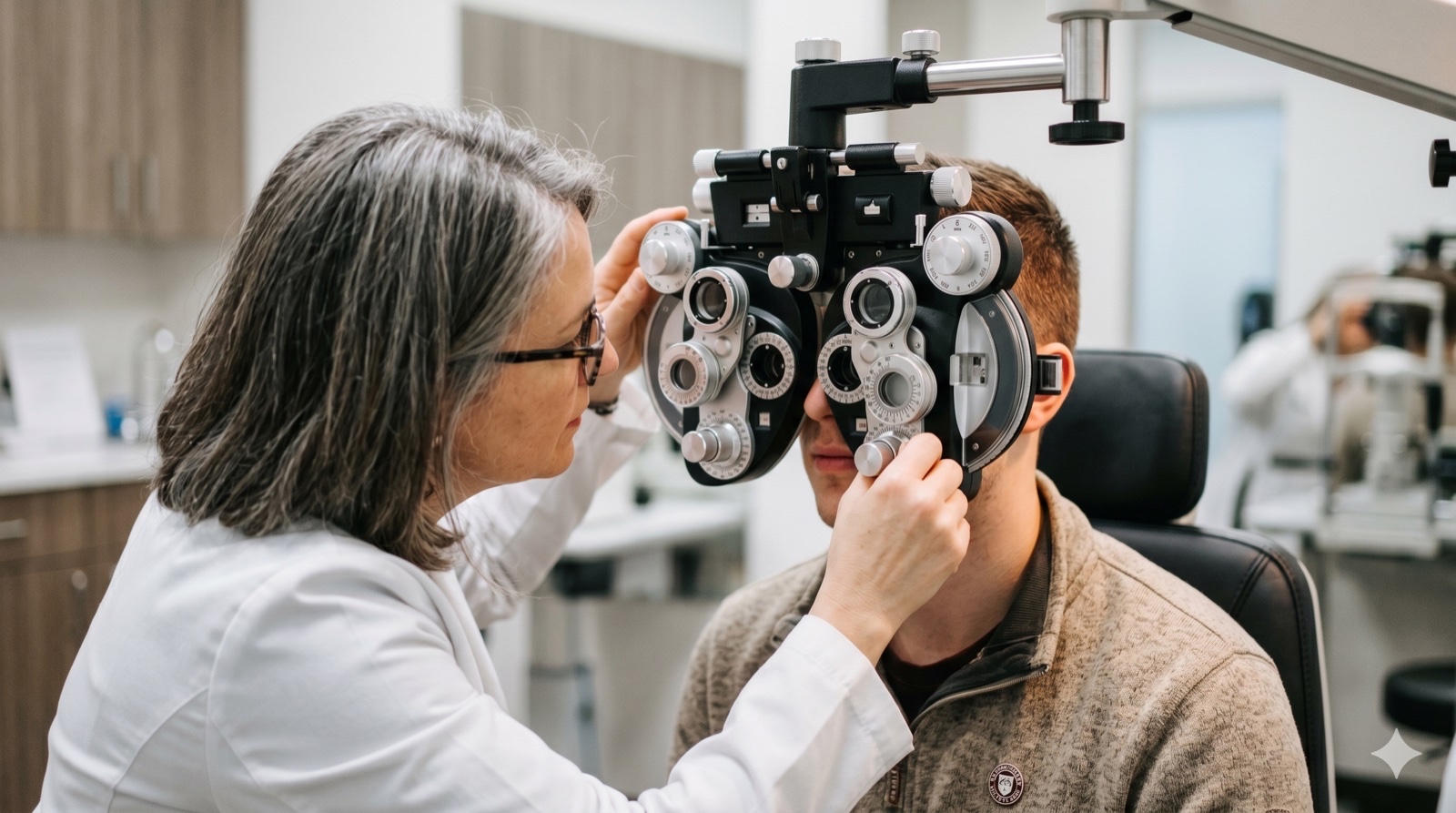
In Quebec, two professionals handle eye health: Optometrist: performs vision exams, prescribes glasses and contact lenses, can diagnose some eye conditions. For routine vision exams and getting a glasses or contacts prescription, you see an optometrist. Ophthalmologist: a medical eye specialist — treats eye diseases, performs surgeries, can also prescribe glasses. For medical issues (cataracts,...
Pharmacy and Prescription Drugs in Quebec
Quebec's public drug insurance (RAMQ), pharmacies, fees and deductibles: how to fill and pay for your prescriptions as a newcomer.
In Quebec, drug insurance is mandatory. Two options: Private insurance through your employer (if offered) → you must use it Public plan through RAMQ (default otherwise) The public RAMQ plan: Monthly deductible: about $21 Coinsurance: 30% of the remaining cost Monthly maximum: about $105 (varies by income) Children and seniors: enhanced coverage An annual premium is also paid through your Quebec...
Register with RAMQ: Get Your Carte Soleil
Register with RAMQ online or by phone and get your carte soleil, step by step. The 3-month waiting period starts the day you register — don't delay.
The RAMQ is the Régie de l'assurance maladie du Québec. Once registered, you receive a health insurance card — also called the carte soleil. This card gives you access to medical care in Quebec. If you are a permanent resident, a Canadian citizen, or hold another status , you are eligible. You must also be present in Quebec at least 183 days per calendar year. The clock starts the day you REGIS...
Mental Health in Quebec: Where to Find Help
Understanding access to mental health care in Quebec, free resources available, how to navigate the system and where to go in a crisis.
Quebec has made significant progress in recent years normalizing mental health care. Many employers offer Employee Assistance Programs (EAPs) including free psychology sessions. Universities and cégeps have free counselling services for students. For newcomers, the immigration process itself — the break from your home country, cultural adaptation, uncertainty, sometimes isolation — is a recogni...
Health Care for Asylum Seekers in Quebec
How to get care without a RAMQ card: the Interim Federal Health Program for asylum seekers, and clinics for people with no coverage at all.
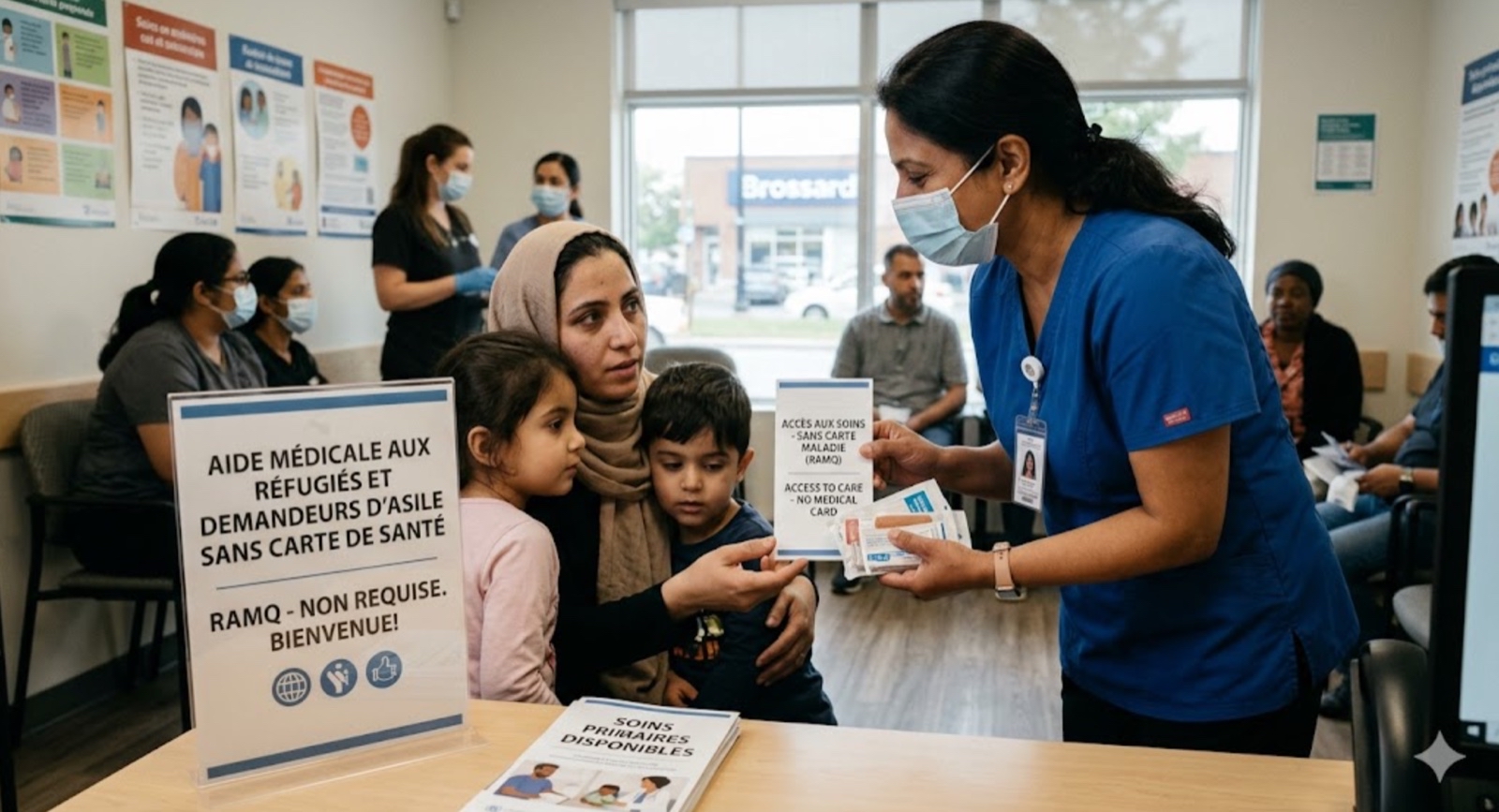
In Quebec, much care runs through the RAMQ health insurance card. But not everyone qualifies right away: asylum seekers, people awaiting status, or those without status may find themselves with no card. If that's you, don't give up on care. There are programs and clinics precisely for you. This guide explains the two main routes: the Interim Federal Health Program for asylum seekers, and clinic...
Recommended Vaccines for Adult Newcomers in Quebec
Which vaccines to check on arrival, where to get them at the CLSC, and why to bring your vaccination record.
People often think vaccines are just for children. In fact, adults need updates too: some vaccines need boosters in adulthood, others are recommended based on age, health or work. For a newcomer, it's wise to take stock on arrival: your original vaccines may not match the Quebec schedule, and some protection may have expired. Good news: in Quebec several vaccines are offered free under the publ...
Services(12)
See all →Apostille and Document Authentication in Quebec
Since 2024, Canada issues apostilles: how to authenticate a Quebec document for use abroad, and recognize a foreign document here.
When an official document must be used in another country — a birth certificate, a diploma, a corporate document — the foreign authority wants to be sure it's genuine. That's the role of authentication. Since January 11, 2024, Canada is part of the Hague Apostille Convention, which greatly simplifies this process between member countries: a single certificate, the apostille, replaces the old le...
Immigration Lawyer or Consultant: Which to Choose?
The only three types of authorized immigration representatives in Canada, how to verify someone is in good standing, and how to avoid scams.
Choosing someone to help with an immigration step is a big decision: a good representative can make the difference in a complex file, while a fake consultant can cost you thousands of dollars and jeopardize your application. The first thing to know: in Canada, only three types of people can represent you for a fee. This guide explains which ones, how to verify, and how to spot scams. In Canada,...
Bankruptcy and Insolvency in Quebec: Your Options
When debt becomes unmanageable: the difference between a consumer proposal and bankruptcy, and who to talk to.
Falling into debt can happen to anyone, especially early in life in Quebec: underestimated cost of living, job loss, a family emergency. If you can no longer pay your debts, know two things. First, you're not alone, and it's not a crime. Second, Canadian law provides regulated solutions for a fresh start, so you're not a prisoner of your debts for life. This guide explains the two main ones — t...
Home Internet and TV in Quebec
Home internet and TV in Quebec: comparing Bell, Vidéotron and the smaller providers, choosing a plan and avoiding contract pitfalls.
The Quebec market: Bell and Vidéotron: major players, available everywhere Cogeco: certain regions EBOX, Fizz, VMedia: cheaper alternatives, same infrastructure Recommended speed by use: 100 Mbps: 1–3 people, normal use 300–500 Mbps: 4+ people, gaming, intensive remote work 1 Gbps: rarely a residential necessity Typical prices for 100 Mbps: Bell, Vidéotron, Cogeco: $70 to $90/month EBOX, Fizz, ...
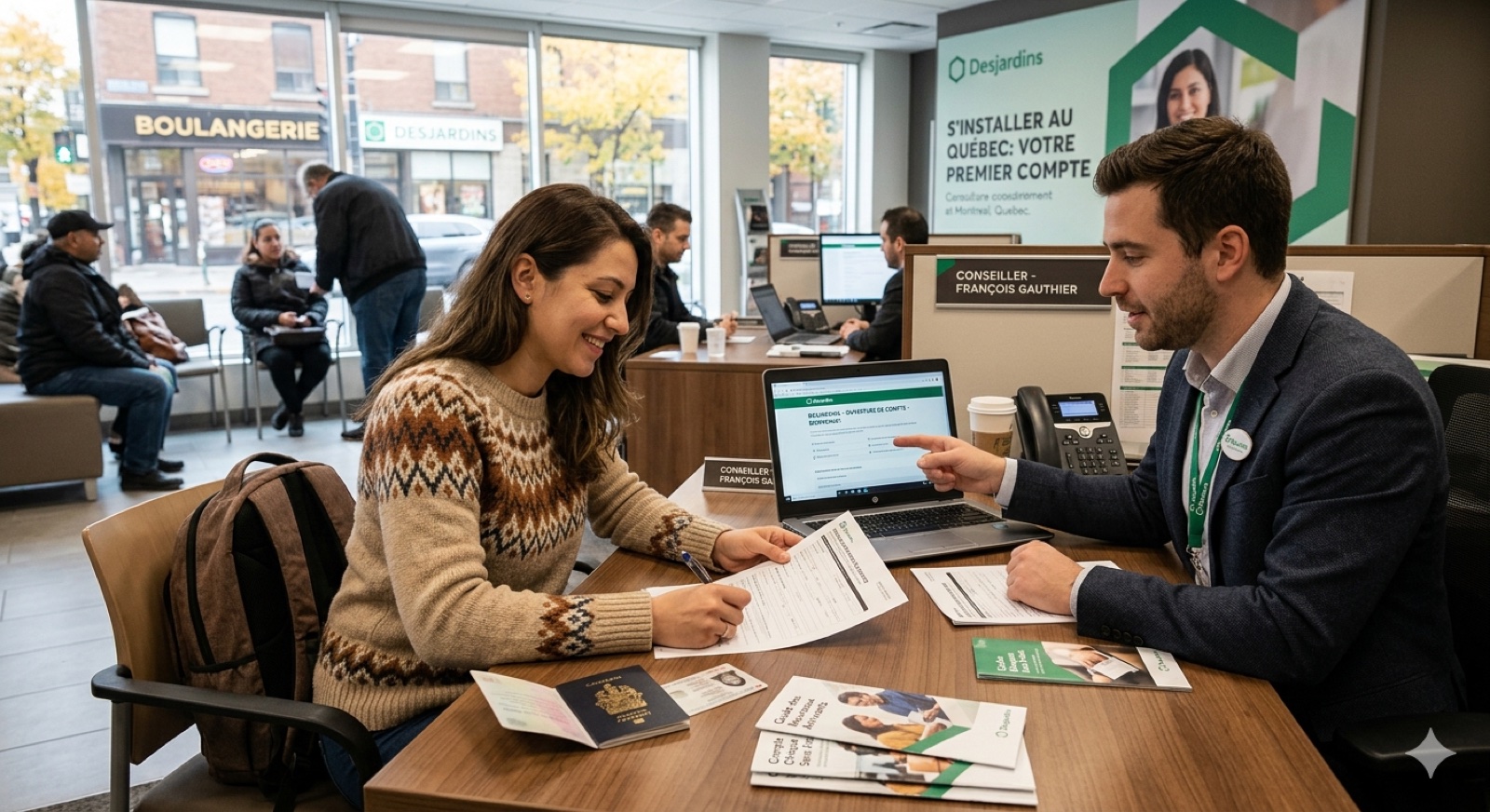
Open a Bank Account in Quebec: Chequing Account
Comparison of major banks and the steps to open your first chequing (current) account in Quebec as a newcomer.
In Quebec, you need a bank account to receive your salary, pay your rent, and use a debit or credit card. Do this in your first week. The main banks: Desjardins — the largest Quebec cooperative Banque Nationale — Quebec bank, present everywhere RBC, BMO, TD, Scotia — major national Canadian banks All major banks offer a newcomer package, which usually includes: A chequing account with no monthl...
Hydro-Québec: Open Your Electricity Account
How to open your Hydro-Québec account online in minutes: documents needed, security deposit, and deadlines before move-in.
In Quebec, electricity is never automatically included in a rental unit. As soon as you sign a lease, you must open your own account with Hydro Québec — the only company that distributes electricity in the province. Without this account, the service won't be in your name, and you risk having no power on move in day. In Quebec, it's almost always the tenant who opens the Hydro Québec account in ...
Choosing a Phone Plan in Quebec
Choosing a phone plan in Quebec: the big carriers, the budget brands, Fizz, how much data you need and typical plans compared by profile.
In Quebec, mobile plans are among the most expensive in North America. Choosing well can save you several hundred dollars per year. Three carriers dominate the market: Bell, Rogers, Telus — excellent coverage everywhere, high prices, reliable Each major carrier also owns a budget brand using the same network: Bell → Virgin, Lucky Mobile Rogers → Fido, Chatr Telus → Koodo, Public Mobile Same cov...
7 Things to Do in Your First Week in Quebec
Your first week in Quebec, step by step: SIN, temporary housing, bank account, phone plan, OPUS card, RAMQ registration and free French classes.
The Social Insurance Number (SIN) is the first step. No SIN, no legal work. Service Canada — free, often done the same day. Book temporary housing for 2 to 4 weeks. That gives you time to visit apartments in person without pressure. Before choosing your city or neighbourhood, compare the cost of living with our — the differences between Montreal, Quebec City and the suburbs can be significant. ...
RRSP, TFSA, FHSA, HBP & RESP Explained Simply
RRSP, TFSA, FHSA, HBP and RESP explained simply: what each account is for, which to open first and how the government helps you save.
RRSP, TFSA, FHSA, HBP, RESP: five acronyms you hear everywhere in Canada without anyone explaining them. They aren't investments in themselves — they're registered containers with the government in which you put your savings to pay less tax — and, in the case of the RESP, to receive grants for your children's education. The money inside can be in a savings account, GICs, funds, depending on wha...
Certified Document Translation in Quebec
When and how to have an official document translated by an OTTIAQ-certified translator for your immigration and settlement steps.
For many steps in Quebec and Canada — immigration, diploma recognition, school registration, marriage — you'll be asked to provide your documents in French or English. But beware: you may not translate your own documents, and neither a family member nor your representative or consultant — even one who is a lawyer, notary or translator — may do it for you ( ). A friend who is neither can: they m...
How Much Money to Bring to Canada (and Transfer It)
Cash, bank transfer, or transfer services: how to bring your funds to Canada on arrival, and the mandatory border declaration.
Arriving with the right mix of funds makes a real difference in your first weeks. Too much cash on you is a loss or theft risk; leaving everything in your account abroad leaves you without immediately available money before your Canadian account is open. The right approach spreads your funds across several complementary methods. Keep only enough cash on you to cover your very first days — trans...
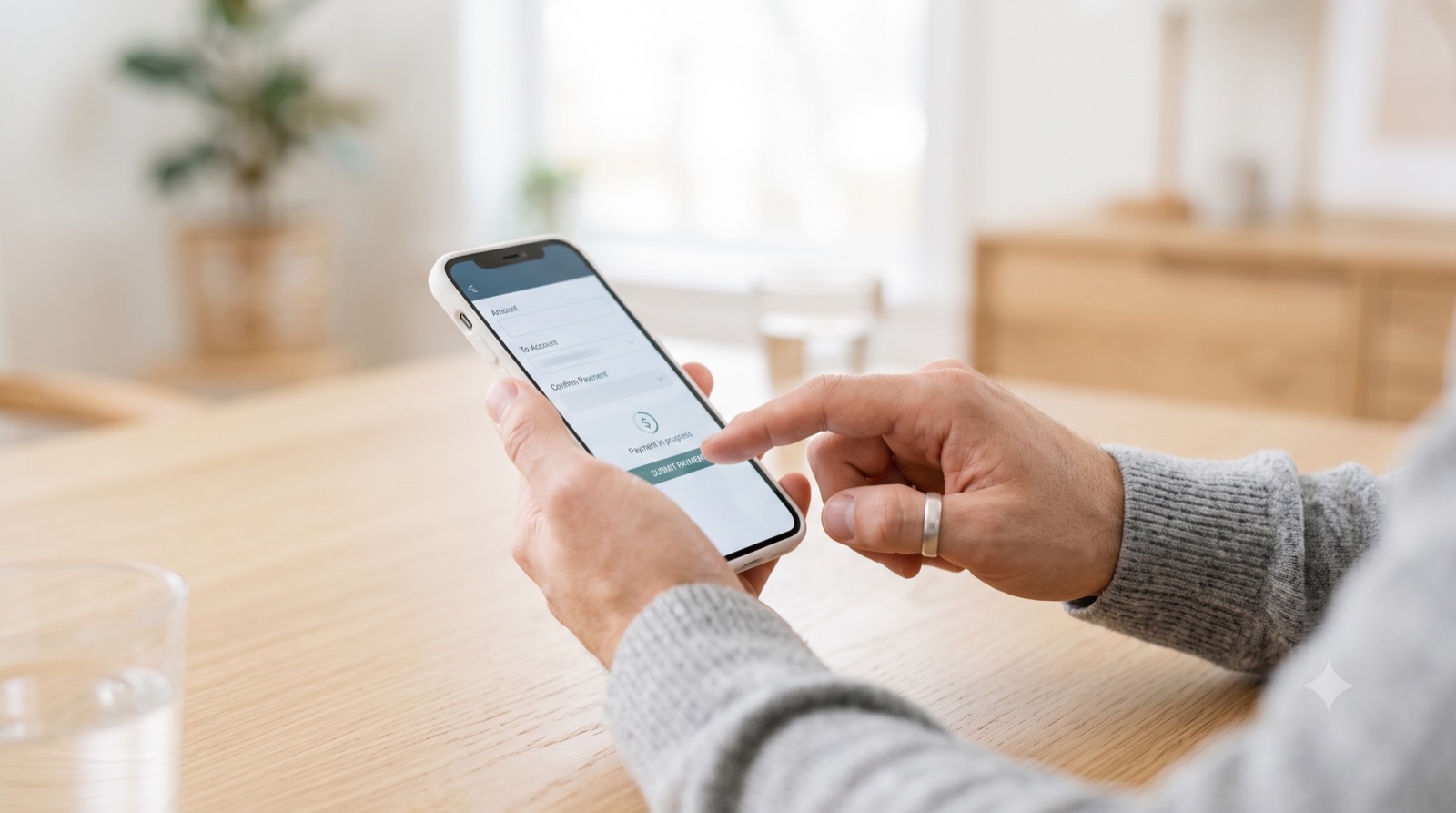
Interac e-Transfer and Online Bill Payment in Quebec
How to send money by Interac e-Transfer and pay your bills directly from your online bank account.
In Canada, almost nobody talks about a “bank transfer” between individuals — people simply say “send an Interac.” Interac is the Canadian interbank payment network that connects every financial institution in the country. It serves two distinct purposes: sending money to another person by email or text, and paying your bills directly from your account, without ever writing a cheque. From your b...
Work(11)
See all →Employment Insurance (EI) in Quebec
Employment Insurance (EI) in Quebec: who qualifies, how much you receive, how long, and the steps to apply after losing your job.
Employment Insurance (EI) is a federal program funded by withholdings on your paycheck. Paid for: job loss with no fault, illness, caregiver, and more. Main conditions: Insurable hours: between 420 and 700 in the last 52 weeks (varies by region) Have lost your job with no fault (layoff, end of contract...) Be ready and able to work Actively looking for a job The benefits: 55 % of your average s...
Understanding Your Pay Stub in Quebec
Decoding your pay stub: gross, net, federal and provincial deductions.
Two key terms: Gross salary: before deductions Net salary: what lands in your account The gap: about 25 to 35 % in Quebec. Federal deductions: Federal income tax (varies with income) EI: 1.30 % in Quebec (a reduced rate, since QPIP covers parental leave) CPP: in Quebec, replaced by the QPP (see below) Provincial deductions specific to Quebec: Provincial income tax (higher than elsewhere in Cana...
Writing a Quebec-Style Résumé
Writing a Quebec-style résumé: the expected format and structure, what to leave out (no photo, no age) and the cultural codes recruiters look for.
The basic format: 1 page for young professionals, 2 pages maximum for experienced profiles Sober font: Calibri, Arial, size 10 or 11 No bright colors, no backgrounds, no decorative frames Do NOT include: No photo No date of birth or age No marital status No nationality No religion or origin This is protected by Quebec's Charter of Rights. Recommended structure, in this order: 1. Name + contact ...
Succeeding at a Job Interview in Quebec
Preparation, cultural codes, and classic questions of the Quebec interview.
Before the interview, read: The company website (« About » page) Recent news (Google News) The LinkedIn profile of the company and your future manager Note 2 or 3 points that genuinely interest you about them. Simple rule: one notch above the company's usual style. Standard office: dress pants + shirt or blouse Banking, law, management: suit and tie or tailored suit Creative or tech: outfit tha...
Quebec Labour Standards: Your Rights as an Employee
Minimum wage, hours, overtime, vacation, leaves and end of employment — what the law guarantees almost every employee in Quebec.
In Quebec, the Act respecting labour standards sets the minimum conditions almost every employer must respect: wages, hours, vacation, leaves, end of employment. It's a floor: your employer can offer more, never less. Most employees are covered — full time, part time, paid hourly, on commission or by output. The body that enforces these rules is the CNESST. Key point: you cannot waive a labour ...
Recognizing Your Foreign Diplomas in Quebec
Comparative evaluation, professional orders, and steps to validate your qualifications.
Without recognition, you risk underemployment. Recognition validates your real qualification level. The MIFI comparative evaluation compares your foreign diploma to Quebec diplomas. Many employers and professional orders require it. 46 professional orders regulate professions in Quebec, including: Doctors, nurses, dentists, pharmacists Engineers, architects, surveyors Accountants (CPA), lawyers...
Professional Networking in Quebec: LinkedIn and Events
A large share of Quebec jobs are found through networks, not posted ads. Here's how to build yours — LinkedIn, informational interviews, events and mentorship.
Many newcomers send out dozens of résumés with no reply and conclude the market is closed. The real explanation is often different: in Quebec, a large share of positions are filled through networks and referrals — often before they're even posted. This is the hidden job market. An employer who receives a candidacy referred by a trusted person looks at it differently. Networking doesn't mean kno...
The Quebec Pension Plan (QPP/RRQ) Explained
Quebec's public pension plan in plain language: who contributes, how much, what you'll receive, when to start, and the disability and survivor benefits.
Retirement income in Canada rests on three layers. The first, Old Age Security (OAS), is federal: from age 65, based on years lived in Canada, even without ever working. The second, in Quebec, is the QPP/RRQ: mandatory, tied to your earnings — the subject of this guide. The third is your own savings: RRSP, TFSA, employer pension plan. Layer Managed by In short 1st — Old Age Security (OAS) Feder...
Finding a Job in Quebec
Finding your first job in Quebec: the SIN, a Quebec-style résumé, where to look, job platforms compared, free support programs and the interview.
To work legally in Quebec, you must first have your Social Insurance Number (SIN). Without this number, no employer can hire you. If you don't have it yet, see our . The Quebec résumé is different from those in other countries: Short: 1 to 2 pages maximum No photo, no age, no marital status, no nationality Includes only: name, contact info, education, professional experience, skills Tailored to...
Working in Quebec Without Speaking French
Working in English in Quebec: which sectors and cities hire without French, what the law allows and strategies to get your first job.
French is the official language of work in Quebec. Bill 96 strengthened its use. But English language jobs exist, especially in Montreal. Some sectors regularly hire in English in Montreal and its western suburbs: Information technology (IT / tech) — startups, services firms, international product teams. Aerospace (Bombardier, Pratt & Whitney, CAE) — global English language supply chain. Video ...
Self-Employed in Quebec: Registering and Invoicing
Working for yourself or starting a small business? Here's when to register, the GST/QST threshold, and how to handle your self-employed taxes.
You're self employed if you offer your services on your own account, with no employer relationship: consulting, trades, creative work, delivery, digital platforms, a small service business. The difference from an employee is real: no one withholds tax or contributions from your income, you partly set how you work, and you carry the risk and the expenses. That freedom comes with responsibilities...
Resources(13)
See all →ACEF: Free Budget Help in Quebec
ACEFs across Quebec offer free budget consultations, debt help and consumer-rights defence.
When money is tight, when you feel overwhelmed by bills, or when you no longer know how to build a budget in a new country, there's free, judgment free help: ACEFs. An ACEF (association coopérative d'économie familiale) is a community organization specialized in personal finances and consumer rights. There's one in almost every region of Quebec. They help you build a budget, understand your deb...
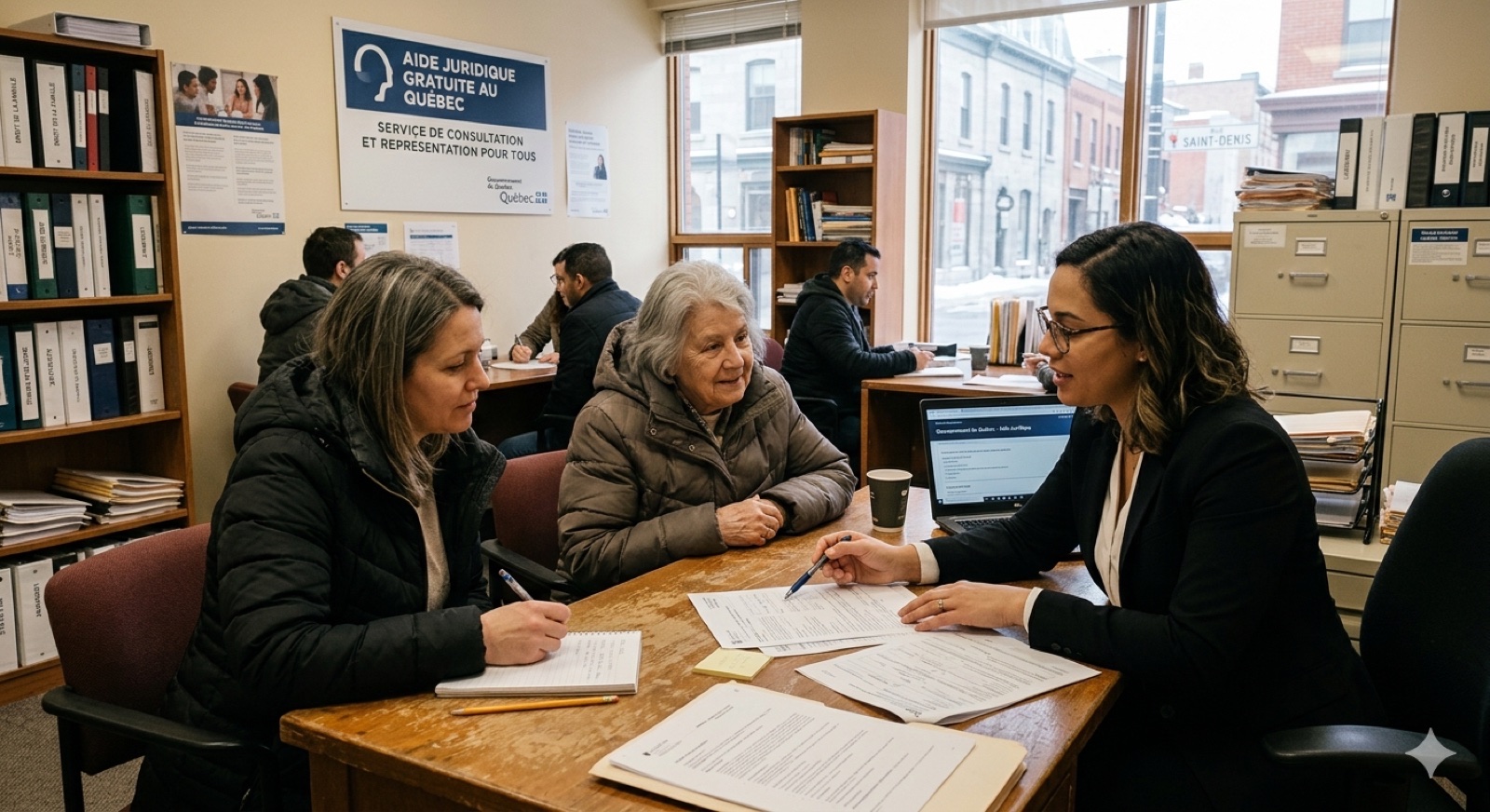
Free Legal Help in Quebec: Legal Aid and Clinics
Where to find free legal advice in Quebec: legal aid, lawyer clinics, Justice Pro Bono and free lawyers for newcomers.
Several free or low cost legal resources exist in Quebec — from legal aid to free legal advice and free lawyer consultations. Before paying a lawyer, explore these options. Legal aid is managed by the Commission des services juridiques. Lawyers paid by the government Eligibility based on your income Show up with proof of income Legal aid works in two tiers. The free tier covers your fees in ful...
Emergency Help in Quebec: Money, Housing, Food
What to do and who to call when everything collapses — the three numbers that unlock help, no status or paperwork needed.
If you're reading this in a moment of panic, start here. Three numbers cover almost every emergency in Quebec — all free, confidential, and requiring no immigration status. 911 — immediate danger: violence, injury, fire, a threat to your life or someone else's. 811 — health and psychological distress: press 1 for Info Santé, 2 for Info Social, which gives psychosocial crisis support, day and ni...
Family Allowances in Quebec and Canada: CCB and QFA
Financial aid for families with children: CCB, Quebec family allowance, and more.
In Quebec, families with children receive two stackable allowances: The Canada Child Benefit (CCB) — federal The Quebec Family Allowance — provincial, paid by Retraite Québec The CCB is a monthly and non taxable amount paid for each child under 18. The amount depends on your net family income. Check current figures on the Canada Revenue Agency website. The Quebec Family Allowance is added on to...
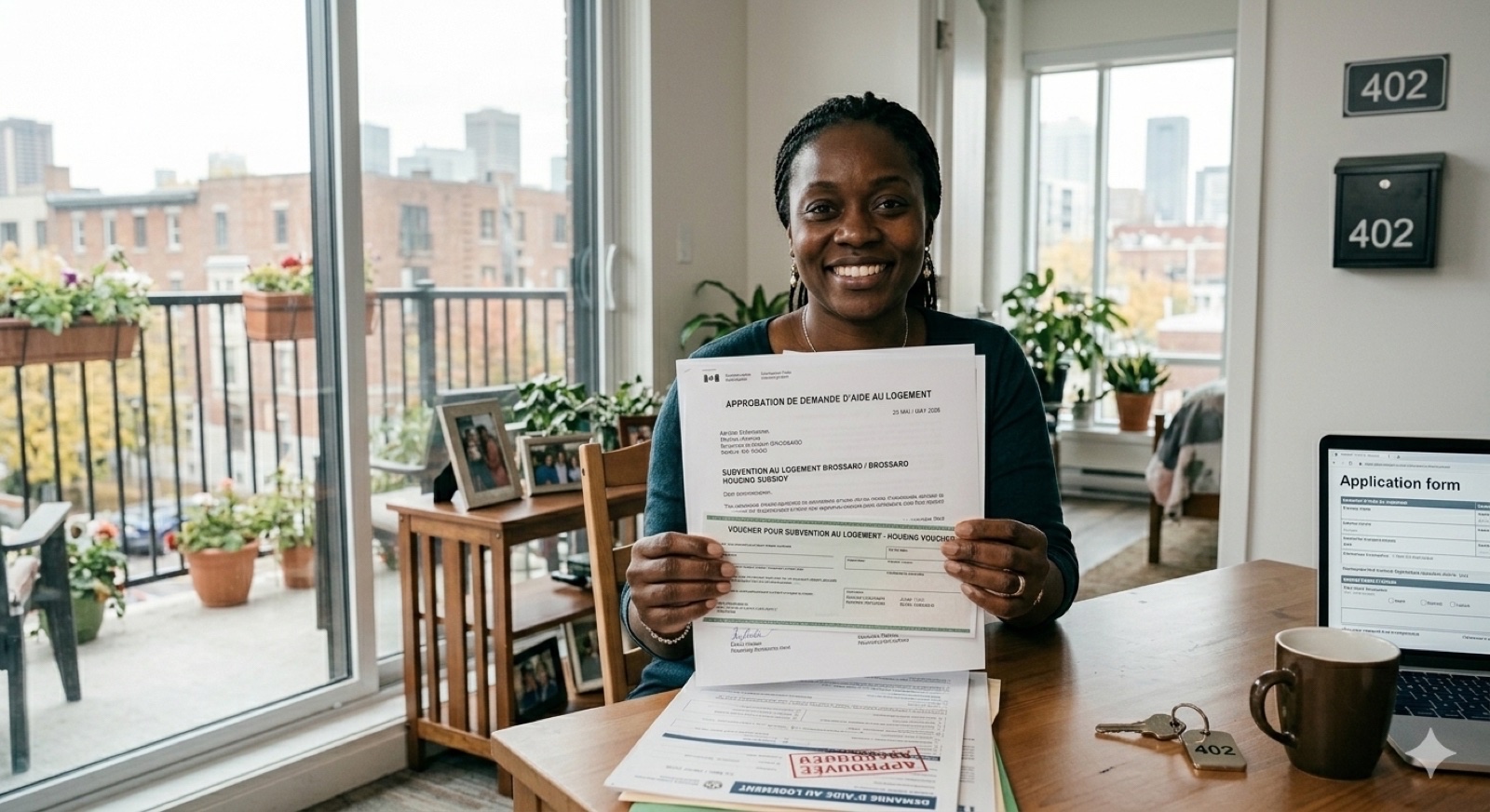
Revenu Québec Shelter Allowance: A Monthly Subsidy
Revenu Québec's Shelter Allowance: who qualifies, how much you can receive each month and how to apply, step by step.
The Allocation logement is a provincial financial aid for low income individuals and families who spend a disproportionate share of their budget on housing. The program falls under the Société d'habitation du Québec (SHQ), but Revenu Québec is the one that manages it and pays it out. Eligible renters (and some homeowners) can receive a monthly maximum amount — verify the current maximum and thr...
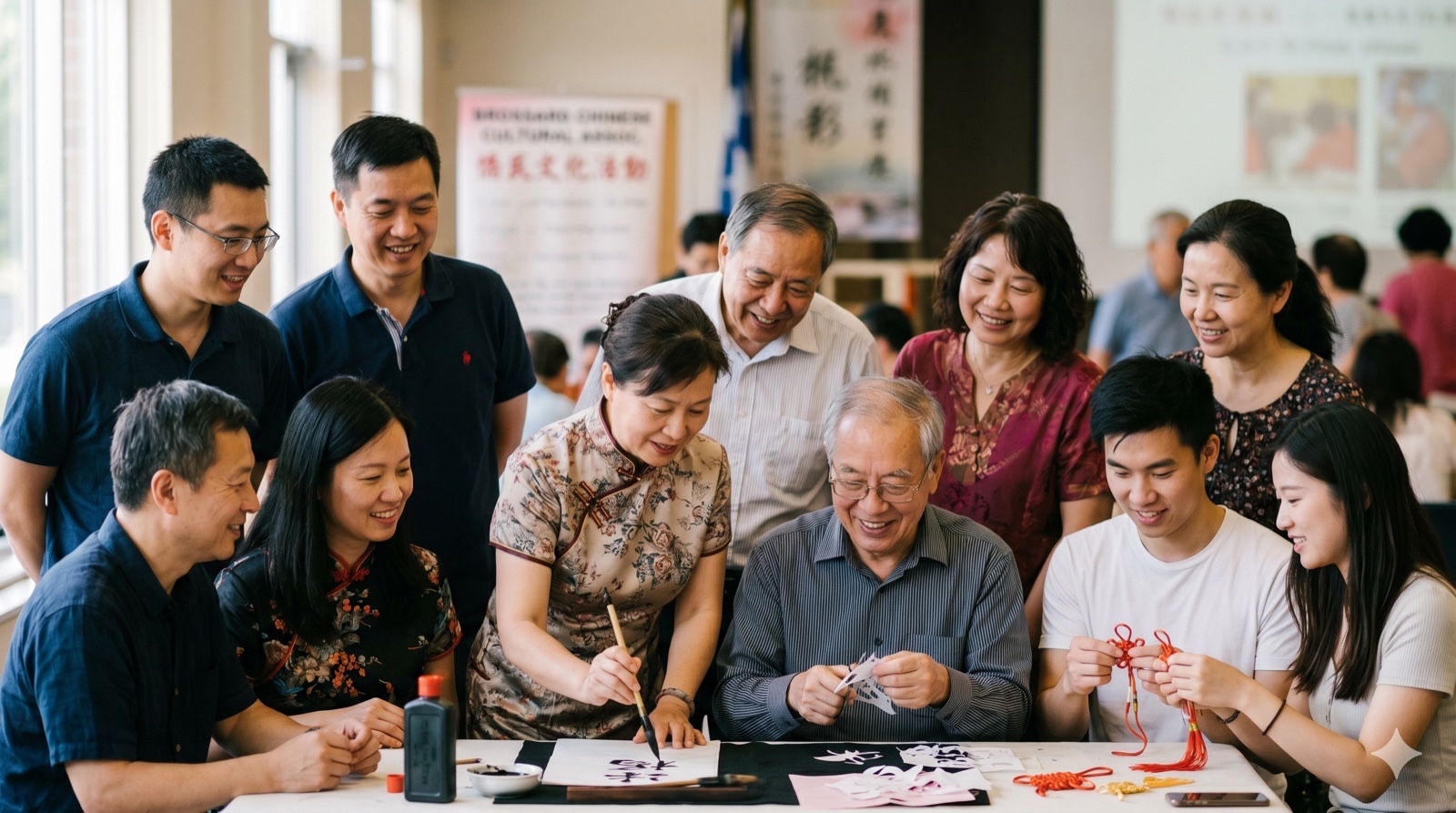
Cultural Associations for Immigrants in Quebec
Cultural associations, community centres and diaspora groups are often the first gateway into Quebec society. A guide to finding them and making the most of them.
For most immigrants, the first weeks in Quebec feel the same: an apartment to furnish, administrative steps to complete, and a loneliness that surprises even those who anticipated the change. This is normal. The social network rebuilds itself. Cultural and community associations exist precisely to accelerate that rebuilding. They're spaces where your first language is spoken, where others have ...
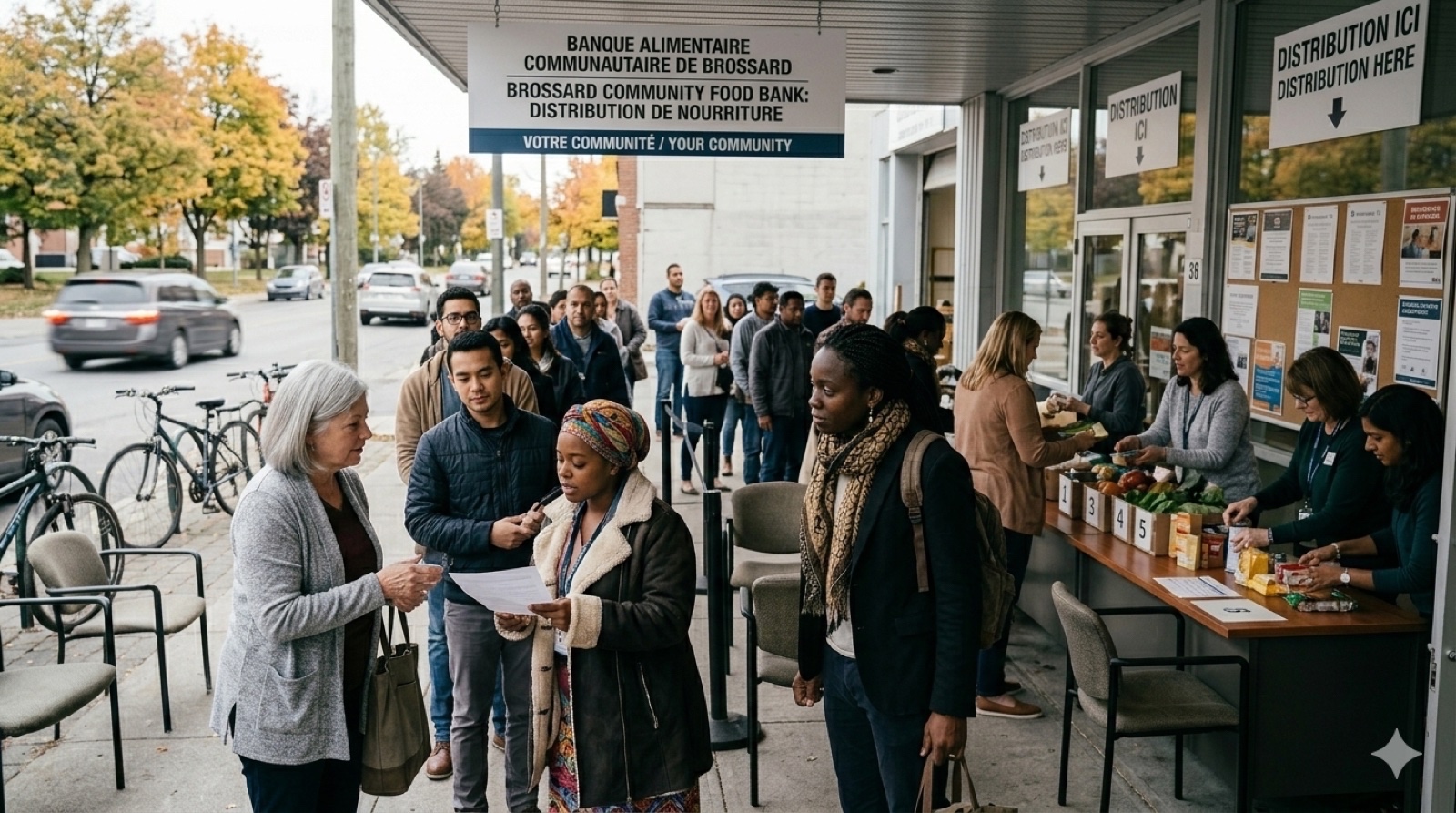
Food Banks in Quebec: Who Can Go and How to Find One
The provincial network, no-shame welcome, and the 19 regional Moissons: your map to free food assistance.
In Quebec, hundreds of thousands of people use a food bank each month. Students, families with children, minimum wage workers, seniors, newcomers, people between jobs. Going for help is not a sign of failure — it's exactly why the network exists. The organizations distributing food assistance do so without judgment and without questioning your right to eat. Most ask for no proof of immigration ...
Volunteering in Quebec: How to Get Started
Volunteering in Quebec: why it helps you integrate, where to find opportunities, the easiest fields to start in and how to list it on your résumé.
Volunteering plays an important role in Quebec society. Tens of thousands of non profit organizations, school committees, sports federations, food banks and newcomer support organizations run thanks to volunteer work. For a newcomer, volunteering offers several simultaneous benefits: Practice French in a real, supportive environment Build a local network in Quebec — often the main barrier to em...
Subsidized Daycare in Quebec: How to Get a Spot
The three kinds of subsidized spots, the reduced daily rate, and how to register on the government's single portal.
In Quebec there are two big worlds of childcare, and the difference is huge for your budget. A state subsidized spot costs you a small daily rate set by the government — the same everywhere. A non subsidized spot, in a private daycare, costs you full price — often several dozen dollars a day — but you recover part of it through a refundable tax credit from Revenu Québec. Subsidized spots are in...
Crisis Lines in Quebec: Suicide, Distress, Violence
Every life-saving number, sorted by situation — free, confidential, 24/7, often multilingual.
If you, or someone near you, are in immediate danger — a suicide attempt in progress, physical violence, serious injury — call 911 right now. It's free, works from any phone even with no plan, and has no connection to your immigration status. Don't hesitate out of fear of bothering anyone or of consequences: that's exactly what the number is for. The listening lines below are for distress, supp...
Emergency Shelters and Housing in Quebec
Where to sleep safely tonight: finding a shelter for your situation, what to expect, and how to move out of the emergency.
If you have nowhere to sleep tonight, the fastest and safest way is to dial 211. An agent identifies the nearest shelter for your situation — single man, single woman, family, youth — and tells you how to get there and what time to show up. 211 is free, confidential, in 200+ languages, day and night. If you're in immediate danger — outside in extreme cold, ill, threatened — call 911. If you're ...
Community Resources for Newcomers in Quebec
Organizations, food banks, thrift stores, and free services across Quebec.
In Quebec, community organizations offer for free: Administrative accompaniment Informal French classes Food aid and clothing Childcare and family support Psychological support and accompaniment Some specialized organizations for immigrants: In Montreal: CARI Saint Laurent, PROMIS, Hirondelle, COFFRET, CSAI In Quebec City: Centre Multiethnique de Québec In Sherbrooke: Service d'aide aux Néo Can...
Domestic Violence in Quebec: Finding Help
Recognizing abuse, free shelters, and the truth about your immigration status if you leave.
If your safety or your children's safety is threatened right now, call 911. The police will respond, regardless of your immigration status and regardless of what you may have been told. To talk to someone, be heard, assess your situation or find a shelter spot, call SOS violence conjugale at 1 800 363 9010: free, confidential, anonymous and bilingual, 24/7. Workers can even call a shelter for y...
Education(7)
See all →Free Homework Help for Kids in Quebec
Where to find free homework help — Alloprof, libraries and community groups — when you can't help in French.
Many newly arrived parents feel guilty about not being able to help their child with homework in French, especially while learning the language themselves. Good news: in Quebec there's a real network of free homework help, built for the local school curriculum. Your child can get help from teachers, online or in person, at no cost. Your job isn't to know the answer — it's to connect your child ...
Enrolling Your Child in a Welcome Class in Quebec
How to enrol a non-francophone child in Quebec school and access welcome and French-support services.
When a child who doesn't yet speak French arrives in Quebec, the school doesn't leave them to fend for themselves in a regular class. It offers welcome and French support services — often in what's called a classe d'accueil (welcome class). There the child learns French intensively and gradually integrates into Quebec school life, until they can follow regular instruction in French. Depending o...
Choosing an Elementary School in Quebec
Choosing and enrolling your child in a Quebec elementary school: French or English public, private, enrolment deadlines and parents' rights.
Quebec's school system is divided into school boards serving specific geographic territories. There are two major public networks: French language network — the largest, accessible to all residents English language network — accessible only under specific eligibility conditions (see below) Elementary school in Quebec spans 6 years (Grades 1–6), for children approximately 6–12 years old. Compuls...
Learn French for Free with Francisation Québec
Free French courses, a financial allowance, and online registration: everything about Francisation Québec for newcomers.
Francisation Québec is the government service that groups together all free French courses offered to immigrants. It was created in June 2023 by the Ministère de l'Immigration (MIFI). It is today the only official portal to register for a French course in Quebec. A useful distinction so you don't get lost: the MIFI and Francisation Québec are not the same thing. The MIFI is the ministry — the g...
Practicing French in Quebec
Free courses, conversation circles, apps, media — where to go and how to start to improve your French.
Learning French in Quebec isn't about signing up for one course and waiting. It's multiplying your contacts with the language in every possible situation. This guide gathers five families of resources, from the most formal — free government courses — to the most informal — radio in the background while cooking. All are free or very low cost. But before going to explore others' offerings, start ...
Quebec's School System
From primary to university, understanding levels and choices for your kids.
Structure from primary to university: Primary: 6 years (Grades 1 to 6, 6 to 12 years old) Secondary: 5 years (Sec. 1 to 5, 12 to 17 years old) CEGEP: 2 or 3 years ( 17 to 19 years old) University: bachelor's 3 years, master's 2 years, doctorate 3 5 years The diagram below shows these pathways, plus the entry points for adults. Mandatory and free until age 16 Public school: free (only material a...
Quebec administrative vocabulary
The technical words you'll hear at RAMQ, SAAQ, the bank — so you're never caught off-guard.
When you arrive in Quebec, even with good French, administrative counters can be destabilizing. The clerk speaks quickly, uses technical words, and assumes you understand. This guide gathers the vocabulary for the five situations you'll meet earliest: RAMQ, the bank, the lease, SAAQ, and immigration. Every term below is also indexed on , with IPA pronunciation and audio, gathered with terms fro...
Housing(9)
See all →Buying a Home in Quebec
Down payment, mortgage, broker — basics for going from renter to owner.
Minimum down payment: Under $500,000: 5% minimum $500,000 to $1.5M: 5% on the first $500K, 10% on the rest Over $1.5M: 20% minimum < 20% down: mortgage default insurance is mandatory (CMHC/Sagen) Mortgage pre approval: Before you shop for a home Tells you how much you can borrow Locks the rate for 90 to 120 days Strengthens your offer to sellers Estimate your monthly payments by price, down pay...
Home Insurance in Quebec
Home and tenant insurance in Quebec: why you need it, what it covers, how much it costs and how to choose a policy as a renter or owner.
Home insurance covers: Personal belongings (furniture, electronics, clothes) Theft, fire, water damage Civil liability (a visitor's injury, damage at a neighbour's) Renter vs owner: Renter: your landlord insures the building; you insure your belongings ($15 30/month) Owner: you insure everything ($50 150/month depending on value) A mortgage almost always requires insurance In Quebec: Many landl...
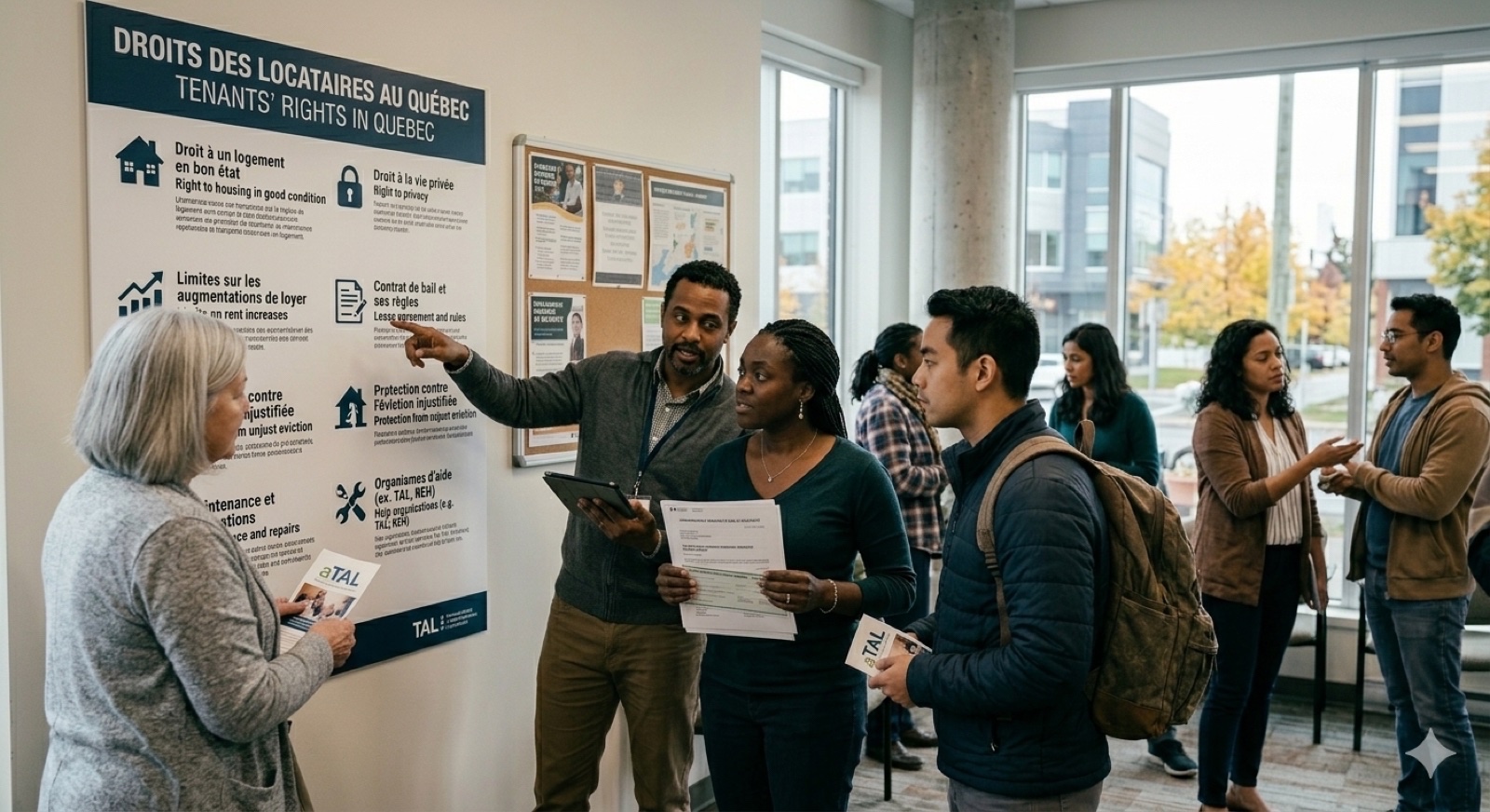
Tenant Rights in Quebec: What the Law Gives You
Rent increase, eviction, repairs: your recourse when something goes wrong.
In Quebec, the law strongly protects tenants. A landlord cannot evict you because they found a better tenant, raise the rent freely, or ignore an urgent repair. Many of these rights are automatic: they apply even if the lease does not mention them, and even if you signed a paper saying otherwise. This guide complements . The lease guide covers before signing; here we cover after — when the land...
Rent Increase in Quebec: Check It with the TAL Tool
How to know if your rent or rent increase is reasonable, using the Tribunal administratif du logement's calculation tool.
Many newcomers pay a rent increase without knowing they could question it, or accept a starting rent that's too high without checking. In Quebec, rent isn't entirely free: the Tribunal administratif du logement (TAL) frames increases and each year publishes calculation parameters plus an online tool to estimate a fair increase. You don't have to accept an increase just because it's written on a...
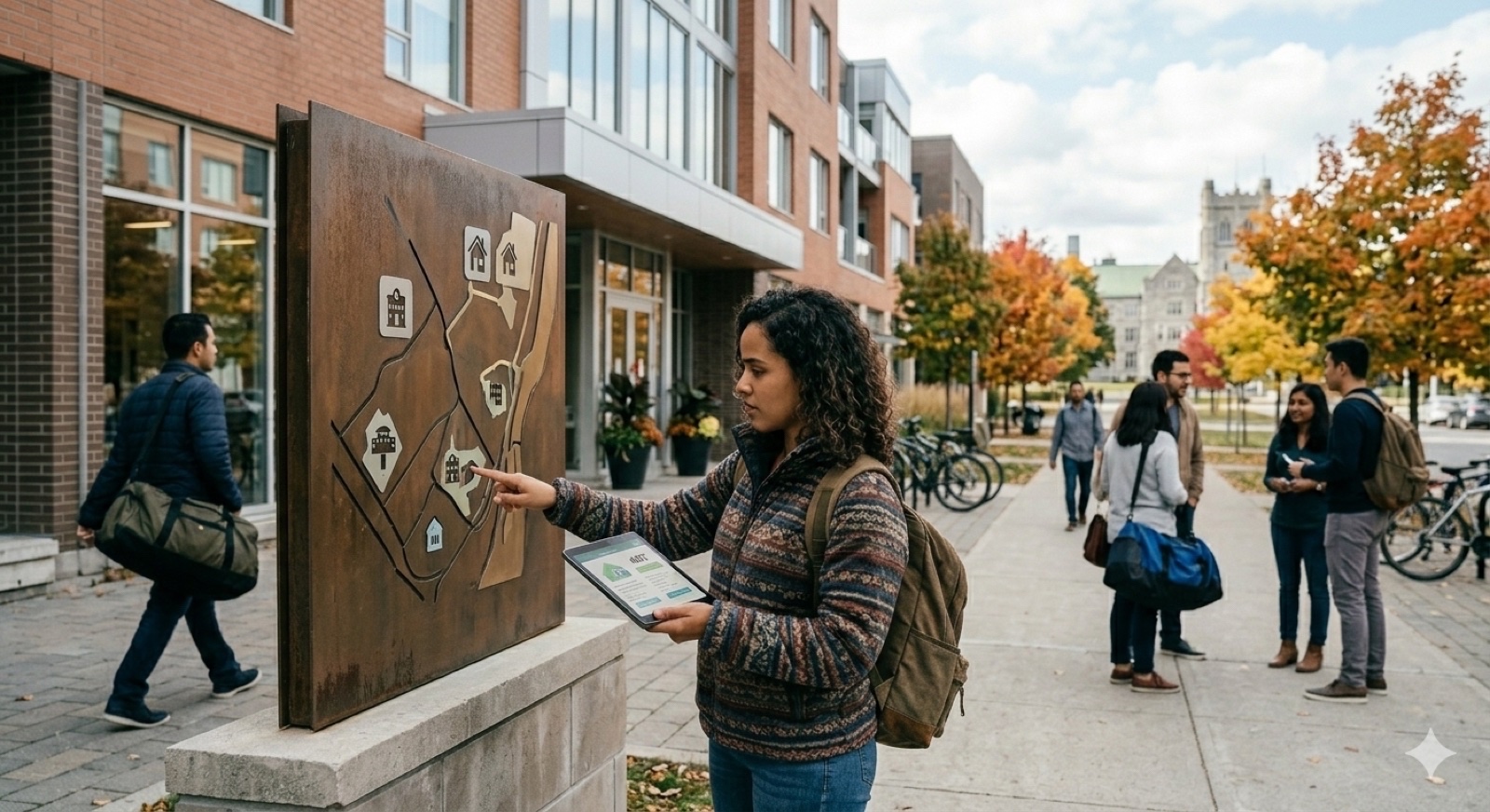
Finding Student Housing in Quebec
University residence, shared apartment or private studio — how a student finds a place to live, without getting scammed.
As an international student or someone from another city, you have three main ways to find housing: The university residence — accommodation run by the institution, on or near campus The shared apartment — an apartment shared with other people, where each pays their share The private studio or apartment — a place of your own, rented directly from a landlord No option is better in itself: it dep...
Social Housing in Quebec: HLM, PSL, Affordable
Three provincial programs, seven eligibility rules, a points-based wait-list: how to apply correctly.
Social housing in Quebec is overseen by the Société d'habitation du Québec (SHQ) and managed locally by municipal housing offices. In Montreal, it's the OMHM (Office municipal d'habitation de Montréal); each major city has its equivalent (OMH of Quebec City, OMH of Gatineau, etc.). When you apply for social housing, your file is considered for three distinct programs: HLM (Habitation à loyer mo...
Housing in Quebec: comparing cities
Average rents, vacancy rates and city profiles: SCHL figures and practical benchmarks for choosing where to settle in Quebec.
Every fall, the surveys rents and available apartments in every Quebec centre. It is the most reliable reference for comparing cities. The October 2025 survey puts the average two bedroom at $1,460 in Gatineau, $1,346 in Montréal, $1,277 in Québec City, $1,062 in Sherbrooke, $1,045 in Drummondville, $1,016 in Trois Rivières and $985 in Saguenay. The chart below shows the full picture. To compar...
Leases in Quebec: Rules, Subletting and Assignment
Signing a lease in Quebec: the standard TAL lease, your rights, what a landlord cannot ask, and how subletting and lease assignment work.
In Quebec, all residential leases must use the standard form of the Tribunal administratif du logement (TAL). It's required by law. Security deposits are PROHIBITED in Quebec. The landlord can only ask for: The first month's rent at signing No post dated cheques may be required for subsequent months The landlord can ask for: Full name, previous address, phone, employer Credit check (with your w...
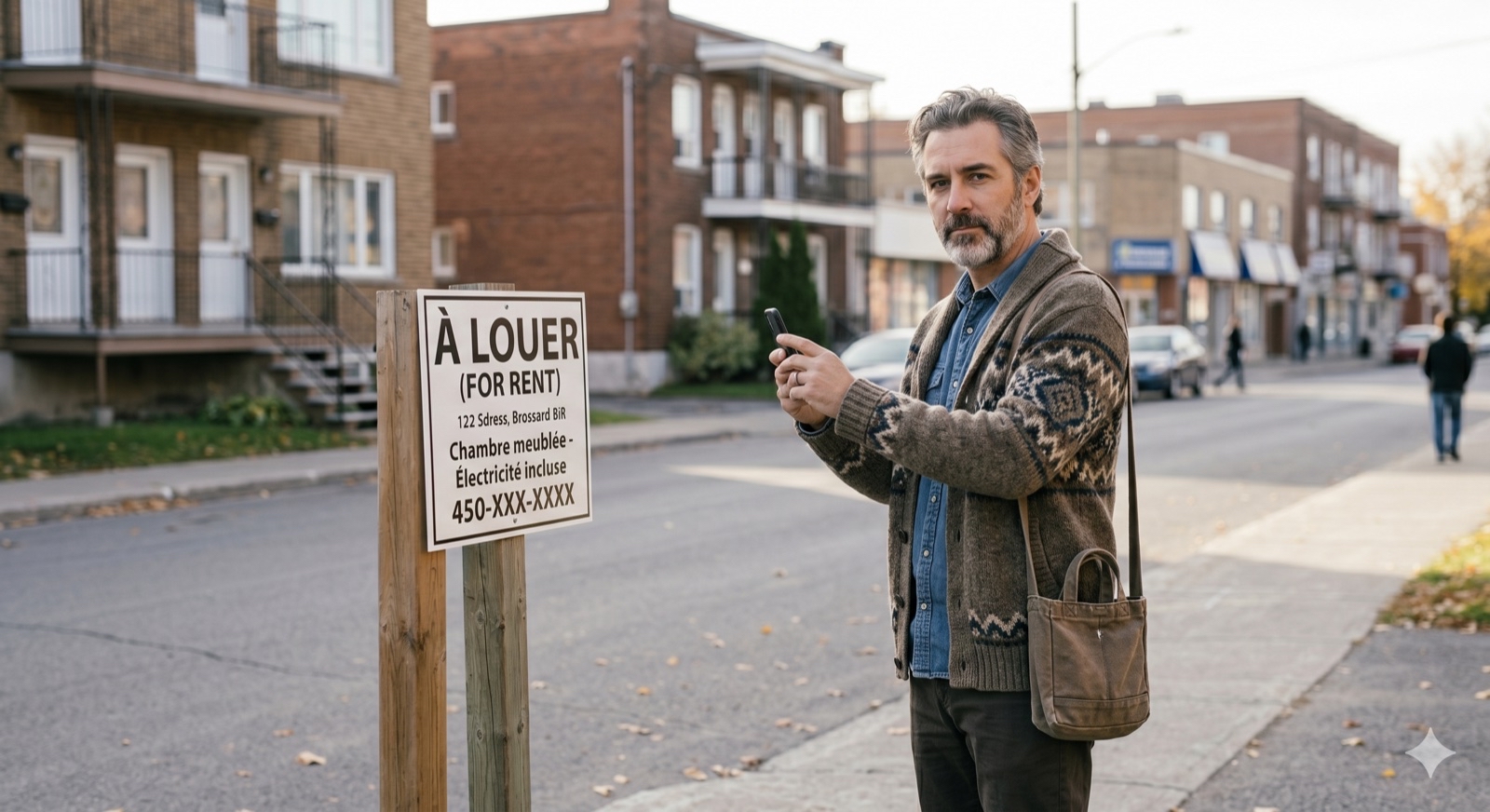
Finding a Room to Rent in Quebec
Renting a room instead of a whole apartment: where to look, what changes legally, and how to avoid scams.
On arrival, renting a whole apartment isn't always realistic: without credit history, without confirmed work, or on a small budget, it's hard. Renting a room — in a shared home, with a private host, or in a residence — is often the most accessible entry point. It's cheaper, more flexible, and buys you time to learn the neighbourhoods before committing to a one year lease. But the rules aren't e...
Daily life(20)
See all →Buying a Car in Quebec: Used, New or Lease
Used, new or lease: checks, real price, financing, warranty and SAAQ transfer.
A new car costs more and loses value fast in its first years. Its real advantages: Full warranty from the manufacturer No unknown history: no hidden accident, no debt Reliability and recent technology For a first vehicle on arrival, many newcomers choose used. New makes sense if you plan to keep the car for many years. Private seller: lower price, but no warranty and more risk Dealer: higher pr...
Buying and drinking alcohol in Quebec
Why there are no spirits at the grocery store, how late you can buy, and what you may actually bring to a BYOW restaurant.
This is one of the most common blind spots for newcomers. You are planning a dinner, you stop at the grocery store, and you look for a bottle of rum or vodka. You will not find it. Not because the store is poorly stocked — because the law forbids it. In Quebec, the state controls alcohol sales, and the rules resemble those of almost nowhere else you have probably lived. Where to buy what, until...
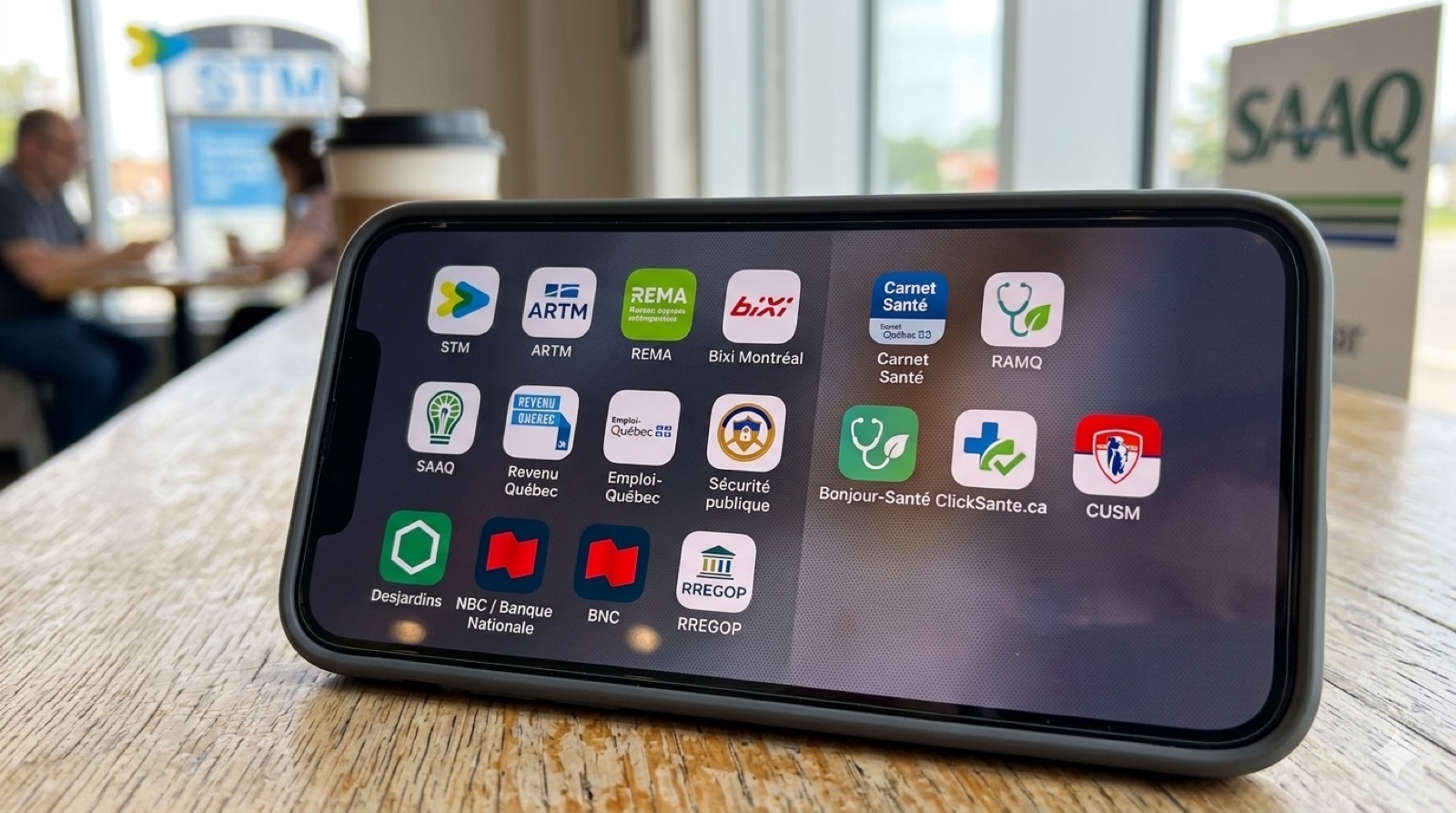
Useful Apps for Living in Quebec
The best free apps to simplify daily life in Quebec — transit, government, health, finances and more.
For getting around Quebec, several apps are essential: Transit — best app for public transit: covers STM in Montréal, RTC in Québec City, RTL on the South Shore and most regional networks. Shows real time bus and metro arrivals. Google Maps — for driving, transit or walking navigation across all of Quebec. BIXI (Montréal) — locate stations and unlock bikes. Waze — popular for driving to avoid t...
Common Scams in Quebec
Scams targeting newcomers in Quebec: fake CRA or IRCC calls, fake bank emails, text and Interac scams, job and housing fraud, and how to report them.
The « threatening CRA » scam: a fake agent calls about an invented debt. Signs: arrest threats, immediate payment demanded in gift cards or Bitcoin. The real CRA NEVER does this. Hang up immediately. Variation targeting immigrants: a fake Service Canada or IRCC agent threatens deportation. The Canadian government never calls to threaten or demand immediate payment. Hang up. Real agencies follow...
Car Insurance in Quebec
SAAQ for injuries, private insurer for the car — understanding the hybrid system.
Quebec has a hybrid system: SAAQ (public): covers bodily injuries of ALL drivers (regardless of fault) Private insurance: covers damage to the car (collision, theft, etc.) You pay the SAAQ via your annual registration fees Civil liability insurance is mandatory: Legal minimum: $50,000 Recommended: $1 to $2 million (cost difference is minimal) Without insurance: severe fine + licence suspended O...
Hair Salons and Beauty Services in Quebec
Finding a good hair salon in Quebec — price ranges, local conventions, cultural differences to know and tips for communicating your needs in a French-language salon.
Haircut prices in Quebec vary considerably by salon type, city, and services requested: Service Typical price range Men's haircut (barbershop / standard salon) $20–40 Women's haircut (standard salon, no colour) $30–60 Upscale salon (central Montréal neighbourhoods) $60–120+ Colouring / highlights $80–200+ depending on complexity Blow dry / styling $30–60 Customary tip: 15–20% — to be added to t...
Food Delivery in Quebec
Using Uber Eats, DoorDash, Skip and SkipTheDishes in Quebec — platform comparison, fees to know, tipping, money-saving tips and finding the best local restaurants.
Three major platforms in Quebec: Uber Eats, DoorDash and Skip (SkipTheDishes). Each platform has its own partner restaurants — some are exclusive to one platform, others appear on all three. Pro tip: ordering directly from the restaurant (by phone or their own website) is often cheaper — no platform service fees. The price shown in a delivery app is almost always lower than what you'll actually...
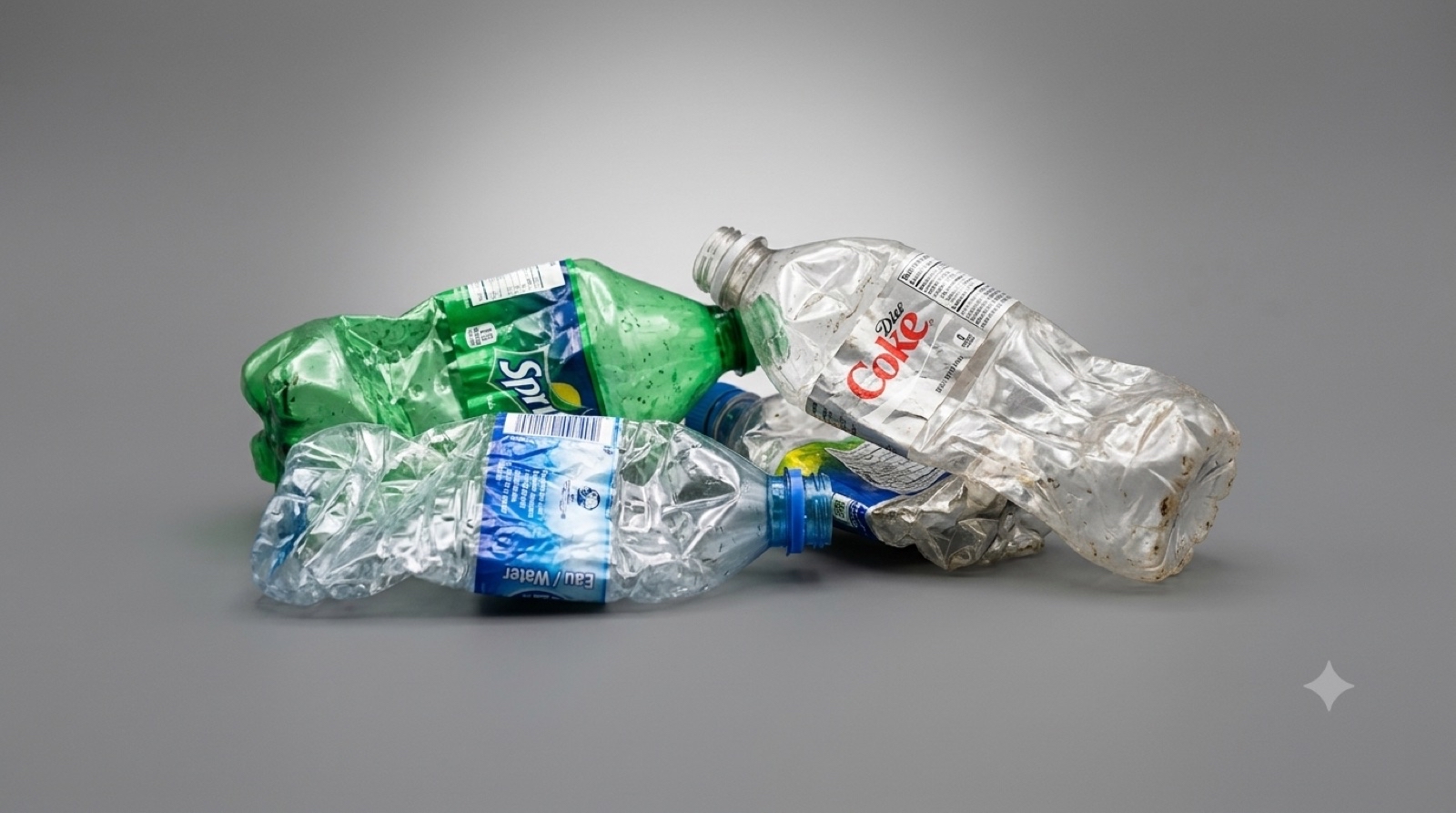
Bottle Deposit and Recycling in Quebec
How bottle deposits work in Quebec, what goes in recycling bins, how to compost and avoid errors that contaminate recycling.
The bottle deposit (consigne) is a refundable deposit on certain beverage containers — you pay it at purchase and get it back when you return the empty container. Current deposit amounts (Consigne Plus): 10 cents for most targeted containers (cans, plastic, small containers) 25 cents for glass containers 500 ml and over (wine bottles, large beer bottles) Consigned containers: beer bottles and c...
Building Canadian Credit: First Card and Strategy
Why credit matters, how to get a first card (secured or newcomer) and build your score.
In Canada, your credit history influences almost everything: Renting an apartment Getting a credit card with a good limit Financing a car Buying a home The credit score in Canada: 300 – 599: poor (few options) 600 – 659: fair 660 – 724: good 725 – 900: excellent (best rates) Five factors: 1. On time payments (most important) 2. Utilization rate: under 30% of your limit 3. Age of accounts 4. Typ...
Online Grocery and Home Delivery in Quebec
Comparing online grocery delivery services in Quebec — IGA online, Maxi, Instacart, Goodfood and alternatives — fees, delays, money-saving tips.
Online grocery delivery has grown considerably in Quebec in recent years. Main options: Service Type Notes IGA en ligne Direct supermarket delivery Order online, delivery 1–2 days or same day in store pickup Maxi / Provigo Direct supermarket delivery Available in most of Montréal and suburbs Instacart Third party delivery (multiple stores) Delivery in 1–2 hours; shops at various stores Goodfood...
Grocery Stores in Quebec: A Practical Guide
Grocery shopping in Quebec: comparing IGA, Metro, Maxi and Super C, how to save money, and where to find international products.
The Quebec market is dominated by three big groups: Loblaws: Provigo (premium), Maxi (discount) Sobeys: IGA (premium) Metro Inc.: Metro (premium), Super C (discount) Each group occupies both the quality niche and the discount niche, with two distinct banners — a strategy to capture both affluent shoppers and price conscious ones. Quality grocers (higher prices): IGA, Metro, Provigo Wide selecti...
Balcony Gardening in Quebec: Vegetables and Herbs
How to grow tomatoes, herbs and vegetables on a Quebec balcony — when to plant, how to choose the right containers and avoid beginner mistakes.
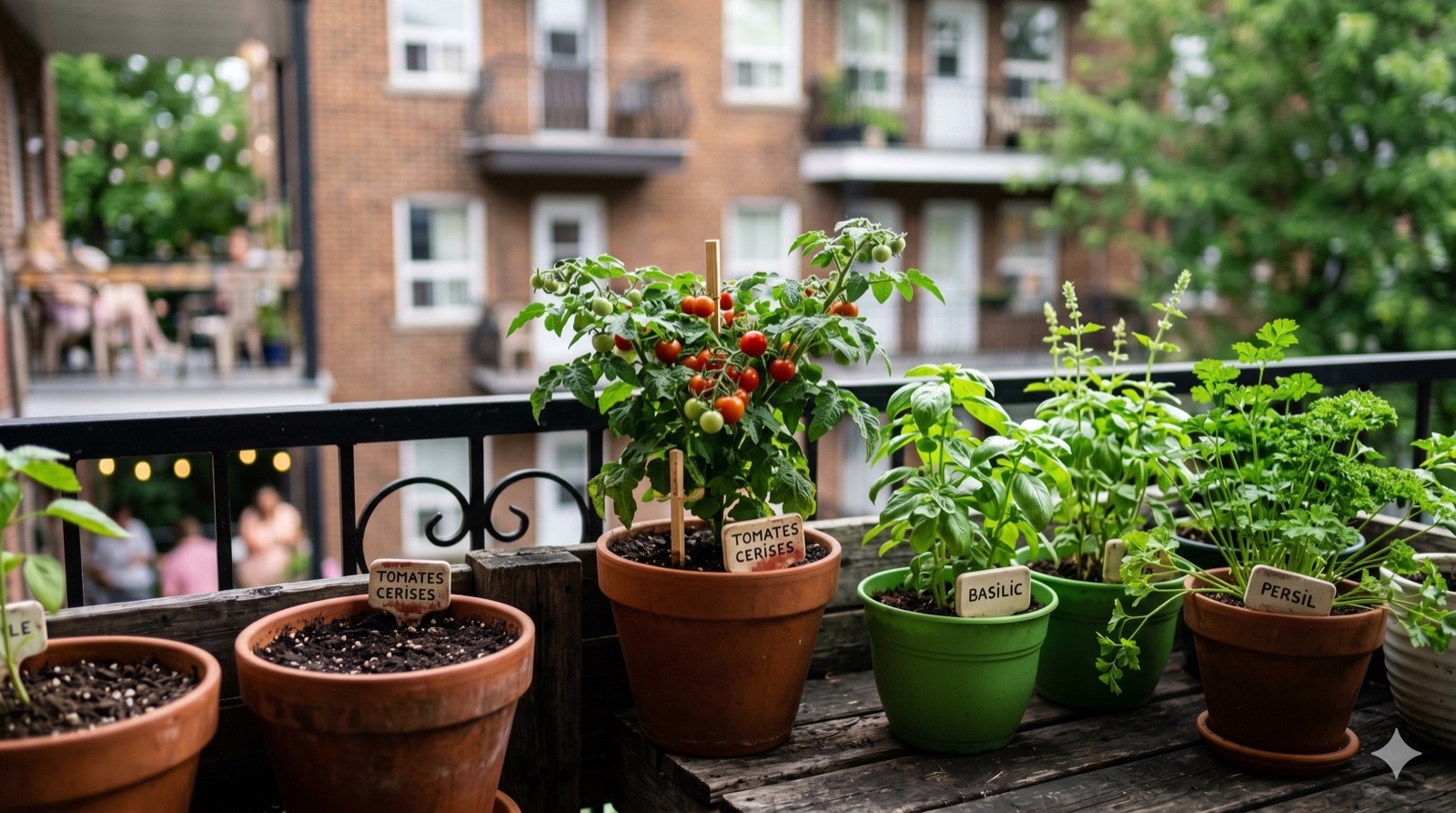
Balcony gardening is very popular in Quebec, particularly in Montréal. Having a few pots of cherry tomatoes, basil, parsley or mint on your balcony is common and accessible even for complete beginners. Key climate constraint: the growing season is short — from late May to October — and winters are too harsh for anything to survive outside. But in those five months, a lot is possible. Quebec's p...
Public Holidays in Quebec
Quebec's statutory holidays, provincial and federal: which are paid, what closes (stores, banks, SAQ) and your rights if you work that day.
In Quebec: 8 provincial public holidays per year Plus a few federal public holidays (banks and federal government) All employees are entitled to the 8 provincial ones as paid leave The 8 provincial holidays: 1. January 1 — New Year's Day 2. Good Friday or Easter Monday (employer's choice) 3. The Monday before May 25 — National Patriots' Day 4. June 24 — Quebec National Holiday 5. July 1 — Canad...
Quebec Media: Landscape and Language Learning
The Quebec media landscape — TV, press, radio, podcasts — and what to watch at each level to learn.
Following Quebec media helps you: Understand local culture and politics Learn the spoken French of Quebec (different from standard French) Follow the news that affects your daily life Radio Canada: ICI Radio Canada Télé: news, shows ICI Première: talk radio Tou.tv: free streaming The major dailies: La Presse (free online): mainstream journalism, quality Le Devoir (paid): intellectual, more left...
Hardware Stores and DIY in Quebec
Finding the right tools, materials and services for home maintenance and repairs in Quebec — Home Depot, Réno-Dépôt, BMR, tool rental and lease rules.
Quebec has several major hardware store chains: Chain Notes Home Depot Giant chain, large selection, many Montréal locations Réno Dépôt Quebec French language version of Home Depot, same parent company, similar selection BMR Quebec cooperative, more present in mid sized cities and regions; smaller stores, known for personalized service Rona Another major Canadian chain present in Quebec Indepen...
Surviving the Quebec Winter
Clothing, transport, housing, and health to get through winter without suffering.
Quebec winter lasts about 5 months (November to April). Temperatures: −15 to −30 °C, sometimes lower with windchill Snowstorms are frequent Short days (sunrise around 7:30, sunset around 16:30 in December) The most important investment: Coat rated for −30 °C, with hood and fur trim ($200 to $600) Winter boots, waterproof, with non slip soles Reliable brands: Kanuk, Canada Goose, North Face, Col...
Public Transit in Quebec: Bus, Metro and Train
How to use public transit in Quebec — STM, RTC, RTL, exo — fares, passes and the right habits for getting around without a car.
Quebec has a well developed public transit network in its major cities, but very limited coverage in rural areas. Each region has its own transit agency: STM in Montréal, RTC in Québec City, RTL in Longueuil, STL on Montréal's north shore, and the exo network for distant suburbs and commuter trains. For travel between cities, Flixbus, Orléans Express and Via Rail serve the main routes. If you l...
Finding Home-Country Ingredients in Quebec
Where to find ingredients from your home country in Quebec: African, Asian, Middle Eastern and Latin American grocers, ethnic markets and online orders.
Montréal is extraordinarily food diverse. Thanks to successive waves of immigration, you can find ingredients from virtually every country in the world — Ethiopian spices, rare Asian vegetables, Latin, African, Middle Eastern and Caribbean products. Key neighbourhoods for international food: Côte des Neiges — Montréal's most cosmopolitan neighbourhood; extraordinary international food selection...
Garage Sales, Thrift Stores and Kijiji in Quebec
Buying second-hand in Quebec: garage sales, thrift stores, Kijiji and Facebook Marketplace to furnish and equip your home for less.
In Quebec, buying and selling second hand items is deeply embedded in local culture. It's a normal, valued practice across all income levels, encouraged by growing environmental consciousness. For a newcomer who needs to furnish an empty apartment, the second hand market is an extraordinary opportunity to save several thousand dollars. On July 1st (Montréal's massive moving day), hundreds of pi...
Pets in Quebec: Vet, Rules and Costs
Bringing or adopting a pet in Quebec: what it costs, how to find an affordable vet, municipal rules and resources if the budget is tight.
Pets are part of the daily life of many Quebec families — dogs, cats, rabbits, birds and fish are the most common. Quebec has clear rules on animals in apartments, breeds banned in certain cities, mandatory sterilization in some boroughs, and the requirement to keep dogs on leash in public spaces. For newcomers who want to bring their pet or adopt one, this guide covers the essentials: arrival ...
Culture & leisure(18)
See all →Activities for Babies and Toddlers in Quebec (0–3)
Free and affordable activities for babies and toddlers in Quebec: libraries, early childhood centres, drop-in daycares, parent groups and CLSC services.
Quebec has established a network of public resources to support parents of young children — many of these resources are free or very low cost. Two most important resources to know from arrival: 1. Your neighbourhood CLSC: first point of contact for your baby's health — birth follow up, vaccinations, weigh ins, specialist referrals. In most CLSCs, a nurse follows up within days of coming home fr...
Kids' Activities in Quebec: Costs and Financial Help
Organized sports, hockey, summer camps and city recreation — the real costs and every financial aid.
Signing your child up for an activity — soccer, swimming, arts, scouts — does far more than keep them busy. It's often where they make their first friends, practise French in a relaxed setting, and where you, the parent, meet other families. In Quebec many of these activities are surprisingly affordable thanks to city programs, and there's help for families on a tight budget. Money shouldn't be...
Winter Outdoor Activities in Quebec
Discover the winter activities Quebecers love — cross-country skiing, snowshoeing, tobogganing, skating — with the best spots, costs and practical tips.
Quebec winter lasts five to six months. Quebecers don't hole up at home from November — they ski, skate, toboggan, snowshoe, go to bonfires and attend winter festivals. The popular expression: 'there's no bad weather, only bad clothing.' The key to enjoying Quebec winter is dressing correctly — in layers, with materials that retain warmth even when wet. Once properly dressed, most winter activi...
Libraries in Quebec: Much More Than Books
The public library is free, bilingual and open to everyone. Here's what you can do there, how to sign up, and why it's one of the best integration tools.
In many countries, a library is a quiet place to borrow books. In Quebec, it's much more than that. The public library is a living space open to all residents — free, bilingual, heated in winter — offering books, yes, but also films, music, board games, children's activities, computer classes, workspaces and sometimes even recording studios or 3D printers. Registration is free with a piece of I...
The sugar shack and maple season
When to go, what you eat, what it costs and how to prepare — the most Quebec spring tradition there is.
If a single outing were to make you understand Quebec, this would be it. At the end of winter, when the snow is still there but the sun is starting to warm things up, thousands of Quebec families head for the cabane à sucre. You eat far too much, you sometimes sing, and you leave with syrup filling the trunk. This is not a tourist attraction invented for visitors: it is a family ritual that cut...
Understanding the Quebec accent
The five features that distinguish Quebec French — enough to recognize, not necessarily to imitate.
Quebec French isn't Parisian French. The vocabulary differs, vowels shift, some words disappear into contractions. You'll notice it on the first taxi ride, the first café, the first work conversation. This guide covers the five features that make the Quebec accent distinct — enough to understand what you hear, without trying to imitate what only years of living here teach. To hear each word pro...
Cultural Festivals in Quebec: The Major Events Calendar
Quebec's major festivals that Quebecers look forward to all year — music, comedy, winter, film, food — with dates, free access and tips to make the most of them.
Quebec is world renowned for its cultural festivals. These events are part of Quebec identity — Quebecers look forward to them months in advance. For a newcomer, participating in these festivals is an enjoyable way to integrate into local culture — and many events are freely accessible in public spaces. Montréal's major festivals: Festival When Free access Festival International de Jazz de Mont...
French at work in Quebec
Tu/vous, emails, meetings, coffee breaks — the linguistic codes of the Quebec workplace.
French at work in Quebec is not French at work in France. Tutoiement comes faster, emails are more direct, the coffee break is a social ritual. This guide covers the five situations where a newcomer can commit a social misstep through excessive formality — and how to navigate them. The office vocabulary below is also available on , grouped with that of the other guides by CEFR level — useful fo...
Places of Worship and Religious Practice in Quebec
Finding your place of worship in Quebec — mosques, temples, synagogues, churches of all faiths — and understanding the role of religion in Quebec's secular society.
Quebec is an officially secular society — religion is separated from the state and public institutions. This does not mean religion is absent from Quebec society. There's an important distinction between the public and private spheres. In the public sphere (public schools, hospitals, government offices, courts): religious signs are regulated and religious neutrality is valued. Law 21 (2019) pro...
Bill 101 and the Charter of the French Language
Why French is everywhere in Quebec, and what the Charter concretely changes for your family, your job and your paperwork.
You arrive in Quebec and you notice something immediately: the signs are in French, the government form is in French, the cashier answers you in French. This is not a coincidence, nor simply a cultural habit. It is a law. The Charter of the French Language — which almost everyone here calls Bill 101 — has governed the language of school, work, commerce and the state since 1977. It was deeply re...
Dining Out in Quebec: Culture, Tips and Codes
Everything you need to know to dine out in Quebec: tipping, taxes, how to order, restaurant types and mistakes to avoid as a newcomer.
Dining out is an important social pleasure in Quebec — whether it's a morning café, a business lunch, a family dinner or an evening with friends. Quebec restaurants have their own codes that newcomers sometimes discover with surprise. Key point: you are greeted at the entrance and seated at a table by a host or server. It's rare to choose your own table in a medium or large restaurant — wait to...
Quebec's eleven Indigenous nations
Who the eleven nations are, where they live, what languages they speak, and how to discover their cultures without getting it wrong.
You already live in the middle of these cultures, whether or not you know it. The word Québec comes from an Indigenous language. The maple syrup you eat at the sugar shack rests on know how that the Government of Quebec itself describes as a legacy of Indigenous peoples. Dozens of town and river names around you come from Algonquin, Innu, Abenaki or Mi'kmaq. And yet most newcomers spend their f...
Beaches and Swimming in Quebec: Where to Swim in Summer
The best beaches accessible from Montréal and across Quebec's regions — rivers, lakes, supervised beaches, safety rules and tips for enjoying the water in summer.
Quebec's swimming season is short but intense. Waters in Quebec's lakes and rivers are generally warm enough for swimming from mid June to late August, sometimes into early September depending on the year. The peak summer season is July and August, when temperatures can exceed 30°C for consecutive days. Quebec has remarkable water resources — thousands of lakes, major rivers, and access to the ...
Quebec Etiquette and Cultural Codes in Daily Life
Tu or vous, saying hello, lining up, taking off your shoes: the cultural codes that make daily life smoother in Quebec.
Beyond language, every society has its invisible codes: the right distance, the right tone, what's done and what isn't. In Quebec these codes are often relaxed and warm, but they exist, and knowing them spares you awkward moments and helps you feel at home faster. This guide gathers the most useful everyday codes for a newcomer — no judgment, just to help you settle in smoothly. Situation Expec...
Tipping at Restaurants and Elsewhere in Quebec
Tipping in Quebec: how much to tip at restaurants, bars, taxis and salons, how to calculate it on the pre-tax amount, and why it is expected.
In Quebec, the tip is part of servers' salary. Minimum wage lower for tipped employees The tip closes the gap No tip considered rude At a restaurant: 15 to 20% of the pre tax subtotal. 15%: okay service 18%: good service (the norm) 20%+: excellent service 10%: genuinely disappointing service 0%: only for catastrophic service Trick: double the tax amount on the bill about 15%. For 18 20%, add a ...
Pronouncing Quebec place names
Kamouraska, Chibougamau, Pie-IX: where these names come from, what they mean, and where to hear them pronounced properly.
You call a clinic and have to give your address. You ask for directions. You tell a colleague where you spent the weekend. And the name will not come out — Kamouraska, Chibougamau, Témiscamingue, Manicouagan. It is not your fault, and this guide will explain why. Many Quebec place names come from Indigenous languages, transcribed centuries ago by European mapmakers who did not speak those langu...


Hiking and National Parks in Quebec
Exploring Quebec's national parks on foot: the most beautiful trails, Sépaq rates, how to book, and the essentials to know before you go.
Quebec has 23 national parks managed by the Société des établissements de plein air du Québec (Sépaq), with several new parks in development. They span the entire province — Laurentians, Eastern Townships, Gaspésie, Bas Saint Laurent, Nunavik. Park access is paid: Daily access fee (per park, around $10/adult) Annual Discovery Card (around $95/adult): covers access to all parks, worthwhile if yo...
Sacres: understanding Quebec swear words
Where Quebec's religious swear words come from, what they originally meant, and why « sacrer son camp » is not a swear word.
You hear them in your first week. On the street, at the garage, in a film, sometimes at work. Words that, in an ordinary French dictionary, denote church objects: a chalice, a host, a tabernacle. Here, they are swear words. This guide is not here to teach you to use them. It is here so you understand what you are hearing, where it comes from, and above all where the line sits — because the real...
Today I need to…
The first concrete steps to tackle right now, in order.
Select your region
120 guides across 7 regions — pick yours: