First Steps in Quebec
Dossier46 guidesYour first steps after arrival — housing, SIN, banking, phone.
For the whole province
These guides apply everywhere in Quebec, across the whole province — no matter your city.
Your first practical steps
Open an account, choose a phone plan, and the seven-day starter list — where to actually begin.
7 Things to Do in Your First Week in Quebec
Your first week in Quebec, step by step: SIN, temporary housing, bank account, phone plan, OPUS card, RAMQ registration and free French classes.
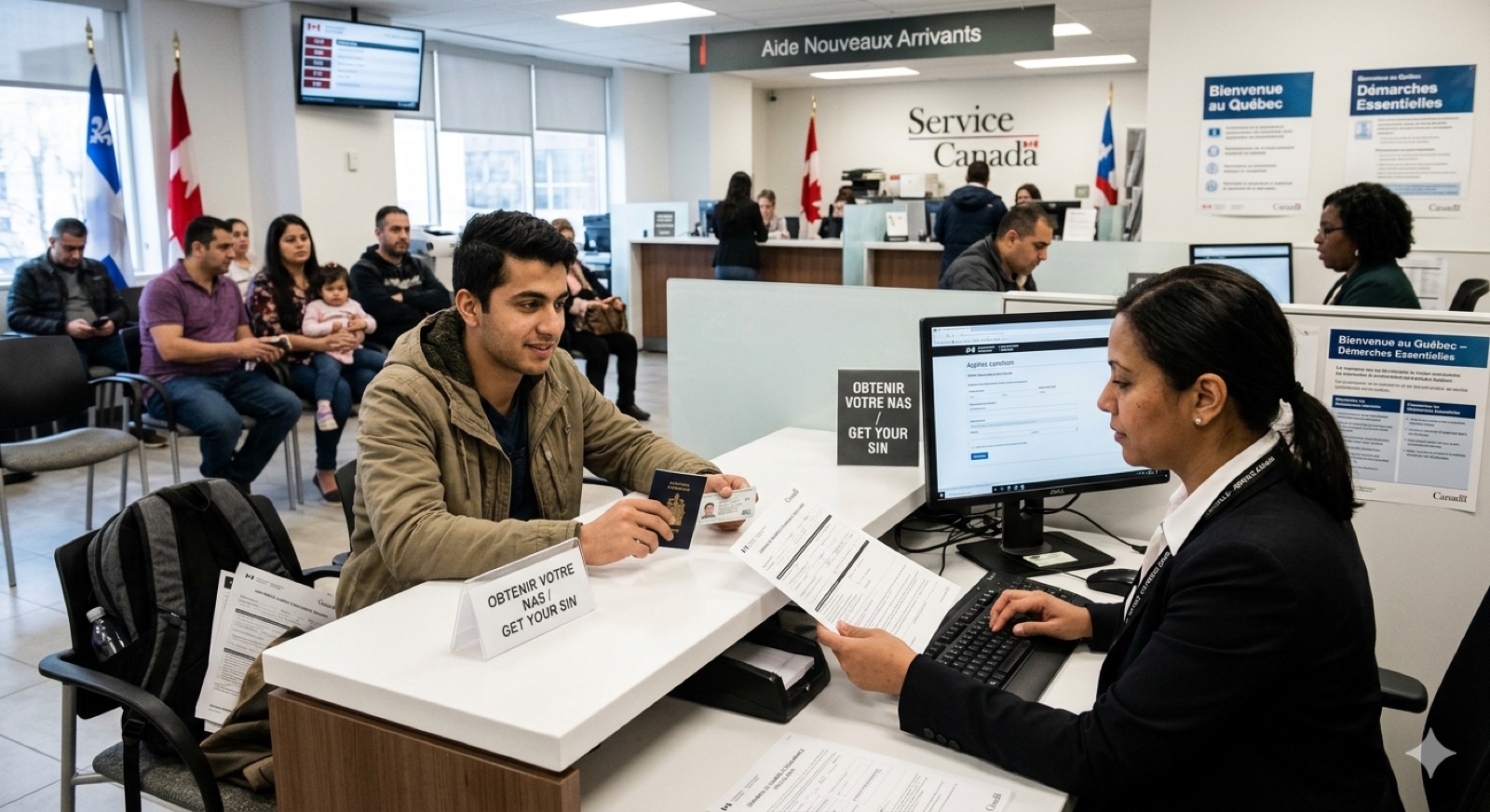
The Social Insurance Number (SIN) is the first step. No SIN, no legal work. Service Canada — free, often done the same day. Book temporary housing for 2 to 4 weeks. That gives you time to visit apartments in person without pressure. Before choosing your city or neighbourhood, compare the cost of living with our — the differences between Montreal, Quebec City and the suburbs can be significant. ...
Open a Bank Account in Quebec: Chequing Account
Comparison of major banks and the steps to open your first chequing (current) account in Quebec as a newcomer.
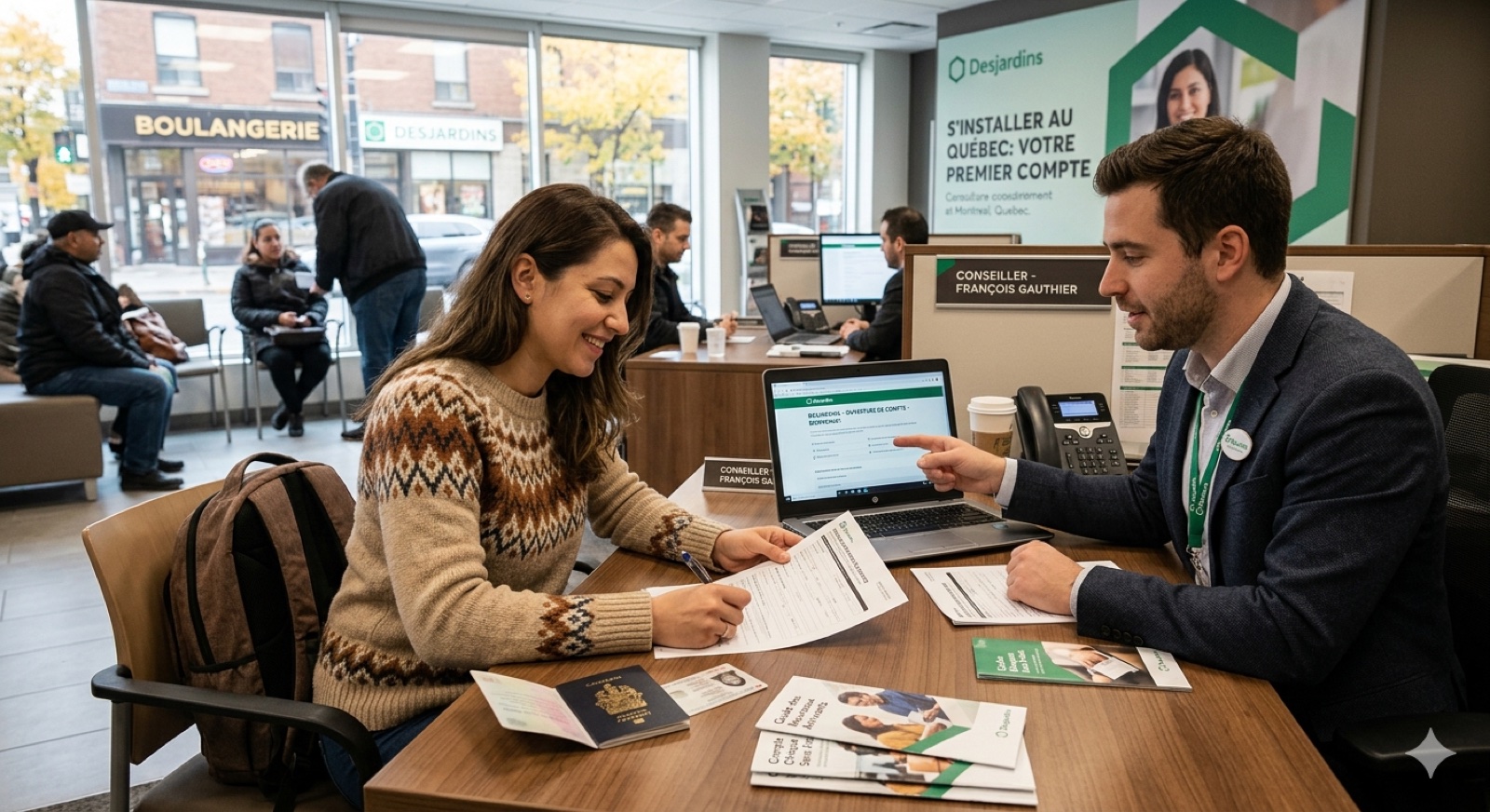
In Quebec, you need a bank account to receive your salary, pay your rent, and use a debit or credit card. Do this in your first week. The main banks: Desjardins — the largest Quebec cooperative Banque Nationale — Quebec bank, present everywhere RBC, BMO, TD, Scotia — major national Canadian banks All major banks offer a newcomer package, which usually includes: A chequing account with no monthl...
Choosing a Phone Plan in Quebec
Choosing a phone plan in Quebec: the big carriers, the budget brands, Fizz, how much data you need and typical plans compared by profile.
In Quebec, mobile plans are among the most expensive in North America. Choosing well can save you several hundred dollars per year. Three carriers dominate the market: Bell, Rogers, Telus — excellent coverage everywhere, high prices, reliable Each major carrier also owns a budget brand using the same network: Bell → Virgin, Lucky Mobile Rogers → Fido, Chatr Telus → Koodo, Public Mobile Same cov...
Finding housing and staying alert
Find a room to rent, insure your home, and recognize the scams that target newcomers.
Housing in Quebec: comparing cities
Average rents, vacancy rates and city profiles: SCHL figures and practical benchmarks for choosing where to settle in Quebec.
Every fall, the surveys rents and available apartments in every Quebec centre. It is the most reliable reference for comparing cities. The October 2025 survey puts the average two bedroom at $1,460 in Gatineau, $1,346 in Montréal, $1,277 in Québec City, $1,062 in Sherbrooke, $1,045 in Drummondville, $1,016 in Trois Rivières and $985 in Saguenay. The chart below shows the full picture. To compar...
Finding a Room to Rent in Quebec
Renting a room instead of a whole apartment: where to look, what changes legally, and how to avoid scams.
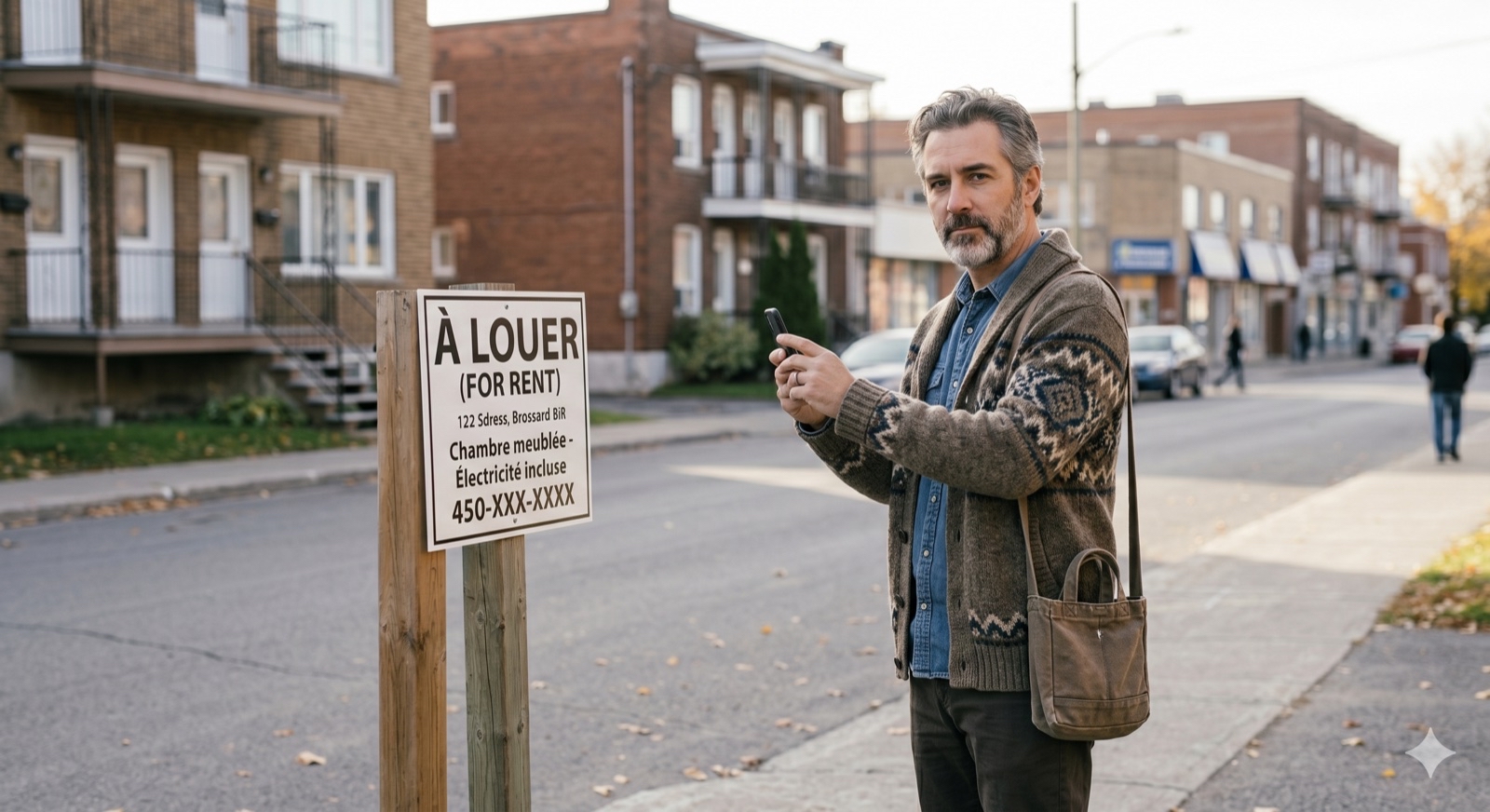
On arrival, renting a whole apartment isn't always realistic: without credit history, without confirmed work, or on a small budget, it's hard. Renting a room — in a shared home, with a private host, or in a residence — is often the most accessible entry point. It's cheaper, more flexible, and buys you time to learn the neighbourhoods before committing to a one year lease. But the rules aren't e...
Home Insurance in Quebec
Home and tenant insurance in Quebec: why you need it, what it covers, how much it costs and how to choose a policy as a renter or owner.
Home insurance covers: Personal belongings (furniture, electronics, clothes) Theft, fire, water damage Civil liability (a visitor's injury, damage at a neighbour's) Renter vs owner: Renter: your landlord insures the building; you insure your belongings ($15 30/month) Owner: you insure everything ($50 150/month depending on value) A mortgage almost always requires insurance In Quebec: Many landl...
Common Scams in Quebec
Scams targeting newcomers in Quebec: fake CRA or IRCC calls, fake bank emails, text and Interac scams, job and housing fraud, and how to report them.
The « threatening CRA » scam: a fake agent calls about an invented debt. Signs: arrest threats, immediate payment demanded in gift cards or Bitcoin. The real CRA NEVER does this. Hang up immediately. Variation targeting immigrants: a fake Service Canada or IRCC agent threatens deportation. The Canadian government never calls to threaten or demand immediate payment. Hang up. Real agencies follow...
Your host city, first steps
Every city has its own welcome guide — find yours for the very first steps on the ground.
Your First 48 Hours in Montreal
The essential first steps as soon as you arrive: SIN, housing, banking, transit.
As soon as you arrive at Montréal Trudeau airport, look for the welcome desk of the Ministère de l'Immigration. Staff will give you essential documents about your rights and your first steps in Quebec. The Social Insurance Number (SIN) is a 9 digit number issued by the Government of Canada. It is mandatory for working or receiving government services. To get it, present yourself at a Service Ca...
First Steps in Quebec City
City services, essentials and landmarks for settling in the capital, Quebec City.
Quebec City, capital of Quebec, has over 590,000 residents. Founded in 1608, it's the only fortified city in North America north of Mexico — its Old Quebec is classified as UNESCO World Heritage. The city has six boroughs: La Cité Limoilou, Les Rivières, Sainte Foy–Sillery–Cap Rouge, Charlesbourg, Beauport and La Haute Saint Charles. Quebec City Hall handles municipal services: permits, parking...
First Steps in Laval
Everything you need to start life in Laval: city services, essential errands, neighbourhood landmarks.
Laval is Quebec's third largest city after Montreal and Quebec City, with over 440,000 residents. It sits on an island — île Jésus — directly north of Montreal, connected by several bridges. Laval is a modern city with large shopping centres like Carrefour Laval, schools, hospitals, and quick metro access to downtown Montreal. Laval City Hall is the main entry point for municipal services: perm...
First Steps in Gatineau
Settling in Gatineau, bilingual city facing Ottawa: city services and local particulars.
Gatineau is the main city of the Outaouais region, with about 306,000 residents (2025 estimate). Located directly across from Ottawa, the Canadian capital, it has five sectors: Aylmer, Hull, Gatineau, Buckingham and Masson Angers. It's a unique city in Quebec — bilingual in practice, with a large English speaking community and an economy tied to the federal public service. Gatineau is the resul...
Welcome to Sherbrooke
An introduction to Sherbrooke, capital of the Eastern Townships: student city, neighborhoods, and settlement services.
Sherbrooke is Quebec's sixth largest city and the main hub of the Eastern Townships. Known as the city of rivers and hills, it is also a major student city thanks to Université de Sherbrooke and Bishop's University. Historic downtown centers around Wellington Street, with cafés and shops. The Plateau Marquette area is popular with families. The Fleurimont borough has a large newcomer population...
First Steps in Longueuil
City services, essential errands and neighbourhood landmarks for starting life in Longueuil.
Longueuil is one of Quebec's largest cities, with about 250,000 residents. Located on the South Shore of Montreal, directly across from downtown, it's connected to Montreal by the Jacques Cartier bridge and the yellow metro line. Longueuil includes several historic boroughs: Vieux Longueuil, Saint Hubert, and Greenfield Park, each with its own character. Longueuil City Hall handles municipal se...
First Steps in Lévis
City services and landmarks for settling in Lévis, on the south shore of Quebec City.
Lévis is a city in the Chaudière Appalaches region, on the south shore of the river, across from Quebec City. It has about 160,000 residents — it crossed that threshold in early 2026 — and remains the 7th largest city in Quebec. Lévis is divided into three boroughs: Desjardins (including Vieux Lévis), Les Chutes de la Chaudière Est and Les Chutes de la Chaudière Ouest. The Caisse populaire Desj...
First Steps in Saguenay
Settling in the merged city of Saguenay: Chicoutimi, Jonquière, La Baie.
Saguenay is a merged city formed in 2002 from the cities of Chicoutimi, Jonquière and La Baie, the municipalities of Laterrière, Lac Kénogami and Shipshaw, and part of Canton Tremblay. It has about 152,000 residents, famous for its fjord. Saguenay is over 98% French speaking. It is the largest city of the Saguenay Lac Saint Jean region. Saguenay retains a strong identity by borough: Chicoutimi ...
First Steps in Trois-Rivières
Settling in Trois-Rivières, historic city between Montreal and Quebec City.
Trois Rivières is the main city of the Mauricie, halfway between Montréal and Quebec. It has about 140,000 residents. Founded in 1634, it's the second oldest city in Quebec after Quebec City. Recognized as the world capital of poetry. Trois Rivières's City Hall handles municipal services. Errands online via v3r.net. Dial 311 for any question. The Trois Rivières library network is free for resid...
First Steps in Terrebonne
Settling in Terrebonne: city services, housing, transit to Montreal, schools and the essentials for your first weeks.
Terrebonne is a city in the Lanaudière region, north of Montreal, with over 120,000 residents. It includes several sectors: Terrebonne (including Vieux Terrebonne), Lachenaie, and La Plaine. The city offers a suburban lifestyle, with a lively historic centre and quick access to highways 40 and 640. Before getting into municipal service details, here's an overview of the three main sectors to or...
First Steps in Repentigny
Settling in Repentigny: city hall procedures, libraries and citizen services, waste collection, first administrative steps and Repentigny vs Le Gardeur.
Repentigny is a city in the Lanaudière region, east of Montreal, with about 86,000 residents (2021 census) and a projection around 90,000. It comprises two main sectors: Repentigny, the historic sector near the river, and Le Gardeur, more suburban with large family homes. Located at the confluence of the Saint Laurent river and the L'Assomption river, it offers a family friendly setting with ac...
First Steps in Magog
Settling in Magog, on the shores of Lake Memphrémagog in the Eastern Townships.
Magog is a city in the Estrie region on the shores of Lake Memphrémagog — about 30,000 residents in the regular season, nearly double in summer. Geographic position: 30 minutes from Sherbrooke via Autoroute 10 1 h 15 from Montréal About 25 minutes from the nearest US border crossing, at Stanstead (Vermont) Exceptional setting between lake and mountains — one of the main tourism destinations in ...
First Steps in Drummondville
Settling in the Centre-du-Québec hub city, halfway between Montréal and Québec.
Drummondville ( 85,600 residents, per Quebec's 2026 population decree) — main city of the Centre du Québec. Strong growth: population up more than 10 % over the past ten years. The city sits halfway between: Montreal: 1 h 30 via Autoroute 20 Quebec City: 1 h 15 via the same highway Cost of living is 30 to 40 % lower than Montreal for housing — drawing families, retirees and remote workers from ...
First Steps in Chicoutimi
Settling in Chicoutimi, the central and university borough of Saguenay: city services, housing, transit, schools and where to get help.
Chicoutimi is the central borough of Saguenay (about 70,000 residents). Administrative, university and hospital hub: UQAC, Cégep de Chicoutimi, Hôpital de Chicoutimi, Vieux Chicoutimi. Vieux Chicoutimi, around rue Racine, houses restaurants, bars, shops and the Pulperie de Chicoutimi. The Saguenay River crosses the borough. Saguenay's main City Hall Regional SAAQ office Service Québec Take adva...
First Steps in Jonquière
Settling in Jonquière, Saguenay's industrial borough: the Arvida heritage district, practical steps, employers and newcomer welcome services.
Jonquière is the industrial and commercial borough (about 62,700 residents, including Jonquière, Lac Kénogami and Shipshaw, per City of Saguenay statistics). Made up of Jonquière, Arvida and Kénogami — each with its own history. Arvida is famous as a model town of an aluminum smelter from the early 20th century. Arvida was born in 1926 around the aluminum smelter. One of the only towns in the A...
First Steps in La Baie
Settling in La Baie, Saguenay's borough on the fjord: its former towns compared, practical steps, the military presence and the cost of living.
La Baie is the maritime borough of Saguenay ( 18,000 residents) — the smallest of the three urban boroughs. Located at the mouth of the Saguenay Fjord, on the Baie des Ha! Ha!. La Baie was born in 1976 from the merger of three towns. Today they form one urban fabric — driving between them in under 10 minutes — but each keeps a distinct character: Bagotville: many services, diversity tied to the...
First Steps in Bécancour
Settling in Bécancour, industrial and residential city facing Trois-Rivières.
Bécancour sits in the Centre du Québec region, facing Trois Rivières. It has about 15,000 residents. Connected to Trois Rivières by the Laviolette Bridge, it's both residential and industrial. Bécancour City Hall handles municipal services. Contact the city via becancour.net. Bécancour is composed of six sectors: Bécancour, Saint Grégoire, Sainte Angèle de Laval, Précieux Sang, Saint Édouard de...
Finding housing, city by city
The rental market and neighbourhoods vary enormously from one city to the next — here's the guide for each one.
Finding Housing in Montreal
Finding an apartment in Montréal: where to look, visiting before signing, the Quebec lease, the neighbourhoods to know and July 1st moving day.
Finding housing in Montreal is easier than in other major Canadian cities, but the market has tightened. Most leases run 12 months and traditionally start July 1st. Begin your search at least 2 months ahead. The most used platforms: Kijiji, Facebook Marketplace — listings from individuals Centris — for rentals managed by real estate brokers LesPAC — the Quebec equivalent of Kijiji À louer signs...
Finding Housing in Quebec City
Quebec City's boroughs, the rental market, and what to know before signing a lease.
Quebec City has six boroughs with distinct characters: La Cité Limoilou — includes Old Quebec and the trendy Saint Roch district Les Rivières — central, near the highways Sainte Foy–Sillery–Cap Rouge — hosts Université Laval and the major shopping centres Charlesbourg, Beauport and La Haute Saint Charles — more suburban and family oriented Budget on average around $1,200 to $1,300 per month for...
Finding Housing in Laval
Laval's neighbourhoods, rental market, and what to know before signing a lease in Quebec's second-largest city.
Laval is divided into six main sectors: Chomedey — the densest and most diverse, near the bridge to Montreal Sainte Rose — popular for its family homes and historic centre Vimont and Auteuil — more residential, near highway 440 Pont Viau and Laval des Rapides — next to Cartier metro Sainte Dorothée and Laval Ouest — quieter and wooded Duvernay and Saint Vincent de Paul — in the east, traditiona...
Finding Housing in Gatineau
Gatineau's sectors, the rental market, and the Quebec-vs-Ontario decision for Ottawa commuters.
Gatineau has five distinct sectors: Hull — dense urban centre, near the Ottawa bridges, popular with young professionals Aylmer — more residential, along the river, large anglophone community Gatineau — original sector, central Buckingham and Masson Angers — more suburban, traditionally francophone Budget roughly $1,200 to $1,700 per month for a 4½. Hull near the bridges is the priciest. Buckin...
Finding Housing in Longueuil
Longueuil's boroughs, the rental market, and what to know before signing a lease.
Longueuil has three boroughs with distinct characters: Vieux Longueuil — historic centre, densely populated, near the metro Saint Hubert — more suburban and residential, home to the regional airport Greenfield Park — quieter, predominantly English speaking Budget roughly $1,100 to $1,400 per month for a 4½. The Vieux Longueuil, near the metro, is the priciest. Saint Hubert and Greenfield Park a...
Finding Housing in Sherbrooke
Sherbrooke's rental market, the student effect, and the standard Quebec lease.
Sherbrooke is divided into several boroughs: Downtown (Fleurimont) — commercial district and CHUS Mont Bellevue and East — near Université de Sherbrooke, popular with students Lennoxville — English speaking borough, around Bishop's University Brompton and Rock Forest — more suburban Sherbrooke has a typical student city rental cycle: high demand in August for the school year start, quieter wint...
Finding Housing in Lévis
Housing in Lévis: three boroughs with three atmospheres, what rent costs, Quebec's standard lease, where to look and the main local employers.
Lévis has about 161,000 residents per the Institut de la statistique du Québec's 2025 estimate (149,683 at the 2021 census) — Quebec's 7th largest city. Here are the three boroughs at a glance before the sector by sector details. Borough Main sectors Character Desjardins Vieux Lévis, Pintendre, Saint Joseph de la Pointe De Lévy Historic, near the ferry Les Chutes de la Chaudière Est Saint Romua...
Finding Housing in Trois-Rivières
Trois-Rivières's accessible rental market and the standard Quebec lease.
Trois Rivières has several sectors with distinct profiles. The table compares vibe and typical target. Trois Rivières centre is the historic sector near Vieux Trois Rivières and UQTR. Cap de la Madeleine, on the east bank of the Saint Maurice, houses the Sanctuary. Sainte Marthe du Cap, Pointe du Lac and Saint Louis de France are more suburban and family oriented. Sector Vibe Typical target Tro...
Finding Housing in Saguenay
Saguenay's rental market and the standard Quebec lease — choosing between Chicoutimi, Jonquière and La Baie.
Budget on average $850 to $1,050 per month for a 4½ — average rents jumped about 12% in one year per the latest CMHC report. Rents in Chicoutimi are slightly higher than in Jonquière or La Baie. Chicoutimi — near UQAC, hospitals, main services Jonquière — ideal if you work at Rio Tinto or study at the Cégep de Jonquière La Baie — quieter life by the fjord, fewer services In short: Chicoutimi fo...
Finding Housing in Terrebonne
Terrebonne's sectors, the rental market, and the standard Quebec lease.
Terrebonne has three main sectors with distinct profiles. The table compares vibe, exo Mascouche train access and family profile. The choice depends on your lifestyle and your proximity to the train or highway. Central Terrebonne is ideal for car free commuters. Lachenaie suits two car families. La Plaine attracts those wanting calm and space. Sector Vibe exo Mascouche train Profile Terrebonne ...
Finding Housing in Repentigny
Repentigny's sectors, the rental market, and the standard Quebec lease.
Repentigny has two main sectors: Repentigny — historic and denser sector, near the river Le Gardeur — more suburban, large family homes Budget on average $950 to $1,250 per month for a 4½. Single family rental homes are rare — most residents are homeowners. In Quebec, every lease uses the official form from the Tribunal administratif du logement. The standard rental period runs July 1 to June 3...
Finding Housing in Magog
Magog's rental market, vacation-rental considerations, and the standard Quebec lease.
Magog's rental market is tight. Many properties are secondary residences rather than year round homes. Budget on average $950 to $1,300 per month for a 4½ (a two bedroom apartment). Here are the typical Magog ranges in 2026, rental and purchase combined. Prices vary mainly with lake proximity and season. The market has been hot since 2020 — many Montreal buyers of secondary residences have push...
Finding Housing in Drummondville
Housing in Drummondville: the main neighbourhoods, typical rents by type of home, the standard lease, extra costs and where to find listings.
$800 to $1,100 for a 4½. The city is experiencing sustained population growth — active rental demand and new developments. Downtown — apartments near shops Saint Charles (rue Lindsay) — residential, families Saint Joseph, Saint Pierre — recent developments Saint Nicéphore — more rural peripheral area All leases use the official form from the Tribunal administratif du logement. Standard period: ...
Finding Housing in Chicoutimi
Chicoutimi rental market: students, families, and neighbourhood options.
Chicoutimi's market has tightened sharply since 2024 — the vacancy rate has fallen to about 1.3% in the Saguenay metro area (SCHL survey, October 2025), and some Chicoutimi sectors are near 0%. This is no longer an especially easy market: in fall 2025, Montréal's rate (2.9%) was actually higher than Saguenay's. Three distinct segments: Student apartments near UQAC Single family homes and duplex...
Finding Housing in Jonquière
Jonquière rental market — apartments, homes, and neighbourhood options.
Watch out: Jonquière's rental market is no longer loose. The vacancy rate fell to 1.6% in 2025 — a very tight market, like the rest of the City of Saguenay. Average prices (CMHC, fall 2025): 2 bedroom (4½): $985/month (up 12% year over year) 3 bedroom (5½): $1,054/month (up 7%) The majority of residents are owners — particularly in Arvida and Kénogami. The total cost (rent + heating) still stay...
Finding Housing in La Baie
Housing in La Baie: the neighbourhoods to choose from, the standard lease, buying a home, extra costs and how the sectors compare.
$750 to $950 for a 4½. Rental market limited and getting tighter — many residents are homeowners of single family homes, and CMHC reports a vacancy rate of only 0.7% in La Baie (fall 2025 survey), among the tightest in the Saguenay area. Bagotville — residential, close to services Port Alfred (rue Bagot) — old town charm, duplexes Grande Baie — fjord views, longer commutes All leases use the of...
Finding Housing in Bécancour
Housing in Bécancour: the rental market, Quebec's standard lease, where to look for an apartment and tips for settling in a small town.
Bécancour offers one of Quebec's most affordable rental markets, though rents here have risen along with the rest of the province. Budget on average $970 to $1,350 per month for a 4½. Most residents are homeowners — the rental market is relatively limited. In Quebec, all leases use the official form from the Tribunal administratif du logement. The standard rental period runs July 1 to June 30. ...
Settling in from day one
Electricity, your first credit card, changing your address, finding your way around town, dressing for the climate — the small tasks to handle in the first few days.
Hydro-Québec: Open Your Electricity Account
How to open your Hydro-Québec account online in minutes: documents needed, security deposit, and deadlines before move-in.
In Quebec, electricity is never automatically included in a rental unit. As soon as you sign a lease, you must open your own account with Hydro Québec — the only company that distributes electricity in the province. Without this account, the service won't be in your name, and you risk having no power on move in day. In Quebec, it's almost always the tenant who opens the Hydro Québec account in ...
Change of Address and Mail Forwarding in Quebec
How to notify the Quebec government, Canada Post and other organizations of your new address after a move.
After a move, there's no single button that notifies everyone of your new address. The Quebec government, the federal government, your bank, your employer and your insurers each keep their own file. Forgetting even one of these organizations can delay a refund, a renewed card, or an important document. The Quebec government offers a free service that sends your new address to seven ministries a...
Preparing your arrival and your finances
How much money to bring, international moving, temporary housing while you settle in, and your first online accounts.
How Much Money to Bring to Canada (and Transfer It)

Cash, bank transfer, or transfer services: how to bring your funds to Canada on arrival, and the mandatory border declaration.
Arriving with the right mix of funds makes a real difference in your first weeks. Too much cash on you is a loss or theft risk; leaving everything in your account abroad leaves you without immediately available money before your Canadian account is open. The right approach spreads your funds across several complementary methods. Keep only enough cash on you to cover your very first days — trans...
Creating Your Online Government Account in Quebec

How to create a single account to access RAMQ, Revenu Québec, and other Quebec government services online.
The Quebec government groups access to several of its online services — including RAMQ, Revenu Québec, and Retraite Québec — behind a single login: the Government Authentication Service. You only need to create this account once; it then lets you sign in to every service that requires it. If you've heard of clicSÉQUR from a friend or an online search, know that this name is gradually being repl...
Interac e-Transfer and Online Bill Payment in Quebec

How to send money by Interac e-Transfer and pay your bills directly from your online bank account.

In Canada, almost nobody talks about a “bank transfer” between individuals — people simply say “send an Interac.” Interac is the Canadian interbank payment network that connects every financial institution in the country. It serves two distinct purposes: sending money to another person by email or text, and paying your bills directly from your account, without ever writing a cheque. From your b...
Select your region
238 guides across 8 regions — pick yours:
The topic in brief
Getting your first weeks in Quebec right
Settling in Quebec isn't only a matter of paperwork. Alongside the official steps — the SIN, RAMQ, driver's license, all gathered in the Paperwork Simplified section — there are the concrete daily tasks: opening a bank account, getting a phone number, finding a roof, understanding your new city. This section covers those practical first steps. Order matters a little, but less than for the official paperwork: most of these can move forward in parallel during your first two or three weeks.
The bank account first
As soon as you have your SIN, open an account at a Canadian institution. You'll need it to receive your salary, pay rent, and set up automatic payments. The big banks (RBC, TD, Scotiabank, BMO, CIBC) and Desjardins — Quebec's own financial cooperative — all offer "newcomer" packages, often free for the first year. Bring your passport, your SIN, and a proof of address, even a temporary one. Opening an account requires no Canadian credit history; building that credit, however, is a separate process that starts with your first card.
Housing: the lease and July 1
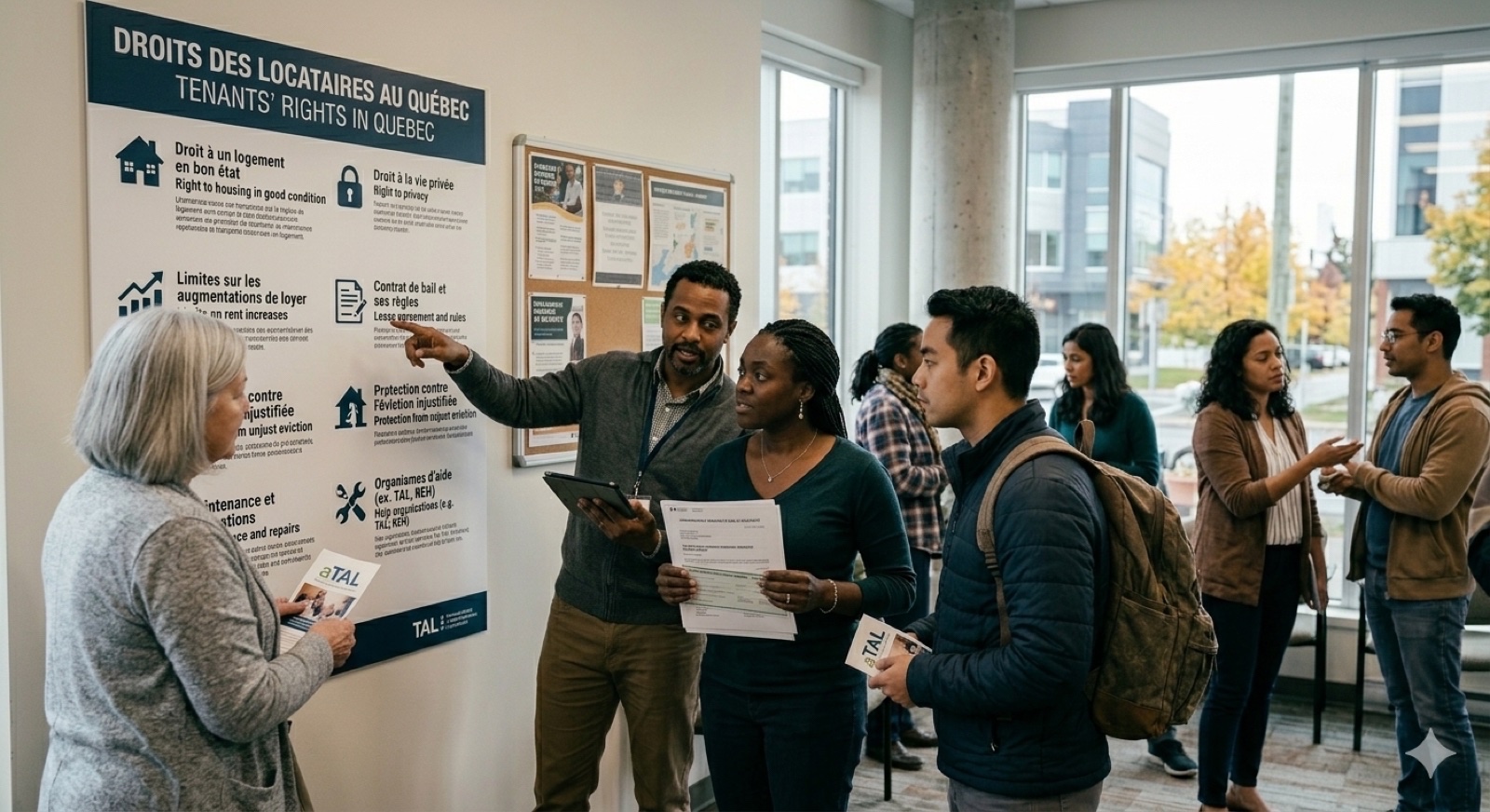
Housing is probably your heaviest decision of the first weeks. In Quebec the standard lease runs 12 months and, by tradition, most leases run July 1 to June 30 — which makes July 1 the big moving day, when thousands of households change address on the same day. If you arrive at another time of year you'll still find housing, but the choice is widest in spring. To sign, you'll generally be asked for ID, a proof of income or employment, and sometimes references. Read the lease in full before signing: Quebec rules cap rent increases and strongly protect the tenant.
Phone and internet
A Canadian phone number will be asked of you everywhere — by employers, landlords, government services. Cell plans cost more than in Europe; compare the main providers and their budget brands before committing, and be wary of long-term contracts. At home, internet access is a separate service, often bundled with television.
Your host city
Quebec is not just Montreal. Whether you settle in Quebec City, Laval, Longueuil, Gatineau, Sherbrooke, the Saguenay or elsewhere, each city has its own transit network, neighbourhoods, welcome services and pace. This section has a welcome guide for each major city: it points you to local resources, public transit and the first useful addresses. Pick yours in the "Guides by city" block below.
You're not alone
Immigrant welcome organizations exist in almost every Quebec city — free, often multilingual, they can support you with housing, work, school enrollment and French classes. When a step gets stuck, they are who to turn to; the Local Resources section lists them.
Where to actually start
If you want an ordered list, follow the "Your first week in Quebec" guide: it chains the tasks of the first seven days, from the SIN to the transit card. Check them off as you go — the feeling of progress counts for a lot when everything is new.
Common mistakes to avoid
Waiting for the SIN before doing anything else
The SIN is needed for a bank account and work, but you can search for housing, compare phone plans and explore your city in parallel. Don't freeze your first weeks.
Signing a lease without reading it
The lease binds you for 12 months and contains important clauses. Read it in full, ask your questions, and never hand over money before you have a signed lease.
Locking into a long phone contract too fast
Plans vary widely and budget brands are often enough. Start with a no-commitment plan while you compare.
Trying to do everything alone
Immigrant welcome organizations are free and know the local pitfalls. Contacting them in your first week saves precious time.

Frequently asked questions
What should I do first when I arrive in Quebec?
+
What should I do first when I arrive in Quebec?
+Get your SIN, then open a bank account and get a Canadian phone number. In parallel, look for housing and find your city's welcome services. The "Your first week in Quebec" guide gives the ordered list.
Can I open a bank account without a credit history?
+
Can I open a bank account without a credit history?
+Yes. Opening an account requires no Canadian credit history — you only need ID, your SIN, and a proof of address. Building your credit is a separate process that starts with your first credit card.
Why does everyone move on July 1?
+
Why does everyone move on July 1?
+By tradition, most leases in Quebec run July 1 to June 30, so July 1 is the big moving day. Housing can be found year-round, but the choice is widest in spring, before that date.
Do I need to speak French for my first steps?
+
Do I need to speak French for my first steps?
+French makes everything easier and remains Quebec's official language. In Montreal and the larger cities, most banks and major services can nonetheless serve you in English. Welcome organizations often offer service in several languages, and French classes are free — start them early.
Where can I find free help to settle in?
+
Where can I find free help to settle in?
+Immigrant welcome organizations exist in almost every Quebec city. They provide free support for housing, work, school and French classes. The "Local Resources" section lists them, and each city welcome guide names the local organizations.
Other topics
Browse all topicsIn the news
Recent changes that matter to newcomers.
Shelter Allowance: the new period opens October 1, up to $170 a month
A Revenu Québec benefit for households whose housing eats at least 30% of their income. Nobody sends it to you automatically — you have to apply.
Workplace health and safety: new protections in every workplace as of October 1, 2026
All employers must put prevention mechanisms in place. For a worker, that means a safer workplace and a say in safety.
Rent increases: a new calculation method since 2026
Quebec has modernized, for the first time in 40 years, how rent increases are calculated. Simpler, more predictable — here's what changes for you.
From Bécancour to Trois-Rivières.
Housing, transit, local schools: every guide also exists for your city, with real addresses and figures.
7 regions · 18 cities
All cities