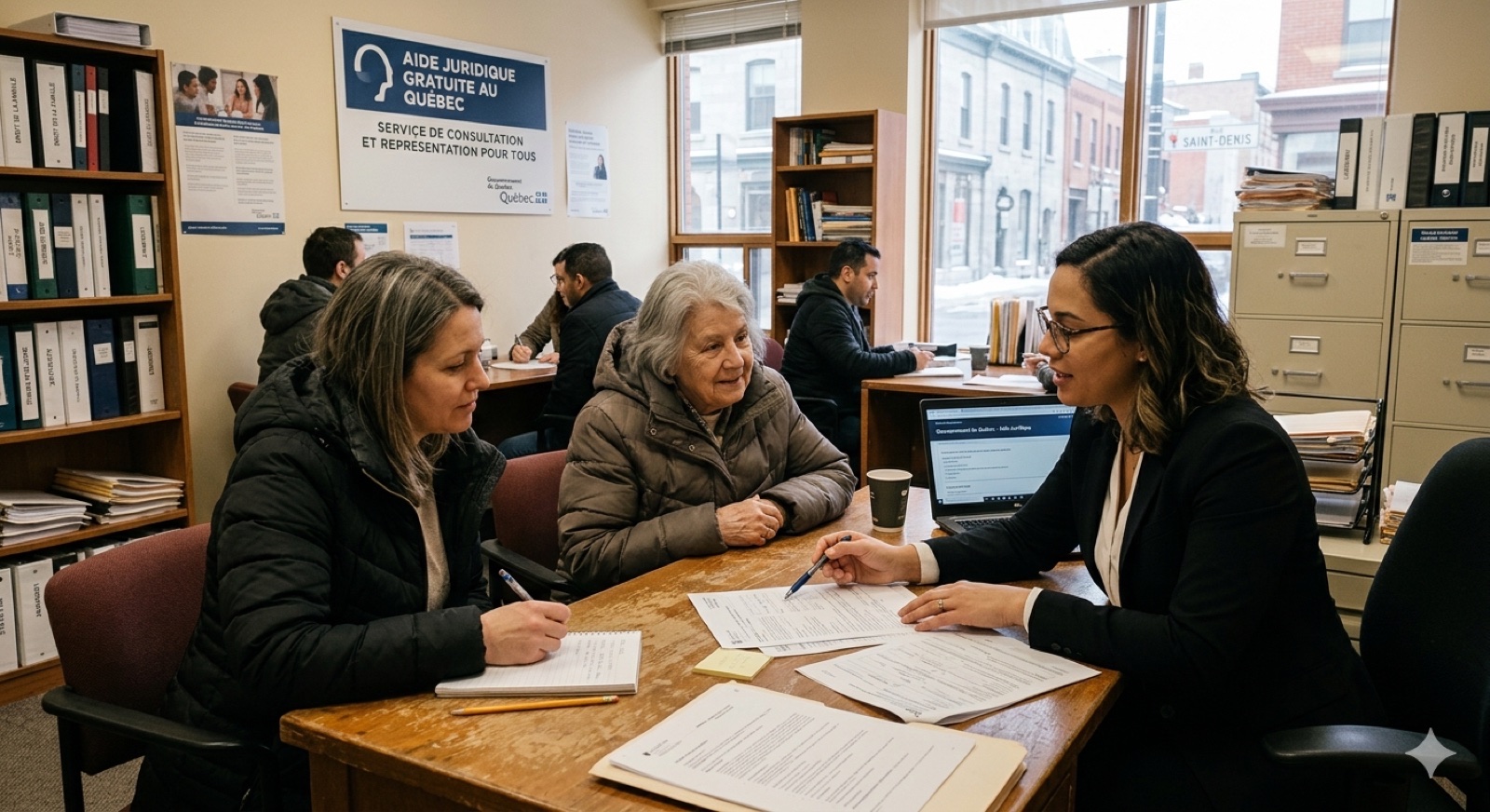
1. A service almost nobody knows about
When money is tight, when you feel overwhelmed by bills, or when you no longer know how to build a budget in a new country, there's free, judgment-free help: ACEFs. An ACEF (association coopérative d'économie familiale) is a community organization specialized in personal finances and consumer rights. There's one in almost every region of Quebec. They help you build a budget, understand your debts, and know your rights — often for free.
| ACEF service | Free? | By appointment? | For whom |
|---|---|---|---|
| Budget consultation | Yes | Yes | Anyone in financial difficulty |
| Creditor negotiation | Yes | Yes | Overdue debts |
| Tax return assistance | Yes | Yes | Low-income earners |
| Financial literacy workshops | Yes | Sometimes | General public |
| Consumer rights advocacy | Yes | No (general info) | Complaints, disputes |
2. What an ACEF can do for you
ACEFs offer several services:
- Budget consultation — an advisor helps you put your income and expenses on paper, see clearly, and find a method that holds. Our budget calculator can help you organize your figures before the appointment.
- Debt help — they explain your options, help you prioritize, and refer you if the situation exceeds their services.
- Consumer-rights information — contracts, purchases, collection agencies, abusive practices.
Many ACEFs also run free group workshops on budgeting and credit.
3. Who is it for? You, precisely
People often think these services are only for those in serious trouble. Not true. An ACEF helps the person who simply wants to learn to budget in a new system as much as the one drowning in debt. For a newcomer it's an excellent starting point: you learn how money works in Quebec — the real cost of living, credit traps, cell-phone or furniture-on-credit contracts. You don't need to be a citizen or permanent resident to ask for help.
4. How to find your regional ACEF
ACEFs are organized by region. To find yours:
- search online for ACEF plus your city or region's name;
- go through the Union des consommateurs, which brings several ACEFs together;
- or call 211, the free community-information service.
Call first to learn what services are offered, any costs, and wait times: the offer varies from one ACEF to another.
5. Frequently asked questions
Here are the most common questions about ACEFs: is it really free, is it confidential, and can they help even if you speak little French.
Is it really free?
Many ACEF services — budget consultations, information, group workshops — are free or low-cost. Some specific services may have a small fee. Always ask when you call, but cost is rarely a barrier; ACEFs exist to help people in financial difficulty, not to profit from them.
Is it confidential?
Yes. A budget consultation is private and confidential, and using an ACEF has no effect on your immigration file or your credit. It's a safe place to lay out your real situation and get clear, neutral advice.
What if my debts are too big for an ACEF?
The ACEF will still help you understand your situation and will refer you to the right resource — for example a licensed insolvency trustee if a consumer proposal or bankruptcy is worth considering. See our guide on insolvency to understand those options before you decide anything.
6. See also
These related guides may be useful:
- Building your Canadian credit — the foundation of healthy finances here.
- Bankruptcy and insolvency — the options for heavy debt.
- Common scams in Quebec — spotting fake debt-settlement offers.
- Budget calculator — organize your figures before your ACEF consultation.
7. Official sources
To find budget help near you, see:
Author's Note: asking for budget help isn't an admission of failure — it's a smart financial move. One early call to your regional ACEF can save you years of stress. It's free, confidential, and has no effect whatsoever on your immigration file.