Daily Life
Dossier101 guidesTransport, local services, health, everyday life.
For the whole province
These guides apply everywhere in Quebec, across the whole province — no matter your city.
Health and care
Seeing a doctor, the pharmacist, the dentist — how to access care, with or without a family doctor.
Seeing a Doctor in Quebec: Family, Walk-in or Online
How to see a doctor in Quebec: family doctor, walk-in clinics, ERs, and telehealth.
To consult for free, you need your RAMQ card. : 3 months for new permanent residents. During this time, get private insurance. For an assigned family doctor, register with the GAMF. Wait time: sometimes several years. In the meantime, use the other options. To register, you need a valid RAMQ health insurance card and must not already have a family doctor. Register or by phone at 1 844 313 2029 ...
Pharmacy and Prescription Drugs in Quebec
Quebec's public drug insurance (RAMQ), pharmacies, fees and deductibles: how to fill and pay for your prescriptions as a newcomer.
In Quebec, drug insurance is mandatory. Two options: Private insurance through your employer (if offered) → you must use it Public plan through RAMQ (default otherwise) The public RAMQ plan: Monthly deductible: about $21 Coinsurance: 30% of the remaining cost Monthly maximum: about $105 (varies by income) Children and seniors: enhanced coverage An annual premium is also paid through your Quebec...
Recommended Vaccines for Adult Newcomers in Quebec
Which vaccines to check on arrival, where to get them at the CLSC, and why to bring your vaccination record.
People often think vaccines are just for children. In fact, adults need updates too: some vaccines need boosters in adulthood, others are recommended based on age, health or work. For a newcomer, it's wise to take stock on arrival: your original vaccines may not match the Quebec schedule, and some protection may have expired. Good news: in Quebec several vaccines are offered free under the publ...
Going to the Dentist in Quebec
Dental care in Quebec: what the public plan covers (very little), private insurance, real prices for a check-up or filling, and low-cost options.
RAMQ covers little: Children under 10 — exam, X rays, fillings, simple extractions. Cleaning, scaling and fluoride application are NOT covered, even for children Last resort social assistance recipients — expanded access Adults in general — only hospital based emergencies Everything else — at your expense or via private insurance RAMQ also covers certain specific acts — for example some oral su...
Getting around
A car and its insurance here; public transit varies by city (see "Guides by city" below).
Car Insurance in Quebec
SAAQ for injuries, private insurer for the car — understanding the hybrid system.
Quebec has a hybrid system: SAAQ (public): covers bodily injuries of ALL drivers (regardless of fault) Private insurance: covers damage to the car (collision, theft, etc.) You pay the SAAQ via your annual registration fees Civil liability insurance is mandatory: Legal minimum: $50,000 Recommended: $1 to $2 million (cost difference is minimal) Without insurance: severe fine + licence suspended O...
Buying a Car in Quebec: Used, New or Lease
Used, new or lease: checks, real price, financing, warranty and SAAQ transfer.
A new car costs more and loses value fast in its first years. Its real advantages: Full warranty from the manufacturer No unknown history: no hidden accident, no debt Reliability and recent technology For a first vehicle on arrival, many newcomers choose used. New makes sense if you plan to keep the car for many years. Private seller: lower price, but no warranty and more risk Dealer: higher pr...
Money, housing and consumption
Credit, sales tax, tipping and buying a home — the financial habits of life here.
Building Canadian Credit: First Card and Strategy
Why credit matters, how to get a first card (secured or newcomer) and build your score.
In Canada, your credit history influences almost everything: Renting an apartment Getting a credit card with a good limit Financing a car Buying a home The credit score in Canada: 300 – 599: poor (few options) 600 – 659: fair 660 – 724: good 725 – 900: excellent (best rates) Five factors: 1. On time payments (most important) 2. Utilization rate: under 30% of your limit 3. Age of accounts 4. Typ...
Understanding GST and QST in Quebec
GST and QST explained: why the sticker price is never the price you pay in Quebec, the rates, what is taxed and how to calculate the total.
In Quebec, taxes are never included in the displayed price. GST: 5% (federal) QST: 9.975% (provincial) Total added: about 14.975% on top of the displayed price Quick calculation: displayed price × 1.15 approximate price at the register. $20 displayed → $23 $100 displayed → $115 $1,000 displayed → $1,150 Use the for a precise calculation. No taxes on: Basic food: fruits, vegetables, meats, milk,...
Tipping at Restaurants and Elsewhere in Quebec
Tipping in Quebec: how much to tip at restaurants, bars, taxis and salons, how to calculate it on the pre-tax amount, and why it is expected.
In Quebec, the tip is part of servers' salary. Minimum wage lower for tipped employees The tip closes the gap No tip considered rude At a restaurant: 15 to 20% of the pre tax subtotal. 15%: okay service 18%: good service (the norm) 20%+: excellent service 10%: genuinely disappointing service 0%: only for catastrophic service Trick: double the tax amount on the bill about 15%. For 18 20%, add a ...
RRSP, TFSA, FHSA, HBP & RESP Explained Simply

RRSP, TFSA, FHSA, HBP and RESP explained simply: what each account is for, which to open first and how the government helps you save.
RRSP, TFSA, FHSA, HBP, RESP: five acronyms you hear everywhere in Canada without anyone explaining them. They aren't investments in themselves — they're registered containers with the government in which you put your savings to pay less tax — and, in the case of the RESP, to receive grants for your children's education. The money inside can be in a savings account, GICs, funds, depending on wha...
Buying a Home in Quebec
Down payment, mortgage, broker — basics for going from renter to owner.
Minimum down payment: Under $500,000: 5% minimum $500,000 to $1.5M: 5% on the first $500K, 10% on the rest Over $1.5M: 20% minimum < 20% down: mortgage default insurance is mandatory (CMHC/Sagen) Mortgage pre approval: Before you shop for a home Tells you how much you can borrow Locks the rate for 90 to 120 days Strengthens your offer to sellers Estimate your monthly payments by price, down pay...
Immigrant Family Budget in Quebec: The Real Numbers

Understanding the real expenses of an immigrant family in Montréal — rent, groceries, daycare, transit — and how to balance your budget in the first years.
Budget management is one of the most concrete challenges of the first year in Quebec. This guide gives you realistic 2026 figures for Montréal — rent, groceries, transit, daycare, insurance and leisure — so an immigrant family can plan with eyes open. These figures are realistic ranges, not absolute minimums or luxury maximums. Housing typically represents 30–40% of a family budget. In Montréal...
Everyday housing
Subletting properly and checking whether your rent is excessive — day-to-day life as a tenant.
Family, children and school
Daycare, welcome classes, activities, homework help and childcare — getting organized when you have a family.
Subsidized Daycare in Quebec: How to Get a Spot
The three kinds of subsidized spots, the reduced daily rate, and how to register on the government's single portal.
In Quebec there are two big worlds of childcare, and the difference is huge for your budget. A state subsidized spot costs you a small daily rate set by the government — the same everywhere. A non subsidized spot, in a private daycare, costs you full price — often several dozen dollars a day — but you recover part of it through a refundable tax credit from Revenu Québec. Subsidized spots are in...
Enrolling Your Child in a Welcome Class in Quebec
How to enrol a non-francophone child in Quebec school and access welcome and French-support services.
When a child who doesn't yet speak French arrives in Quebec, the school doesn't leave them to fend for themselves in a regular class. It offers welcome and French support services — often in what's called a classe d'accueil (welcome class). There the child learns French intensively and gradually integrates into Quebec school life, until they can follow regular instruction in French. Depending o...
Kids' Activities in Quebec: Costs and Financial Help
Organized sports, hockey, summer camps and city recreation — the real costs and every financial aid.
Signing your child up for an activity — soccer, swimming, arts, scouts — does far more than keep them busy. It's often where they make their first friends, practise French in a relaxed setting, and where you, the parent, meet other families. In Quebec many of these activities are surprisingly affordable thanks to city programs, and there's help for families on a tight budget. Money shouldn't be...
Free Homework Help for Kids in Quebec
Where to find free homework help — Alloprof, libraries and community groups — when you can't help in French.
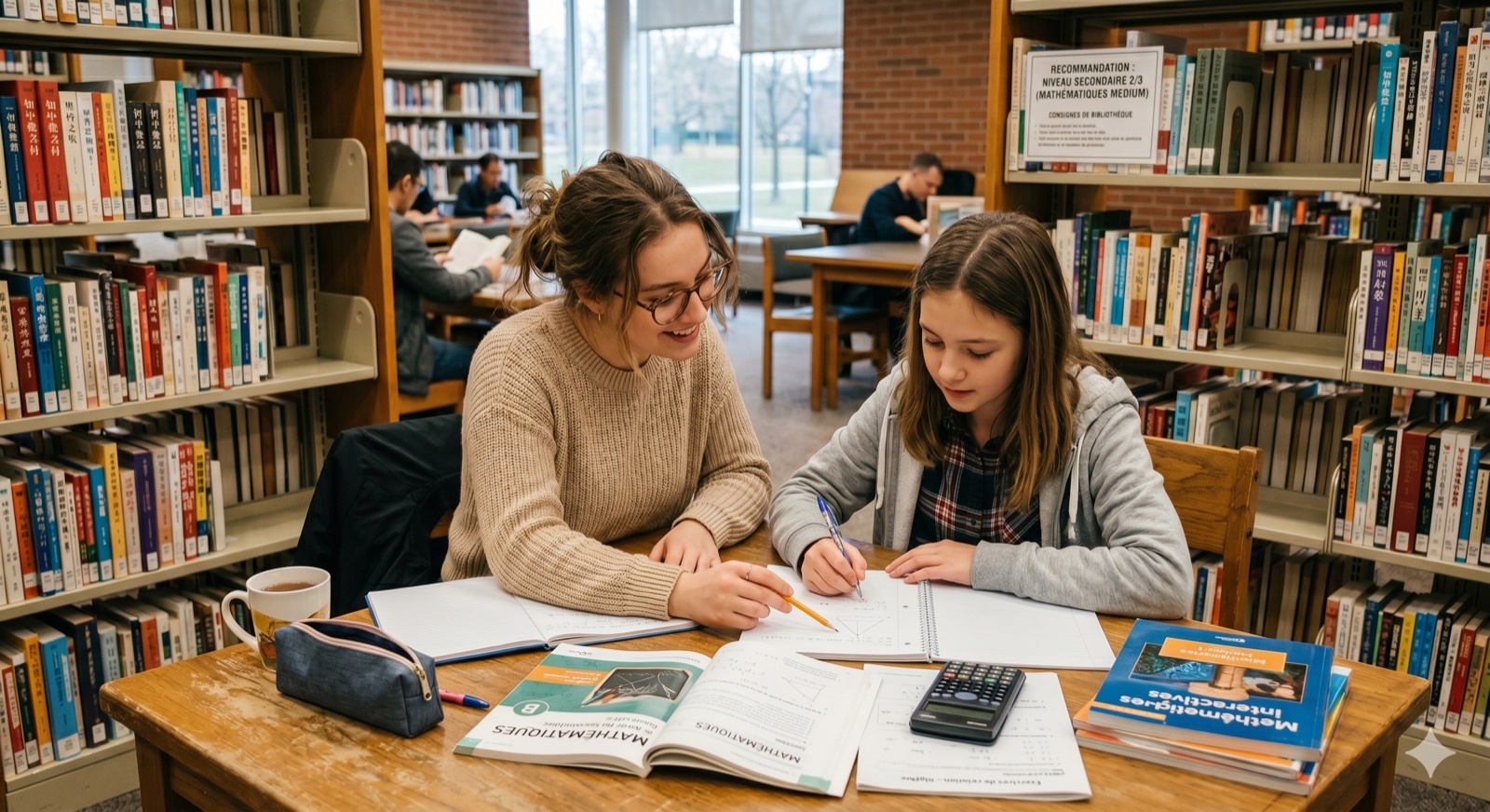
Many newly arrived parents feel guilty about not being able to help their child with homework in French, especially while learning the language themselves. Good news: in Quebec there's a real network of free homework help, built for the local school curriculum. Your child can get help from teachers, online or in person, at no cost. Your job isn't to know the answer — it's to connect your child ...
Choosing an Elementary School in Quebec
Choosing and enrolling your child in a Quebec elementary school: French or English public, private, enrolment deadlines and parents' rights.
Quebec's school system is divided into school boards serving specific geographic territories. There are two major public networks: French language network — the largest, accessible to all residents English language network — accessible only under specific eligibility conditions (see below) Elementary school in Quebec spans 6 years (Grades 1–6), for children approximately 6–12 years old. Compuls...
Activities for Babies and Toddlers in Quebec (0–3)
Free and affordable activities for babies and toddlers in Quebec: libraries, early childhood centres, drop-in daycares, parent groups and CLSC services.
Quebec has established a network of public resources to support parents of young children — many of these resources are free or very low cost. Two most important resources to know from arrival: 1. Your neighbourhood CLSC: first point of contact for your baby's health — birth follow up, vaccinations, weigh ins, specialist referrals. In most CLSCs, a nurse follows up within days of coming home fr...
Everyday: groceries, winter, school
Gearing up for winter, grocery shopping, connecting the home, enrolling the kids.
Surviving the Quebec Winter
Clothing, transport, housing, and health to get through winter without suffering.
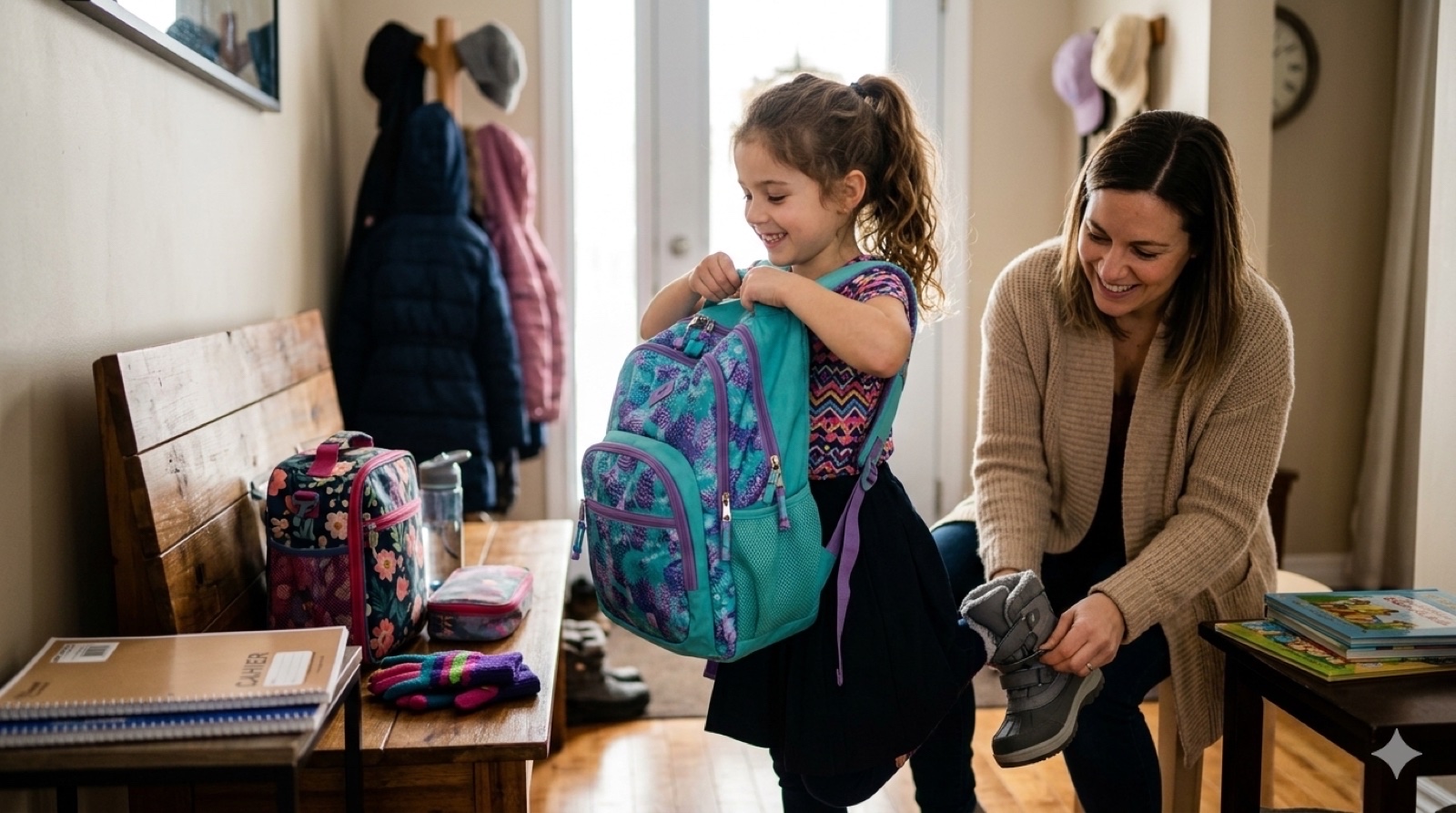
Quebec winter lasts about 5 months (November to April). Temperatures: −15 to −30 °C, sometimes lower with windchill Snowstorms are frequent Short days (sunrise around 7:30, sunset around 16:30 in December) The most important investment: Coat rated for −30 °C, with hood and fur trim ($200 to $600) Winter boots, waterproof, with non slip soles Reliable brands: Kanuk, Canada Goose, North Face, Col...
Grocery Stores in Quebec: A Practical Guide
Grocery shopping in Quebec: comparing IGA, Metro, Maxi and Super C, how to save money, and where to find international products.
The Quebec market is dominated by three big groups: Loblaws: Provigo (premium), Maxi (discount) Sobeys: IGA (premium) Metro Inc.: Metro (premium), Super C (discount) Each group occupies both the quality niche and the discount niche, with two distinct banners — a strategy to capture both affluent shoppers and price conscious ones. Quality grocers (higher prices): IGA, Metro, Provigo Wide selecti...
Home Internet and TV in Quebec
Home internet and TV in Quebec: comparing Bell, Vidéotron and the smaller providers, choosing a plan and avoiding contract pitfalls.
The Quebec market: Bell and Vidéotron: major players, available everywhere Cogeco: certain regions EBOX, Fizz, VMedia: cheaper alternatives, same infrastructure Recommended speed by use: 100 Mbps: 1–3 people, normal use 300–500 Mbps: 4+ people, gaming, intensive remote work 1 Gbps: rarely a residential necessity Typical prices for 100 Mbps: Bell, Vidéotron, Cogeco: $70 to $90/month EBOX, Fizz, ...
Quebec's School System
From primary to university, understanding levels and choices for your kids.
Structure from primary to university: Primary: 6 years (Grades 1 to 6, 6 to 12 years old) Secondary: 5 years (Sec. 1 to 5, 12 to 17 years old) CEGEP: 2 or 3 years ( 17 to 19 years old) University: bachelor's 3 years, master's 2 years, doctorate 3 5 years The diagram below shows these pathways, plus the entry points for adults. Mandatory and free until age 16 Public school: free (only material a...
Civic life and cultural codes
Voting in local elections and understanding Quebec's social codes — settling into life here.
Quebec Etiquette and Cultural Codes in Daily Life
Tu or vous, saying hello, lining up, taking off your shoes: the cultural codes that make daily life smoother in Quebec.
Beyond language, every society has its invisible codes: the right distance, the right tone, what's done and what isn't. In Quebec these codes are often relaxed and warm, but they exist, and knowing them spares you awkward moments and helps you feel at home faster. This guide gathers the most useful everyday codes for a newcomer — no judgment, just to help you settle in smoothly. Situation Expec...
Places of Worship and Religious Practice in Quebec
Finding your place of worship in Quebec — mosques, temples, synagogues, churches of all faiths — and understanding the role of religion in Quebec's secular society.
Quebec is an officially secular society — religion is separated from the state and public institutions. This does not mean religion is absent from Quebec society. There's an important distinction between the public and private spheres. In the public sphere (public schools, hospitals, government offices, courts): religious signs are regulated and religious neutrality is valued. Law 21 (2019) pro...
Quebec's eleven Indigenous nations
Who the eleven nations are, where they live, what languages they speak, and how to discover their cultures without getting it wrong.
You already live in the middle of these cultures, whether or not you know it. The word Québec comes from an Indigenous language. The maple syrup you eat at the sugar shack rests on know how that the Government of Quebec itself describes as a legacy of Indigenous peoples. Dozens of town and river names around you come from Algonquin, Innu, Abenaki or Mi'kmaq. And yet most newcomers spend their f...
Dining Out in Quebec: Culture, Tips and Codes
Everything you need to know to dine out in Quebec: tipping, taxes, how to order, restaurant types and mistakes to avoid as a newcomer.
Dining out is an important social pleasure in Quebec — whether it's a morning café, a business lunch, a family dinner or an evening with friends. Quebec restaurants have their own codes that newcomers sometimes discover with surprise. Key point: you are greeted at the entrance and seated at a table by a host or server. It's rare to choose your own table in a medium or large restaurant — wait to...
Buying and drinking alcohol in Quebec
Why there are no spirits at the grocery store, how late you can buy, and what you may actually bring to a BYOW restaurant.
This is one of the most common blind spots for newcomers. You are planning a dinner, you stop at the grocery store, and you look for a bottle of rum or vodka. You will not find it. Not because the store is poorly stocked — because the law forbids it. In Quebec, the state controls alcohol sales, and the rules resemble those of almost nowhere else you have probably lived. Where to buy what, until...
Tipping at Restaurants and Elsewhere in Quebec

Tipping in Quebec: how much to tip at restaurants, bars, taxis and salons, how to calculate it on the pre-tax amount, and why it is expected.
In Quebec, the tip is part of servers' salary. Minimum wage lower for tipped employees The tip closes the gap No tip considered rude At a restaurant: 15 to 20% of the pre tax subtotal. 15%: okay service 18%: good service (the norm) 20%+: excellent service 10%: genuinely disappointing service 0%: only for catastrophic service Trick: double the tax amount on the bill about 15%. For 18 20%, add a ...
Neighbourhoods & local shops
Supermarket, pharmacy, public market — the everyday shops and how to find your feet from day one.
Pharmacy and Prescription Drugs in Quebec
Quebec's public drug insurance (RAMQ), pharmacies, fees and deductibles: how to fill and pay for your prescriptions as a newcomer.
In Quebec, drug insurance is mandatory. Two options: Private insurance through your employer (if offered) → you must use it Public plan through RAMQ (default otherwise) The public RAMQ plan: Monthly deductible: about $21 Coinsurance: 30% of the remaining cost Monthly maximum: about $105 (varies by income) Children and seniors: enhanced coverage An annual premium is also paid through your Quebec...
Grocery Stores in Quebec: A Practical Guide
Grocery shopping in Quebec: comparing IGA, Metro, Maxi and Super C, how to save money, and where to find international products.
The Quebec market is dominated by three big groups: Loblaws: Provigo (premium), Maxi (discount) Sobeys: IGA (premium) Metro Inc.: Metro (premium), Super C (discount) Each group occupies both the quality niche and the discount niche, with two distinct banners — a strategy to capture both affluent shoppers and price conscious ones. Quality grocers (higher prices): IGA, Metro, Provigo Wide selecti...
Public Transit in Quebec: Bus, Metro and Train
How to use public transit in Quebec — STM, RTC, RTL, exo — fares, passes and the right habits for getting around without a car.
Quebec has a well developed public transit network in its major cities, but very limited coverage in rural areas. Each region has its own transit agency: STM in Montréal, RTC in Québec City, RTL in Longueuil, STL on Montréal's north shore, and the exo network for distant suburbs and commuter trains. For travel between cities, Flixbus, Orléans Express and Via Rail serve the main routes. If you l...
Community life
Libraries, community centres, cultural associations — the free resources that build community.
Libraries in Quebec: Much More Than Books
The public library is free, bilingual and open to everyone. Here's what you can do there, how to sign up, and why it's one of the best integration tools.
In many countries, a library is a quiet place to borrow books. In Quebec, it's much more than that. The public library is a living space open to all residents — free, bilingual, heated in winter — offering books, yes, but also films, music, board games, children's activities, computer classes, workspaces and sometimes even recording studios or 3D printers. Registration is free with a piece of I...
Cultural Associations for Immigrants in Quebec
Cultural associations, community centres and diaspora groups are often the first gateway into Quebec society. A guide to finding them and making the most of them.
For most immigrants, the first weeks in Quebec feel the same: an apartment to furnish, administrative steps to complete, and a loneliness that surprises even those who anticipated the change. This is normal. The social network rebuilds itself. Cultural and community associations exist precisely to accelerate that rebuilding. They're spaces where your first language is spoken, where others have ...
Free Homework Help for Kids in Quebec
Where to find free homework help — Alloprof, libraries and community groups — when you can't help in French.
Many newly arrived parents feel guilty about not being able to help their child with homework in French, especially while learning the language themselves. Good news: in Quebec there's a real network of free homework help, built for the local school curriculum. Your child can get help from teachers, online or in person, at no cost. Your job isn't to know the answer — it's to connect your child ...
Volunteering in Quebec: How to Get Started
Volunteering in Quebec: why it helps you integrate, where to find opportunities, the easiest fields to start in and how to list it on your résumé.
Volunteering plays an important role in Quebec society. Tens of thousands of non profit organizations, school committees, sports federations, food banks and newcomer support organizations run thanks to volunteer work. For a newcomer, volunteering offers several simultaneous benefits: Practice French in a real, supportive environment Build a local network in Quebec — often the main barrier to em...
Recreation & outings
Parks, public markets, festivals, sports activities — going out, having fun and enjoying Quebec without breaking the bank.
Kids' Activities in Quebec: Costs and Financial Help

Organized sports, hockey, summer camps and city recreation — the real costs and every financial aid.
Signing your child up for an activity — soccer, swimming, arts, scouts — does far more than keep them busy. It's often where they make their first friends, practise French in a relaxed setting, and where you, the parent, meet other families. In Quebec many of these activities are surprisingly affordable thanks to city programs, and there's help for families on a tight budget. Money shouldn't be...
Free Activities in Montreal: Outings and Culture
Parks, free museums, festivals, libraries, pools — a practical guide to the best free activities in Montréal for families and newcomers.
Montréal has a well established reputation as a cultural, festive city — and much of what the city offers at its best is entirely free. The parks are magnificent and open to all. Summer festivals attract millions of visitors, and the vast majority of shows cost nothing. Museums open their doors for free on certain days. Outdoor pools and skating rinks are often municipal and low cost or free. F...
Montréal's Public Markets: Where, When and What to Buy
Jean-Talon, Atwater, Maisonneuve — Montréal's public markets are much more than grocery spots. A practical guide for newcomers.
Montréal's public markets are nothing like supermarkets. They are living spaces where farmers from surrounding regions sell directly to consumers — fruits, vegetables, artisanal cheeses, meats, breads, flowers, spices and homemade processed goods. Visiting a market is a taste of rural Quebec without leaving the city. Seasonal produce prices are often competitive with grocery stores, sometimes c...
Cultural Festivals in Quebec: The Major Events Calendar
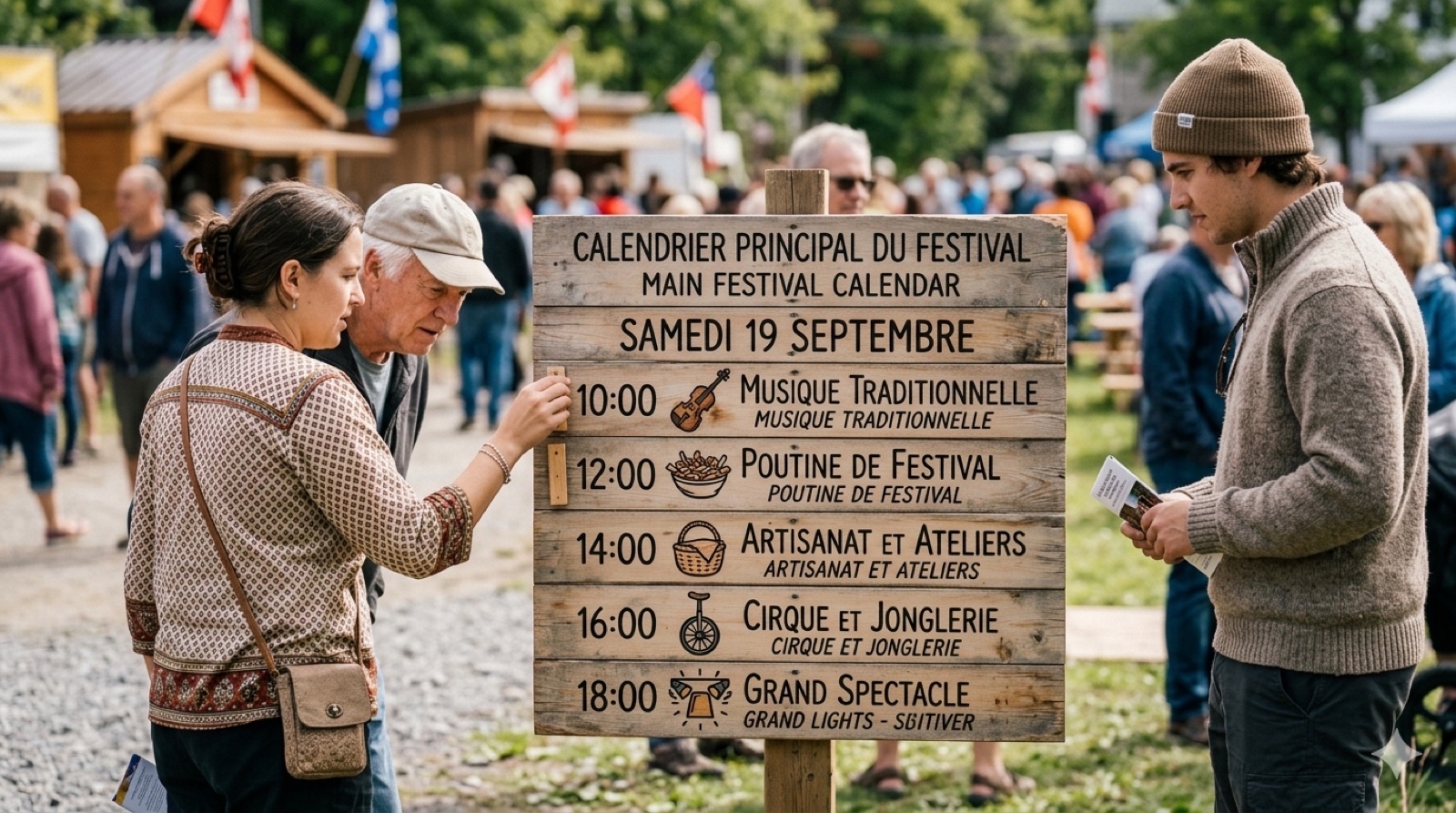
Quebec's major festivals that Quebecers look forward to all year — music, comedy, winter, film, food — with dates, free access and tips to make the most of them.
Quebec is world renowned for its cultural festivals. These events are part of Quebec identity — Quebecers look forward to them months in advance. For a newcomer, participating in these festivals is an enjoyable way to integrate into local culture — and many events are freely accessible in public spaces. Montréal's major festivals: Festival When Free access Festival International de Jazz de Mont...
The sugar shack and maple season
When to go, what you eat, what it costs and how to prepare — the most Quebec spring tradition there is.
If a single outing were to make you understand Quebec, this would be it. At the end of winter, when the snow is still there but the sun is starting to warm things up, thousands of Quebec families head for the cabane à sucre. You eat far too much, you sometimes sing, and you leave with syrup filling the trunk. This is not a tourist attraction invented for visitors: it is a family ritual that cut...
Balcony Gardening in Quebec: Vegetables and Herbs
How to grow tomatoes, herbs and vegetables on a Quebec balcony — when to plant, how to choose the right containers and avoid beginner mistakes.
Balcony gardening is very popular in Quebec, particularly in Montréal. Having a few pots of cherry tomatoes, basil, parsley or mint on your balcony is common and accessible even for complete beginners. Key climate constraint: the growing season is short — from late May to October — and winters are too harsh for anything to survive outside. But in those five months, a lot is possible. Quebec's p...
Seasons & the pace of life
Winter, the school calendar — understanding the pace of the Quebec year so nothing catches you off guard.
Surviving the Quebec Winter
Clothing, transport, housing, and health to get through winter without suffering.
Quebec winter lasts about 5 months (November to April). Temperatures: −15 to −30 °C, sometimes lower with windchill Snowstorms are frequent Short days (sunrise around 7:30, sunset around 16:30 in December) The most important investment: Coat rated for −30 °C, with hood and fur trim ($200 to $600) Winter boots, waterproof, with non slip soles Reliable brands: Kanuk, Canada Goose, North Face, Col...
Quebec's School System
From primary to university, understanding levels and choices for your kids.
Structure from primary to university: Primary: 6 years (Grades 1 to 6, 6 to 12 years old) Secondary: 5 years (Sec. 1 to 5, 12 to 17 years old) CEGEP: 2 or 3 years ( 17 to 19 years old) University: bachelor's 3 years, master's 2 years, doctorate 3 5 years The diagram below shows these pathways, plus the entry points for adults. Mandatory and free until age 16 Public school: free (only material a...
Everyday health
Walk-in clinics, CLSCs, family doctors, vets — navigating the Quebec health system without an assigned doctor.
Pets in Quebec: Vet, Rules and Costs
Bringing or adopting a pet in Quebec: what it costs, how to find an affordable vet, municipal rules and resources if the budget is tight.

Pets are part of the daily life of many Quebec families — dogs, cats, rabbits, birds and fish are the most common. Quebec has clear rules on animals in apartments, breeds banned in certain cities, mandatory sterilization in some boroughs, and the requirement to keep dogs on leash in public spaces. For newcomers who want to bring their pet or adopt one, this guide covers the essentials: arrival ...
Optometrist and Glasses in Quebec: Costs and Options
Understanding the costs of eye care in Quebec, what RAMQ covers, options for glasses and contacts, and where to find affordable care.
In Quebec, two professionals handle eye health: Optometrist: performs vision exams, prescribes glasses and contact lenses, can diagnose some eye conditions. For routine vision exams and getting a glasses or contacts prescription, you see an optometrist. Ophthalmologist: a medical eye specialist — treats eye diseases, performs surgeries, can also prescribe glasses. For medical issues (cataracts,...
Mental Health in Quebec: Where to Find Help
Understanding access to mental health care in Quebec, free resources available, how to navigate the system and where to go in a crisis.
Quebec has made significant progress in recent years normalizing mental health care. Many employers offer Employee Assistance Programs (EAPs) including free psychology sessions. Universities and cégeps have free counselling services for students. For newcomers, the immigration process itself — the break from your home country, cultural adaptation, uncertainty, sometimes isolation — is a recogni...
Home, internet & services
Setting up internet and your phone plan, insuring your belongings, DIY basics, recycling, and everyday apps — getting your home equipped and running.
Home Internet and TV in Quebec
Home internet and TV in Quebec: comparing Bell, Vidéotron and the smaller providers, choosing a plan and avoiding contract pitfalls.
The Quebec market: Bell and Vidéotron: major players, available everywhere Cogeco: certain regions EBOX, Fizz, VMedia: cheaper alternatives, same infrastructure Recommended speed by use: 100 Mbps: 1–3 people, normal use 300–500 Mbps: 4+ people, gaming, intensive remote work 1 Gbps: rarely a residential necessity Typical prices for 100 Mbps: Bell, Vidéotron, Cogeco: $70 to $90/month EBOX, Fizz, ...
Useful Apps for Living in Quebec
The best free apps to simplify daily life in Quebec — transit, government, health, finances and more.
For getting around Quebec, several apps are essential: Transit — best app for public transit: covers STM in Montréal, RTC in Québec City, RTL on the South Shore and most regional networks. Shows real time bus and metro arrivals. Google Maps — for driving, transit or walking navigation across all of Quebec. BIXI (Montréal) — locate stations and unlock bikes. Waze — popular for driving to avoid t...
Bottle Deposit and Recycling in Quebec
How bottle deposits work in Quebec, what goes in recycling bins, how to compost and avoid errors that contaminate recycling.
The bottle deposit (consigne) is a refundable deposit on certain beverage containers — you pay it at purchase and get it back when you return the empty container. Current deposit amounts (Consigne Plus): 10 cents for most targeted containers (cans, plastic, small containers) 25 cents for glass containers 500 ml and over (wine bottles, large beer bottles) Consigned containers: beer bottles and c...
Hardware Stores and DIY in Quebec
Finding the right tools, materials and services for home maintenance and repairs in Quebec — Home Depot, Réno-Dépôt, BMR, tool rental and lease rules.
Quebec has several major hardware store chains: Chain Notes Home Depot Giant chain, large selection, many Montréal locations Réno Dépôt Quebec French language version of Home Depot, same parent company, similar selection BMR Quebec cooperative, more present in mid sized cities and regions; smaller stores, known for personalized service Rona Another major Canadian chain present in Quebec Indepen...
Hair Salons and Beauty Services in Quebec
Finding a good hair salon in Quebec — price ranges, local conventions, cultural differences to know and tips for communicating your needs in a French-language salon.
Haircut prices in Quebec vary considerably by salon type, city, and services requested: Service Typical price range Men's haircut (barbershop / standard salon) $20–40 Women's haircut (standard salon, no colour) $30–60 Upscale salon (central Montréal neighbourhoods) $60–120+ Colouring / highlights $80–200+ depending on complexity Blow dry / styling $30–60 Customary tip: 15–20% — to be added to t...
Shopping & groceries
Grocery shopping online, ordering food, finding ingredients from home, and buying secondhand — eating and shopping well without breaking the bank.
Food Delivery in Quebec
Using Uber Eats, DoorDash, Skip and SkipTheDishes in Quebec — platform comparison, fees to know, tipping, money-saving tips and finding the best local restaurants.
Three major platforms in Quebec: Uber Eats, DoorDash and Skip (SkipTheDishes). Each platform has its own partner restaurants — some are exclusive to one platform, others appear on all three. Pro tip: ordering directly from the restaurant (by phone or their own website) is often cheaper — no platform service fees. The price shown in a delivery app is almost always lower than what you'll actually...
Online Grocery and Home Delivery in Quebec
Comparing online grocery delivery services in Quebec — IGA online, Maxi, Instacart, Goodfood and alternatives — fees, delays, money-saving tips.
Online grocery delivery has grown considerably in Quebec in recent years. Main options: Service Type Notes IGA en ligne Direct supermarket delivery Order online, delivery 1–2 days or same day in store pickup Maxi / Provigo Direct supermarket delivery Available in most of Montréal and suburbs Instacart Third party delivery (multiple stores) Delivery in 1–2 hours; shops at various stores Goodfood...
Finding Home-Country Ingredients in Quebec
Where to find ingredients from your home country in Quebec: African, Asian, Middle Eastern and Latin American grocers, ethnic markets and online orders.
Montréal is extraordinarily food diverse. Thanks to successive waves of immigration, you can find ingredients from virtually every country in the world — Ethiopian spices, rare Asian vegetables, Latin, African, Middle Eastern and Caribbean products. Key neighbourhoods for international food: Côte des Neiges — Montréal's most cosmopolitan neighbourhood; extraordinary international food selection...
Garage Sales, Thrift Stores and Kijiji in Quebec
Buying second-hand in Quebec: garage sales, thrift stores, Kijiji and Facebook Marketplace to furnish and equip your home for less.

In Quebec, buying and selling second hand items is deeply embedded in local culture. It's a normal, valued practice across all income levels, encouraged by growing environmental consciousness. For a newcomer who needs to furnish an empty apartment, the second hand market is an extraordinary opportunity to save several thousand dollars. On July 1st (Montréal's massive moving day), hundreds of pi...
Sports, the outdoors & the seasons
Enjoying winter, summer beaches, and national parks year-round — staying active and discovering Quebec through the seasons.
Winter Outdoor Activities in Quebec
Discover the winter activities Quebecers love — cross-country skiing, snowshoeing, tobogganing, skating — with the best spots, costs and practical tips.
Quebec winter lasts five to six months. Quebecers don't hole up at home from November — they ski, skate, toboggan, snowshoe, go to bonfires and attend winter festivals. The popular expression: 'there's no bad weather, only bad clothing.' The key to enjoying Quebec winter is dressing correctly — in layers, with materials that retain warmth even when wet. Once properly dressed, most winter activi...
Beaches and Swimming in Quebec: Where to Swim in Summer
The best beaches accessible from Montréal and across Quebec's regions — rivers, lakes, supervised beaches, safety rules and tips for enjoying the water in summer.
Quebec's swimming season is short but intense. Waters in Quebec's lakes and rivers are generally warm enough for swimming from mid June to late August, sometimes into early September depending on the year. The peak summer season is July and August, when temperatures can exceed 30°C for consecutive days. Quebec has remarkable water resources — thousands of lakes, major rivers, and access to the ...
Hiking and National Parks in Quebec
Exploring Quebec's national parks on foot: the most beautiful trails, Sépaq rates, how to book, and the essentials to know before you go.
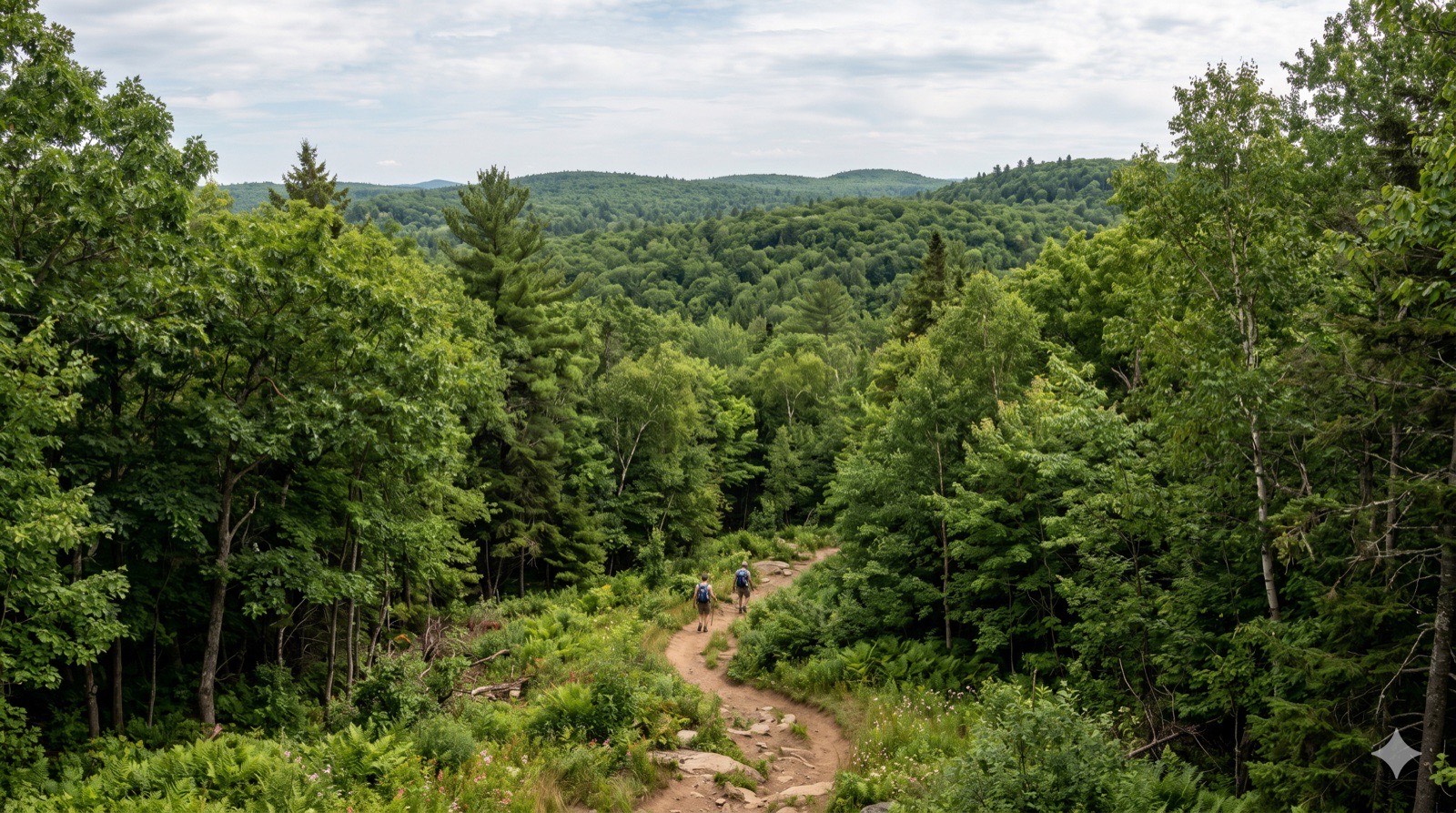
Quebec has 23 national parks managed by the Société des établissements de plein air du Québec (Sépaq), with several new parks in development. They span the entire province — Laurentians, Eastern Townships, Gaspésie, Bas Saint Laurent, Nunavik. Park access is paid: Daily access fee (per park, around $10/adult) Annual Discovery Card (around $95/adult): covers access to all parks, worthwhile if yo...
Public transit, city by city
Every city has its own network (STM, STL, RTL, STO, exo, STS…). Find the guide for yours.
Using the Montreal Metro and Bus (STM)
How to get and load an OPUS card, choose the right fare and ride the STM metro and buses in Montreal, with tips for newcomers.
The STM is the Société de transport de Montréal. It runs the metro and the bus network on the island of Montreal. To use its services, you need an OPUS card loaded with a valid transit pass. The OPUS card is a rechargeable smart chip card. It stays with you for all your years in Montreal. It comes in two versions: The basic card — for the regular adult fare The photo OPUS card — required for re...
RTC: Public transit in Quebec City
The essentials of Réseau de transport de la Capitale for getting around Quebec City, from tickets to Métrobus lines.
The RTC, or Réseau de transport de la Capitale, is the bus authority serving Quebec City and surrounding areas. It is the simplest and most affordable way to get around without a car. You can pay in cash directly on board, but the fare is cheaper with an OPUS card. This rechargeable card lets you buy single tickets, multi ride passes, or a monthly pass. The Métrobus network groups the RTC's fas...
Public Transit in Laval: STL, Metro and OPUS
How to use the STL bus network and the metro to get around Laval and into Montreal.
In Laval, public transit relies on two complementary networks. The STL, Société de transport de Laval, runs the local buses covering all of Laval. Montreal's metro — the orange line — has three stations in Laval that reach downtown Montreal in about twenty minutes. The OPUS card pays for all networks in Greater Montreal. The orange line crosses Laval with three stations: Cartier — near the brid...
Public Transit in Gatineau: STO, OC Transpo, Multi Card
The STO network, OC Transpo connection from Ottawa, and the Multi card for getting around the capital region.
The STO, or Société de transport de l'Outaouais, runs the buses in Gatineau. The network covers the five sectors: Aylmer, Hull, Gatineau, Buckingham and Masson Angers. Several Rapibus lines cross the city quickly on a dedicated lane. Many Gatineau residents work in Ottawa. Several STO lines cross the bridges to Ottawa, and several OC Transpo lines come into Hull. If you commute daily between Ga...
Public Transit in Longueuil
The RTL, the metro yellow line, and the OPUS card — everything for getting around Longueuil.
The RTL, or Réseau de transport de Longueuil, is the bus operator for the Longueuil agglomeration. It serves Longueuil, Brossard, Saint Lambert, Boucherville and Saint Bruno de Montarville. More than 80 routes cover the territory, with high frequency at rush hour. Montreal's metro yellow line crosses the river and ends at Longueuil–Université de Sherbrooke station. It is the only direct metro a...
Public Transit in Sherbrooke: STS
Getting around Sherbrooke by bus: the STS network, the OPUS card, fares and passes, and the main routes newcomers use every day.
The STS, or Société de transport de Sherbrooke, operates the buses in Sherbrooke. Network coverage: Over 20 lines covering the whole city High frequency to Université de Sherbrooke and Cégep de Sherbrooke Regional service: Lennoxville, Rock Forest, Fleurimont Schedule: Monday to Sunday First buses: 6 AM Last buses: 11 PM (limited evenings) One of the best networks for a city of under 200,000 re...
Transit in Lévis: STLévis and Ferry
The STLévis buses, the ferry to Quebec City, and the OPUS card for getting around the region.
In Lévis, three complementary networks handle your travel: STLévis — local buses covering all of Lévis Québec Lévis ferry — crosses the river in about 12 minutes OPUS card — pays for STLévis and several other networks STLévis runs over 30 bus routes in Lévis. Main routes connect the Saint Jean Chrysostome, Saint Romuald, Saint Nicolas, Pintendre and Saint Étienne sectors to downtown and the fer...
STTR: Public transit in Trois-Rivières
The Société de transport de Trois-Rivières bus network, fares, and main routes in the Mauricie region.
The STTR, or Société de transport de Trois Rivières, is the bus authority serving Trois Rivières and its sectors like Cap de la Madeleine. It is an affordable, reliable service for those without a car, especially for reaching the Université du Québec à Trois Rivières. You can pay in cash on board, but the fare is cheaper with the Carte Cité. This rechargeable card lets you buy single tickets or...
Public Transit in Saguenay (STS)
The Société de transport du Saguenay and how to get between Chicoutimi, Jonquière and La Baie.
The Société de transport du Saguenay (STS) runs the bus network linking Chicoutimi, Jonquière and La Baie. Network coverage: About 30 lines Serves: UQAC, Cégep de Chicoutimi, Cégep de Jonquière, Place du Royaume, hospitals in Chicoutimi and La Baie, Rio Tinto Arvida plants Schedules: Monday to Saturday: full service Sunday: reduced service First buses: 6 AM Last buses: 11 PM No night service Ma...
Transit in Terrebonne: exo Mascouche and OPUS
How to use the exo Mascouche train line and local buses to get around Terrebonne and into Montreal.
Terrebonne is served by exo, Greater Montreal's regional train and bus network. The Mascouche train line connects Terrebonne to downtown Montreal in about one hour, with a stop at Central Station. exo also runs several bus routes covering Terrebonne and the north shore. The Mascouche line serves several stations in the area: Terrebonne, Mascouche and Sainte Thérèse. Each station has free park a...
Public Transit in Repentigny: exo and OPUS
Getting around Repentigny: the exo bus network, fares and passes, and the best options for commuting to Montreal every day.
Repentigny is served by exo, Greater Montreal's regional train and bus network. In Repentigny, service is mainly provided by express bus lines connecting the city to Radisson metro in east end Montreal, in about 30 minutes at rush hour. Several express and local bus routes serve Repentigny. Express buses to Montreal leave from several park and ride lots, notably at exit 22 of Highway 40. Check ...
Getting Around Magog: Transit and Car
Transit options in Magog: rural collective transit, car, bike and shuttle to Sherbrooke.
Magog is primarily a car oriented town. Downtown is easy to cross on foot, but reaching other towns essentially requires a car. The highway network reaches Sherbrooke in 30 minutes and Montreal in 1 hour 30. Transport collectif de la MRC de Memphrémagog offers a shuttle bus to Sherbrooke. Frequencies are limited, especially evenings and weekends. Magog is very well served by bike paths. The Rou...
Getting Around Drummondville: Transit and Car
Getting around Drummondville: public transit, driving on Autoroute 20, and bus and train links to Montréal and Québec City.
The Société de transport de Drummondville serves downtown, neighbourhoods, Cégep, industrial parks. Adult cash fare: $3.50 With the reloadable card: $3.00 Adult monthly pass: $59 These are the fares in effect since January 1, 2026 (rates are revised annually). Drummondville is served by VIA Rail. Drummondville ↔ Montreal: about 1h15 on average — the fastest, most direct link Drummondville ↔ Que...
Getting Around Brossard: REM, RTL and OPUS
How to use the REM light metro, RTL buses and the OPUS card to get around Brossard and into Montreal.
In Brossard, three transit networks work together. The REM is the light metro linking Brossard to downtown Montreal in about 18 minutes. The RTL runs the local buses in Brossard and Longueuil. The OPUS card lets you pay on both networks and across the entire metropolitan system. The REM opened in 2023. In Brossard, three stations connect you to the network: Brossard, Du Quartier and Panama. Tra...
BCITI Brossard Card: How to Get Your Free Resident Card
Learn how to get your resident card to access libraries, leisure activities, and city digital services.
The BCITI card is a digital or physical resident card. It is free and mandatory to register for leisure activities and borrow books from the library. You can create your profile online at brossard.ca or via the BCITI+ app. If you prefer, you can go in person to City Hall or the Georgette Lepage library. To validate your account, you must provide proof of residence such as a Hydro Québec bill or...
Getting Around Bécancour: Transit and Car
Transit options in Bécancour: car, collective transit and connection to Trois-Rivières.
A car is practically essential in Bécancour. The city spans six sectors separated by several kilometres, and services concentrated in Trois Rivières make trips frequent. The Laviolette Bridge, opened in 1967, connects Bécancour to Trois Rivières in 10 to 15 minutes depending on traffic. It's a free bridge — Quebec charges no tolls on provincially operated bridges. Main roads: Route 132: runs al...
Parks and recreation, city by city
Parks, trails and outdoor activities specific to each city.
Parks and Outdoor Activities in Laval
Centre de la nature, urban parks, bike paths and winter activities in Laval.
The Centre de la nature, in the Saint Vincent de Paul sector, is Laval's largest urban park. It spans about 50 hectares with a lake, walking trails, picnic areas, a farm with animals, a greenhouse, and an outdoor climbing wall. In summer, you can rent paddle boats; in winter, the lake freezes into a skating rink. Entry is free, and parking too. Laval has over 200 neighbourhood parks. A few wort...
Parks, Leisure and Culture in Repentigny
The Centre d'art Diane-Dufresne, Centre aquatique Jacques-Dupuis, Bibliothèque Robert-Lussier, parks and activities in Repentigny.
Repentigny has about 86,000 residents (2021 census) — projected 90,000+. A city with a remarkable cultural life for its size. The Centre d'art Diane Dufresne (opened November 2015) is the main hall for exhibitions and cultural programming: 1,365 m² Exhibition hall for contemporary art Multifunctional hall for shows Cultural mediation room Teaching area Annual programming: exhibitions, concerts,...
Parks, Leisure and Outdoors in Lévis
Lévis Terrace, Parc de la Chute-de-la-Chaudière, and outdoor activities.
The Lévis Terrace is one of the province's most spectacular viewpoints: an elevated belvedere with a panoramic view of the river, Old Quebec and the Château Frontenac. It's free, open year round, and particularly magical at sunset or at night. The terrace is in Vieux Lévis, walkable from the ferry terminal in about 10 minutes via the Côte du Passage. The Parc de la Chute de la Chaudière surroun...
Parks and Leisure in Jonquière
Parc de la rivière-aux-Sables, Centre Georges-Vézina, and Jonquière's leisure offerings.
The Parc de la rivière aux Sables — one of Saguenay's largest urban green spaces. Trails for walking and cycling Picnic areas, beaches, fishing In winter: cross country skiing and snowshoeing The Centre Georges Vézina — Jonquière's main arena, named in honour of the legendary goaltender. Hosts the Marquis de Jonquière (LNAH), shows, public skating. Lac Kénogami — one of the region's largest lak...
Parks and Outdoor Activities in Brossard
Parc de la Cité, bike paths, skating and sports — how to enjoy Brossard's green spaces year-round.
Parc de la Cité is Brossard's largest municipal park. It spans nearly 100 hectares, with a large lake, walking trails, bike paths, picnic areas, children's play structures, and an outdoor amphitheatre. This is where the city hosts its summer festivals, free concerts and fireworks. Entry is free and there is no parking fee. Brossard has more than 100 neighbourhood parks. A few worth exploring: P...
Library and Leisure Activities in Brossard
Everything you can do with your BCITI card: borrow books, sign up for workshops, access free city activities.
The Georgette Lepage library is one of the best entry points to discover Brossard. All services are free for residents: book and film loans, internet access, French language workshops, computer stations, study rooms. You'll also meet your first neighbours there. The Georgette Lepage library is located at 7855 avenue San Francisco, next to City Hall. It is usually open Monday to Saturday, and cl...
Vieux-Longueuil, Parks and Leisure
Vieux-Longueuil, Parc Michel-Chartrand, the riverfront promenade, and leisure activities.
Vieux Longueuil is the city's historic centre, organized around Saint Charles Street. You'll find restaurants, cafés, summer terraces, art galleries and independent shops. The Co Cathedral of Saint Antoine de Padoue, from the 19th century, marks the heart of the area. This is where Longueuil residents go out on Saturday night, and it is also the most accessible neighbourhood by transit from the...
Île-des-Moulins, Parks and Leisure in Terrebonne
The Île-des-Moulins historic site, urban parks and outdoor activities in Terrebonne.
The Île des Moulins is a national historic site at the heart of Terrebonne. Built on an island in the Rivière des Mille Îles, it groups five 18th and 19th century buildings, including a flour mill, a sawmill, a bakery and a seigneurial office. Access is free; exhibitions and events run during summer. Vieux Terrebonne is the heritage district surrounding the Île des Moulins. You'll find ancestra...
Mont-Orford and Outdoors in Magog
Mont-Orford National Park, skiing, hiking and outdoor activities in Magog.
The Mont Orford National Park, run by Sépaq, is 15 minutes from downtown Magog. It offers: Over 80 kilometres of hiking trails Beaches on Lake Stukely Camping areas 853 metre summit accessible by gondola or on foot The Mont Orford Ski Resort offers 64 runs of alpine skiing across three mountains. You can also do cross country skiing, snowshoeing and snowboarding. A season pass is very worthwhil...
Mont-Valin and Outdoor Life Around Chicoutimi
Mont-Valin and outdoor activities near Chicoutimi — fjord, skiing, snowmobiling.
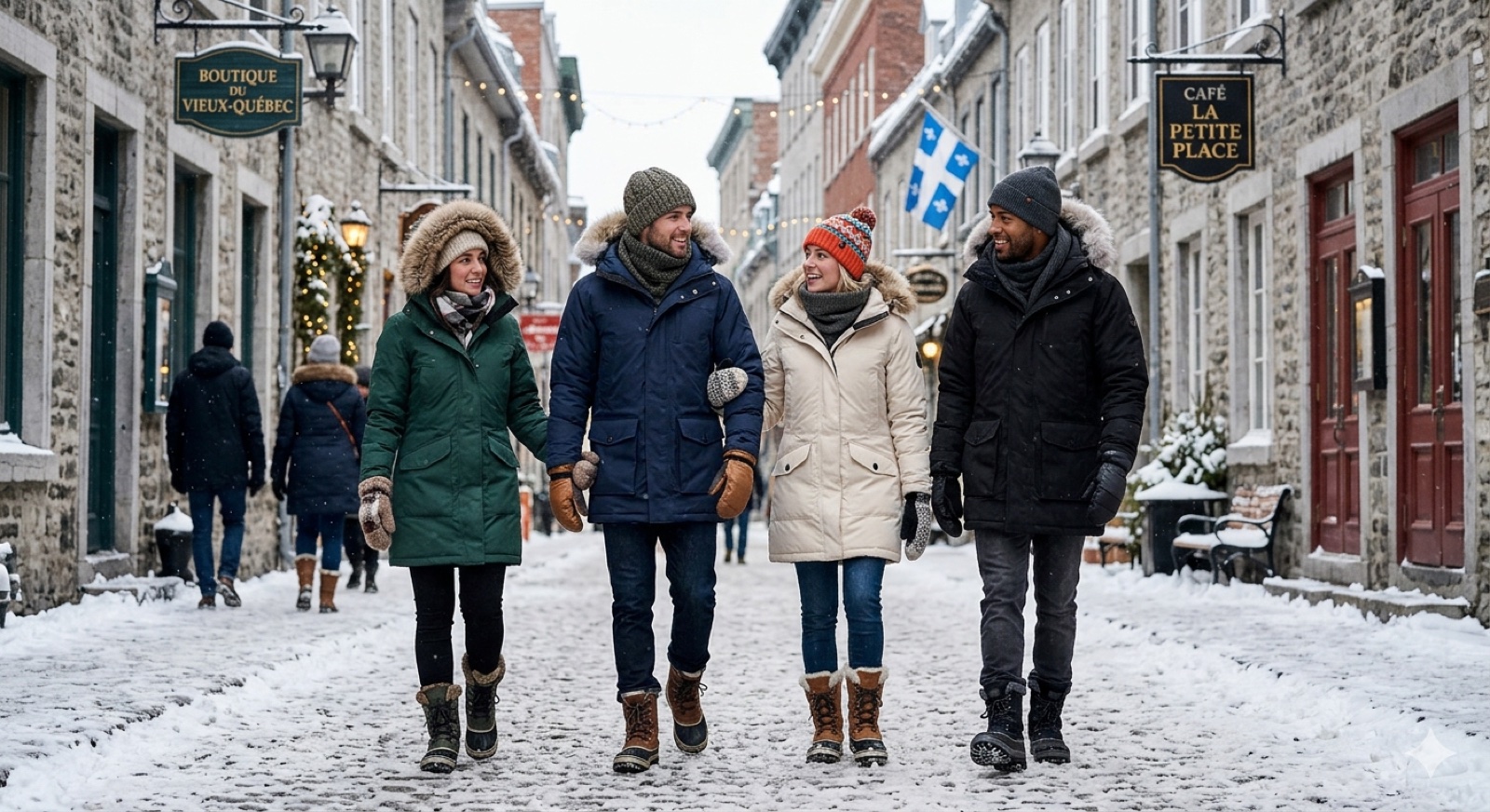
The Parc national des Monts Valin sits about 30 minutes north of Chicoutimi. Winter: snow covered firs in the shape of Valin ghosts Summer: hiking, mountain biking, fishing Mont Édouard ( 1 hour) — one of the region's favourite ski stations. 44 trails (including 13 glade/sous bois runs), vertical of 450 m Comparable to the Laurentians, less crowded, more affordable Saguenay Lac Saint Jean is on...
Surviving winter, by region
The cold isn't the same everywhere — each region has its own conditions, activities and pitfalls.
Surviving Winter in Quebec
Quebec City winter is intense — here's how to gear up, enjoy it, and adapt to the cold season in the capital.
Winter in Quebec City runs from December to March, sometimes through April. Temperatures can drop below minus 25 degrees Celsius, and annual snowfall often exceeds three metres. It's harsher than Montreal — prepare accordingly. The capital gets on average more snow than Montreal and its thaws are less frequent: snow that falls in December often stays on the ground until March. Minimum gear: Win...
Living through winter in Saguenay
Prepare for an intense winter in Saguenay–Lac-Saint-Jean: extreme temperatures, gear, and winter driving.
Saguenay is known for one of the harshest winters in inhabited Quebec. Temperatures can drop below minus 30 degrees in January, and heavy snow falls from November to April. Dry cold feels less harsh than humid cold, but wind changes everything. Invest early in a quality winter coat, ideally rated for minus 30 degrees. You will also need insulated boots with non slip soles, a tuque, mittens warm...
Winter in Trois-Rivières and the Mauricie
Living and enjoying winter in the Mauricie: abundant snow, national parks and local activities.
Winter in the Mauricie is cold and snowy — often snowier than Montreal. Temperatures can drop below minus 25 Celsius. The season runs from late November to mid April. The Parc national de la Mauricie, run by Parks Canada, is about 45 to 60 minutes north of Trois Rivières, depending on which entrance you use (Saint Mathieu du Parc or Saint Jean des Piles). Winter activities: cross country skiing...
Winter in Sherbrooke and the Eastern Townships
How to live and enjoy winter in the Eastern Townships, its mountains and lakes.
Winter in Sherbrooke lasts from late November to March. Temperatures can drop below minus 20 Celsius. The region gets a lot of snow — often more than Montréal — thanks to the proximity of the Appalachians. The Eastern Townships offer several major resorts within an hour: Mont Orford — the largest, lake view Bromont — night skiing, water park Mont Sutton — off piste lovers Owl's Head — picturesq...
More guides in this section
The rest of the section — every guide stays one click away.
Cégep de Chicoutimi
Cégep de Chicoutimi: flagship programs, international students, campus life, costs and financial aid, and how to prepare your admission file.
The Cégep de Chicoutimi — public, francophone, founded in 1967. 2,500 students. Pre university and technical programs. Flagship programs: Aeronautics (one of 2 CEGEPs in Quebec offering this training) Police techniques Nursing Civil engineering Arts and letters The Cégep hosts a growing number of international students. The cost of living in Saguenay makes studies very affordable. The internati...
Studying at UQAC, Chicoutimi
The Université du Québec à Chicoutimi: programs, student life, and tips for international students.
The UQAC is one of the ten institutions in the Université du Québec network. About 6,250 students as of fall 2025, including roughly 1,500 international students — about one in four. That share has fallen sharply since 2024 as federal and provincial study permit rules tightened. Flagship programs: engineering, management, forestry sciences, arts, computer science. UQAC is very welcoming to inte...
Cégep de Drummondville
Cégep de Drummondville: programs, international students and college life.
Cégep de Drummondville — public, francophone, founded in 1968 as part of the Parent reform that created Quebec's CEGEP network. 2,500 full time students. The main campus is on Boulevard Saint Joseph, 10 minutes' walk from downtown and reachable via STD bus. Central position in the Centre du Québec — a popular choice for students from across the region: Victoriaville, Nicolet, even Trois Rivière...
Festivals and Local Life in Drummondville
Festival de la Poutine, Voltigeurs, Village québécois d'antan — cultural life in Drummondville.
The Festival de la Poutine — now the biggest summer event in Drummondville. Format: 3 days, usually in early August New site: Cégep de Drummondville Major names from the Quebec music scene each year A culinary competition to crown the province's best poutine Admission requires a ticket — expect around $70 to $80 for a weekend pass, depending on the lineup and when you buy. Good to know: Drummon...
Cégep de Jonquière
Cégep de Jonquière: flagship programs, ATM (Arts and Media Technology) and student life.
Cégep de Jonquière — public, French language, founded in 1967 as part of the Parent reform that created the CEGEP network. 3,000 students full time. Main campus on Boulevard du Royaume, near downtown Jonquière. Particularly known for its Arts and Media Technology (ATM) program — one of the most prestigious in Quebec in journalism, radio and television. This specialty draws students from across ...
Festivals and Local Life in La Baie
La Baie's cultural life: La Fabuleuse Histoire d'un Royaume, the Centre national d'exposition, seasonal festivals and community life for newcomers.
La Fabuleuse Histoire d'un Royaume — major summer show presented since 1988 at the Palais municipal Theatre. Retraces the history of Saguenay Lac Saint Jean from 19th century colonization to today. On stage: Over 150 volunteer actors from the region Horses and other animals Pyrotechnic special effects Monumental staging Practical details: Duration: about 2 hours Tickets: from $29.50 (child) to ...
The Saguenay Fjord from La Baie
Activities, cruises and discoveries on one of the world's longest fjords, right at your doorstep.
The Saguenay Fjord — one of the world's longest ( 105 km between Saguenay and Tadoussac). Living in La Baie means living at the gateway to the fjord. Cliffs, deep waters and marine wildlife. Companies offer cruises departing from the port of La Baie — the main operator is Navettes maritimes du Fjord. Classic cruise (3 hours): scenic run along the fjord with photo stops Signature cruise (7 hours...
Lake Memphrémagog
Activities, beaches and access to Lake Memphrémagog, Magog's geographic heart.
The Lake Memphrémagog — one of southern Quebec's largest lakes: Length: about 45 km Maximum width: 2 km Maximum depth: over 100 m Border: straddles Vermont (the south is American) Magog is at the northern end of the lake. The lake is the epicentre of local life: Summer: swimming, sailing, kayak, fishing, cruises Winter: thick ice allows cross country skiing, snowshoeing, ice fishing The water q...
Laundromats in Montréal
Using a laundromat in Montréal: finding the nearest one, prices, how the machines work and your options if your apartment has no washer.
Many apartments in Montréal — particularly duplexes and triplexes in older neighbourhoods — have no washer or dryer inside the apartment itself. Coin operated laundromats (buanderies or laveries automatiques) are very common in Montréal — found in virtually every neighbourhood. Typical hours: 7 am – 10 or 11 pm; some are open 24 hours. Step by step laundromat use: 1. Arrive with your laundry an...
Summer Heat and Heat Waves in Montréal: How to Prepare
Surviving summer heat waves in Montréal — free cooling sites, financial aid, signs of heat stroke and practical advice for new residents.
A heat wave (Alerte level) is officially declared in the Montréal region when the temperature reaches 33°C for at least three consecutive days, with nights above 20°C — or two consecutive nights above 25°C. An apartment without air conditioning can quickly exceed 40°C — dangerous for vulnerable people. In 2010, a heat wave caused more than 280 deaths in Quebec. Since then, free protective resou...
Amateur Sports Clubs and Leisure for Adults in Montreal
Finding a sports club, recreational team or physical activity class in Montréal — soccer, badminton, running, yoga, swimming — to stay active and meet people.
Playing a sport or physical activity in a group is one of the most effective ways to meet Montrealers and build a social network outside of work. Sport creates a natural structure — regular practices, matches, social events — that facilitates repeated encounters, essential for building real friendships. For a new resident, joining a recreational sports team is often easier than building a socia...
Montreal's July 1st Moving Day: How to Prepare
July 1st is the most chaotic moving day in Quebec. This guide explains why it's so unique, how to organize if you must move that day, and how to avoid it if you can.
July 1st is the end and start date for the vast majority of leases in Quebec. This tradition traces back to a 19th century agrarian law fixing farm lease dates to May 1st, which later evolved to July 1st. Today, approximately 100,000 households move in Montréal on each July 1st — one of the largest simultaneous urban migrations in North America. The result: streets are cluttered with furniture,...
Parent and Family Groups in Montréal
Parent groups and support networks for immigrant families in Montréal: Maisons de la Famille, Facebook groups, CLSCs and community organizations.
Arriving in Quebec with young children can be profoundly isolating — the family support network stayed in the home country. Parent groups are often the first place where immigrant families build a local network — not just for the children, but for the parents themselves. Real linguistic advantage: group discussions with other parents are one of the best informal practices of everyday French. Ma...
Community Gardens in Montréal: How to Get a Plot
Montréal's community gardens: grow your own vegetables for a few dollars a year. How to apply, the waiting list and the rules to know.
Montréal has one of the largest community garden networks in North America — more than 100 community gardens managed by the City across 19 boroughs, totalling over 8,000 plots. These gardens allow residents without private outdoor space to grow their own vegetables, herbs and flowers. The annual cost is nominal — typically $5–30 depending on the borough and plot size — and includes access to ir...
Cycling Paths and Biking in Montréal: Practical Guide
Cycling in Montréal: the bike path network, how BIXI works, the road rules for cyclists in Quebec and how to make the bike your daily transport.
Montréal has more than 1,000 km of cycling paths — separated lanes, on street bike lanes and shared paths. The city has invested heavily in its network since the 1990s and is regularly ranked among the world's top 20 most cycling friendly cities. For a newcomer, cycling is a serious transport option, particularly for daily trips under 10 km. The BIXI network, Montréal's bike share system, is on...
Recycling and Garbage in Montreal: Bins and Collection
Recycling, garbage and compost in Montreal: which bin for what, pickup days by borough, bulky items and the rules to follow.
Three bins in Montreal: Green bin: recycling (paper, glass, plastic, metal) Brown bin: compost (organic matter) Black/gray bin: household garbage The exact colour and shape can vary by borough, but the three stream logic stays the same across the island. In the green bin: Paper and cardboard (rinsed and flattened) Glass: bottles, jars Plastic: numbers 1 to 7 (look under the container) Metal: ca...
Free Shows and Theatre in Montréal
The best places and events to enjoy Montréal's culture for free or nearly free — theatre, concerts, outdoor cinema, libraries and public cultural programming.
Montréal is one of the North American cities with the largest volume of free cultural programming. For a new resident, discovering this free programming is often a pleasant surprise — professional quality concerts, street theatre performances, outdoor film screenings, entire festivals — without spending a dollar. The Quartier des spectacles is Montréal's central cultural district, located betwe...
Finding Healthcare in Montréal
How to navigate Montreal's health network: walk-in clinics, ERs, 811 and pharmacies.
In Montreal, public health services are organized into large networks called CIUSSS — one for each part of the island. These networks run hospitals, CLSCs and public clinics. For most everyday consultations, the entry point is the walk in clinic or the CLSC in your neighbourhood. The RAMQ card — Quebec's public health insurance — typically takes three months to be issued after arrival. During t...
Montréal Neighbourhoods: Which One to Settle In?
Plateau, Rosemont, Côte-des-Neiges, Verdun, Villeray: a portrait of Montréal's neighbourhoods to help newcomers choose where to live.
Montréal is a city of neighbourhoods — each has its own personality, atmosphere, population and prices. When you arrive from outside, it's hard to know where to settle without some reference points. The most important criteria for a newcomer are generally: rent cost, proximity to transit, safety, presence of a familiar cultural community, school quality for families with children, and access to...
Festivals and Cultural Life in Quebec City
The Festival d'été, the Carnaval, visual arts and music scene in the capital.
The Festival d'été de Québec is one of North America's largest music festivals. It runs 11 days in July, with over 150 shows across multiple downtown stages. The festival pass gives access to all shows — the best deal of the season to see international artists. Buy early: prices rise. The Quebec Winter Carnival runs in February over two weekends. It's the world's largest winter carnival, with i...
Select your region
238 guides across 8 regions — pick yours:
The topic in brief
Understanding everyday life in Quebec
Once the paperwork is settled, living in Quebec is a thousand daily details written down nowhere. How to see a doctor, how to get around, why the price at the register doesn't match the tag, how to get through winter. This section gathers the bearings of everyday life — health, transport, money, consumption, school — to save you the time normally lost to trial and error.
Seeing a doctor — without a family doctor
Most Quebecers don't have an assigned family doctor, and that will be your case when you arrive too. It's not a dead end: you can see a doctor at a walk-in clinic, use the First-Line Access Point (GAP) for a one-off need, or call 811 (Info-Santé) for free nurse advice, day and night. The pharmacist can also treat several minor issues and renew certain prescriptions. RAMQ covers doctor visits and hospital care, but not adult dental care or most medications — plan coverage for those.
Getting around
Every city has its own public-transit network, with its own fares and reduced rates — find yours as soon as you settle in. If you opt for a car, know that auto insurance works differently here: bodily injuries are covered by a public plan run by the SAAQ, on a "no-fault" basis, while vehicle damage and civil liability fall to private insurers — and that liability insurance is mandatory to drive. Buy a used car carefully: check the history and mechanical condition before signing.
Money day to day — three surprises
First, the displayed price is almost never the price paid: two sales taxes, the federal GST and the provincial QST, are added at the register — about 15% more. Second, tipping: at restaurants, bars, hairdressers or in taxis, you usually leave 15 to 20%, and it's not included in the bill — staff rely on it. Third, your credit history doesn't cross borders: you start from zero, and building that credit early will make renting, plans and loans easier.
Winter — the season that reorganizes everything
Quebec winter is long, bright and beautiful, but you don't get through it by improvising. A real coat, proper boots, winter driving, heating: you need to gear up before the first cold, not during it. For many newcomers it's the biggest shock — and, well prepared, one of the finest discoveries.
Groceries, the home, and the traps
Grocery chains, brands and habits differ — it takes a few visits to find your way. At home, internet access is a separate service, often bundled with television. And stay alert: newcomers are a frequent target of scams — fake "government" calls, fake rental listings, urgent payment demands. One simple rule: no government agency asks for payment by gift card, cryptocurrency or urgent transfer.
Finding your place
Daily life isn't only services to settle. Municipal libraries are free and offer far more than books; parks, festivals and neighbourhood recreation are plentiful, often free or low-cost. Every city has its own places and rhythm — explore yours. That, more than the paperwork, is where you end up feeling at home.
Common mistakes to avoid
Forgetting that displayed prices exclude tax
GST and QST — about 15% combined — are added at the register, not on the tag. Budget for that gap, especially on big purchases.
Waiting for a family doctor before seeking care
Most people don't have one. Use walk-in clinics, the First-Line Access Point and 811 — don't put off a health problem while waiting for an assigned doctor.
Driving without understanding auto insurance
Liability insurance is mandatory to drive in Quebec. Injuries fall under the SAAQ public plan; vehicle damage, under a private insurer. Driving without the required coverage is illegal.
Letting your guard down against scams
Newcomers are targeted by fake government calls and fake rental listings. No public agency demands payment by gift card, cryptocurrency or urgent transfer.

Frequently asked questions
How do I see a doctor if I don't have a family doctor?
+
How do I see a doctor if I don't have a family doctor?
+Most Quebecers are in this situation. You can see a doctor at a walk-in clinic, use the First-Line Access Point (GAP) for a one-off need, or call 811 (Info-Santé) for free nurse advice, day and night. The pharmacist can also treat several minor issues.
Why is the price at the register higher than the tag?
+
Why is the price at the register higher than the tag?
+Displayed prices in Quebec don't include sales tax. The federal GST and provincial QST — about 15% combined — are added when you pay. This applies in stores, restaurants and most services.
Do I need to tip in Quebec?
+
Do I need to tip in Quebec?
+Yes. At restaurants, bars, in taxis or at the hairdresser, you usually leave 15 to 20%, calculated on the pre-tax amount. The tip is not included in the bill and staff rely on it. It is not expected at fast-food counters.
How does auto insurance work in Quebec?
+
How does auto insurance work in Quebec?
+It has two tiers. Bodily injuries from an accident are covered by a public plan run by the SAAQ, regardless of fault. Vehicle damage and civil liability fall to private insurers; civil-liability insurance is mandatory to drive.
How do I build my credit as a newcomer?
+
How do I build my credit as a newcomer?
+Your foreign credit history doesn't follow you — you start from zero. Begin with a newcomer credit card or a secured card, pay the full balance on time every month, and keep usage modest. Good credit makes renting, plans and loans easier.
Other topics
Browse all topicsFirst Steps in Quebec
Your first steps after arrival — housing, SIN, banking, phone.
ExplorePaperwork Simplified
Documents, official cards, government formalities.
ExploreWork & Career
Finding a job, Quebec-style résumé, French interviews.
ExploreLocal Resources
Communities, welcome services, neighborhood resources.
ExploreIn the news
Recent changes that matter to newcomers.
From October 5, 2026: free repairs for appliances and electronics that break too soon
A new legal 'good working order' warranty covers free repair of a fridge, washer, TV or phone for several years.
Unpaid Hydro Bill: Your Options, No Winter Cut-Off
Between December 1 and March 31, Hydro-Québec won't cut power for non-payment in an electrically heated home. A payment plan beats an ignored bill.
Fake calls from 'the tax agency' or 'immigration': how to spot the scam and not pay
The CRA and IRCC never ask you to pay by gift card or cryptocurrency, or for banking details by text. A call that threatens you is a scam: hang up.
From Bécancour to Trois-Rivières.
Housing, transit, local schools: every guide also exists for your city, with real addresses and figures.
7 regions · 18 cities
All cities