Local Resources
Dossier34 guidesCommunities, welcome services, neighborhood resources.
For the whole province
These guides apply everywhere in Quebec, across the whole province — no matter your city.
Help organizations
Community welcome organizations and legal aid — free, and there to support you. For local help, see "Guides by city" below.
Community Resources for Newcomers in Quebec
Organizations, food banks, thrift stores, and free services across Quebec.
In Quebec, community organizations offer for free: Administrative accompaniment Informal French classes Food aid and clothing Childcare and family support Psychological support and accompaniment Some specialized organizations for immigrants: In Montreal: CARI Saint Laurent, PROMIS, Hirondelle, COFFRET, CSAI In Quebec City: Centre Multiethnique de Québec In Sherbrooke: Service d'aide aux Néo Can...
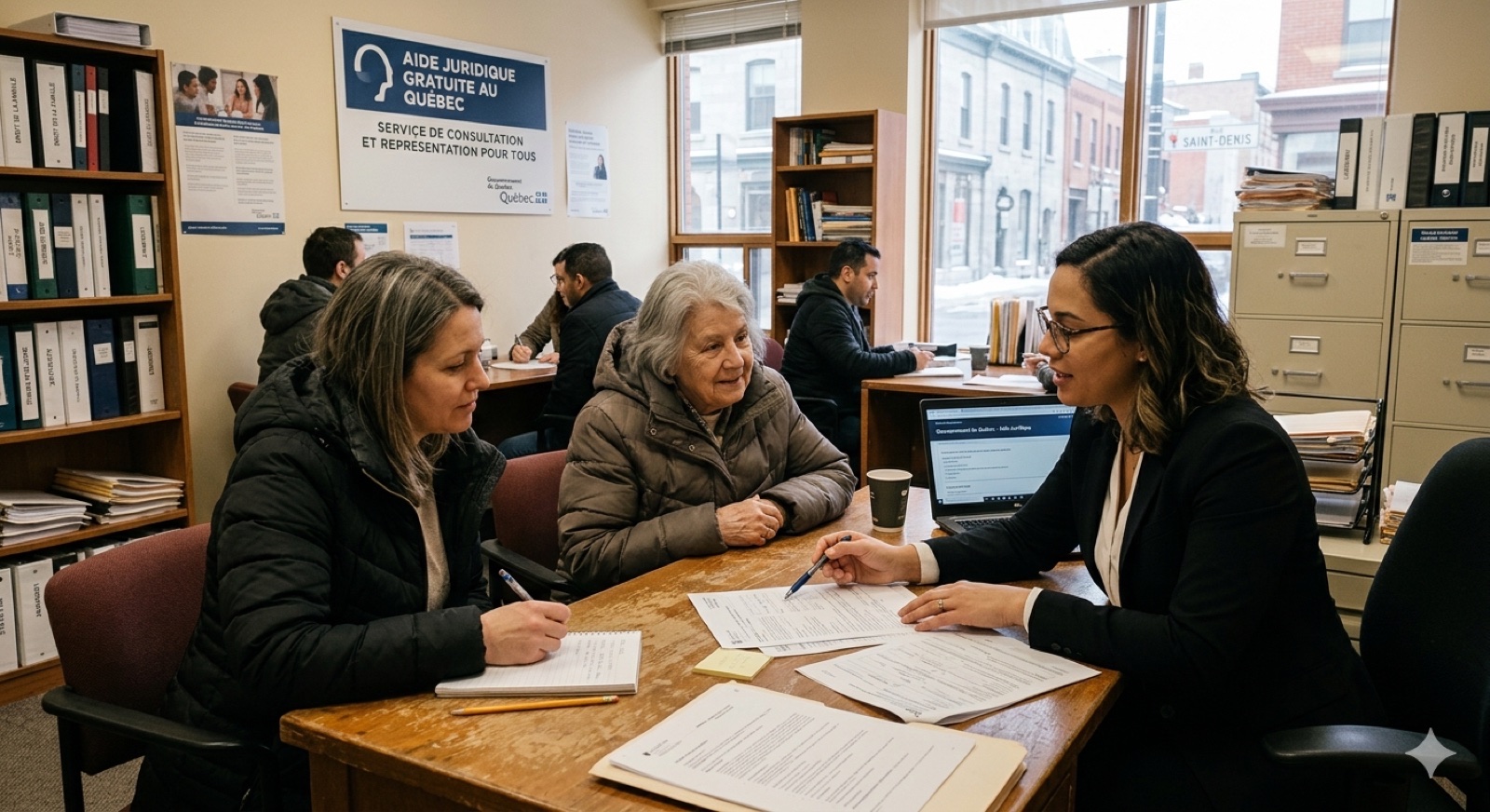
Free Legal Help in Quebec: Legal Aid and Clinics
Where to find free legal advice in Quebec: legal aid, lawyer clinics, Justice Pro Bono and free lawyers for newcomers.
Several free or low cost legal resources exist in Quebec — from legal aid to free legal advice and free lawyer consultations. Before paying a lawyer, explore these options. Legal aid is managed by the Commission des services juridiques. Lawyers paid by the government Eligibility based on your income Show up with proof of income Legal aid works in two tiers. The free tier covers your fees in ful...
Inform yourself and learn
Official sites, local media, free French classes and the public-holiday calendar.
Essential Government Websites in Quebec
The essential Quebec and Canadian government websites: main portals, specialized agencies, online accounts, phone lines and who does what.
Almost all errands pass through an official site. Learning to navigate these sites saves you hours and avoids scams. The 4 main portals: — provincial government — federal government — City of Montreal Your municipality's site (if outside Montreal) Specialized agencies: — health — licence, vehicle — provincial taxes — federal taxes — immigration and citizenship Mon dossier: Mon dossier RAMQ: hea...
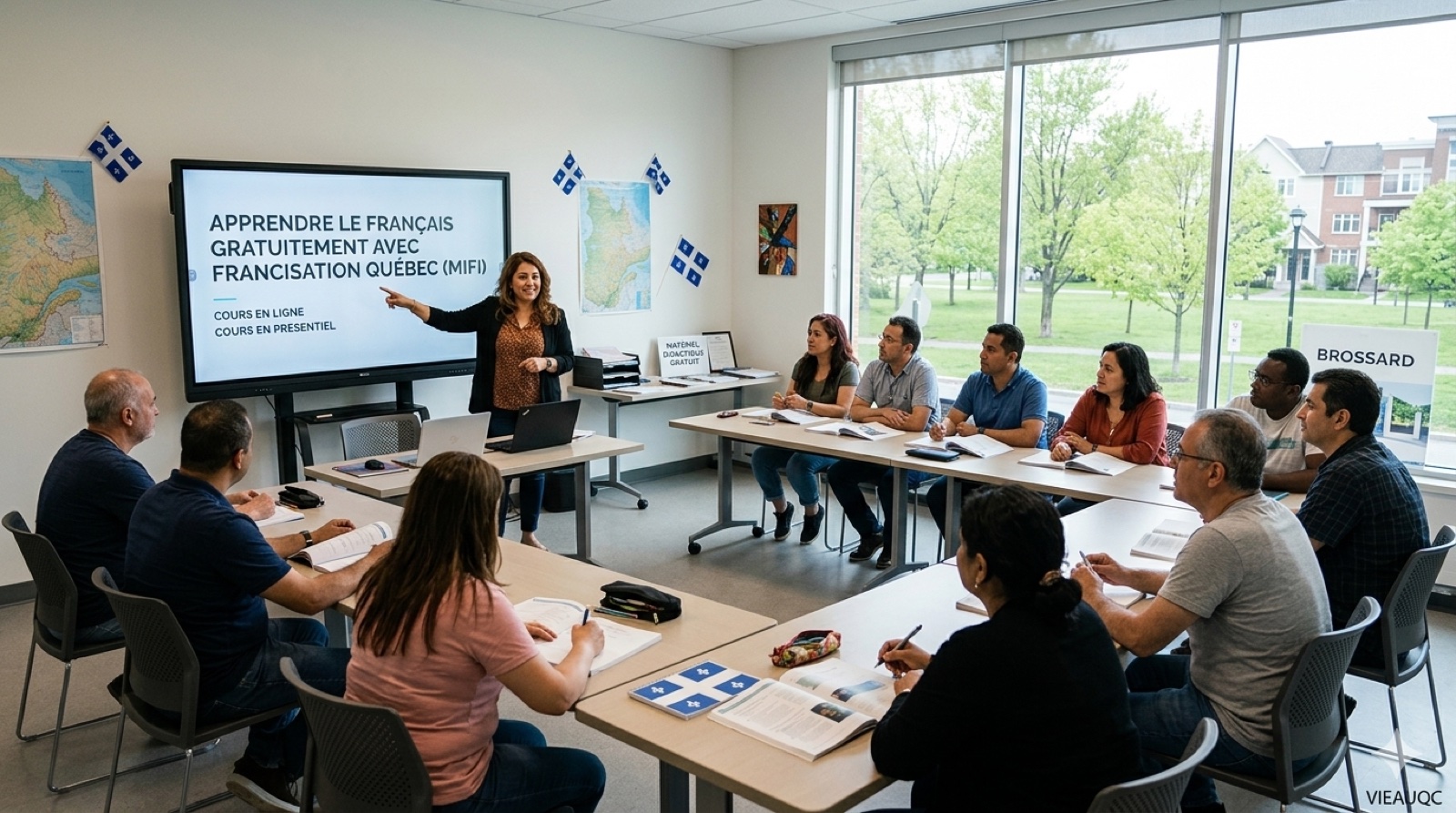
Learn French for Free with Francisation Québec
Free French courses, a financial allowance, and online registration: everything about Francisation Québec for newcomers.
Francisation Québec is the government service that groups together all free French courses offered to immigrants. It was created in June 2023 by the Ministère de l'Immigration (MIFI). It is today the only official portal to register for a French course in Quebec. A useful distinction so you don't get lost: the MIFI and Francisation Québec are not the same thing. The MIFI is the ministry — the g...
Quebec Media: Landscape and Language Learning
The Quebec media landscape — TV, press, radio, podcasts — and what to watch at each level to learn.
Following Quebec media helps you: Understand local culture and politics Learn the spoken French of Quebec (different from standard French) Follow the news that affects your daily life Radio Canada: ICI Radio Canada Télé: news, shows ICI Première: talk radio Tou.tv: free streaming The major dailies: La Presse (free online): mainstream journalism, quality Le Devoir (paid): intellectual, more left...
Public Holidays in Quebec
Quebec's statutory holidays, provincial and federal: which are paid, what closes (stores, banks, SAQ) and your rights if you work that day.
In Quebec: 8 provincial public holidays per year Plus a few federal public holidays (banks and federal government) All employees are entitled to the 8 provincial ones as paid leave The 8 provincial holidays: 1. January 1 — New Year's Day 2. Good Friday or Easter Monday (employer's choice) 3. The Monday before May 25 — National Patriots' Day 4. June 24 — Quebec National Holiday 5. July 1 — Canad...
Emergency help and crisis situations
When you're out of money, housing or food, or facing distress or violence — who to turn to, right away.
Emergency Help in Quebec: Money, Housing, Food
What to do and who to call when everything collapses — the three numbers that unlock help, no status or paperwork needed.
If you're reading this in a moment of panic, start here. Three numbers cover almost every emergency in Quebec — all free, confidential, and requiring no immigration status. 911 — immediate danger: violence, injury, fire, a threat to your life or someone else's. 811 — health and psychological distress: press 1 for Info Santé, 2 for Info Social, which gives psychosocial crisis support, day and ni...
Emergency Shelters and Housing in Quebec

Where to sleep safely tonight: finding a shelter for your situation, what to expect, and how to move out of the emergency.
If you have nowhere to sleep tonight, the fastest and safest way is to dial 211. An agent identifies the nearest shelter for your situation — single man, single woman, family, youth — and tells you how to get there and what time to show up. 211 is free, confidential, in 200+ languages, day and night. If you're in immediate danger — outside in extreme cold, ill, threatened — call 911. If you're ...
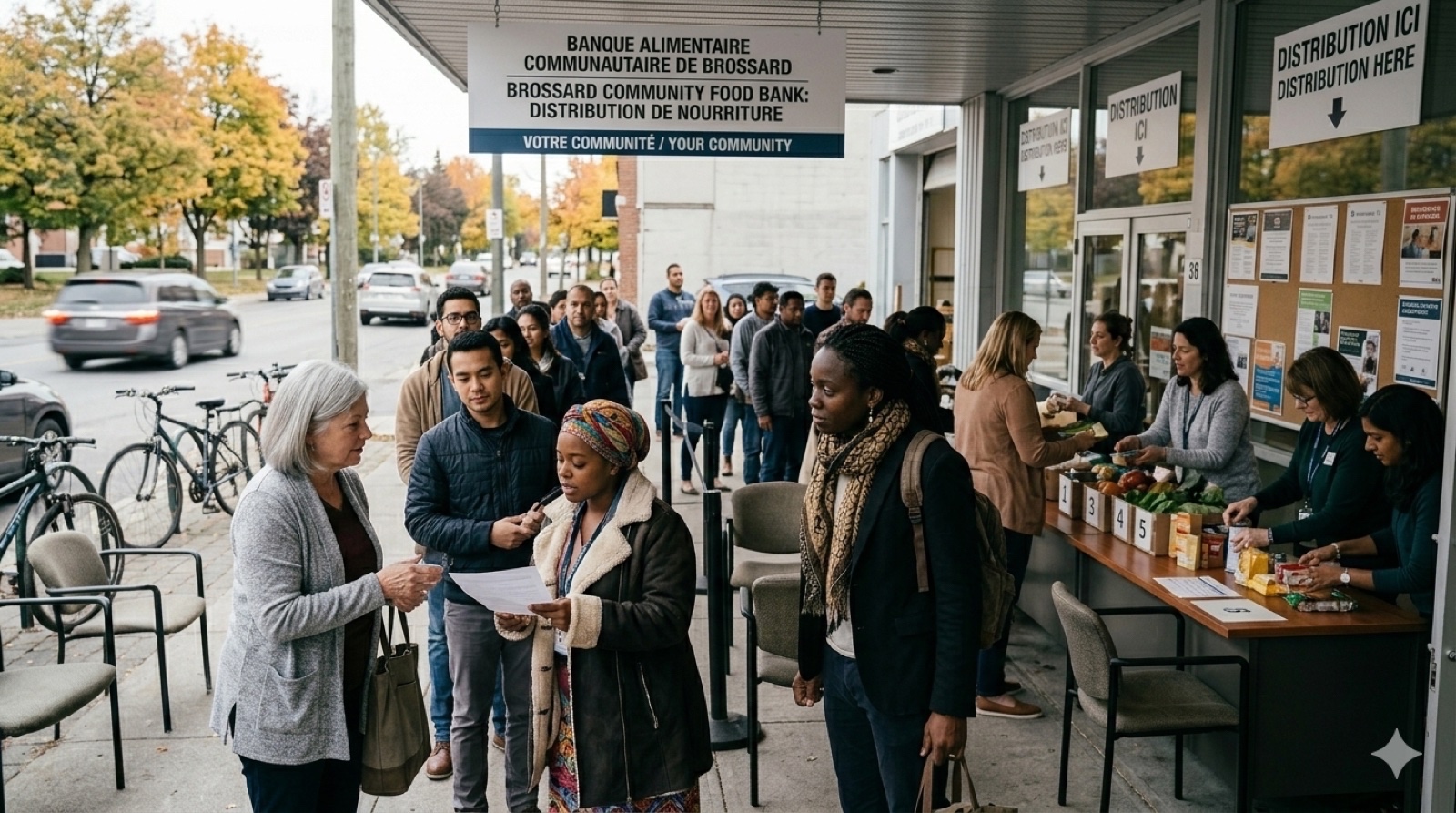
Food Banks in Quebec: Who Can Go and How to Find One
The provincial network, no-shame welcome, and the 19 regional Moissons: your map to free food assistance.
In Quebec, hundreds of thousands of people use a food bank each month. Students, families with children, minimum wage workers, seniors, newcomers, people between jobs. Going for help is not a sign of failure — it's exactly why the network exists. The organizations distributing food assistance do so without judgment and without questioning your right to eat. Most ask for no proof of immigration ...
Crisis Lines in Quebec: Suicide, Distress, Violence

Every life-saving number, sorted by situation — free, confidential, 24/7, often multilingual.
If you, or someone near you, are in immediate danger — a suicide attempt in progress, physical violence, serious injury — call 911 right now. It's free, works from any phone even with no plan, and has no connection to your immigration status. Don't hesitate out of fear of bothering anyone or of consequences: that's exactly what the number is for. The listening lines below are for distress, supp...
Domestic Violence in Quebec: Finding Help

Recognizing abuse, free shelters, and the truth about your immigration status if you leave.

If your safety or your children's safety is threatened right now, call 911. The police will respond, regardless of your immigration status and regardless of what you may have been told. To talk to someone, be heard, assess your situation or find a shelter spot, call SOS violence conjugale at 1 800 363 9010: free, confidential, anonymous and bilingual, 24/7. Workers can even call a shelter for y...
Money troubles
Getting a budget back under control, understanding your options with debt or insolvency — free, and without judgment.

ACEF: Free Budget Help in Quebec
ACEFs across Quebec offer free budget consultations, debt help and consumer-rights defence.
When money is tight, when you feel overwhelmed by bills, or when you no longer know how to build a budget in a new country, there's free, judgment free help: ACEFs. An ACEF (association coopérative d'économie familiale) is a community organization specialized in personal finances and consumer rights. There's one in almost every region of Quebec. They help you build a budget, understand your deb...
Bankruptcy and Insolvency in Quebec: Your Options
When debt becomes unmanageable: the difference between a consumer proposal and bankruptcy, and who to talk to.
Falling into debt can happen to anyone, especially early in life in Quebec: underestimated cost of living, job loss, a family emergency. If you can no longer pay your debts, know two things. First, you're not alone, and it's not a crime. Second, Canadian law provides regulated solutions for a fresh start, so you're not a prisoner of your debts for life. This guide explains the two main ones — t...
Health and access to care
Mental health for newcomers, and care for people without insurance or seeking asylum.
Job-search help, city by city
Every city has its own network of job-search organizations. Find the one that covers yours.
Free Job-Search Help in Montreal: Where to Go
Specialized job-search organizations in Montréal by profile — newcomers, anglophones, women, professionals — and who to contact first.
In Montreal, several organizations offer professional and entirely free job search help. The catch is that not all of them serve the same audience. Picking the right one from the start saves you weeks: an internationally trained professional doesn't need the same support as a woman returning to the workforce after an extended break. This guide groups them by specialty: Newcomers and immigrants ...
Job-Search Help in Québec City
The free services that support newcomers in their job search in Québec City — organizations, Services Québec, and where to start.
Job hunting in a new country means relearning everything: résumé format, interview codes, how to apply, recognition of your experience. Good news: in Québec City, free services support newcomers at every step. Service type Organization Specialty For whom Professional integration Immigration focused NPO Credential recognition, skilled employment Recent immigrants General placement Carrefour jeun...
Job-Search Help in Laval
The free services that support newcomers in their job search in Laval — Perspective Carrière, the CIL, Services Québec.
Finding a job in Laval when you come from elsewhere means relearning local codes: résumé, interview, network, recognition of your experience. Good news: free services support newcomers at every step. Service type Organization Specialty For whom Professional integration Immigration focused NPO Credential recognition, skilled employment Recent immigrants General placement Carrefour jeunesse emplo...
Job-Search Help in Gatineau (and the Ottawa Option)
The free services that help newcomers toward employment in Gatineau — SITO, CJEO, Services Québec — and how to weigh working in Ottawa.
Gatineau has a unique advantage: two job markets within reach — Quebec's and Ottawa's, just across the river. To navigate them, the Outaouais has free services that help newcomers toward employment. Service type Organization Specialty For whom Professional integration Immigration focused NPO Credential recognition, skilled employment Recent immigrants General placement Carrefour jeunesse emploi...
Free French courses, city by city
Free francization exists everywhere in Quebec, but the organizations offering it change from city to city.
Free French Classes in Montreal: How to Choose
Francisation Québec, community organizations, conversation cafés: every free way to learn French in Montreal.
In Montreal, you do not need to pay to learn French. Three avenues coexist and complement one another: The government route — , which funds formal courses (full time, part time, or online) with a possible allowance for eligible learners. Neighbourhood community organizations — courses that are often less formal, in small groups, sometimes with childcare for parents. Informal practice — librarie...
Free French Classes in Québec City
Where to learn French for free in Québec City — Francisation Québec, welcome organizations, CÉGEPs — and how to register.
In Québec City, almost everything happens in French: work, school, services, neighbourhood life. Learning French is the best investment for your integration and your job. Good news: there are free courses, state funded, for all levels. Pathway Program Paid? Intensity For whom Government Francisation Québec (MIFI) Yes (if eligible) Full time or part time Permanent + eligible temporary immigrants...
Free French Classes in Laval
Where to learn French for free in Laval — Francisation Québec, Carrefour d'intercultures, Collège Montmorency — and how to register.
In Laval, French opens doors: work, children's school, services, social life. And you don't have to pay to learn it: the state funds free courses for all levels, and Laval organizations offer friendly practice. Pathway Program Paid? Intensity For whom Government Francisation Québec (MIFI) Yes (if eligible) Full time or part time Permanent + eligible temporary immigrants School board School boar...
Free French Classes in Gatineau
Where to learn French for free in Gatineau and the Outaouais — Francisation Québec, APO, AFIO, Cégep de l'Outaouais — and how to register.
In Gatineau, it can be tempting to do everything in English because of Ottawa, just across the river. But you live in Quebec: French remains essential for local jobs, services, school and integration. The state funds free courses for all levels, and the Outaouais has its own francization organizations. Pathway Program Paid? Intensity For whom Government Francisation Québec (MIFI) Yes (if eligib...
Free French Classes in Sherbrooke
Where to learn French for free in Sherbrooke and the Estrie — Francisation Québec, SANC, the Cégep and Université de Sherbrooke — and how to register.
In Sherbrooke, French is the language of work, study and daily life. Learning it is the best accelerator of your integration, and you don't have to pay for it: the state funds free courses for all levels, and the Estrie has a solid welcome network. A few hours a week, kept up over time, are enough to transform your daily life in this French speaking city. Pathway Program Paid? Intensity For who...
Free French Classes in the Saguenay
Where to learn French for free in the Saguenay — Francisation Québec, SANA Saguenay-Le Fjord, Cégep de Chicoutimi — and how to register.

The Saguenay Lac Saint Jean is a deeply French speaking region: here, French isn't an option, it's the everyday language. That's also an opportunity: you're immersed in French constantly, which speeds up learning. And free courses, state funded, exist for all levels. Pathway Program Paid? Intensity For whom Government Francisation Québec (MIFI) Yes (if eligible) Full time or part time Permanent...
Support organizations, city by city
Beyond the province-wide overview, here are the community organizations specific to each city.
Montreal Help Organizations, by Need
Where to go in Montreal by need: paperwork, jobs, housing, family — free organizations, sorted.
In Montreal, dozens of organizations help newcomers free of charge. Rather than naming them all, this guide groups them by need: Paperwork and settlement — for your papers and your move in Employment — to find work Housing — to find a home and defend your rights Family — for your children and family life Good to know: many organizations (such as CSAI, L'Hirondelle or CARI) help on several front...
Newcomer Support Organizations in Québec City, by Need
The free organizations welcoming newcomers in Québec City — settlement, French, employment — and where to start.
Québec City welcomes more and more newcomers, and organizations funded by the Ministère de l'Immigration support them for free: welcome, settlement, French, job search, housing. These services are free and confidential, and open to all newcomers — permanent residents, temporary workers and students, and refugees. You don't need to speak French to be welcomed: it's often by helping you with your...
Newcomer Support Organizations in Laval, by Need
The free organizations that welcome and support newcomers in Laval — settlement, French, employment — and where to start.
Settling in a new city is heavy: paperwork, housing, French, work, children's school. Good news: in Laval, organizations funded by the Ministère de l'Immigration welcome immigrants for free and support them at every stage. These services are free, confidential, and open regardless of status in many cases. This guide presents Laval's main organizations, by type of need. For general welcome and s...
Newcomer Support Organizations in Gatineau, by Need
The free organizations welcoming newcomers in Gatineau and the Outaouais — settlement, French, employment — with a note on working in Ottawa.
Gatineau has a particularity: it's just across the river, facing Ottawa, Ontario. Many newcomers live and work on both sides. For welcome and integration, the Outaouais has its own network of organizations funded by the Ministère de l'Immigration — free and confidential. Accueil Parrainage Outaouais (APO) supports immigrants at every step: orientation and procedures, temporary housing, informat...
Newcomer Support Organizations in Longueuil, by Need
The free organizations welcoming newcomers in Longueuil and the South Shore — settlement, French, integration — and how to start.
Longueuil and the South Shore welcome many newcomers, and organizations funded by the Ministère de l'Immigration are there to support them for free: paperwork, housing, French, social and professional integration. No need to figure it all out alone or pay for everything. Carrefour le Moutier has supported immigrants in their settlement and integration steps for decades. On the settlement side, ...
Newcomer Support Organizations in Sherbrooke, by Need
Sherbrooke and the Estrie's free welcome network — settlement, French, employment — built around the Service d'aide aux Néo-Canadiens.
Sherbrooke, in the Estrie, has a long tradition of welcoming immigrants. The local network, funded by the Ministère de l'Immigration, offers free settlement help, French courses, employment support and integration support. The Service d'aide aux Néo Canadiens (SANC) has welcomed and supported immigrants in the Estrie in their socio economic integration since 1954. Mandated by the Ministère de l...
More guides in this section
The rest of the section — every guide stays one click away.
Free Help for Newcomers in Montreal
PROMIS and the YMCA — two organizations offering free support to newcomers in Montreal.
In Montreal, community organizations support newcomers — free of charge: No specific immigration status required No fees: these services are funded for you Human guidance, often available in several languages The right time to contact them: as soon as you arrive This guide presents two solid organizations: PROMIS and the YMCA. PROMIS — Promotion intégration société nouvelle — has supported immi...
Montreal Housing Co-ops: Below-Market Rent, How to Join
How housing co-ops in Montréal offer quality housing below market rent, what member commitment involves, and the two concrete paths to apply.
Housing cooperatives in Montréal — also called coops d'habitation — work very differently from private rentals or public housing like the . In a co op, residents are not merely tenants: they collectively own and manage the building. Because members handle administration, maintenance, and finances themselves, operating costs stay low — which lets co ops offer quality housing at rates significant...
Universities in Sherbrooke: UdeS and Bishop's
Université de Sherbrooke and Bishop's University — the two universities that make Sherbrooke a student city.
Sherbrooke is one of Quebec's main student cities. With about 40,000 students for a population of 175,000 residents, nearly one in four Sherbrookers is a student. The Université de Sherbrooke (UdeS) is the main university, French speaking, founded in 1954. It has over 33,000 students across three campuses: Main campus in Sherbrooke Health campus near the CHUS Longueuil campus (Montréal South Sh...
UQTR and Student Life in Trois-Rivières
UQTR and Cégep de Trois-Rivières — university life in the Mauricie region.
The UQTR, founded in 1969, has over 15,000 students (15,129 for the 2026 2027 year). Its main campus is in Trois Rivières, with satellite campuses in Drummondville, Terrebonne, Joliette and L'Assomption, plus additional facilities in Quebec City and Longueuil. Recognized for programs in kinesiology, podiatry, chiropractic, nursing and engineering. The Cégep de Trois Rivières has over 4,000 stud...
Select your region
238 guides across 8 regions — pick yours:
The topic in brief
The support network around you
No one settles in successfully alone. Quebec has a dense network of organizations and services that support newcomers — often free of charge, and in several languages. The problem is almost never that a resource doesn't exist; it's not knowing it exists. This section maps that network: who to turn to, for which need, and where to find reliable information.
Community and welcome organizations
In almost every Quebec city, state-funded organizations welcome newcomers. They're free, often multilingual, and provide concrete support: housing search, job search, school enrollment, French classes, and simply finding your way through an unfamiliar administration. Contacting them in your first weeks — or even before arrival — saves precious time. You can go back as often as needed; it's not a one-time service.
Legal aid — so you don't face a problem alone
A dispute with a landlord, an employer who doesn't respect your rights, a complex immigration question: Quebec's legal aid offers free or low-cost services depending on your income, and community legal clinics round out the network. The golden rule: consult before you sign, before you pay, or before you give up — advice obtained early prevents costly mistakes.
Official sites — your shield against misinformation
Administrative rules change, and much of what circulates on forums or old blogs is outdated or false. Get into the habit of checking at the source: the Quebec and Canada government portals publish current information, official forms and real fees. Knowing the genuine sites also protects you from scams that imitate public services.
French classes — the highest-leverage resource
Learning French is probably the most rewarding investment of your settlement, and Quebec offers it free of charge. Francisation Québec provides full-time or part-time courses, often with a financial allowance, and access is open to most newcomers — including many temporary residents. The earlier you start, the faster everything else — work, paperwork, social life — becomes easier.
Reading the society: media and the calendar
Following a few Quebec media outlets — news, radio, TV — helps you understand the debates, references and humour here, while improving your French. On a more practical note, knowing the public-holiday calendar saves you wasted trips: government offices, banks and many businesses close on those days.
Knowing the resource exists is half the journey
None of these resources will come find you: the first step is yours to take. But that first step is almost always free, and commits you to nothing. When in doubt or stuck, the right question isn't "can I manage this alone?" but "who, here, already does this for free?".
Common mistakes to avoid
Trying to do everything alone
The support network is free and built precisely for newcomers. Asking for help isn't a weakness — it's what saves you weeks.
Relying on unofficial sources
Forums and old blogs contain a lot of outdated information. For rules, fees and forms, always check the official government sites.
Putting off French classes
Francisation Québec courses are free and often come with an allowance. Every month of delay holds back work, paperwork and social life. Start early.
Facing a legal problem without help
Housing, work, immigration: legal aid exists for these disputes. Consult before you sign, pay or give up — not after.

Frequently asked questions
Where can I find a newcomer-help organization?
+
Where can I find a newcomer-help organization?
+They exist in almost every Quebec city — state-funded, free and often multilingual. The "Community Resources" guide lists them, and the Immigration ministry's site lets you find the nearest organization. In Montreal, dedicated guides list available help by need.
Is legal aid really free?
+
Is legal aid really free?
+It's free or low-cost depending on your income. It covers many areas — housing, work, immigration, family. Community legal clinics also provide free information. Consult early, before signing or giving up a right.
Are French classes free?
+
Are French classes free?
+Yes. Francisation Québec offers free French courses, full-time or part-time, often with a financial allowance. Access is open to most newcomers, including many temporary residents. Register early.
How do I know if administrative information is reliable?
+
How do I know if administrative information is reliable?
+Always check the official Quebec and Canada government sites. Rules, fees and forms there are current. Forums and blogs, by contrast, often carry outdated information — and some fake sites imitate public services to defraud.
What does a public holiday change for my errands?
+
What does a public holiday change for my errands?
+Government offices, banks and many businesses close on public holidays. Planning your errands around the calendar saves you wasted trips. The Quebec public-holidays guide gives the list and the dates.
Other topics
Browse all topicsFirst Steps in Quebec
Your first steps after arrival — housing, SIN, banking, phone.
ExplorePaperwork Simplified
Documents, official cards, government formalities.
ExploreWork & Career
Finding a job, Quebec-style résumé, French interviews.
ExploreDaily Life
Transport, local services, health, everyday life.
ExploreIn the news
Recent changes that matter to newcomers.
Shelter Allowance: the new period opens October 1, up to $170 a month
A Revenu Québec benefit for households whose housing eats at least 30% of their income. Nobody sends it to you automatically — you have to apply.
Workplace health and safety: new protections in every workplace as of October 1, 2026
All employers must put prevention mechanisms in place. For a worker, that means a safer workplace and a say in safety.
Rent increases: a new calculation method since 2026
Quebec has modernized, for the first time in 40 years, how rent increases are calculated. Simpler, more predictable — here's what changes for you.
From Bécancour to Trois-Rivières.
Housing, transit, local schools: every guide also exists for your city, with real addresses and figures.
7 regions · 18 cities
All cities