
Your first year — season by season
Quebec changes radically from season to season. Here's what to know, anticipate, and prepare for each season of your first year.
La Vie au Québec
Simplifiez votre vie au Québec · Simplify your life in Quebec
vieauqc.com
Your first year — season by season
Quebec changes radically from season to season. Here's what to know, anticipate, and prepare for each season of your first year.
- 1
SUMMER (June–August)
Terraces, festivals, construction holidays
Short hot season (up to 32 °C with humidex). Festivals everywhere (Jazz, Just for Laughs, Saint-Jean-Baptiste). Construction holidays in July — many offices closed, heavy traffic. Air conditioning or fan recommended.
Public holidays in Quebec - 2
AUTUMN (Sept–Nov)
Back-to-school, winter tires, Thanksgiving
School returns late August / early September. Thanksgiving on the 2nd Monday of October (holiday). Winter tires mandatory on all vehicles from December 1 — book your garage appointment by late October.
Read the school-system guideDriving without winter tires between December 1 and March 15 = $200 minimum fine, and your insurance may refuse to cover an accident.
- 3
WINTER (Dec–March)
Gear, driving, heating, daylight
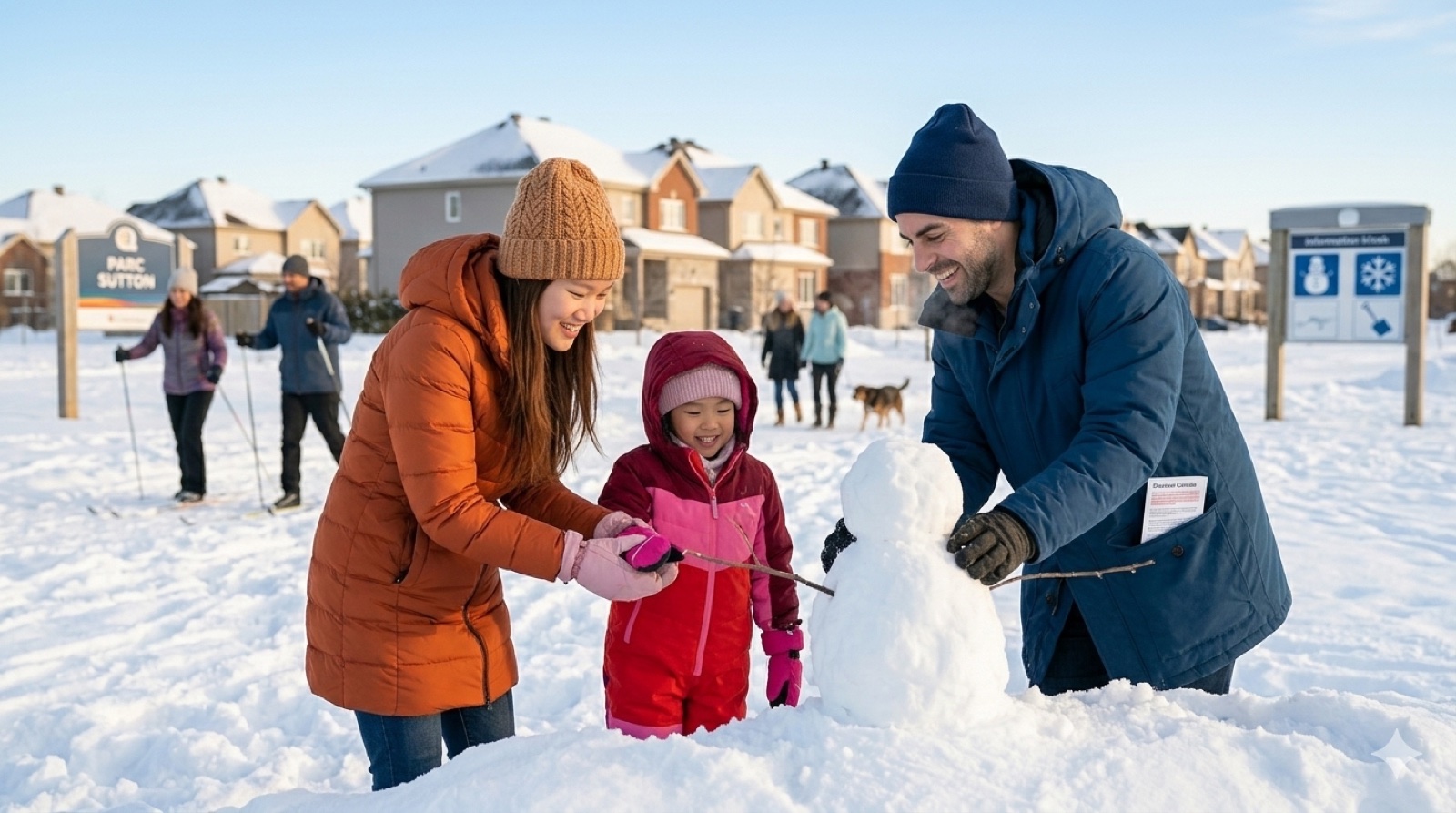
Coat rated -25 °C, traction boots, scarf / toque / mittens essential. Winter driving = gradual braking, double distance. Electric heating expensive (anticipate bills). Light therapy useful against seasonal depression (very short days in January).
Read the full winter guideBlack ice (invisible glaze) causes falls and accidents. First major thermal shock for newcomers — equip yourself BEFORE December.
- 4
SPRING (April–May)
Snow clearing, cleaning, end of hibernation
Snowmelt and mud (April — nicknamed 'the sloppy weeks'). Clean the balcony, store winter clothes. Terraces reopen late April / early May. Perfect season to visit sugar shacks (maple syrup, March–April).
See the daily-life guides



In short
Your first year — season by season
Four distinct seasons — each requires specific preparation.
Summer is short and intense: festivals, patios, construction holiday in July.
Fall: school year starts, switch to winter tires mandatory by December 1.
Winter is long (December–March): −25 °C coat, gripped boots, winter driving, heating.
Covers your first year — for non-seasonal topics (housing, health, food, car, culture), see the Daily Life section.
What's next?
You've finished settling in. Here's where to go next.
Frequently asked questions
Do I really need to change my tires for winter?
+
Do I really need to change my tires for winter?
+Yes. Winter tires are mandatory on all vehicles from December 1. Driving without them between December 1 and March 15 means a $200 minimum fine, and your insurance may refuse to cover an accident.
When should I book a garage appointment for winter tires?
+
When should I book a garage appointment for winter tires?
+By late October, during the fall. Winter tires become mandatory on December 1, so it is best to book your appointment before everyone else rushes to do the same.
What is black ice and why is it dangerous?
+
What is black ice and why is it dangerous?
+Black ice is an invisible glaze that causes falls and accidents. It is often the first major thermal shock for newcomers, so it is best to equip yourself before December rather than get caught off guard mid-winter.
What are the construction holidays and why should I know about them?
+
What are the construction holidays and why should I know about them?
+It is a collective vacation period in July when many offices close and traffic gets heavier. It is useful to know about when planning your errands or appointments that summer.
How do I prepare for the very short days in January?
+
How do I prepare for the very short days in January?
+Light therapy is useful against seasonal depression, since the days are very short in January. It is a good thing to plan for before the heart of winter sets in.
What are the 'sloppy weeks' in spring?
+
What are the 'sloppy weeks' in spring?
+It is the nickname for the snowmelt and mud that arrive in April. It is also the time to clean the balcony and store winter clothes before terraces reopen in late April or early May.
Does this parcours cover housing, health, or food?
+
Does this parcours cover housing, health, or food?
+No, this parcours focuses on the seasonal topics of your first year. For housing, health, food, cars, or culture, see the Daily Life section.
Is electric heating expensive in winter?
+
Is electric heating expensive in winter?
+Yes, electric heating is expensive in winter, so you should anticipate your bills. It is one of the things to plan for in your budget during the cold season.
Topics

First Steps in Quebec
Your first steps after arrival — housing, SIN, banking, phone.
Explore
Paperwork Simplified
Documents, official cards, government formalities.
Explore
Work & Career
Finding a job, Quebec-style résumé, French interviews.
Explore
Daily Life
Transport, local services, health, everyday life.
Explore
Local Resources
Communities, welcome services, neighborhood resources.
ExploreFrom Bécancour to Trois-Rivières.
Housing, transit, local schools: every guide also exists for your city, with real addresses and figures.


7 regions · 18 cities
All cities