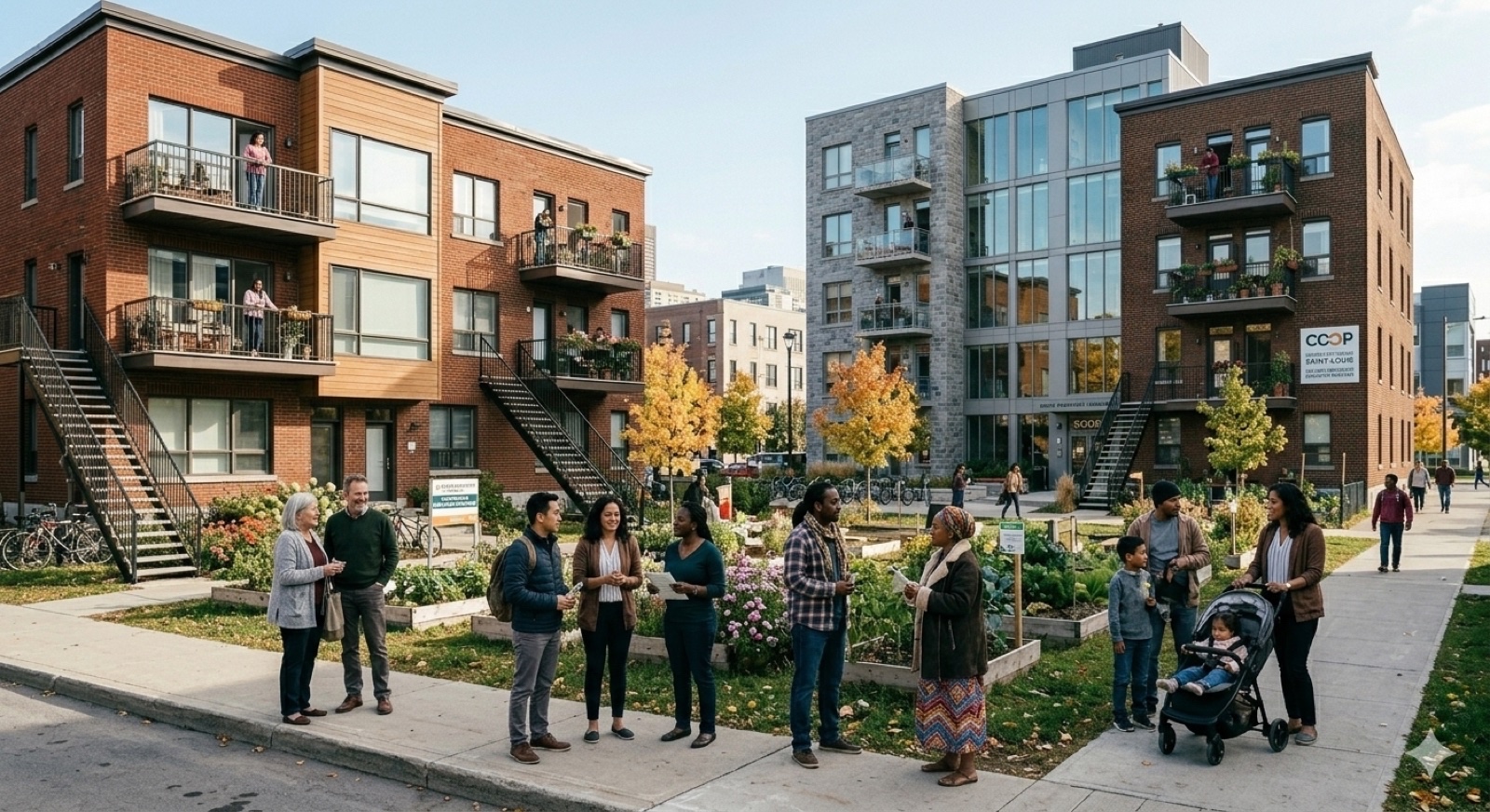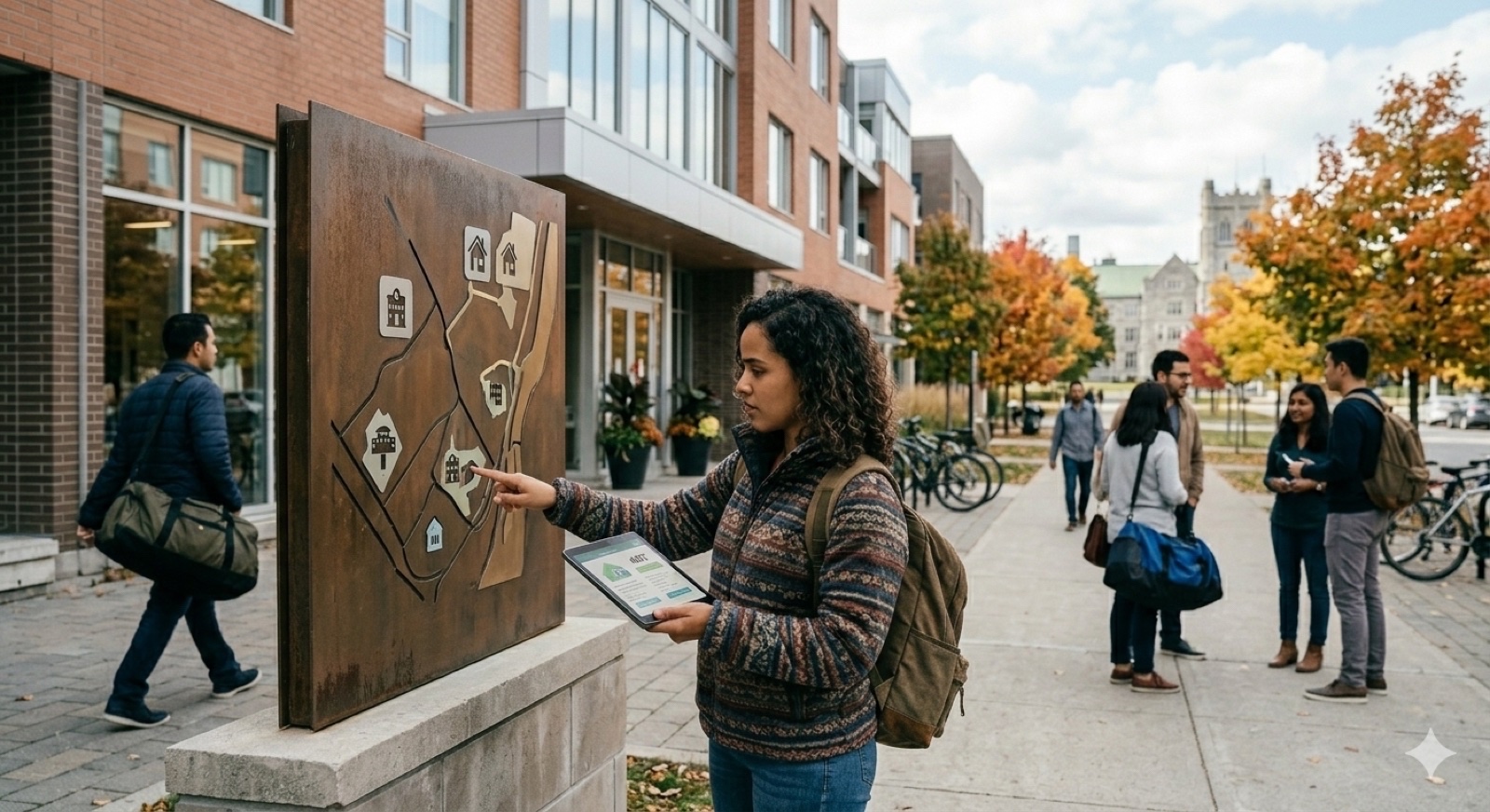
Trouver où vivre est la première démarche d'un étudiant — commencez tôt.
1. Three main housing options
As an international student or someone from another city, you have three main ways to find housing:
- The university residence — accommodation run by the institution, on or near campus
- The shared apartment — an apartment shared with other people, where each pays their share
- The private studio or apartment — a place of your own, rented directly from a landlord
No option is better in itself: it depends on your budget, your need for independence, and the date when you start searching.
2. University residence
The university residence is often the simplest option for a first term, especially if you are arriving from abroad. You have no private lease to negotiate and no furniture to buy, and the residence is close to your classes.
Many institutions reserve a share of spots for international students, sometimes as a priority. The weak point: spots are limited and fill up fast.
Applications usually open several months before the start of term, and the waiting list can be long. Apply as soon as you receive your letter of admission — do not wait until you have your study permit.
3. Sharing an apartment
Sharing an apartment is the most common arrangement among students. Several people share one apartment: each has their own bedroom and the common areas — kitchen, living room, bathroom — are shared.
The main advantage is financial: the rent and bills are divided, which makes neighbourhoods near campus much more affordable. It is also a natural way to make friends and practise French when you arrive.
Check carefully how your name appears on the lease: being one of the tenants named on the lease gives you rights, but also a shared responsibility for the rent.
4. A private studio or apartment
The private studio or apartment offers you your own space, with no roommates. It is the most expensive option, because you pay all the rent and all the bills alone. It is also the one that requires the most steps: you sign a lease directly with a landlord and you are solely responsible.
In Quebec, the studio often means a single-room home where the bedroom, living room and kitchen share one space, with a separate bathroom. You will also see listings described as a trois et demi or a quatre et demi: these numbers count the rooms, the half being the bathroom.
5. Comparing the three options
Here is how the three options compare on the points that matter most to a student: the cost, the steps involved, and the moment to act.
For a first term arriving from abroad, the residence is the most reassuring choice: few steps, but apply as early as possible. Sharing an apartment remains the best balance of cost and independence once you are settled. The private studio suits you if you want privacy and your budget allows it.
| Option | Relative cost | Steps | When to apply |
|---|---|---|---|
| University residence | Variable, often all-inclusive | Low — via the institution | Very early, spots limited |
| Shared apartment | The most affordable | Moderate — shared lease | Several months ahead |
| Studio / private apartment | The highest | High — lease in your name | Several months ahead |
6. The rental market calendar
In Quebec, most leases start and end on July 1. It is the national moving day: thousands of people change homes on the same day. For a student, this means two things.
First, the supply of housing is widest in the spring, for leases starting in July — it is the right time to search for the September start of classes. Second, trucks and movers are scarce and expensive around July 1; book ahead.
Searching mid-year is still possible, with fewer choices but often more calm.
7. What to budget for
The advertised rent is not always the real cost. Before signing, check what is included and what is not.
- The heating, the electricity and hot water may be included in the rent — or billed separately, directly by Hydro-Québec
- The internet is almost always your responsibility, except in a residence
- Plan for setup costs: furniture if the home is unfurnished, home insurance often required by the lease, and internet connection fees
A slightly lower rent but with heating not included can end up costing more than an all-inclusive rent, especially during the Quebec winter.
8. The lease and your address
As soon as you rent an apartment, you sign a lease. It is Quebec's official rental contract, and it strongly protects you as a tenant.
A twelve-month lease also sets your residential address for the year — a stable address is useful for almost all your steps: bank account, student file, official mail.
The lease is a topic in its own right: signing rules, banned deposit, tenant rights, rent increases. Rather than re-explaining all of that here, read our full lease guide in Quebec before signing anything.
9. Viewing and avoiding scams
Student housing rented from a distance is a classic target for fraudsters. The golden rule: never pay before you have seen the home. Always visit in person, or have a trusted person already on site visit for you.
Be wary of a listing too good for the price, a landlord who claims to be abroad and cannot show the place, and any request for a fast money transfer to reserve it.
Before transferring a single dollar, confirm that the home exists and that the person really is its owner or manager. A real rental goes through a signed lease — not a deposit sent to a stranger.
10. Documents a landlord may ask for
To rent, a landlord mainly wants to know whether you can pay the rent. They may ask you for:
- An identification document and your contact details
- A proof of income or of your ability to pay
- For a student newcomer with no history in Canada: a guarantor — someone who commits to paying if you do not — or a proof of funds covering several months of rent
The landlord has no right to refuse you because of your origin, your age or your immigration status. If they need a credit check, they must get your written consent.
11. Your action list
Follow these steps to find your student housing without stress. Check each box as you go — your progress is saved if you're signed in.
12. Frequently asked questions
The most common questions about student housing in Quebec: when to start searching, what is included in the rent, renting from abroad, and the guarantor for a student with no credit history.
When should I start looking for housing?
As early as possible — several months before the start of classes. For a residence, apply as soon as you receive your letter of admission, because spots are limited and fill up fast.
For a private apartment or a shared apartment, the widest choice appears in the spring for leases starting on July 1. Waiting until August for a September start means searching when the good places are already rented.
Are heating and electricity included in the rent?
It depends on the home — always check before signing. In some apartments, heating, electricity and hot water are included. In others, you pay them separately, billed directly by Hydro-Québec.
The internet is almost always your responsibility, except in a residence. In winter, heating can make a rent that looks « cheaper » in fact the most expensive in the end.
Can I rent an apartment from abroad, before I arrive?
It is possible, but it is also the situation scammers exploit the most. Never pay a deposit or rent for a home you have not seen.
If you cannot visit in person, ask a trusted person already in Quebec to visit for you, or ask for a live video tour. For a first term from abroad, the safest option is often the university residence.
What is a guarantor, and do I need one?
A guarantor is a person who commits in writing to pay your rent if you cannot do so. A landlord may ask for one from a student newcomer, because you have no credit history yet in Canada.
If you have no guarantor, some landlords will instead accept a proof of funds — a bank statement covering several months of rent. A guarantor or proof of funds is legal; a security deposit, on the other hand, is forbidden.
13. See also
These related resources may be useful to you:
- Parcours — International student — all your steps from the CAQ to settling in.
- Signing a lease in Quebec — the rental contract in detail, your rights and the pitfalls.
- Finding a room to rent in Quebec — a more economical option for flatsharing or boarding.
- Common scams in Quebec — recognising and avoiding fraud, including fake housing listings.
14. Official sources
For official, up-to-date information:
- Housing Administrative Tribunal — the lease, your rights and obligations
- Housing in Quebec (Government of Quebec) — information for newcomers
- Hydro-Québec — connecting electricity to your new home
Author's Note: for student housing, time is your best ally and money sent too quickly, your worst enemy. Start early, visit before you pay, and read the lease guide before you sign. The rest, you will learn as you settle in.