1. The room: the most accessible arrival option
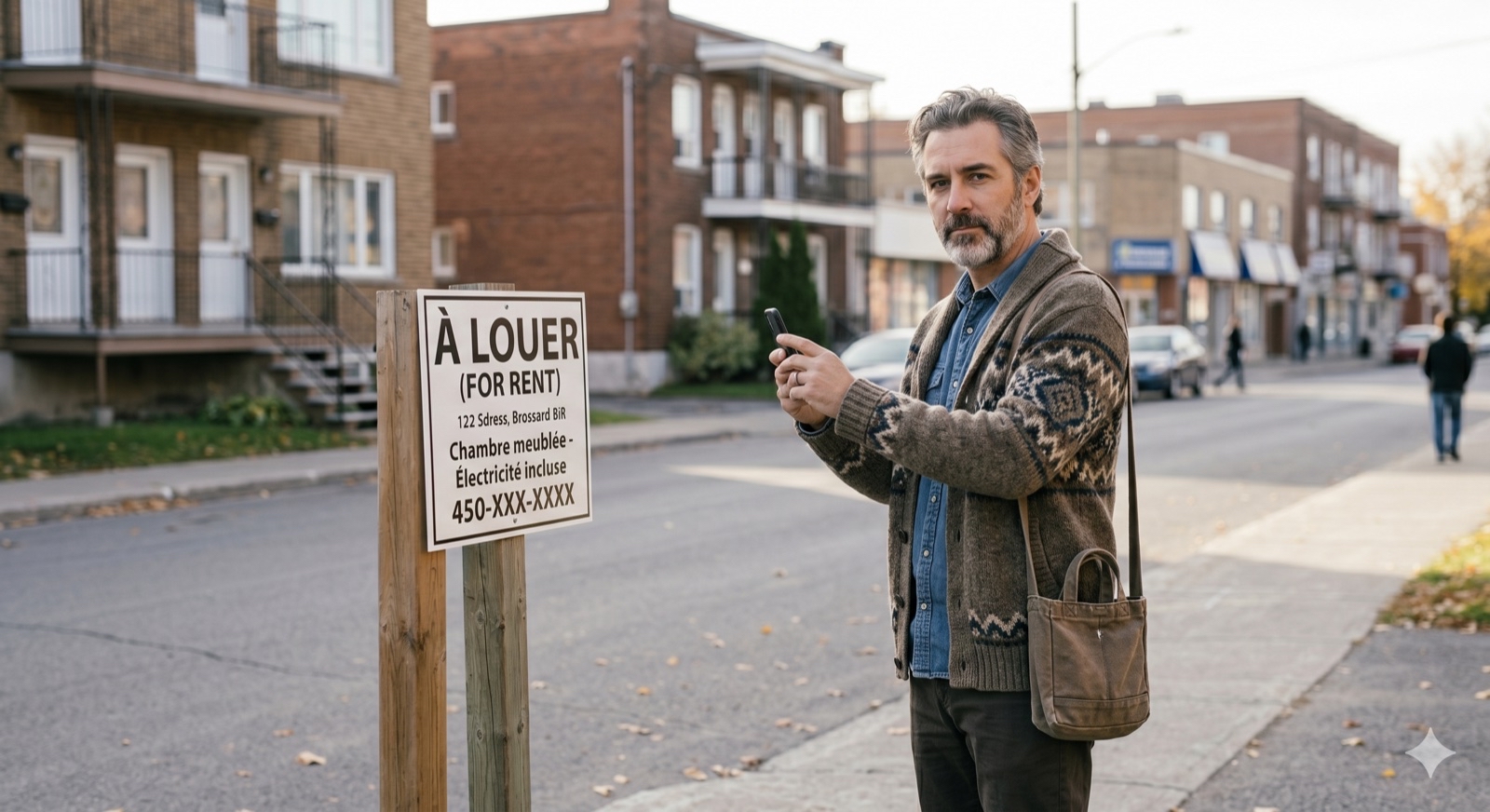
On arrival, renting a whole apartment isn't always realistic: without credit history, without confirmed work, or on a small budget, it's hard. Renting a room — in a shared home, with a private host, or in a residence — is often the most accessible entry point. It's cheaper, more flexible, and buys you time to learn the neighbourhoods before committing to a one-year lease. But the rules aren't exactly the same as for a whole apartment, so read on before signing or handing over money.
2. Where to look
Several channels work in Quebec:
- classifieds like Kijiji and Facebook Marketplace;
- city- or neighbourhood-based Facebook roommate groups, very active;
- university and CÉGEP bulletin boards, useful even if you're not a student;
- community organizations helping newcomers;
- word of mouth: tell people you're looking.
| Shared room (colocation) | Individual apartment | |
|---|---|---|
| Typical rent (Montreal) | $600 – $900 / month | $1,100 – $1,800 / month |
| Deposit required | Sometimes (illegal in Quebec, but common) | None (prohibited by law) |
| Lease mandatory | No (often verbal) | Yes (recommended) |
| Services included | Often (internet, heating) | Variable |
| Flexibility | Greater | Less (12-month lease) |
3. What changes legally with a room
Here's the key nuance. If you rent a room in a home where the owner also lives, and you share the kitchen or bathroom with them, some usual tenant protections may not apply the same way. If instead you rent a room in an apartment where the owner doesn't live, you're generally better protected.
In all cases, insist on a written agreement stating the rent, what's included, and the duration. If unsure about your rights, a housing committee can clarify your exact situation — for free.
4. What to check before saying yes
Before committing, ask the right questions:
- Does the price include heating, electricity, internet?
- Is the room furnished?
- Which rooms are shared, and with how many people?
- Is there a written agreement, and for how long?
- Is the area well served by transit?
Visit at a time when the other occupants are around to feel the vibe. And trust your gut: a home isn't just a price — it's your daily peace of mind too.
5. Frequently asked questions
Here are the most common questions about renting a room: do you need a lease, can you use the address for your paperwork, and how long to stay.
Do I need a lease to rent a room?
A written agreement is always smart, even when a formal lease isn't strictly required. It protects both sides on price, what's included, and duration. Avoid purely verbal arrangements: if a disagreement comes up, you'll have nothing to show. Keep your payment proofs too.
Can I use this address for my paperwork?
Usually yes — your real place of residence is your address for RAMQ, the SAAQ, taxes and mail. Make sure you can actually receive your mail there. If you move often at first, update your address with each agency to avoid missing important documents.
How long should I stay in a room?
As long as it serves you. Many newcomers use a room for the first months — to save money, learn the city, and build a bit of rental and credit history — then move to their own apartment once they have a job and references. There's no rush; a room is a smart stepping stone, not a failure.
6. See also
These related guides may be useful:
- Signing a lease in Quebec — for when you move to your own place.
- Common scams in Quebec — spotting fake listings.
- Student housing — if you're studying.
7. Official sources
To know your rights and avoid traps, see:
Author's Note: a room is often the best first choice in Quebec — affordable, flexible, low-pressure. Remember two golden rules: never pay before visiting, and no landlord can require more than the first month's rent. With that, you avoid 90% of bad surprises.