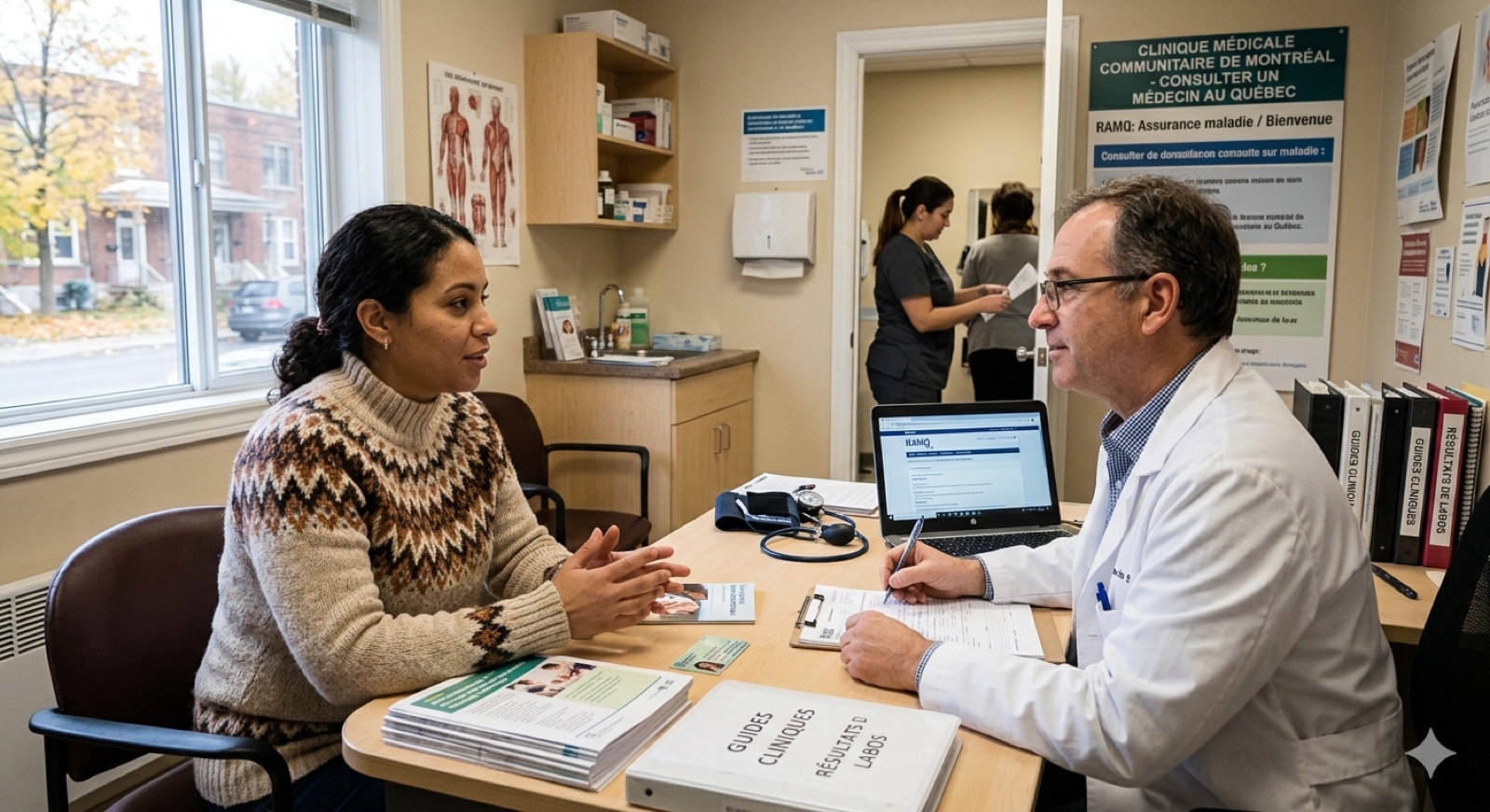
Hôpital, CLSC ou clinique : où aller selon votre situation

Hospital, CLSC or Clinic: Where to Go

Comment choisir entre les urgences, le CLSC, la clinique sans rendez-vous et le 811 selon votre problème de santé.

How to choose between the emergency room, CLSC, walk-in clinic and 811 based on your health situation.

Par VIEAUQC — La vie au QuébecPublié le 17 juinNiveau 5
Hôpital, CLSC ou clinique : où aller selon votre situation

1. Les quatre portes d'entrée du système de santé

Le système de santé québécois offre quatre options principales selon la gravité de votre situation : le 811 Info-Santé, le CLSC, la clinique sans rendez-vous et les urgences de l'hôpital. Connaître la bonne porte d'entrée vous fait gagner du temps, réduit l'attente et préserve les ressources d'urgence pour ceux qui en ont vraiment besoin.

Quebec's health system offers four main options depending on the severity of your situation: 811 Info-Santé, the CLSC, the walk-in clinic, and the hospital emergency room. Knowing the right entry point saves you time, reduces wait times, and keeps emergency resources available for those who truly need them.

En résumé : le 811 pour avoir l'avis d'une infirmière par téléphone, le CLSC pour les soins non urgents et les services sociaux, la clinique sans rendez-vous pour un problème aigu mineur, et les urgences pour une situation grave ou potentiellement mortelle.

In brief: 811 to get a nurse's advice by phone, the CLSC for non-urgent care and social services, the walk-in clinic for a minor acute problem, and the emergency room for a serious or potentially life-threatening situation.
1. The four entry points to the health system. Quebec's health system offers four main options depending on the severity of your situation: 811 Info-Santé, the CLSC, the walk-in clinic, and the hospital emergency room. Knowing the right entry point saves you time, reduces wait times, and keeps emergency resources available for those who truly need them. In brief: 811 to get a nurse's advice by phone, the CLSC for non-urgent care and social services, the walk-in clinic for a minor acute problem, and the emergency room for a serious or potentially life-threatening situation. | Option | When to use it | Typical wait | Cost (with RAMQ) | |---|---|---|---| | 811 Info-Santé | Uncertainty, mild symptoms, night | Immediate (phone) | Free | | CLSC | Non-urgent care, social services, prevention | By appointment (same day possible) | Free | | Walk-in clinic (GMF-U) | Minor acute problem, cold, mild infection | 1–4 hours | Free | | Hospital emergency room | Serious or potentially life-threatening emergency | 4–8 h+ (non-urgent) | Free |
OptionQuand l'utiliserDélai typiqueCoût (avec RAMQ)
811 Info-SantéIncertitude, symptômes légers, nuitImmédiat (téléphone)Gratuit
CLSCSoins non urgents, services sociaux, préventionSur rendez-vous (même jour possible)Gratuit
Clinique sans rendez-vous (GMF-U)Problème aigu mineur, rhume, infection légère1–4 heuresGratuit
Urgences hôpitalUrgence grave ou potentiellement mortelle4–8 h+ (non urgent)Gratuit

2. Quand appeler le 811 (Info-Santé)

Le 811 est une ligne téléphonique disponible 24 heures sur 24, 7 jours sur 7, gratuite, animée par des infirmières diplômées. Elle est accessible en français et en anglais, et dans d'autres langues sur demande. C'est votre première ressource lorsque vous ne savez pas si votre situation nécessite une consultation en personne.

811 is a phone line available 24 hours a day, 7 days a week, free of charge, staffed by registered nurses. It is accessible in French and English, and in other languages on request. It is your first resource when you are unsure whether your situation requires in-person care.

Appelez le 811 dans les situations suivantes :

  • vous n'êtes pas certain de la gravité de vos symptômes
  • vous avez une question sur un médicament ou une posologie
  • votre enfant est fiévreux en pleine nuit et vous hésitez à vous déplacer
  • vous présentez des symptômes légers comme un mal de gorge ou une légère toux
  • vous voulez simplement un avis professionnel avant de décider quoi faire
Call 811 in the following situations: - you are unsure about the severity of your symptoms - you have a question about a medication or dosage - your child has a fever in the middle of the night and you are hesitant to go out - you have mild symptoms such as a sore throat or a slight cough - you simply want a professional opinion before deciding what to do

L'infirmière du 811 évalue votre situation, vous conseille sur les soins à domicile ou vous oriente vers la ressource appropriée. Elle peut aussi vous dire si vous devez aller aux urgences immédiatement. Ce service est couvert par la : aucun frais, aucune carte de crédit requise.

The 811 nurse assesses your situation, advises you on home care, or directs you to the appropriate resource. She can also tell you if you need to go to the emergency room immediately. This service is covered by RAMQ: no fees, no credit card required.
2. When to call 811 (Info-Santé). 811 is a phone line available 24 hours a day, 7 days a week, free of charge, staffed by registered nurses. It is accessible in French and English, and in other languages on request. It is your first resource when you are unsure whether your situation requires in-person care. Call 811 in the following situations: - you are unsure about the severity of your symptoms - you have a question about a medication or dosage - your child has a fever in the middle of the night and you are hesitant to go out - you have mild symptoms such as a sore throat or a slight cough - you simply want a professional opinion before deciding what to do The 811 nurse assesses your situation, advises you on home care, or directs you to the appropriate resource. She can also tell you if you need to go to the emergency room immediately. This service is covered by RAMQ: no fees, no credit card required.

3. Quand aller au CLSC

Le , Centre local de services communautaires, est un établissement de santé de première ligne offrant des soins non urgents, des services sociaux et de la prévention dans votre quartier. Les services sont gratuits avec la carte RAMQ. Un rendez-vous est souvent nécessaire, mais certains CLSC offrent des plages sans rendez-vous, parfois le jour même.

The CLSC (local community service centre) is a front-line health establishment offering non-urgent care, social services, and prevention in your neighbourhood. Services are free with your RAMQ card. An appointment is often required, but some CLSCs offer walk-in slots, sometimes the same day.

Rendez-vous au CLSC pour les situations suivantes :

  • vaccination (grippe, voyage, enfants)
  • soins de plaies et pansements
  • suivi d'une maladie chronique comme le diabète ou l'hypertension
  • soutien en santé mentale
  • services sociaux comme l'aide à domicile
  • soins post-nataux pour la mère et le nouveau-né
  • bilans de santé préventifs
Go to the CLSC for the following situations: - vaccination (flu, travel, children) - wound care and dressings - follow-up for a chronic condition such as diabetes or hypertension - mental health support - social services such as home care - post-natal care for mother and newborn - preventive health check-ups

Pour trouver votre CLSC, rendez-vous sur le site quebec.ca et recherchez par code postal. Vous pouvez aussi consulter notre guide sur le fonctionnement du CLSC pour comprendre tous les services disponibles dans cet établissement.

To find your CLSC, visit quebec.ca and search by postal code. You can also read our guide on how the CLSC works to understand all the services available at this establishment.
3. When to go to the CLSC. The CLSC (local community service centre) is a front-line health establishment offering non-urgent care, social services, and prevention in your neighbourhood. Services are free with your RAMQ card. An appointment is often required, but some CLSCs offer walk-in slots, sometimes the same day. Go to the CLSC for the following situations: - vaccination (flu, travel, children) - wound care and dressings - follow-up for a chronic condition such as diabetes or hypertension - mental health support - social services such as home care - post-natal care for mother and newborn - preventive health check-ups To find your CLSC, visit quebec.ca and search by postal code. You can also read our guide on how the CLSC works to understand all the services available at this establishment.

4. Quand aller à la clinique sans rendez-vous (GMF-U)

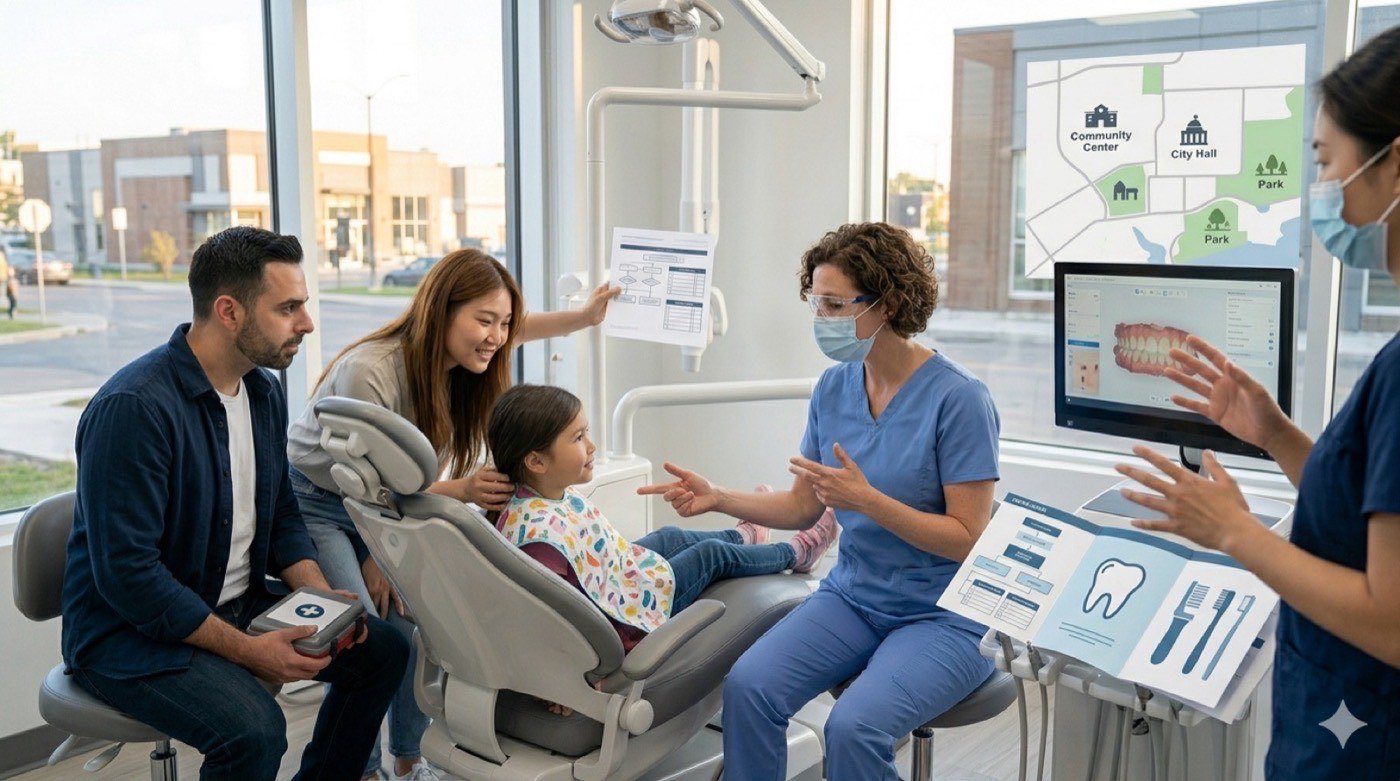
La clinique sans rendez-vous, aussi appelée , est idéale pour les problèmes de santé aigus mais non graves. Elle est particulièrement utile lorsque vous n'avez pas encore de médecin de famille ou que le prochain rendez-vous disponible est dans plusieurs semaines.

The walk-in clinic, also called GMF-U (university family medicine group), is ideal for acute but non-serious health problems. It is particularly useful when you do not yet have a family doctor or the next available appointment is several weeks away.

Consultez une clinique sans rendez-vous pour les situations suivantes :

  • infection des oreilles ou de la gorge
  • infection urinaire
  • foulure ou entorse légère
  • fièvre sans signes inquiétants chez l'adulte
  • petite plaie nécessitant des points de suture
  • conjonctivite
  • renouvellement d'ordonnance simple

L'attente est généralement de une à quatre heures, soit bien moins qu'aux urgences pour ce type de problème.

Visit a walk-in clinic for the following situations: - infection of the ears or throat - urinary tract infection - mild sprain or strain - fever without alarming signs in an adult - small wound requiring stitches - conjunctivitis - simple prescription renewal Wait times are generally one to four hours — much less than the emergency room for this type of problem.

Pour trouver la clinique sans rendez-vous la plus proche, utilisez le localisateur en ligne sur le site csa.ramq.gouv.qc.ca. Vous pouvez y filtrer par ville, par heure d'ouverture et par type de service. La consultation est gratuite avec votre carte RAMQ.

To find the nearest walk-in clinic, use the online locator at csa.ramq.gouv.qc.ca. You can filter by city, opening hours, and type of service. The consultation is free with your RAMQ card.
4. When to go to a walk-in clinic (GMF-U). The walk-in clinic, also called GMF-U (university family medicine group), is ideal for acute but non-serious health problems. It is particularly useful when you do not yet have a family doctor or the next available appointment is several weeks away. Visit a walk-in clinic for the following situations: - infection of the ears or throat - urinary tract infection - mild sprain or strain - fever without alarming signs in an adult - small wound requiring stitches - conjunctivitis - simple prescription renewal Wait times are generally one to four hours — much less than the emergency room for this type of problem. To find the nearest walk-in clinic, use the online locator at csa.ramq.gouv.qc.ca. You can filter by city, opening hours, and type of service. The consultation is free with your RAMQ card.

5. Quand aller aux urgences de l'hôpital

Les urgences hospitalières sont réservées aux situations graves, potentiellement mortelles ou nécessitant des équipements médicaux spécialisés uniquement disponibles à l'hôpital. Pour les problèmes non urgents, l'attente peut dépasser huit heures, car une infirmière effectue un à l'arrivée et les cas graves sont traités en priorité.

Hospital emergency rooms are reserved for serious, potentially life-threatening situations, or those requiring specialized medical equipment only available in a hospital. For non-urgent problems, wait times can exceed eight hours, as a nurse performs triage on arrival and serious cases are treated first.

Allez aux urgences immédiatement dans les situations suivantes :

  • douleur thoracique ou essoufflement soudain
  • suspicion d'AVC (visage qui s'affaisse, bras faible, parole difficile — acronyme VITE)
  • réaction allergique grave (gorge qui se resserre, difficulté à respirer)
  • traumatisme important : chute, accident, fracture évidente
  • saignement incontrôlable
  • perte de connaissance
  • crise convulsive
Go to the emergency room immediately in the following situations: - chest pain or sudden shortness of breath - suspected stroke (face drooping, arm weakness, speech difficulty — acronym FAST) - severe allergic reaction (throat tightening, difficulty breathing) - major trauma: fall, accident, obvious fracture - uncontrollable bleeding - loss of consciousness - seizure

Si vous suspectez une urgence cardiaque ou un AVC, appelez le 911 immédiatement plutôt que de vous rendre à l'hôpital vous-même. Les ambulanciers peuvent commencer le traitement en route et alerter l'équipe médicale à l'avance, ce qui peut faire une différence cruciale.

If you suspect a cardiac emergency or a stroke, call 911 immediately rather than driving yourself to the hospital. Paramedics can begin treatment on the way and alert the medical team in advance, which can make a crucial difference.
5. When to go to the hospital emergency room. Hospital emergency rooms are reserved for serious, potentially life-threatening situations, or those requiring specialized medical equipment only available in a hospital. For non-urgent problems, wait times can exceed eight hours, as a nurse performs triage on arrival and serious cases are treated first. Go to the emergency room immediately in the following situations: - chest pain or sudden shortness of breath - suspected stroke (face drooping, arm weakness, speech difficulty — acronym FAST) - severe allergic reaction (throat tightening, difficulty breathing) - major trauma: fall, accident, obvious fracture - uncontrollable bleeding - loss of consciousness - seizure If you suspect a cardiac emergency or a stroke, call 911 immediately rather than driving yourself to the hospital. Paramedics can begin treatment on the way and alert the medical team in advance, which can make a crucial difference.

6. Questions fréquentes

Puis-je aller directement à l'hôpital sans passer par le 811 ou un CLSC ?

Oui, les urgences sont accessibles sans référence. Mais pour tout problème non urgent, vous attendrez 6 à 8 heures minimum (triage 4–5) alors qu'une clinique sans rendez-vous ou le CLSC vous prendront en charge en 1 à 2 heures pour les mêmes cas.

Can I go directly to the hospital without calling 811 or going to a CLSC first?. Yes, the emergency room is accessible without a referral. But for any non-urgent problem, you will wait a minimum of 6 to 8 hours (triage 4–5), whereas a walk-in clinic or the CLSC will see you in 1 to 2 hours for the same cases.
Le CLSC peut-il gérer une urgence ?

Non. Le CLSC n'est pas équipé pour les urgences médicales graves. Si vous ressentez une douleur thoracique, un trouble de la vision, une faiblesse soudaine ou tout autre signe d'urgence, composez le 911 ou rendez-vous directement aux urgences hospitalières.

Can the CLSC handle an emergency?. No. The CLSC is not equipped for serious medical emergencies. If you experience chest pain, a vision disturbance, sudden weakness, or any other sign of emergency, call 911 or go directly to the hospital emergency room.
Dois-je avoir une carte RAMQ pour consulter ?

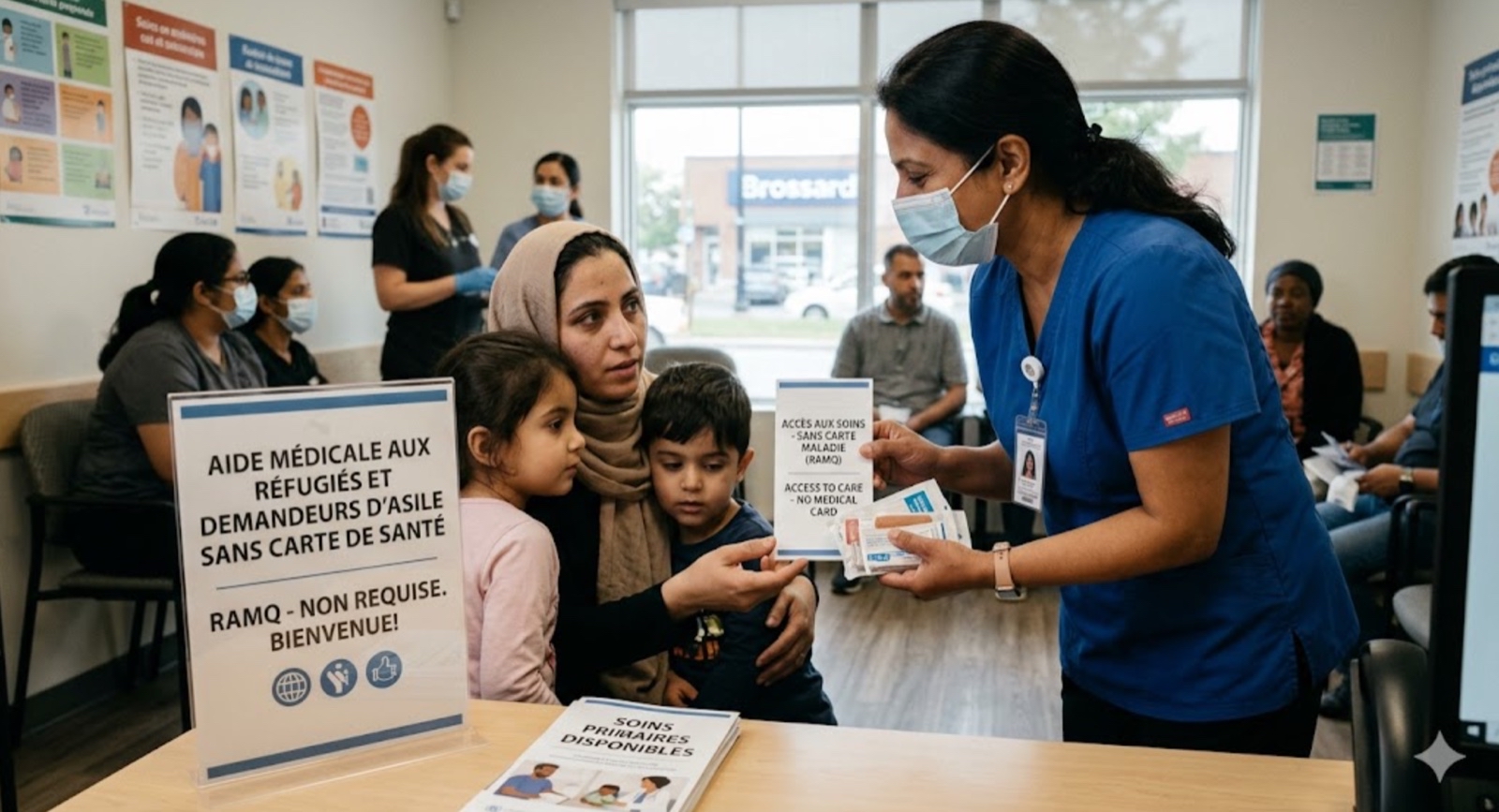
La carte RAMQ est nécessaire pour que les soins soient gratuits. Sans elle, vous serez facturé. Si vous êtes en attente de votre carte, conservez vos reçus : vous pourrez être remboursé rétroactivement une fois la carte reçue dans certains cas. Le 811 est toujours gratuit, même sans carte.

Do I need a RAMQ card to see a doctor?. The RAMQ card is required for care to be free. Without it, you will be billed. If you are waiting for your card, keep your receipts: you may be reimbursed retroactively in some cases once the card is received. 811 is always free, even without a card.
Qu'est-ce que le triage et pourquoi l'attente est-elle si longue ?

Le triage classe les patients de 1 (urgence absolue) à 5 (non urgent). Les cas graves passent en premier, indépendamment de l'heure d'arrivée. Un triage 4 ou 5 — otite, contusion, rhume persistant — peut attendre 4 à 10 heures selon l'achalandage. C'est le fonctionnement normal du système, pas un dysfonctionnement.

What is triage and why is the wait so long?. Triage classifies patients from 1 (absolute emergency) to 5 (non-urgent). Serious cases are treated first, regardless of arrival time. A triage 4 or 5 — ear infection, bruise, persistent cold — can wait 4 to 10 hours depending on traffic. This is normal system functioning, not a malfunction.
6. Frequently asked questions. Yes, the emergency room is accessible without a referral. But for any non-urgent problem, you will wait a minimum of 6 to 8 hours (triage 4–5), whereas a walk-in clinic or the CLSC will see you in 1 to 2 hours for the same cases. No. The CLSC is not equipped for serious medical emergencies. If you experience chest pain, a vision disturbance, sudden weakness, or any other sign of emergency, call 911 or go directly to the hospital emergency room. The RAMQ card is required for care to be free. Without it, you will be billed. If you are waiting for your card, keep your receipts: you may be reimbursed retroactively in some cases once the card is received. 811 is always free, even without a card. Triage classifies patients from 1 (absolute emergency) to 5 (non-urgent). Serious cases are treated first, regardless of arrival time. A triage 4 or 5 — ear infection, bruise, persistent cold — can wait 4 to 10 hours depending on traffic. This is normal system functioning, not a malfunction.

8. Voir aussi

Ces guides apparentés peuvent vous être utiles :

These related guides may be useful to you: - How the CLSC works — to understand in detail all the services offered by the CLSC in your neighbourhood - Finding a family doctor in Quebec — to register on the waiting list and obtain a family doctor, the most stable long-term health resource - Registering with RAMQ and getting your Soleil card — essential before any medical consultation in Quebec - Emergency dental care without insurance — free or low-cost options if you have a dental emergency without coverage
8. See also. These related guides may be useful to you: - How the CLSC works — to understand in detail all the services offered by the CLSC in your neighbourhood - Finding a family doctor in Quebec — to register on the waiting list and obtain a family doctor, the most stable long-term health resource - Registering with RAMQ and getting your Soleil card — essential before any medical consultation in Quebec - Emergency dental care without insurance — free or low-cost options if you have a dental emergency without coverage

8. Sources officielles

- 811 Info-Santé — 811.gouv.qc.ca - Government of Quebec — Find a health resource — quebec.ca/sante - RAMQ — Clinic locator — csa.ramq.gouv.qc.ca - RAMQ — Covered services — ramq.gouv.qc.ca
8. Official sources. - 811 Info-Santé — 811.gouv.qc.ca - Government of Quebec — Find a health resource — quebec.ca/sante - RAMQ — Clinic locator — csa.ramq.gouv.qc.ca - RAMQ — Covered services — ramq.gouv.qc.ca

Note de l'auteure : Le système de santé québécois peut sembler complexe au premier abord, mais sa logique est simple : réserver chaque ressource à ce pour quoi elle est conçue. Le 811 pour l'incertitude, le CLSC pour le suivi et la prévention, la clinique sans rendez-vous pour l'aigu bénin, et les urgences pour le grave. En choisissant la bonne porte d'entrée, vous vous soignez mieux, plus vite, et vous contribuez à un système qui fonctionne pour tout le monde.

Author's note: Quebec's health system can seem complex at first, but its logic is simple: reserve each resource for what it is designed for. 811 for uncertainty, the CLSC for follow-up and prevention, the walk-in clinic for minor acute problems, and the emergency room for serious situations. By choosing the right entry point, you get better, faster care — and you contribute to a system that works for everyone.

Cet article est nouveau — votre avis aiderait les prochains lecteurs.