1. A free, well-established welcome in Sherbrooke
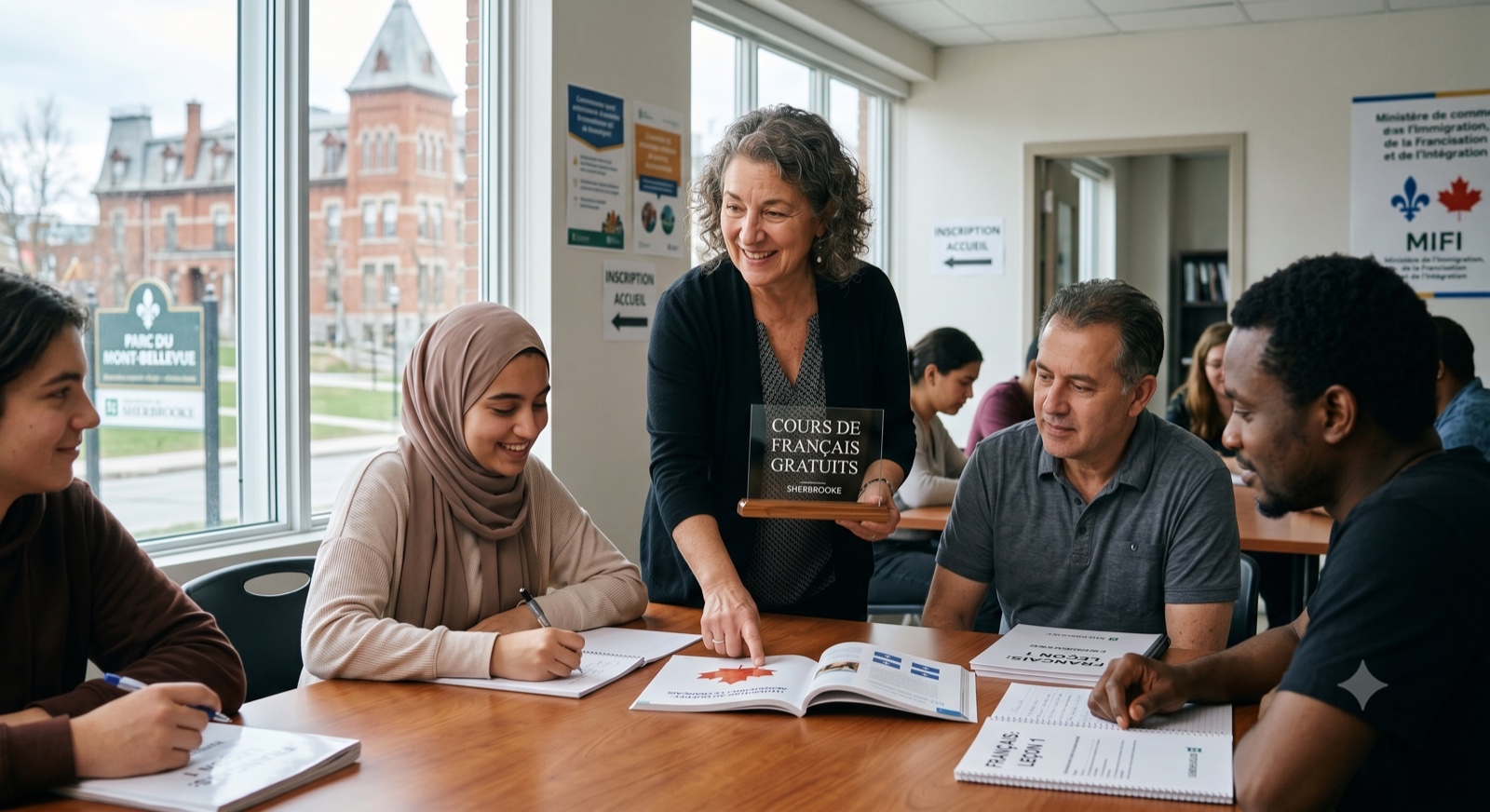
Sherbrooke, in the Estrie, has a long tradition of welcoming immigrants. The local network, funded by the Ministère de l'Immigration, offers free settlement help, French courses, employment support and integration support.
2. The Service d'aide aux Néo-Canadiens (SANC)
The Service d'aide aux Néo-Canadiens (SANC) has welcomed and supported immigrants in the Estrie in their socio-economic integration since 1954. Mandated by the Ministère de l'Immigration, de la Francisation et de l'Intégration, it offers free services: information sessions, personalized support, mentoring, interpretation, and more. In practice, they can help you from day one with your first tasks — the RAMQ health-insurance card, the Social Insurance Number, registering children for school, finding housing — and decode official mail. SANC also has specialized for over 25 years in supporting immigrants' job search. You can reach it at 819 566-5373, at 530 rue Prospect in Sherbrooke.
3. French and employment in Sherbrooke
For French, Francisation Québec is the single point of entry: one registration gives access to free courses, full-time or part-time, day or evening, in person or online, sometimes with a participation allowance for full-time study. The Cégep de Sherbrooke and the Université de Sherbrooke also take part in francization activities. For employment, SANC is the reference; Services Québec offices — CV and interview workshops, recognition of skills earned abroad — and the Carrefours jeunesse-emploi for ages 16 to 35 round out the offer.
4. Where to start
Call SANC at 819 566-5373 or visit 530 rue Prospect, saying you're newly arrived. They'll assess your needs — settlement, French, employment — and support you or steer you to the right partner. Bring your immigration documents. If you'd rather get oriented first, call 211.
5. Frequently asked questions
Here are the most common questions about newcomer help in Sherbrooke: is it free, does SANC help with employment, and do you already need to speak French.
Does SANC really help with employment?
Yes — supporting immigrants' job search is one of SANC's specialties, built over more than 25 years, for people of all immigration backgrounds: skilled workers, refugees, sponsored people, permanent residents and citizens. It's a strong first stop if work is your priority.
Do you already need to speak French?
No. The SANC offers interpretation and multilingual support, and helps you start or continue learning French. You can get help in a language you're comfortable with while you build your French.
Is it really free?
Yes. The SANC and its partners are funded by the Ministère de l'Immigration and cost you nothing. Be wary of any private agency that charges for help the welcome network provides for free.
Do I need a particular status to be welcomed?
No. The SANC welcomes people of every immigration background — permanent residents, temporary workers and students, sponsored people and refugees. Certain specific programs have their own rules, but the first welcome and referral are open to all.
What should I bring to my first appointment?
Bring your immigration documents (CSQ, confirmation of permanent residence, or work/study permit), a piece of ID, and if possible a proof of address. If your diplomas or transcripts are in another language, bring them too — they're useful for employment and francization. No document is mandatory for a first contact: come even empty-handed if you must.
6. See also
These related guides may be useful:
- Free French classes in Sherbrooke — learning French locally.
- Community organizations in Quebec — the province-wide picture.
- Your first-week checklist in Quebec — the essentials on arrival.
7. Official sources
To find and contact these organizations, see:
Author's Note: in Sherbrooke, remember one number — SANC, at 819 566-5373. A single call gives you access to over seventy years of welcome expertise, in a city where support is often more human and faster than elsewhere.