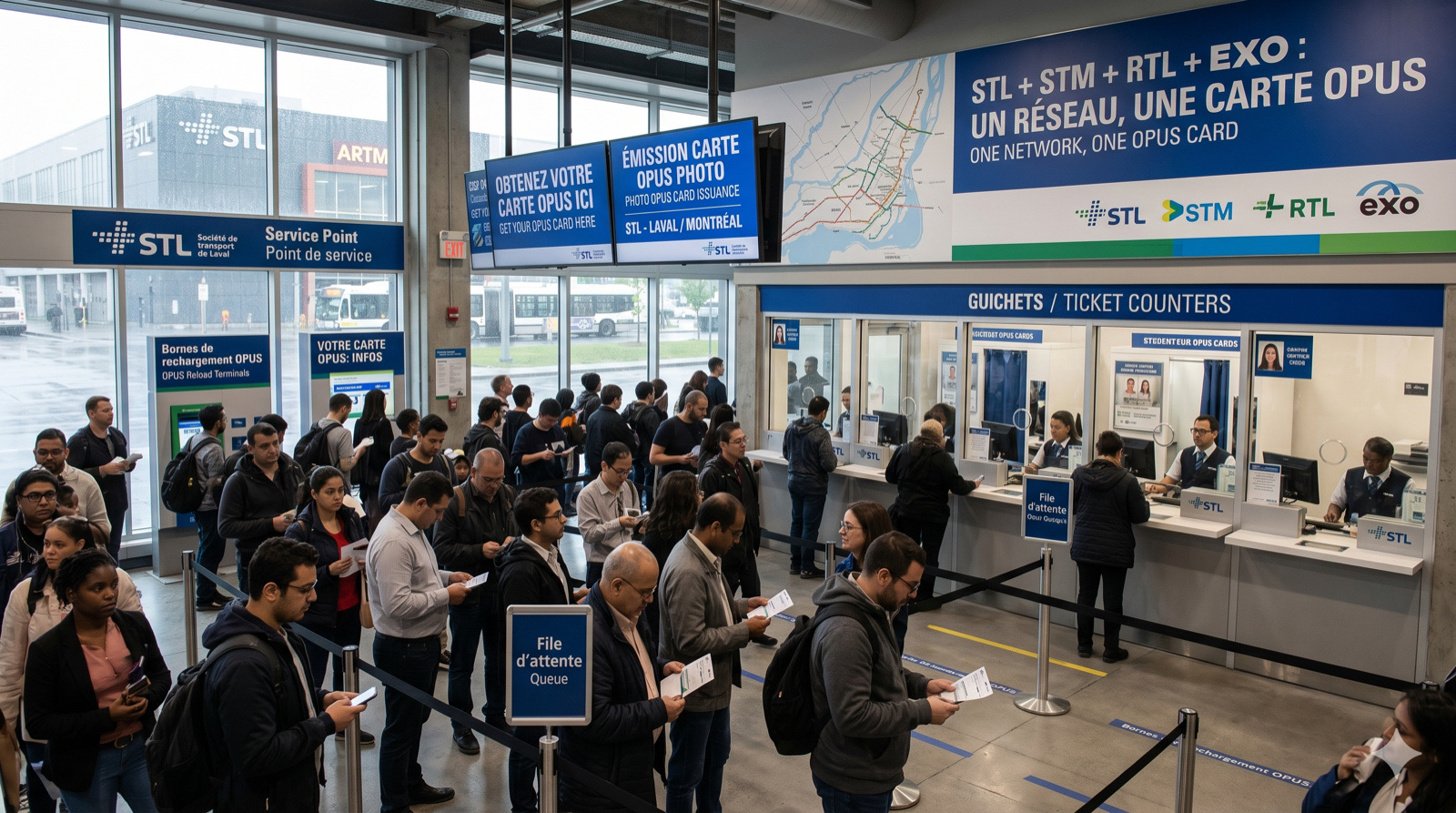
1. Three ways to get around
In Laval, public transit relies on two complementary networks.
The STL, Société de transport de Laval, runs the local buses covering all of Laval.
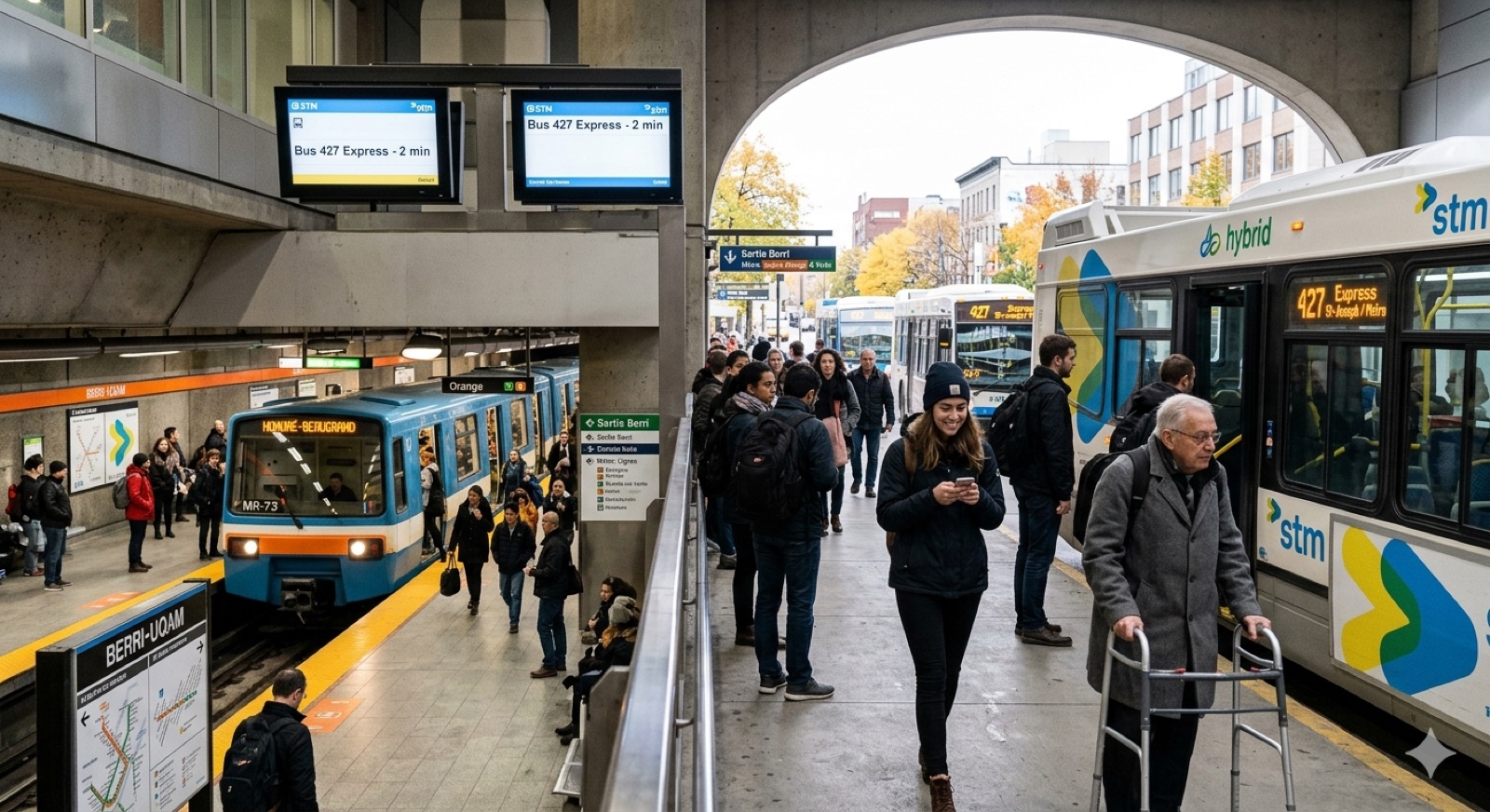
Montreal's metro — the orange line — has three stations in Laval that take you to downtown Montreal.
The OPUS card pays for all networks in Greater Montreal.
2. The three metro stations in Laval
The orange line crosses Laval with three stations:
- Cartier — near the bridge to Montreal and several STL buses
- De la Concorde — also a commuter rail station
- Montmorency — the northern terminus, next to Cégep Montmorency and Université de Montréal — Campus Laval
According to the STM's Cartier station page, trains run every 2 to 6 minutes on weekdays at peak times (7 to 9 a.m. and 4 to 6 p.m.), every 3 to 8 minutes off-peak, and every 6 to 10 minutes on weekends.
3. The STL bus network
The STL runs the bus network in Laval. Several routes feed into the metro stations, and an All Modes fare includes a 120-minute transfer between bus and metro.
Service hours vary from one route to another: check the STL bus schedules. To plan trips, the STL points to the Chrono, Google Maps and Transit trip planners.
4. OPUS card and fare zones
Greater Montreal is divided into fare zones managed by the ARTM.
Laval is in Zone B, and so are its three metro stations. If you travel only by bus — inside Laval or by bus to the island of Montreal — the Bus fare is enough: Bus fares cover buses in and between zones A, B and C. As soon as you take the metro, even between two Laval stations, you need the ALL MODES AB pass: there is no ALL MODES B pass.
According to the ARTM fare schedule, the monthly AB pass becomes cheaper if you ride more than 34 times per month (fares in effect July 1, 2026: single AB fare $5.00, monthly AB pass $170).
5. Where to get and reload your OPUS card
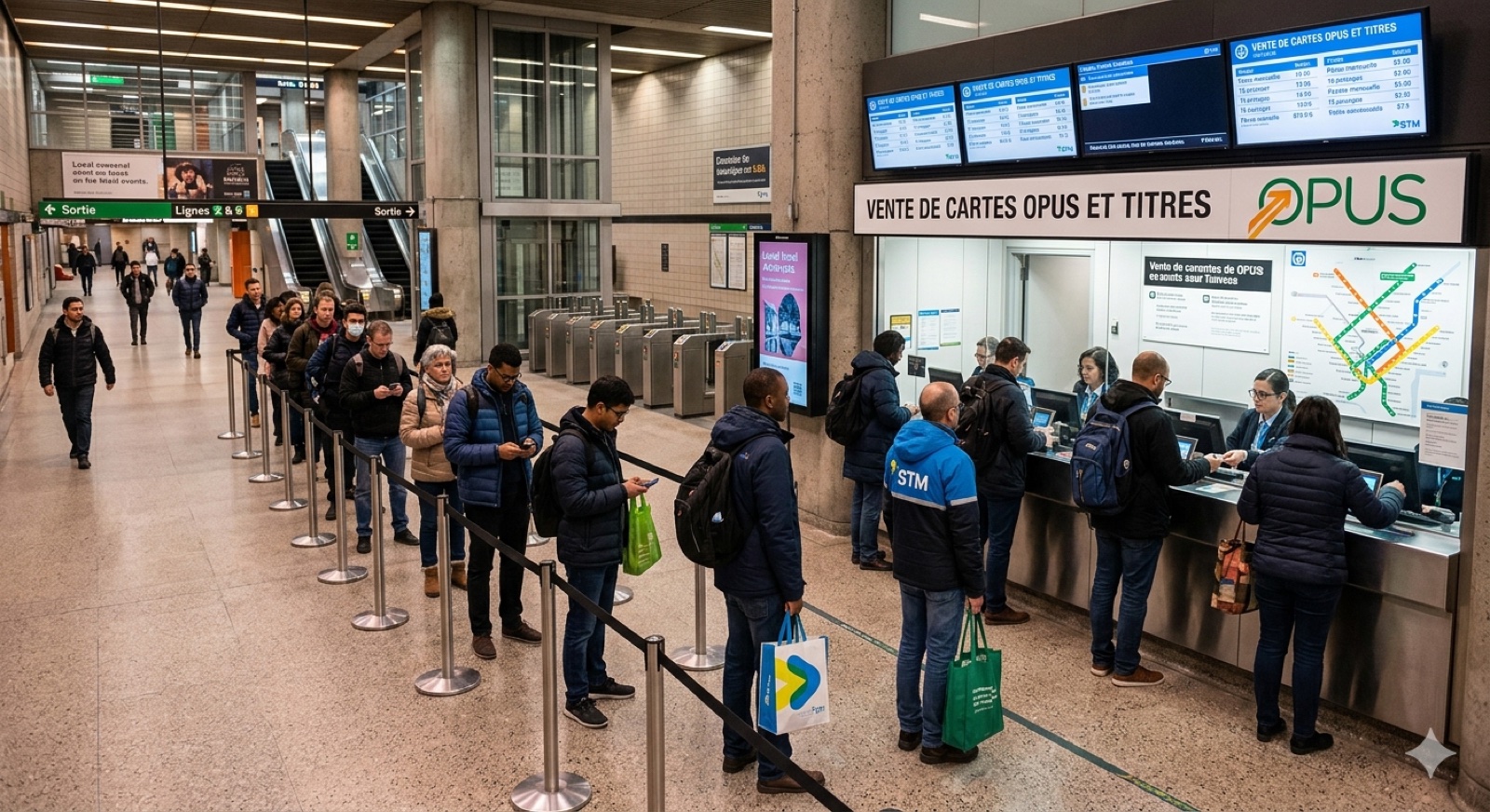
You can buy a regular OPUS card for $6 at a metropolitan ticket office, a sales outlet or a ticket vending machine; it is valid for four years.
Reloading works at ticket offices, vending machines and sales outlets, or with the Chrono mobile app. The photo OPUS card is required for reduced fares — children, students and seniors.
6. Combining STL, metro and commuter rail
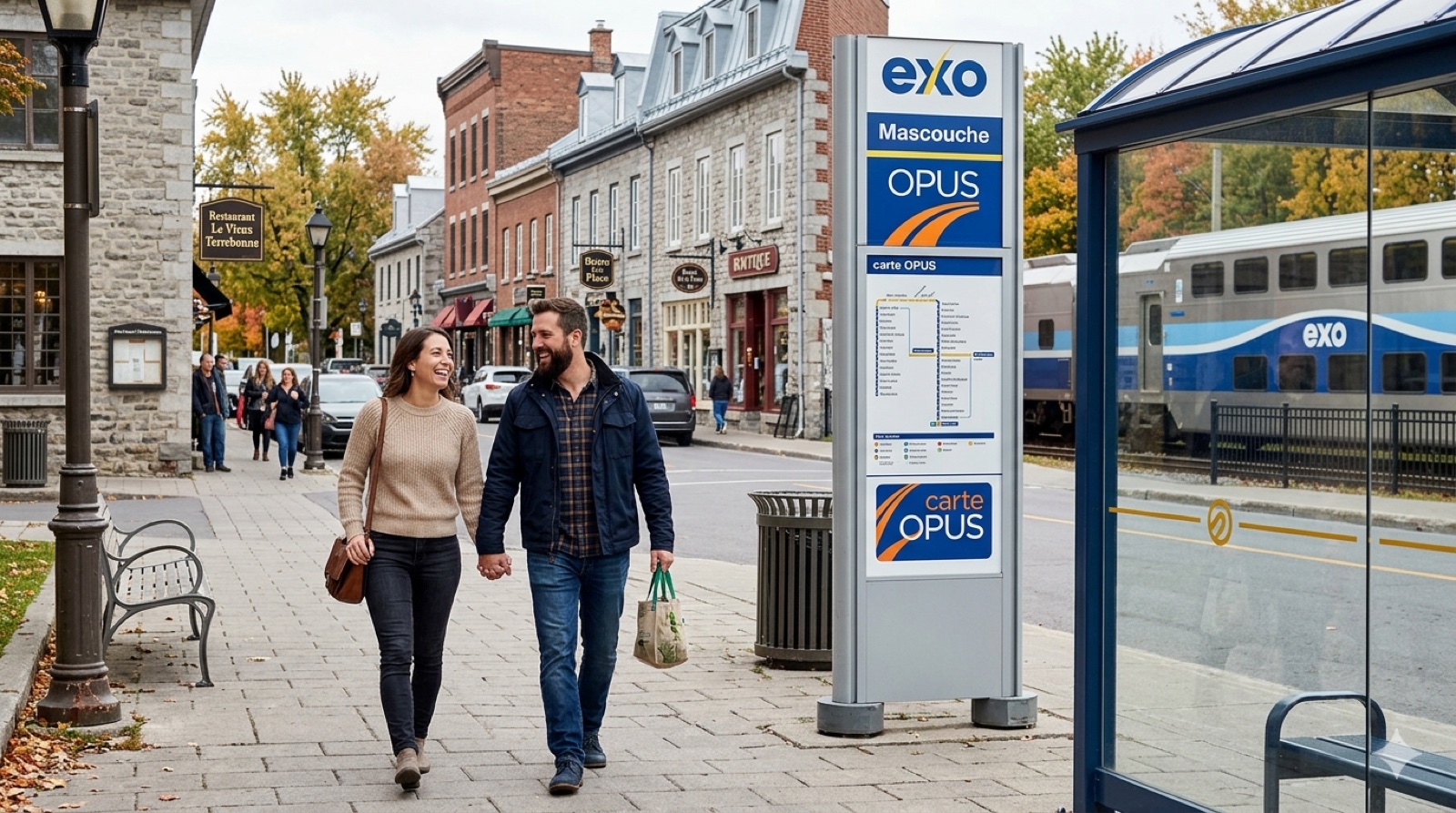
De la Concorde station is a key intermodal hub in Laval. It's both an orange-line metro station and a commuter rail station on the exo Saint-Jérôme line. You can step off the train, board the metro and continue to Montreal without changing stations. Several STL bus routes converge here.
For this kind of combination — train plus metro plus bus — an ALL MODES AB pass covers the whole trip as long as all your zones are included. Trips to Saint-Jérôme or Blainville often require additional zones: check the ARTM fare zones before choosing your pass.
7. ARTM fares for Zone B and A-B at a glance
A summary of the main ARTM passes useful to Laval residents. Exact prices are updated annually by the ARTM on artm.quebec.
If you work in Montreal five days a week, the ALL MODES A-B monthly pass almost always pays off: it becomes cheaper beyond 34 single AB fares a month. If you stay mostly in Laval and only ride the bus, the Bus fare is sufficient and costs less.
For trips beyond Laval — north shore, Repentigny, Longueuil — other fare zones apply. The fare selector on the ARTM site is the most reliable tool: enter your origin and destination, and it suggests the most economical pass for your profile.
| Pass | Coverage | For whom |
|---|---|---|
| ALL MODES A — monthly | Island of Montreal only | Not suitable for Laval |
| Bus — single fare | Buses only (Zones A, B and C) | Occasional bus rider in Laval |
| Bus — monthly | Buses only (Zones A, B and C) | Lives and works in Laval, by bus |
| ALL MODES A-B — single fare | Laval + island of Montreal, metro included | One-off trip to Montreal |
| ALL MODES A-B — monthly | Laval + island of Montreal, metro included | Works in Montreal, lives in Laval |
| Reduced student or 65+ fare | Same zones, reduced price | Photo OPUS card required |
| Children 11 and under | Free at all times | Accompanied by a person aged 14 or older (no more than five children) |
8. Frequently asked questions
The most common questions from new Laval residents about public transit: do you pay a supplement to enter the metro at Cartier, can you pay cash on an STL bus, how do bus-to-metro transfers work, and how long does it take to reach downtown Montreal.
Do you pay a supplement to enter the metro at Cartier?
No supplement at the turnstile, but the right pass is required. The orange-line stations in Laval — Cartier, De la Concorde, Montmorency — are in Zone B.
To enter, you need an ALL MODES AB pass (or ABC, ABCD), even if your trip stays in Laval: there is no ALL MODES B pass. Boarding with a Zone A pass alone is not valid in Laval and could lead to a fine. The OPUS validator at the turnstile checks compatibility automatically.
Can you pay cash on an STL bus?
Yes, in coins: drivers do not give change and banknotes are not accepted; you can also pay on board by debit or credit card. A fare paid on board costs $3.75. Always have the exact fare in your hand before boarding.
A reloaded OPUS card avoids this risk and works on every STL bus and at every metro turnstile in Laval and Montreal; a fare paid on board does not let you transfer to the metro. A regular OPUS card costs $6 and a photo card $15.
How does the bus-to-metro transfer work?
With the OPUS card and an All Modes fare, the transfer is automatic for a same trip: validate when boarding the STL bus, then validate at the metro turnstile within the validity window — 120 minutes for an All Modes fare. The system recognizes that you're continuing the same trip and does not charge a second time.
Important: a transfer is valid in any direction, but never on the same route. For complex itineraries, planning your route on Chrono, Google Maps or Transit reduces the risk of losing time.
How long does it take from Montmorency to downtown Montreal?
The total time depends on your destination station and your wait on the platform; for an exact time, use the STM trip planner. The line goes through De la Concorde, then Cartier, then crosses the Rivière des Prairies and serves the entire orange line on the island of Montreal.
Outside rush hour, the wait on the platform is a little longer, because trains run less often (see section 2). Compared to driving across the bridges in heavy traffic, the metro is often faster and far less stressful.
9. See also
To go further on mobility across Greater Montreal:
- Read using the Montreal metro and bus (STM) to understand the island-side network and pick the right pass.
- Check first steps in Laval to combine OPUS, 311 and municipal services from your first week.
- Prepare your move with finding housing in Laval to target Chomedey or Pont-Viau if you work in Montreal.
10. Official sources
For official, up-to-date information, see these sites:
- Société de transport de Laval (STL)
- Autorité régionale de transport métropolitain (ARTM, French only)
STL customer service: 450 688-6520.
Author's Note: If you work in Montreal, the monthly ALL MODES AB pass almost always pays off. Run the math in your first week — paying per-trip for just one month often costs more than the pass.