1. A heavy-industry economy
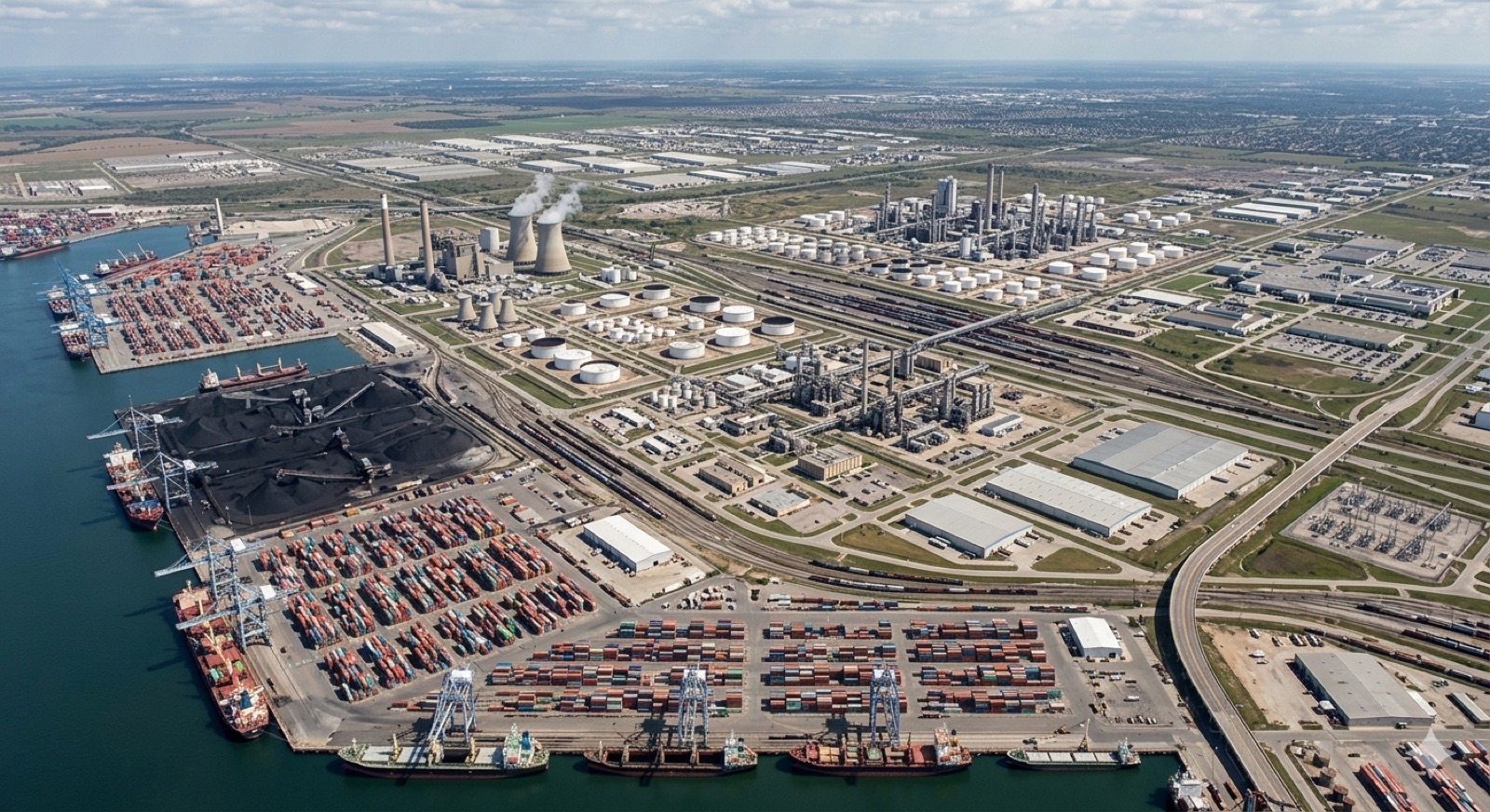
The economy historically rests on three pillars: aluminum, forestry, hydroelectricity.
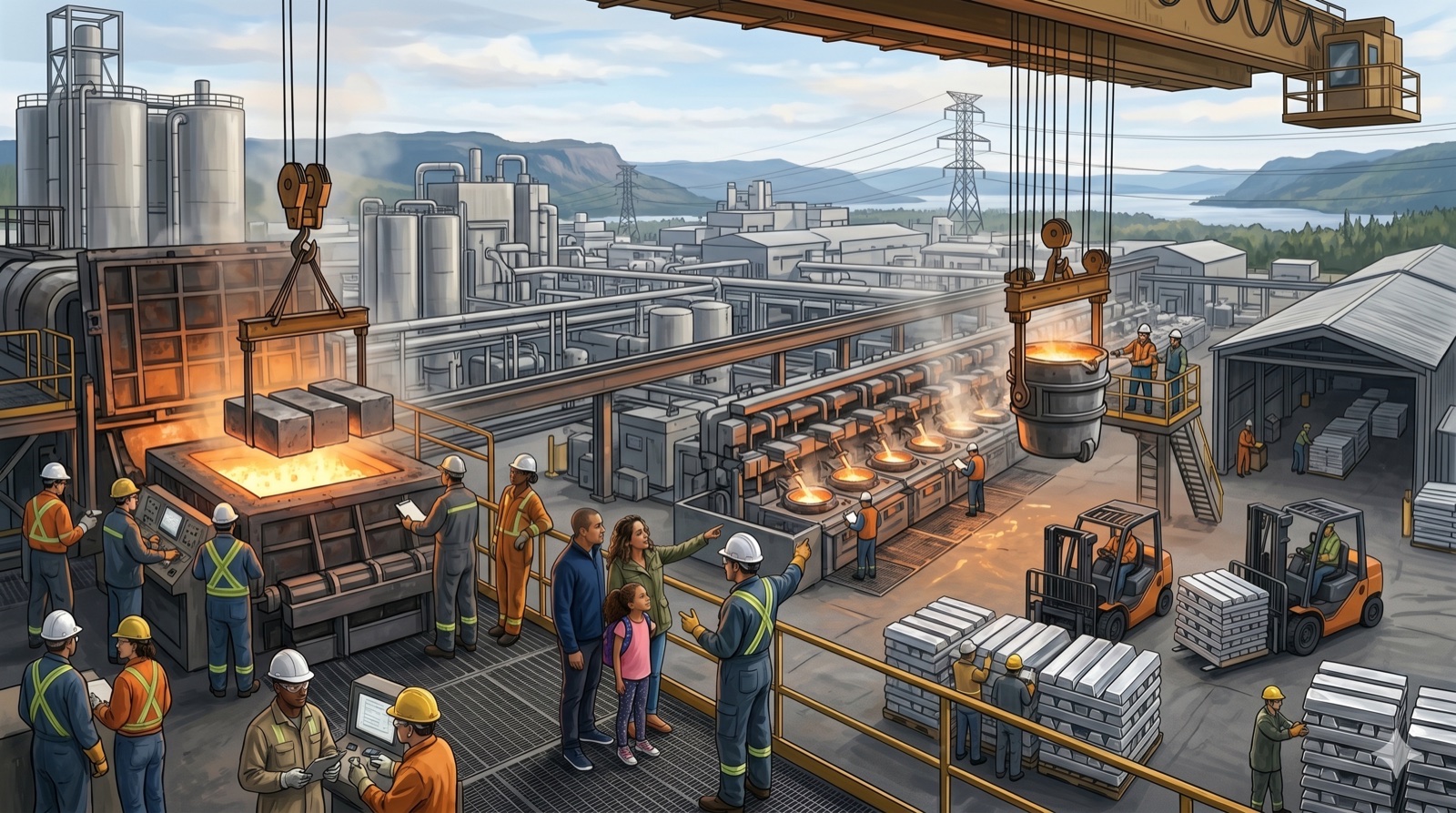
Rio Tinto operates several aluminum smelters — including Arvida and Vaudreuil in Jonquière, and Alma. Among the largest in the world.
2. Other major employers
Other major employers:
- UQAC — Université du Québec in Chicoutimi
- CIUSSS of Saguenay-Lac-Saint-Jean (public health)
- Produits forestiers Résolu
- SMEs in aerospace and manufacturing
3. Labour shortage
The region has a labour shortage in several sectors: health, education, technical trades, restaurants, construction.
4. Where to look
Channels to look for work:
- General job boards: Emploi-Québec, Indeed, Jobillico, LinkedIn
- Employer-specific career sites: Rio Tinto careers, other major employers
- Carrefour jeunesse-emploi du Saguenay — entirely free services for ages 16-35
- CV help, interview prep, recruiter contacts
- For newcomers:
- Portes ouvertes sur le Lac (Alma): personalized accompaniment
- Promotion Saguenay (Chicoutimi): settlement and employment support
- Pairing with volunteer Quebec families
5. Typical salaries and working conditions
Typical salaries by profession (2026):
- Aluminum smelter operator: $70,000 to $95,000/year (with shift premiums and overtime)
- Industrial mechanic: $75,000 to $105,000
- Industrial electrician: $80,000 to $110,000
- Registered nurse: $60,000 to $90,000 depending on experience
- Primary teacher: $50,000 to $90,000 by seniority
- Engineer: $75,000 to $130,000 depending on specialty
Strong union culture:
- Industrial jobs almost always unionized
- Collective agreement protects conditions, pays premiums, guarantees employment security
Shift schedules: the industry norm — premiums of 15 to 25% above base salary.
2026 salaries. Shift premiums add 15 to 25% above base. Industrial jobs almost always unionized — employment security guaranteed by collective agreement.
| Profession | Annual salary (CAD) | Notes |
|---|---|---|
| Aluminum smelter operator | $70,000 to $95,000 | Shift premiums |
| Industrial mechanic | $75,000 to $105,000 | DEP + certifications |
| Industrial electrician | $80,000 to $110,000 | DEP + certifications |
| Engineer | $75,000 to $130,000 | By specialty |
| Registered nurse | $60,000 to $90,000 | By experience |
| Primary teacher | $50,000 to $90,000 | By seniority |
6. Diploma recognition and work permits
Typical steps for foreign diplomas:
- MIFI comparative evaluation: up to 6 months (faster with priority documentation), $141
- For engineers: OIQ accreditation (Order of Engineers of Quebec) — mandatory
- For nurses: OIIQ + final exam (Canadian Council of Nursing Science Examinations)
- For doctors: CMQ + residency — long and difficult process (often 3-5 years)
- For technicians: OTPQ (Order of Professional Technologists)
Many employers hire while waiting for accreditation, but at reduced salary (typically 70 to 80% of the full rate).
Work permits:
- International Mobility: open permit
- Employer-specific permit: verify geographic restrictions before signing a lease
Frequently asked questions
The most common questions on Saguenay work: Rio Tinto without experience, required French level, and growth sectors.
Can I apply to Rio Tinto without industrial experience?
Yes — Rio Tinto runs an « Apprentice operator » program of about 6 to 12 months:
- Paid training path
- Requires only a high-school diploma
The roles of industrial mechanic and electrician still require a Quebec DEP + technical certifications.
But entry-level operator roles are accessible to newcomers with no prior industrial experience.
The traits Rio Tinto looks for:
- Reliability
- Safety awareness
- Ability to follow procedures (in French)
- Physical fitness for shift work
What French level do I really need to work in Saguenay?
Intermediate (Level 6-7) is the minimum for most operational roles.
For management or supervision: Level 8+ expected.
The Saguenay accent is particularly pronounced — even francophones from France or Africa take 3 to 6 months to adjust.
Practical tip: practice listening via local radio (CKRS, Énergie Saguenay).
In-house classes: several employers offer employer-paid French classes — ask at hiring.
Non-customer-facing technical roles (R&D, lab work): advanced English sometimes accepted.
What are the growth sectors in Saguenay?
Growth sectors (2026):
- Battery industry (electric vehicles)
- Aerospace (Bombardier supply chain)
- New forestry (bioeconomy, biomaterials)
- Tech: small but growing in Chicoutimi
Sectors with chronic shortages:
- Health: almost guaranteed jobs for accredited nurses, paramedics, personal support workers
- Education: teachers in short supply across the region
Stable: tourism.
In decline: traditional forestry (pulp/paper), some retail.
For long-term security, target: health, education, or the emerging battery industry.
7. See also
To go further on working in Saguenay:
- Read working in Quebec to understand local work culture and employer expectations.
- Consult first steps in Saguenay for welcome services and francization.
- Prepare your move with finding housing in Saguenay to target Jonquière if you work for Rio Tinto.
8. Official sources
Author's Note: With technical training, several employers even offer relocation incentives.