1. What to expect
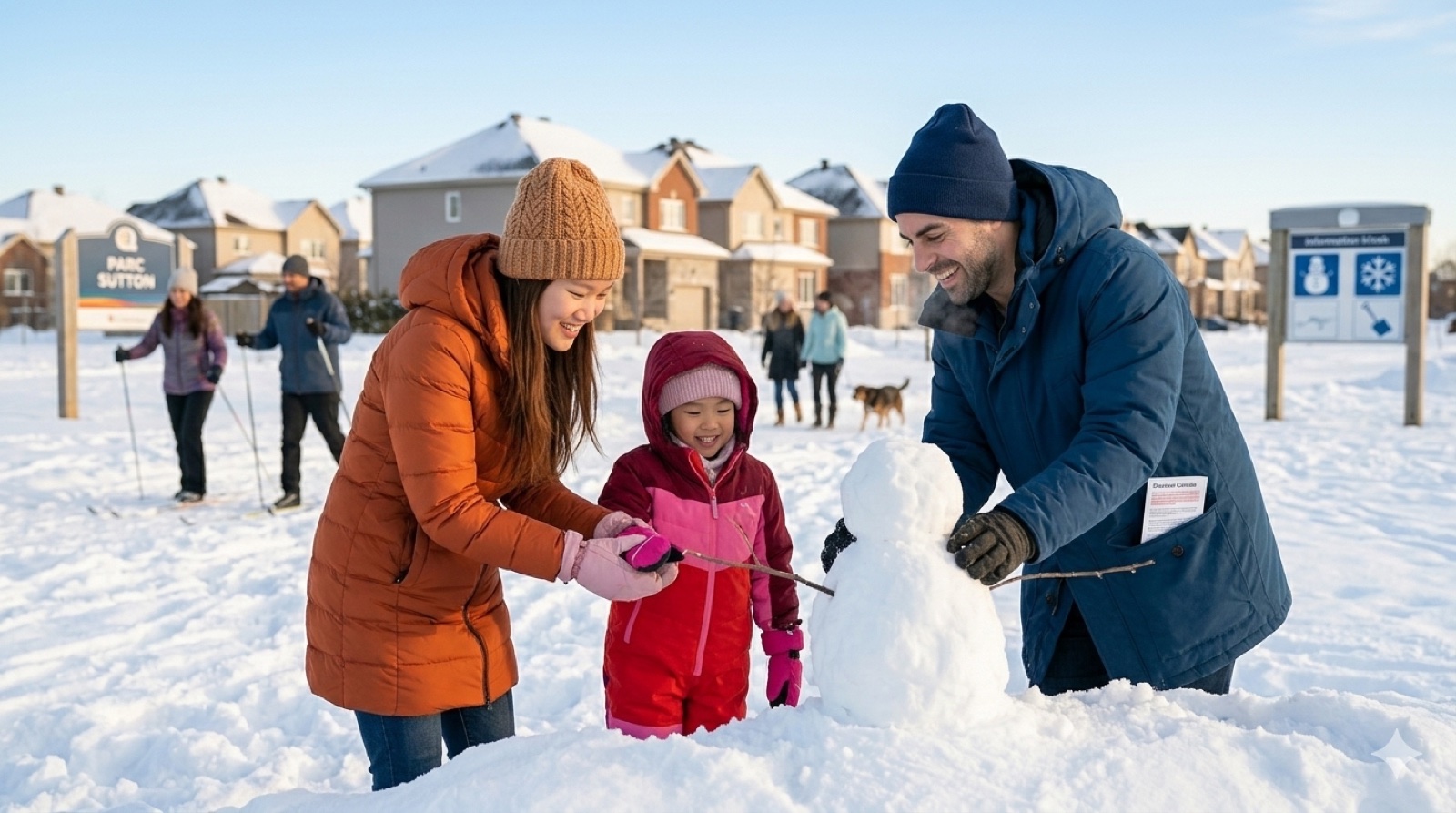
Quebec winter lasts about 5 months (November to April).
- Temperatures: −15 to −30 °C, sometimes lower with windchill
- Snowstorms are frequent
- Short days (sunrise around 7:30, sunset around 16:30 in December)
2. Coat and boots
The most important investment:
- Coat rated for −30 °C, with hood and fur trim ($200 to $600)
- Winter boots, waterproof, with non-slip soles
- Reliable brands: Kanuk, Canada Goose, North Face, Columbia
3. The layering method
The golden rule: multiple layers.
- Base layer: merino wool or synthetic (never cotton)
- Middle layer: fleece or wool
- Outer layer: waterproof, windproof coat
4. Essential accessories
Essential accessories:
- Tuque that covers the ears
- Scarf or neck warmer
- Mittens (warmer than gloves)
- Thermal socks
- Lip balm (lips chap fast)
5. Walking on snow and ice
Black ice is dangerous.
- Walk in small steps, like a penguin
- Buy removable crampons for your boots ($20 to $40)
- Avoid slopes and un-cleared stairs
6. Snow clearing
- House: you clear the driveway and the sidewalk, often within 24 hours of a storm
- Apartment: snow removal is included, but follow the city's snow operations (or your car will be towed)
7. Driving in winter
- Winter tires mandatory from December 1 to March 15
- Emergency kit in the trunk: shovel, sand, blanket, flashlight
- Fill up regularly (an empty tank freezes faster)
8. Three winter-gear budgets — minimum to ideal
Winter gear is an investment amortized over 5 to 10 years. Here are three realistic budgets depending on what you can afford the first year.
- Minimum — students, first winter, tight budget
- Recommended — typical family with daily use (work, transit, leisure)
- Ideal — winter sports, outdoor work
The accessories bundle tuque, mittens, scarf and wool socks.
Practical reference: an initial investment in a good coat ($400+) amortized over 8 years comes to $50 per year — cheaper long-term than a cheap coat replaced every 2 years. Thrift stores like Renaissance or Village des Valeurs often offer Canada Goose and Kanuk second-hand at 30 to 40% of new price, in excellent condition.
| Item | Minimum ($250–400) | Recommended ($500–800) | Ideal ($1,200–2,000) |
|---|---|---|---|
| Coat | Used, −20 °C ($80–150) | Columbia / North Face, −30 °C ($250–400) | Kanuk / Canada Goose, −40 °C ($700–1,200) |
| Boots | Non-slip ($60–100) | Sorel or equiv. ($150–200) | Pajar / Caribou ($250–400) |
| Thermal layers | 1 set ($40–70) | 2 merino ($100–150) | 3–4 merino ($200–350) |
| Accessories | Economy ($50–80) | Complete ($80–130) | Premium ($150–250) |
| Removable crampons | — | $25–40 | Included |
| Thermal comfort | −15 to −20 °C | −30 °C | −40 °C |
9. Frequently asked questions
The most common questions about Quebec winter: do you really need to spend $600 on a coat, when to buy, can you drive without winter tires, how to avoid seasonal depression, and what to do during a major storm.
Do I really need to spend $600 on a coat?
No, but it depends on your use. A $1,000 Canada Goose isn't 10x better than a $300 Columbia. The difference comes down to:
- Durability: 15 years vs 5 years
- Finish and fit: more precise tailoring
- Prestige: the brand is visible, some employers or schools notice
For warmth alone, a coat properly rated for −30 °C from an economy brand like Helly Hansen or Columbia does the job well.
When should I buy my winter coat?
The best period is late February to April — end-of-season sales reach 40 to 60% off current-year models.
If you arrive in fall, buy in September–October before stock runs out — by December, the best models are gone. Stores like Mountain Equipment Co-op (MEC), SportChek, and highway-edge outlets often offer the best prices.
Can I drive without winter tires between December 1 and March 15?
No. It's an offence punishable by a $200 to $300 fine in Quebec.
And in case of accident, your auto insurance can refuse to pay if your tires weren't compliant — a potential loss of tens of thousands of dollars.
If you're buying a used car in fall, check whether it already has winter tires — otherwise plan $600 to $1,000 for a set of 4 tires plus rims.
How to avoid the seasonal depression that hits mid-winter?
Several strategies stack their effects:
- Light therapy: 20 to 30 minutes each morning in front of a 10,000-lux lamp ($60 to $150 at Costco or Amazon)
- Going outside 15 minutes a day minimum, even in deep cold — natural light is essential even on cloudy skies
- Vitamin D: 1,000 to 2,000 IU per day during winter, recommended by Health Canada for the entire population
- Social activities every 1 to 2 weeks — February isolation is harder than the cold itself
- Winter activities: skiing, snowshoeing, outdoor skating change how you perceive the cold
What to do during a major snowstorm?
- Stay home if you can — most schools, daycares and businesses close during major storms
- Prepare for a power outage: flashlights, a phone power bank, 48 hours of water, non-perishable food
- Follow alerts on environnement.canada.ca or Radio-Canada Première 95.1 FM
- Check Québec 511 for real-time road conditions
- Don't shovel in a rush during the storm — wait until it eases, otherwise you shovel twice
10. See also
These related guides may be useful:
- Quebec public holidays — winter long weekends (Christmas, New Year's, Easter) to plan vacations around.
- Tipping at restaurants and elsewhere in Quebec — going out to warm places when it's cold outside, with no surprises on the bill.
- Understanding the Quebec accent — the natural cultural companion to winter orientation, to better catch conversations in cozy cafés.
- Grocery shopping in Quebec — where to shop and how to stock up well before a snowstorm.
11. Official sources
For official information:
Author's Note: The first winter is hard, but afterward, you learn to love it. Skiing, snowshoeing, outdoor skating, Christmas markets — Quebec culture is beautiful when you're equipped to enjoy it.