1. Three free ways to learn French
In Montreal, you do not need to pay to learn French. Three avenues coexist and complement one another:
- The government route — Francisation Québec, which funds formal courses (full-time, part-time, or online) with a possible allowance for eligible learners.
- Neighbourhood community organizations — courses that are often less formal, in small groups, sometimes with childcare for parents.
- Informal practice — libraries, conversation cafés, language matching — which complements courses by testing what you've learned in real situations.
Many learners combine all three:
- a formal evening course;
- a Saturday conversation café;
- a little Radio-Canada in the morning.
This guide helps you choose where to start.
| Pathway | Program | Paid? | Intensity | For whom |
|---|---|---|---|---|
| Government | Francisation Québec (MIFI) | Yes (if eligible) | Full-time or part-time | Permanent + eligible temporary immigrants |
| School board | School boards / cégeps | No | Part-time (evenings) | Working adults |
| Community | Local organizations (CARI St-Laurent, etc.) | No | Variable, often informal | All, including those not eligible for MIFI |
2. The government route: Francisation Québec
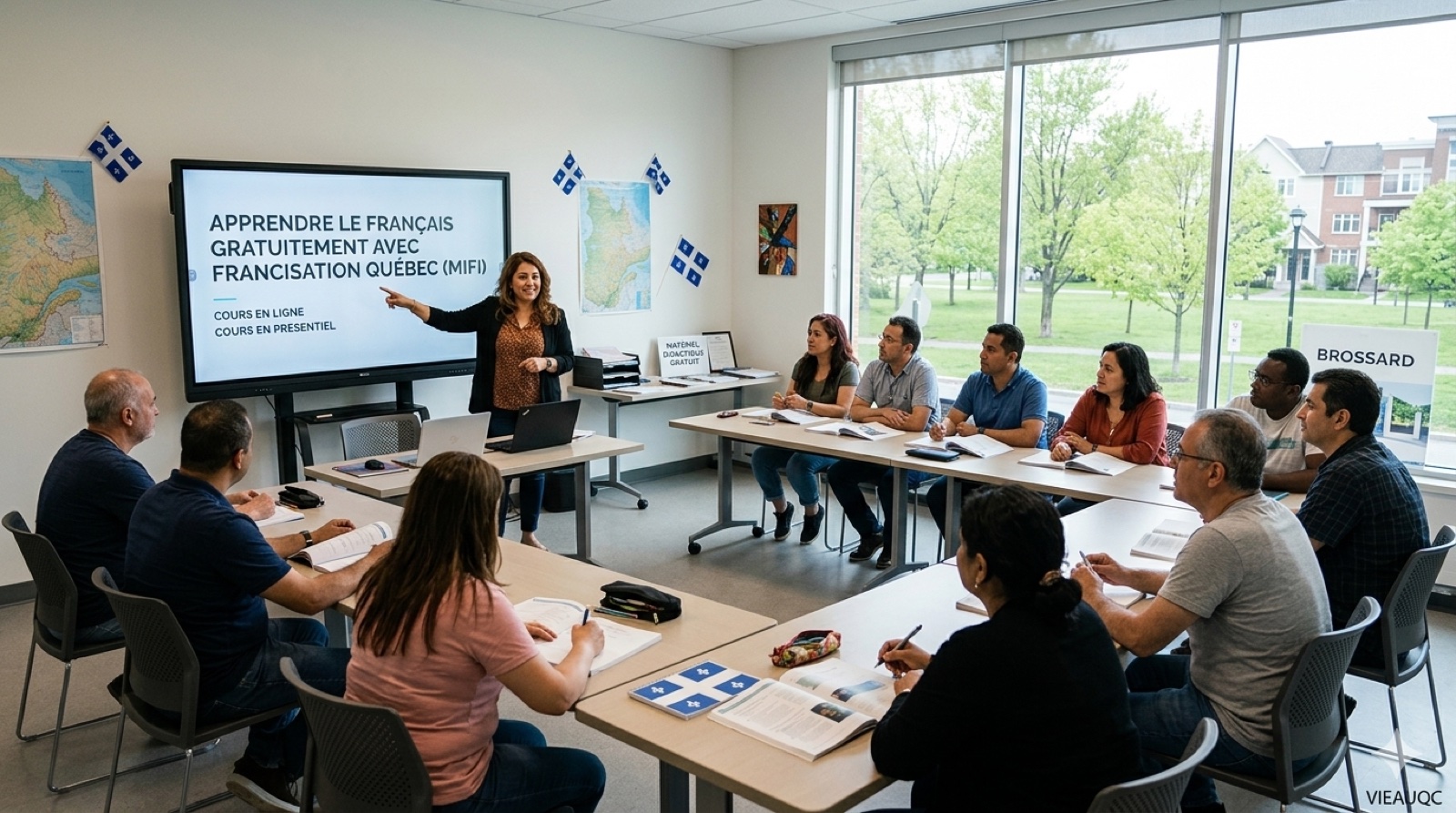
Francisation Québec is the program of the Ministry of Immigration, Francisation and Integration (MIFI). It funds full-time, part-time, and online courses, delivered directly by MIFI or in partnership with CEGEPs, universities, and Montreal community organizations.
A financial allowance is paid to eligible learners taking full-time courses — eligibility criteria (status, length of residence, income) vary; check current conditions on quebec.ca.
For enrolment, the full procedure and conditions are detailed in our provincial guide: Francisation in Quebec — how to learn French for free.
Good to know: when you enrol in a course run by a Montreal community organization (section 3 below), there's a good chance it's already funded by Francisation Québec. Ask the organization.
3. Montreal's community organizations
Several community organizations welcome newcomers in Montreal and offer French courses — often in partnership with Francisation Québec, so free or very low-cost.
Choosing one of them rather than MIFI directly offers several advantages:
- Smaller groups, less school-like atmosphere
- Childcare possible (check with the organization)
- Access to the organization's other services (paperwork, employment, housing) under one roof
- Continuity of a single counsellor following you through several aspects of your integration
The four main ones:
- CSAI — Centre social d'aide aux immigrants: services adapted to your immigration status, at several service points in Montreal. Site: centrecsai.org.
- L'Hirondelle: entirely free personalized accompaniment; several locations including Parc-Extension. 514 281-5696. Site: hirondelle.qc.ca.
- CARI Saint-Laurent: reception and integration in the Saint-Laurent borough. 514 748-2007. Site: cari.qc.ca.
- PROMIS: reception in west and central Montreal (Côte-des-Neiges, Cartierville). Site: promis.qc.ca.
These four organizations serve every immigration status — permanent residents, citizens, temporary workers, international students, asylum seekers.
Several other more local organizations also offer courses in your neighbourhood — to find them, see also our guide Help organizations in Montreal, by need or dial 211 (free multilingual community-information service).
4. Conversation and informal practice — free everywhere
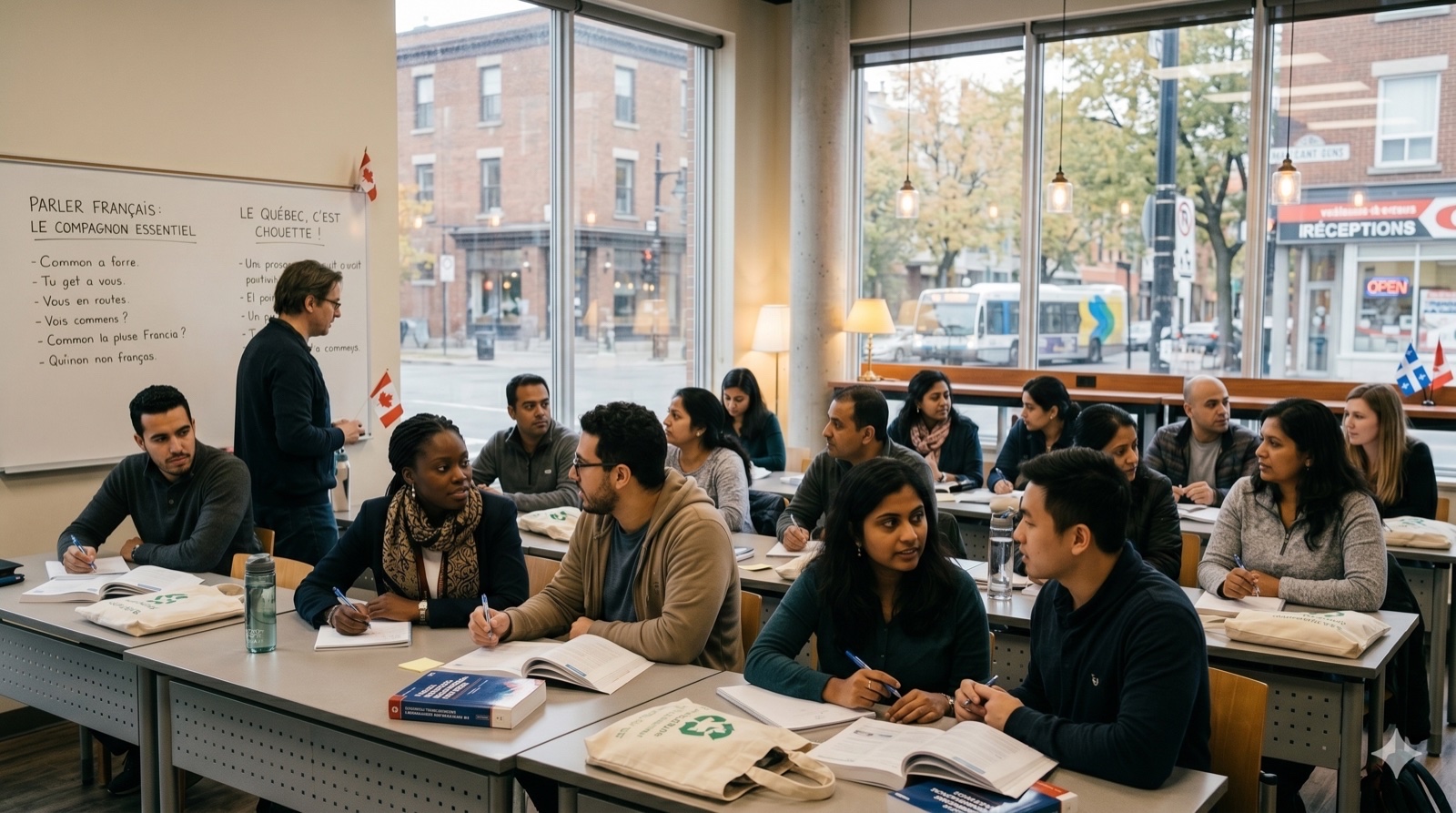
Taking a course without practicing in real life is like learning to swim without going in the water. Montreal offers several free ways to practice:
- Montreal public libraries regularly host conversation cafés, French reading circles, and language-learning activities. Check your local library's calendar at bibliomontreal.com.
- Language matching connects French learners with French speakers who want to share their language — often over coffee, a walk, or an activity. Several community organizations (CSAI, L'Hirondelle, CARI) offer this service for free.
- Pronunciation workshops, French choir, or amateur theatre — less obvious but often low-cost, and terribly effective for unblocking speech. Ask your borough's maison de la culture.
The golden rule: practice matters more than course hours. One conversation café a week, over several months, can do more for your fluency than an intensive course without any practice.
5. Online, free, at your own pace
For passive practice — listening, reading, vocabulary — several free resources complement in-person courses:
- Radio-Canada Première (the public French radio) and its podcasts — standard, well-articulated French. Excellent for getting used to natural speech. ici.radio-canada.ca/premiere.
- TV5 Apprendre le français (apprendre.tv5monde.com) — free interactive exercises classified by CEFR level, with audio, video, and transcripts. Not Quebec-specific but very high quality.
- ICI Télé and Tou.tv (Radio-Canada's streaming service) — to watch Quebec series with subtitles. See also our guide Québécois media for learning French for specific recommendations.
- Our own site, VIEAUQC: the Apprendre français section gathers a bilingual glossary, situational dialogues, and a flashcard system — entirely free, no account required.
6. Choosing the right format for you
No universal answer — your situation determines the best route. Some markers:
- You have free time and need to learn fast → Francisation Québec full-time, with allowance if eligible. The most intensive and best-funded route.
- You work full-time → evening or weekend courses at a community organization; complement with a conversation café.
- You have young children → look for an organization offering childcare during courses (CSAI, L'Hirondelle, and several others offer it).
- You already speak a little French → prioritize practice: conversation café, language matching, Quebec series.
- You live far from Montreal → distance courses via Francisation Québec online (options keep expanding).
Final advice: don't postpone. Many newcomers wait until « everything is settled » before starting courses. French makes every other aspect of your settlement easier — start early, even just a little.
Frequently asked questions
Here are the most common questions about free French classes in Montreal: is it really free, and do you need a specific status.
Are the courses really free?
Yes — Francisation Québec courses are free, and many community-organization activities are free too. In some cases you can even receive a financial allowance while studying full-time. Library and online resources are free as well. Check each organization's current conditions.
Do you need a specific status to register?
Francisation Québec is open to a wide range of immigrants, but eligibility depends on your situation. The good news in Montreal: even if you're not yet eligible for the official program, community organizations and conversation groups welcome almost everyone. Don't assume you're excluded — create an account and check, or ask a local organization.
See also
Related guides that may be useful:
- Francisation Québec and the MIFI program — the official route to free courses and, in some cases, an allowance.
- French at work — how to keep progressing once you are employed.
- Practising your French day to day — concrete ways to practise outside the classroom.
- Welcome class for children — for children who arrive without speaking French.
Official sources
- Francisation Québec — quebec.ca/education/apprendre-francais
- CSAI — centrecsai.org
- L'Hirondelle — hirondelle.qc.ca
- CARI Saint-Laurent — cari.qc.ca
- PROMIS — promis.qc.ca
- Bibliothèques de Montréal — bibliomontreal.com
- TV5 Apprendre le français — apprendre.tv5monde.com
- Radio-Canada Première — ici.radio-canada.ca/premiere
- 211 Québec — dial 211 or 211qc.ca
Community-organization contact details and schedules change occasionally; call before going in person.
Author's note: the best way to learn French in Montreal is rarely the most expensive. Private intensive courses can cost several thousand dollars per session; the same progression — often better, because you speak with real people in your neighbourhood — is available for free. Ask the right questions from the start, never pay before verifying your eligibility for Francisation Québec, and don't forget to practice outside the classroom. Good luck!