1. Terrebonne at a glance
Terrebonne is a city in the Lanaudière region, north of Montreal, with over 120,000 residents. It includes several sectors: Terrebonne (including Vieux-Terrebonne), Lachenaie, and La Plaine.
The city offers a suburban lifestyle, with a lively historic centre and quick access to highways 40 and 640.
2. The three sectors at a glance
Before getting into municipal-service details, here's an overview of the three main sectors to orient you.
Vieux-Terrebonne is ideal if you want to live near services and easily reach the exo Mascouche train station for work in Montreal. Lachenaie suits families with two cars wanting residential and commercial space. La Plaine attracts those seeking quiet, large lots and single-family homes — but expect a car for nearly everything.
Before signing a lease, consult our housing guide to compare sector ranges.
| Sector | Character | Typical profile |
|---|---|---|
| Terrebonne (Vieux-Terrebonne) | Historic, cultural | Walkable services, exo train station |
| Lachenaie | Residential, commercial | Families, two cars |
| La Plaine | Suburban, quiet | Single-family homes, car required |
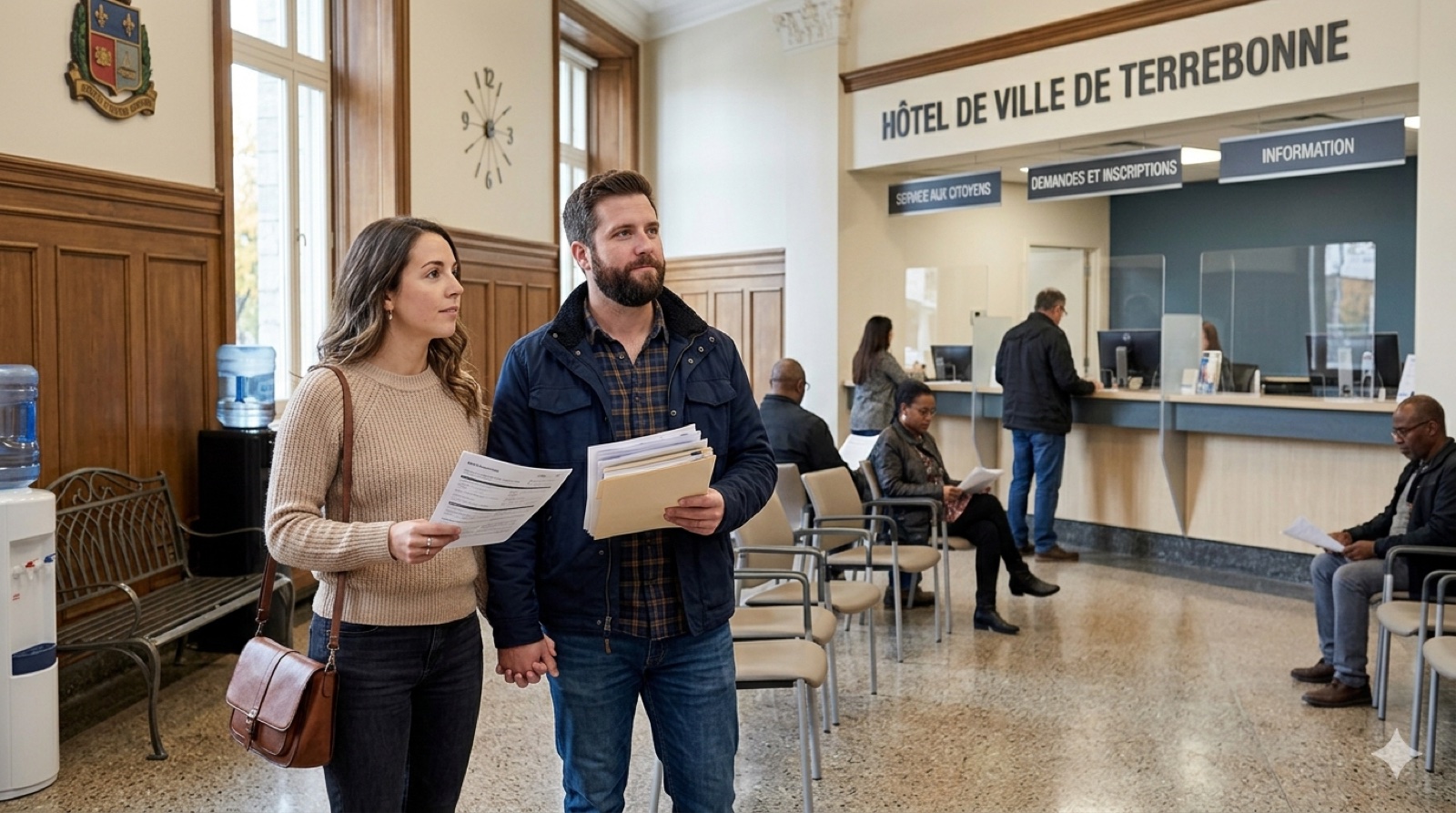
3. Errands at City Hall
Terrebonne City Hall handles municipal services: permits, parking stickers, water, taxes.
Many errands can be done online via the citizen portal at ville.terrebonne.qc.ca.
4. Libraries and citizen services
The Terrebonne library network has several branches. Membership is free for residents. You'll find books, workshops, and workspaces.
311 is the number to call for any municipal-services question.
5. Garbage and recycling collection
Terrebonne has weekly collection of garbage, recycling, and organic compost. Each home gets three bins: black (garbage), blue (recycling) and brown (organic compost).
Collection happens early morning — put bins out the night before by 6 am on collection day. Check your address on the city's collection calendar for the right days.
For bulky items (furniture, large electronics), collection is on request via 311. Hazardous items (paint, oil, batteries) must be dropped at the eco-centre.
6. Your landmarks
A few places to know:
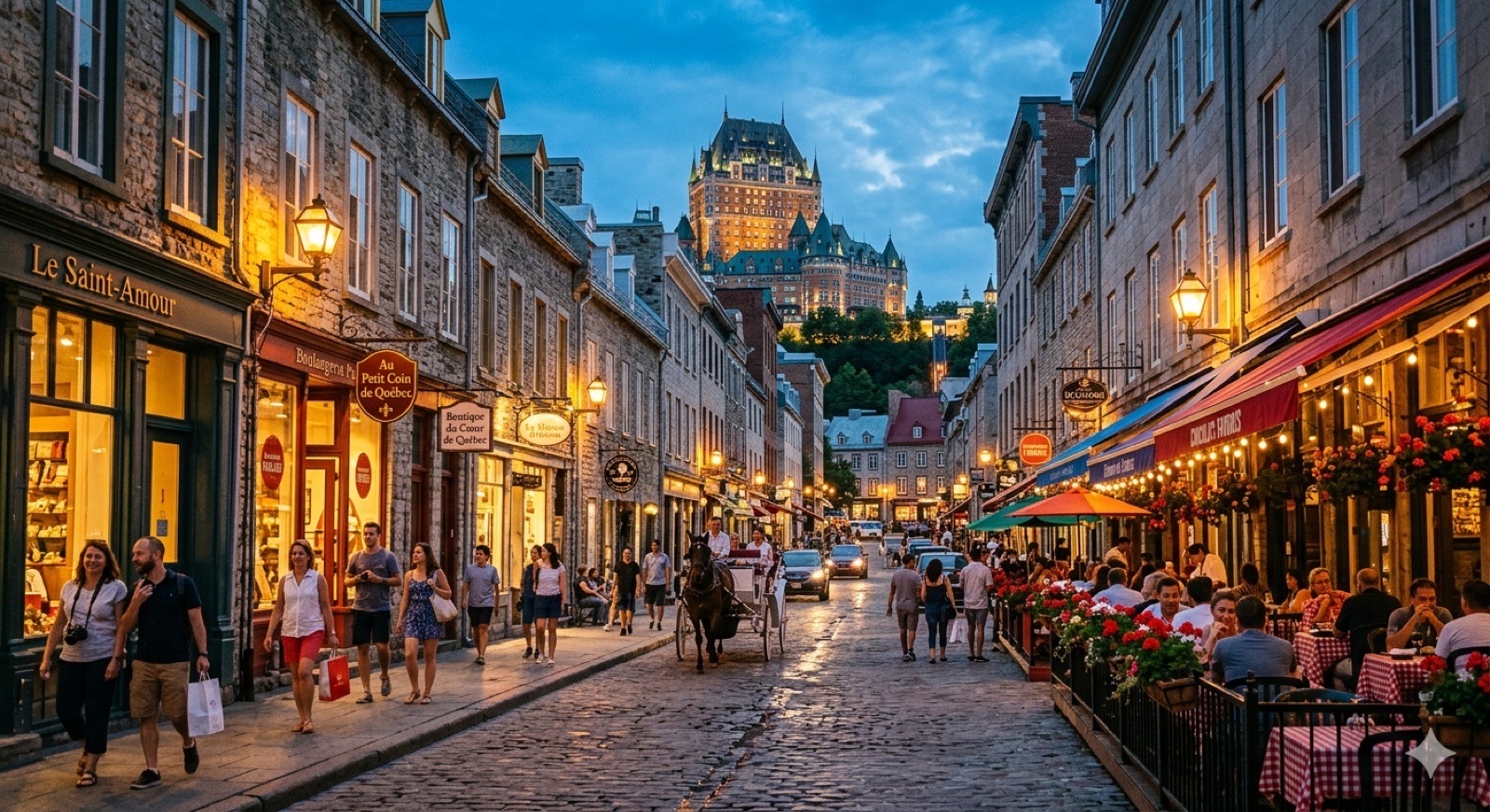
- Vieux-Terrebonne — historic centre with its restaurants
- Île-des-Moulins — 18th-century historic site at the heart of the city
- Galeries Terrebonne — large shopping mall
- Parc de la Coulée — large green space with trails
7. Schools and family services
Public schools are run by the Centre de services scolaire des Affluents, which covers Terrebonne and several neighbouring Lanaudière municipalities.
- Schools above the provincial average
- Welcome classes for immigrant children in several schools
- Free registration for permanent residents and naturalized citizens
- School transport (yellow bus) included for children over 1.6 km from school
For daycare, several CPEs and subsidized daycares serve the three sectors; waitlists are long — register as early as possible.
8. Frequently asked questions
The most common questions from newcomers in Terrebonne: difference between Terrebonne, Mascouche and Repentigny, English-language service access, and sector choice for the first year.
Terrebonne, Mascouche, Repentigny: are they the same region?
They are all in Lanaudière, north and east of Montreal, but they are three distinct cities with their own councils, taxes and services.
- Terrebonne and Mascouche together form the MRC Les Moulins
- Repentigny is in MRC L'Assomption further south
For municipal services (permits, garbage, library card), call 311 in the city where you live. Provincial services (RAMQ, SAAQ, schools, hospitals) are organized by the Quebec government and work the same across all three.
Public transit is shared via exo Lanaudière, with the OPUS card valid on all three networks.
Can you get served in English in Terrebonne?
Yes for essential services. The 311 is officially bilingual. Hospital emergency rooms, banks, large grocery chains and shopping malls like the Galeries Terrebonne generally have English-speaking staff.
That said, daily life in Terrebonne happens in French — neighbours, small shops, parents at school. According to the city's own figures, about 87% of Terrebonne residents have French as their mother tongue.
Doing essential errands in English works; integrating socially essentially requires French. The Centre de services scolaire des Affluents offers welcome classes for immigrant children, and several adult francisation programs are available via the MIFI.
Which sector should I choose for my first year in Terrebonne?
Depends on your work and family setup.
- Commuting to Montreal: target central Terrebonne or near the exo Mascouche train station for walkable services and transit access
- Family with two cars wanting residential and commercial space: Lachenaie balances quiet streets with shopping access
- Quiet and large lot, driving acceptable for everything: La Plaine
General advice: rent for 12 to 18 months before buying. Terrebonne's sectors feel different in winter and summer, and you need on-the-ground time to find the one that fits you.
Schools are of similar quality across all three sectors via the Centre de services scolaire des Affluents.
9. See also
To go further once settled in Terrebonne:
- Read finding housing in Terrebonne to compare Vieux-Terrebonne, Lachenaie and La Plaine before signing.
- Check Terrebonne transit (exo Mascouche and OPUS) to combine commuter train and bus.
- Discover Île-des-Moulins, parks and leisure in Terrebonne for family outings.
- Prepare back-to-school with registering your child for school in Terrebonne via the Centre de services scolaire des Affluents.
10. Official sources
Call 311 for any question about municipal services.
Author's Note: Visit Île-des-Moulins one Saturday in summer. It's a beautiful historic site, free, and an excellent starting point to discover Terrebonne's identity.