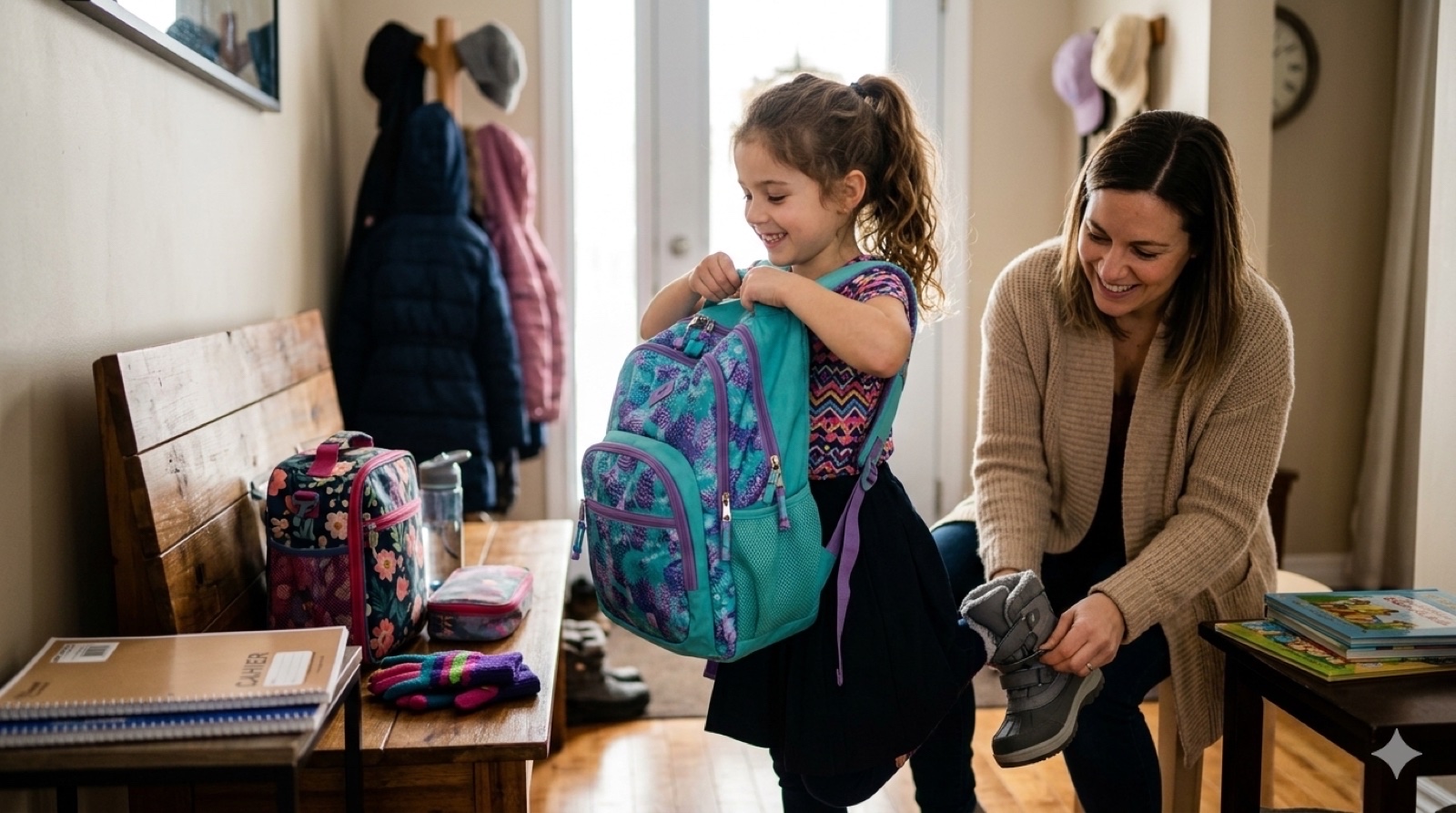
1. The Quebec elementary school system — overview
Quebec's school system is divided into school boards serving specific geographic territories. There are two major public networks:
- French-language network — the largest, accessible to all residents
- English-language network — accessible only under specific eligibility conditions (see below)
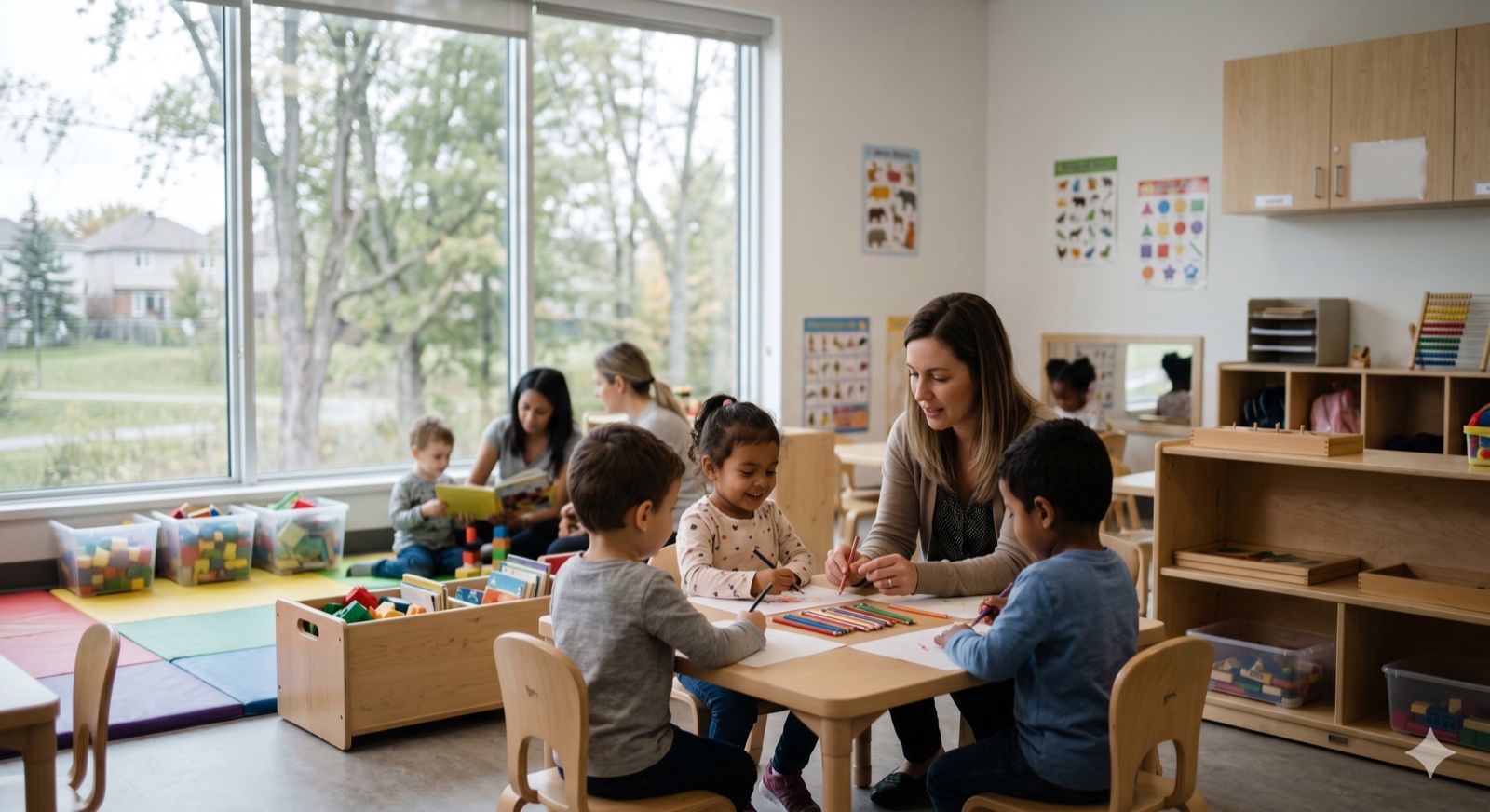
Elementary school in Quebec spans 6 years (Grades 1–6), for children approximately 6–12 years old. Compulsory school attendance begins at age 6. Kindergarten (maternelle 5 ans) is not legally mandatory, but nearly all eligible children attend it — in practice it's the standard entry point into schooling. A 4-year-old kindergarten (maternelle 4 ans) is also available in many schools, optional but strongly recommended.
School is mandatory in Quebec for all children aged 6–16, regardless of immigration status.
2. English schools: who is eligible?
Access to public English-language schools in Quebec is governed by the Charter of the French Language (Bill 101). In summary:
A child has the right to English public instruction if at least one parent, who holds Canadian citizenship, received their primary education in English in Canada.
This right can pass to a child even if that parent did not attend English school personally, as long as the parent was themselves eligible for English instruction (for example, because *their* parent — the child's grandparent — was educated in English in Canada) but attended a French school in Quebec after August 26, 1977.
For most immigrants: if no parent meets this condition, children must attend the French-language school network. Private English-language schools are accessible to everyone — but are fee-paying, often several thousand dollars per year. Families temporarily in Quebec for work or study (on a work or study permit) may qualify for a temporary authorization, valid for up to three years, even without meeting the standard eligibility criteria.
Certificate of Eligibility: if you believe your child qualifies for English instruction, apply to your school board for a Certificate of Eligibility (certificat d'admissibilité) well in advance of the enrolment period.
3. Types of public elementary schools and special programmes
All neighbourhood schools offer the standard general education programme. There are also many special project programmes that allow choosing a school outside your neighbourhood: enriched English, sports, arts, music, computer science, international schools.
These special projects are often competitive (selection tests may apply).
For newly arrived families, the neighbourhood school is often the best first choice — the child integrates into their natural environment, and the school is obligated to offer francization services to newly arrived non-francophone children.
4. How to enrol and key deadlines
Enrolment in a public French-language elementary school takes place generally in January–February for the following school year (starting in September).
Required documents: child's birth certificate, proof of neighbourhood residence, your own ID.
Arriving mid-year? You can enrol your child at any time — the school is obligated to accept them.
Main Montréal French-language school boards (now called *centres de services scolaires*): CSSDM (Centre de services scolaire de Montréal) and CSSMB (Centre de services scolaire Marguerite-Bourgeoys).
5. Frequently asked questions
Common questions from immigrant families choosing an elementary school in Quebec.
How do I enrol my child once we arrive in Quebec?
Contact the school board (centre de services scolaire) responsible for your neighbourhood as soon as you have a local address. You can enrol your child at any time of year — the school is legally obligated to accept them. Bring your child's birth certificate, proof of address, and your own ID. The school board will direct you to the right school and, if needed, assess whether your child needs francization support.
Can I choose any school or am I assigned by address?
For the standard general education programme, you are normally assigned to the neighbourhood school corresponding to your address. However, you can apply to schools offering special project programmes (sports, arts, enriched English, etc.) outside your neighbourhood — these require a separate application and sometimes a selection test. Acceptance depends on available spaces and the school's criteria.
Is private school worth it at the elementary level?
Private elementary schools offer smaller class sizes, often enriched programmes, and sometimes a religious or alternative pedagogy. They are fee-paying — costs vary but can represent a significant annual amount. For most newly arrived families, the public neighbourhood school is an excellent starting point: francization services are strong, integration happens naturally, and the transition is easier on the child. Private school can be considered once the family is settled and has a clearer picture of the child's needs.
My child doesn't speak French — what happens?
Quebec schools are well equipped to welcome non-francophone children. Depending on the child's age and level of French, they may be placed in a classe d'accueil (welcome class) — a specialized class designed to teach French intensively before integration into a regular class. The duration in a classe d'accueil varies according to the child's progress. This system is governed by Loi 101, which ensures that all children are schooled in French. Most children integrate remarkably quickly.
6. See also
These related guides may be useful:
- Activities for babies and toddlers — resources before school age.
- Hockey and organized sports for children — extracurricular sports activities.
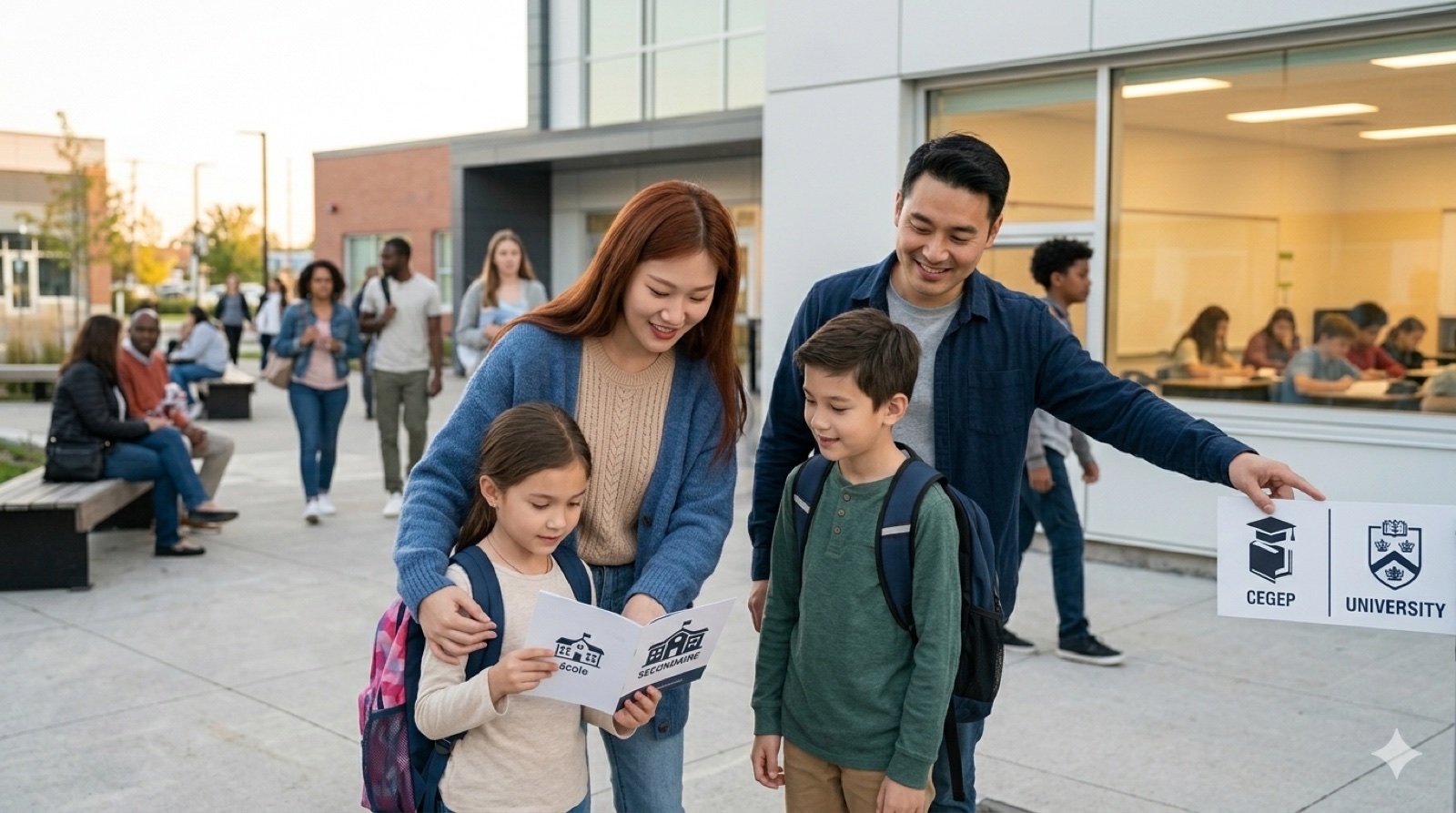
- Quebec's school system — the big picture, from elementary school to CEGEP and university.
- Subsidized daycare in Quebec — how to get a spot before your child starts school.
- Family allowances in Quebec and Canada — financial support for families with children.
7. Official sources
- For the Centre de services scolaire de Montréal and enrolment: cssdm.gouv.qc.ca
- For the Centre de services scolaire Marguerite-Bourgeoys: cssmb.gouv.qc.ca
- For eligibility rules for English instruction in Quebec: quebec.ca
Author's Note: schooling in the French-language network is often one of the most beneficial experiences for immigrant children — not just for French language acquisition, but for social integration. Children who attend their neighbourhood school from kindergarten onward often build friendships that last years and help anchor the entire family. The francization services offered in schools — welcome classes, language support — are generally of good quality and allow children to progress quickly. Don't underestimate children's resilience in linguistic adaptation.