Getting around
Dossier21 guidesPublic transit city by city, the driver's licence, the car and the bike.
For the whole province
These guides apply everywhere in Quebec, across the whole province — no matter your city.
Transport en commun et vélo
Comment fonctionnent les réseaux de transport en commun, et le vélo à Montréal.
Public Transit in Quebec: Bus, Metro and Train
How to use public transit in Quebec — STM, RTC, RTL, exo — fares, passes and the right habits for getting around without a car.
Quebec has a well developed public transit network in its major cities, but very limited coverage in rural areas. Each region has its own transit agency: STM in Montréal, RTC in Québec City, RTL in Longueuil, STL on Montréal's north shore, and the exo network for distant suburbs and commuter trains. For travel between cities, Flixbus, Orléans Express and Via Rail serve the main routes. If you l...
Cycling Paths and Biking in Montréal: Practical Guide

Cycling in Montréal: the bike path network, how BIXI works, the road rules for cyclists in Quebec and how to make the bike your daily transport.
Montréal has more than 1,000 km of cycling paths — separated lanes, on street bike lanes and shared paths. The city has invested heavily in its network since the 1990s and is regularly ranked among the world's top 20 most cycling friendly cities. For a newcomer, cycling is a serious transport option, particularly for daily trips under 10 km. The BIXI network, Montréal's bike share system, is on...
Le permis de conduire
Échanger un permis étranger à la SAAQ, ou obtenir un tout premier permis.
Exchange a Foreign Driver's Licence at the SAAQ

How to exchange your foreign driver's licence for a Quebec one after you arrive, and drive in Quebec on an international licence.
The SAAQ is the Société de l'assurance automobile du Québec. It manages driver's licences, vehicle registration, and the public auto insurance plan. All drivers in Quebec must hold a valid licence issued or recognized by the SAAQ. If you are a new resident in Quebec, you can drive on your valid foreign licence for the first 6 months after settling in. After 6 months, you must hold a Quebec lice...
First Driver's Licence in Quebec: Courses and Exams

Never held a driver's licence? Here's the full path in Quebec — mandatory driving course, learner's permit, exams and probationary licence.
This guide is for you if you've never held a driver's licence, or if you can't have a foreign licence recognized. That includes young people growing up here, people who have never driven, and newcomers from a country without an agreement with Quebec who didn't hold their licence long enough. You start from zero, through the graduated licensing path. Note: if you already hold a valid licence fro...
Voiture : achat et assurance
Acheter une voiture neuve ou d'occasion, et comprendre l'assurance auto.
Buying a Car in Quebec: Used, New or Lease

Used, new or lease: checks, real price, financing, warranty and SAAQ transfer.
A new car costs more and loses value fast in its first years. Its real advantages: Full warranty from the manufacturer No unknown history: no hidden accident, no debt Reliability and recent technology For a first vehicle on arrival, many newcomers choose used. New makes sense if you plan to keep the car for many years. Private seller: lower price, but no warranty and more risk Dealer: higher pr...
Car Insurance in Quebec

SAAQ for injuries, private insurer for the car — understanding the hybrid system.
Quebec has a hybrid system: SAAQ (public): covers bodily injuries of ALL drivers (regardless of fault) Private insurance: covers damage to the car (collision, theft, etc.) You pay the SAAQ via your annual registration fees Civil liability insurance is mandatory: Legal minimum: $50,000 Recommended: $1 to $2 million (cost difference is minimal) Without insurance: severe fine + licence suspended O...
Transport en commun, ville par ville
Chaque ville a son propre réseau (STM, STL, RTL, STO, exo, STS…). Trouvez le guide de la vôtre.
Using the Montreal Metro and Bus (STM)
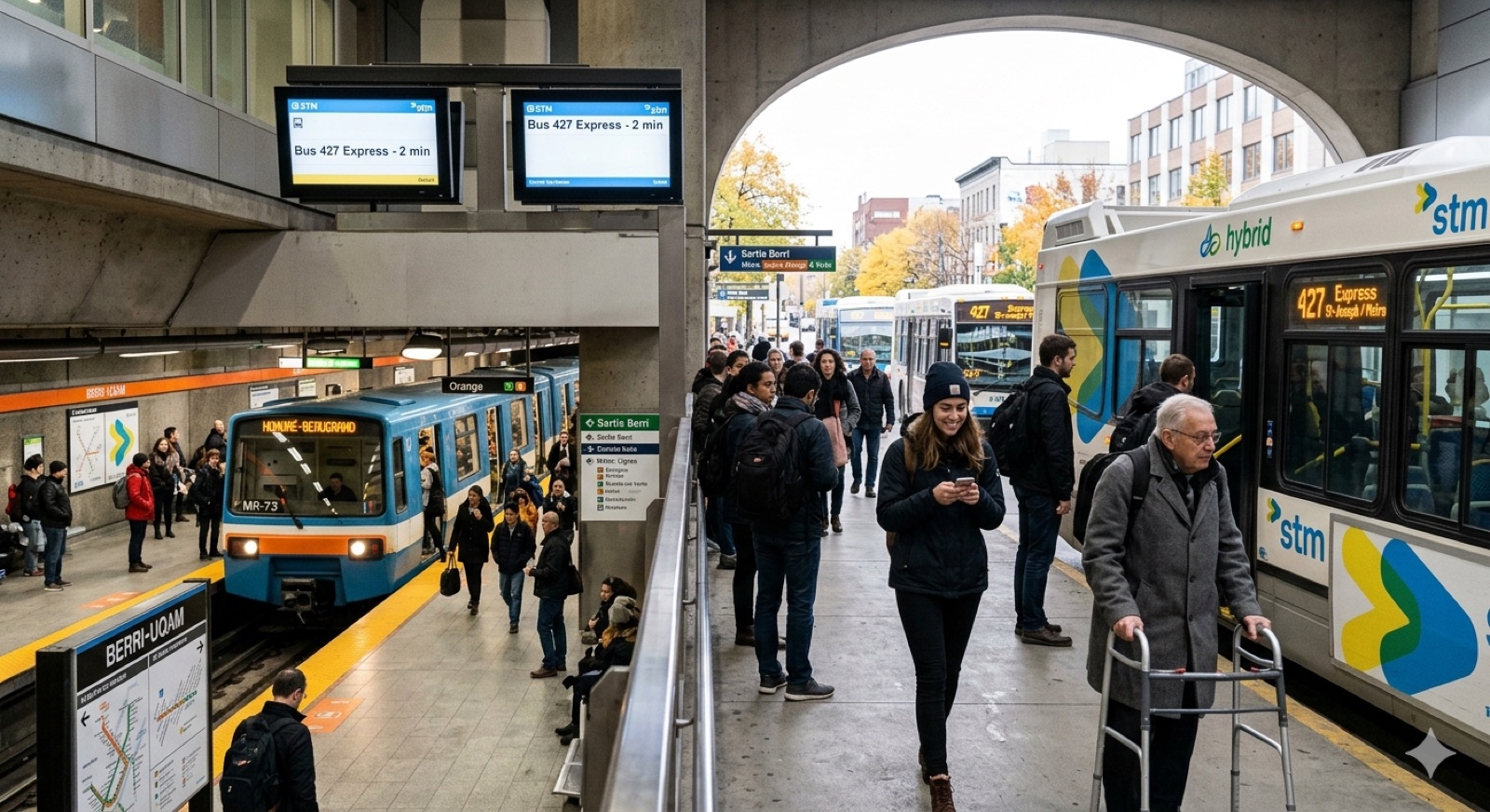
How to get and load an OPUS card, choose the right fare and ride the STM metro and buses in Montreal, with tips for newcomers.
The STM is the Société de transport de Montréal. It runs the metro and the bus network on the island of Montreal. To use its services, you need an OPUS card loaded with a valid transit pass. The OPUS card is a rechargeable smart chip card. It stays with you for all your years in Montreal. It comes in two versions: The basic card — for the regular adult fare The photo OPUS card — required for re...
RTC: Public transit in Quebec City
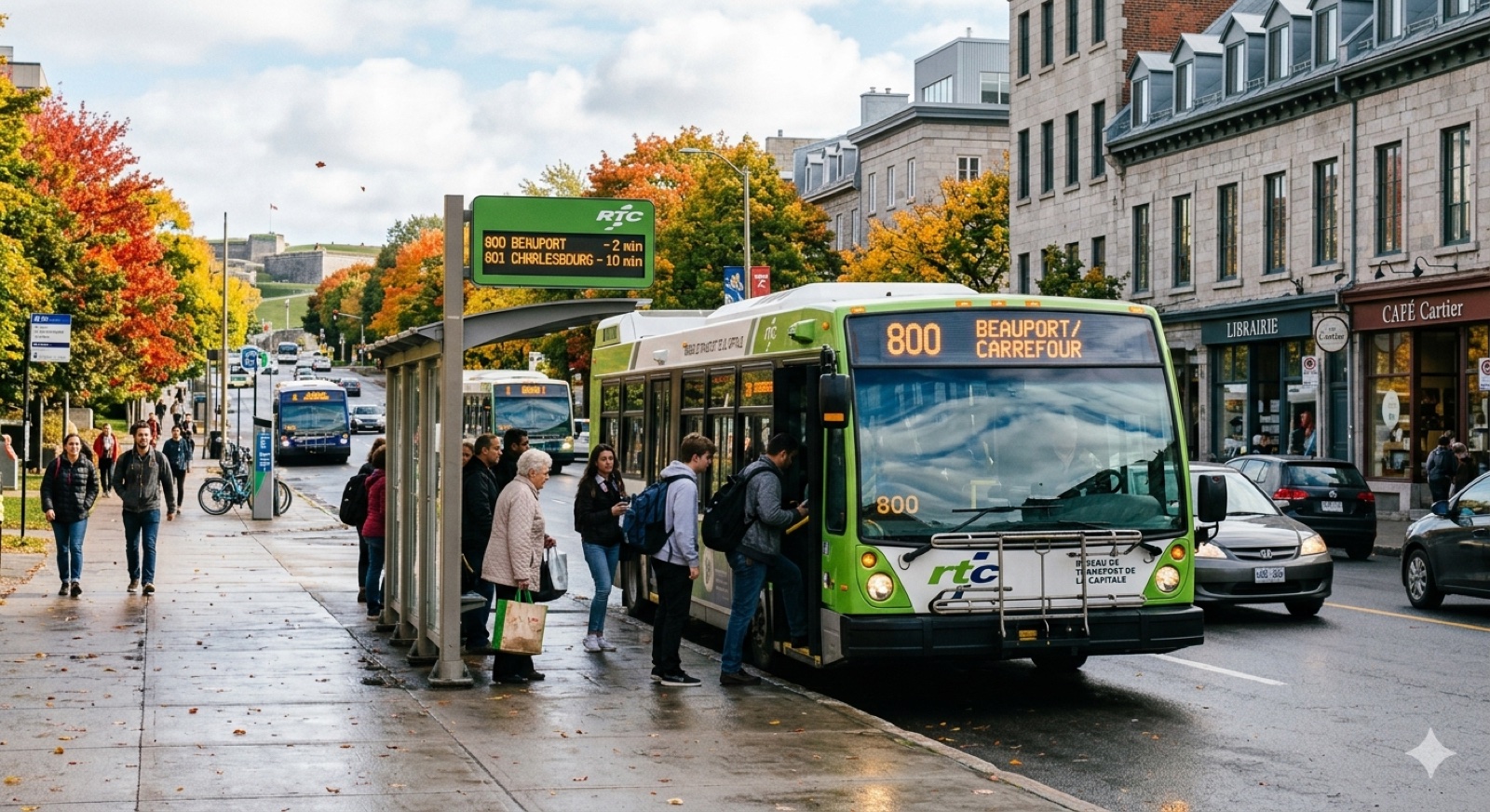
The essentials of Réseau de transport de la Capitale for getting around Quebec City, from tickets to Métrobus lines.
The RTC, or Réseau de transport de la Capitale, is the bus authority serving Quebec City and surrounding areas. It is the simplest and most affordable way to get around without a car. You can pay in cash directly on board, but the fare is cheaper with an OPUS card. This rechargeable card lets you buy single tickets, multi ride passes, or a monthly pass. The Métrobus network groups the RTC's fas...
Public Transit in Laval: STL, Metro and OPUS
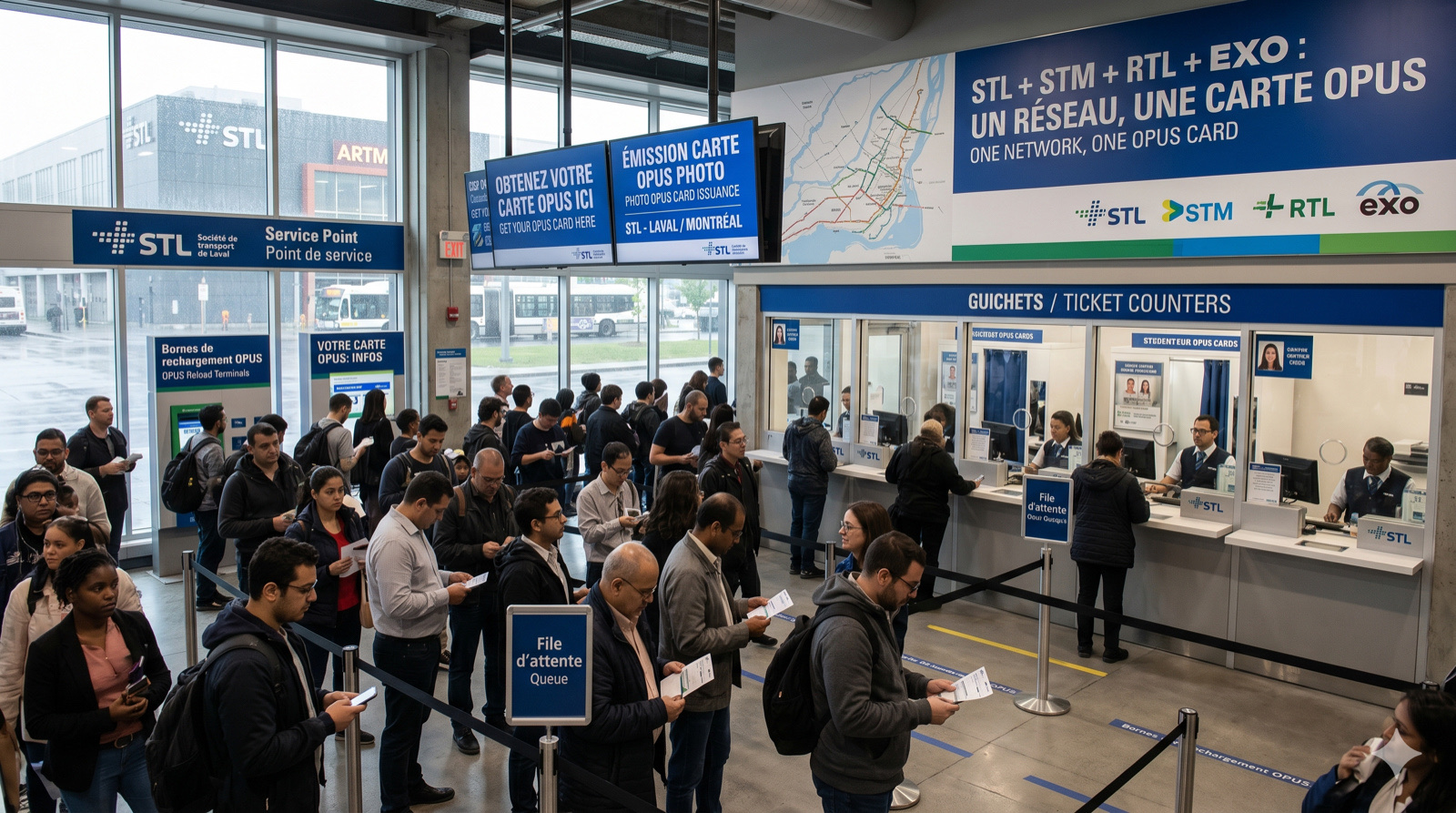
How to use the STL bus network and the metro to get around Laval and into Montreal.
In Laval, public transit relies on two complementary networks. The STL, Société de transport de Laval, runs the local buses covering all of Laval. Montreal's metro — the orange line — has three stations in Laval that reach downtown Montreal in about twenty minutes. The OPUS card pays for all networks in Greater Montreal. The orange line crosses Laval with three stations: Cartier — near the brid...
Public Transit in Gatineau: STO, OC Transpo, Multi Card
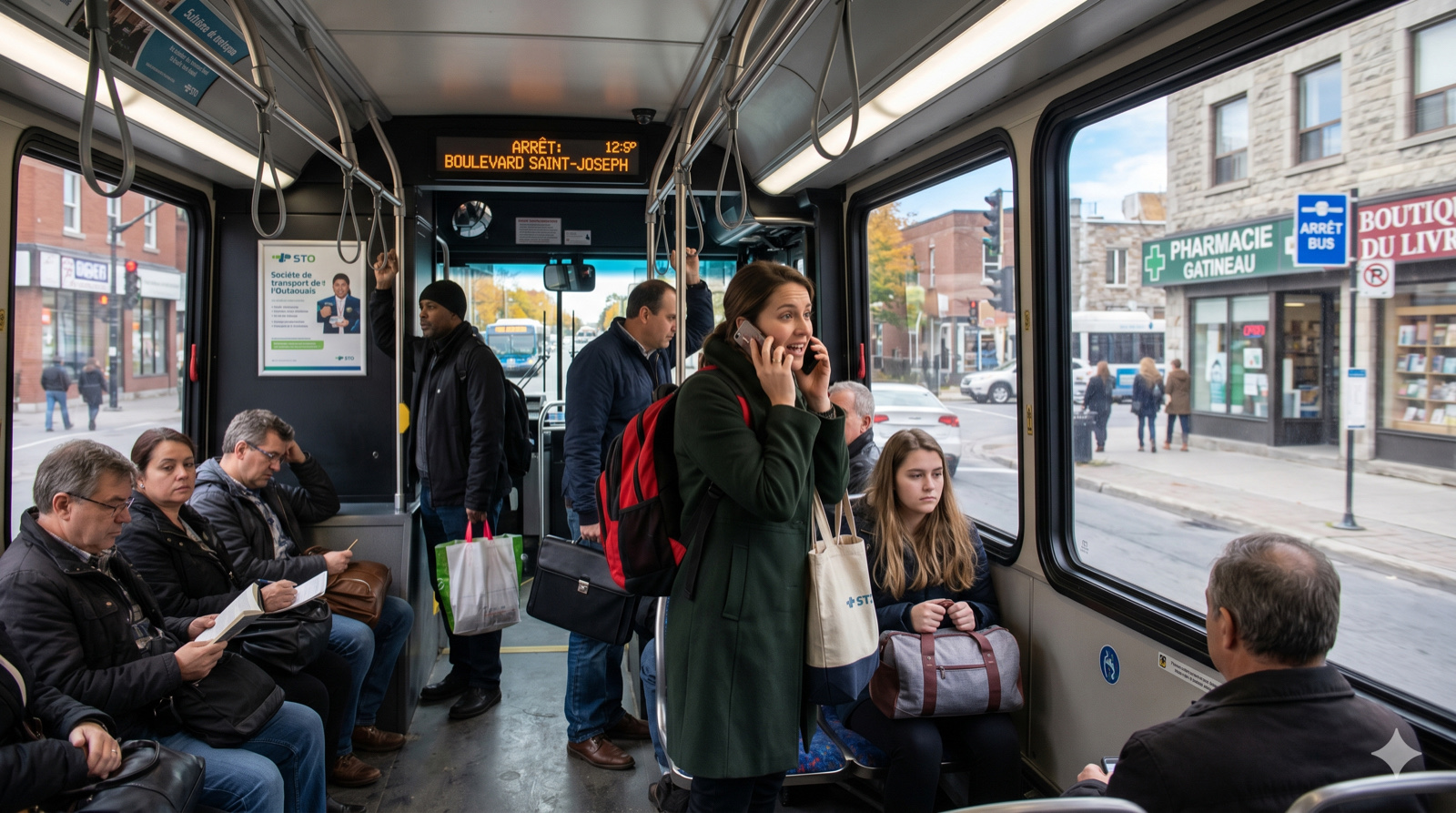
The STO network, OC Transpo connection from Ottawa, and the Multi card for getting around the capital region.
The STO, or Société de transport de l'Outaouais, runs the buses in Gatineau. The network covers the five sectors: Aylmer, Hull, Gatineau, Buckingham and Masson Angers. Several Rapibus lines cross the city quickly on a dedicated lane. Many Gatineau residents work in Ottawa. Several STO lines cross the bridges to Ottawa, and several OC Transpo lines come into Hull. If you commute daily between Ga...
Public Transit in Longueuil

The RTL, the metro yellow line, and the OPUS card — everything for getting around Longueuil.
The RTL, or Réseau de transport de Longueuil, is the bus operator for the Longueuil agglomeration. It serves Longueuil, Brossard, Saint Lambert, Boucherville and Saint Bruno de Montarville. More than 80 routes cover the territory, with high frequency at rush hour. Montreal's metro yellow line crosses the river and ends at Longueuil–Université de Sherbrooke station. It is the only direct metro a...
Public Transit in Sherbrooke: STS
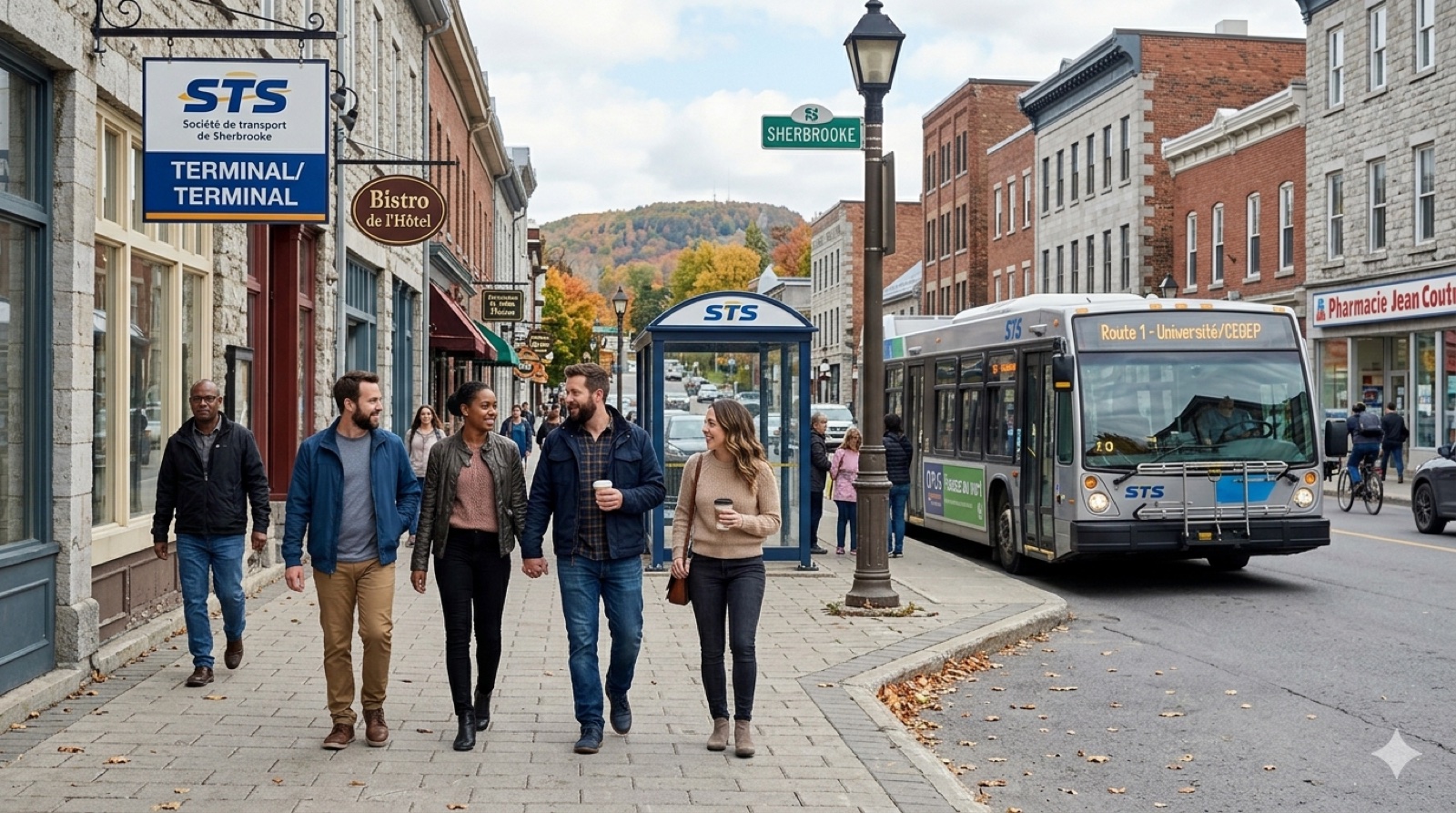
Getting around Sherbrooke by bus: the STS network, the OPUS card, fares and passes, and the main routes newcomers use every day.
The STS, or Société de transport de Sherbrooke, operates the buses in Sherbrooke. Network coverage: Over 20 lines covering the whole city High frequency to Université de Sherbrooke and Cégep de Sherbrooke Regional service: Lennoxville, Rock Forest, Fleurimont Schedule: Monday to Sunday First buses: 6 AM Last buses: 11 PM (limited evenings) One of the best networks for a city of under 200,000 re...
Transit in Lévis: STLévis and Ferry
The STLévis buses, the ferry to Quebec City, and the OPUS card for getting around the region.
In Lévis, three complementary networks handle your travel: STLévis — local buses covering all of Lévis Québec Lévis ferry — crosses the river in about 12 minutes OPUS card — pays for STLévis and several other networks STLévis runs over 30 bus routes in Lévis. Main routes connect the Saint Jean Chrysostome, Saint Romuald, Saint Nicolas, Pintendre and Saint Étienne sectors to downtown and the fer...
STTR: Public transit in Trois-Rivières

The Société de transport de Trois-Rivières bus network, fares, and main routes in the Mauricie region.
The STTR, or Société de transport de Trois Rivières, is the bus authority serving Trois Rivières and its sectors like Cap de la Madeleine. It is an affordable, reliable service for those without a car, especially for reaching the Université du Québec à Trois Rivières. You can pay in cash on board, but the fare is cheaper with the Carte Cité. This rechargeable card lets you buy single tickets or...
Public Transit in Saguenay (STS)
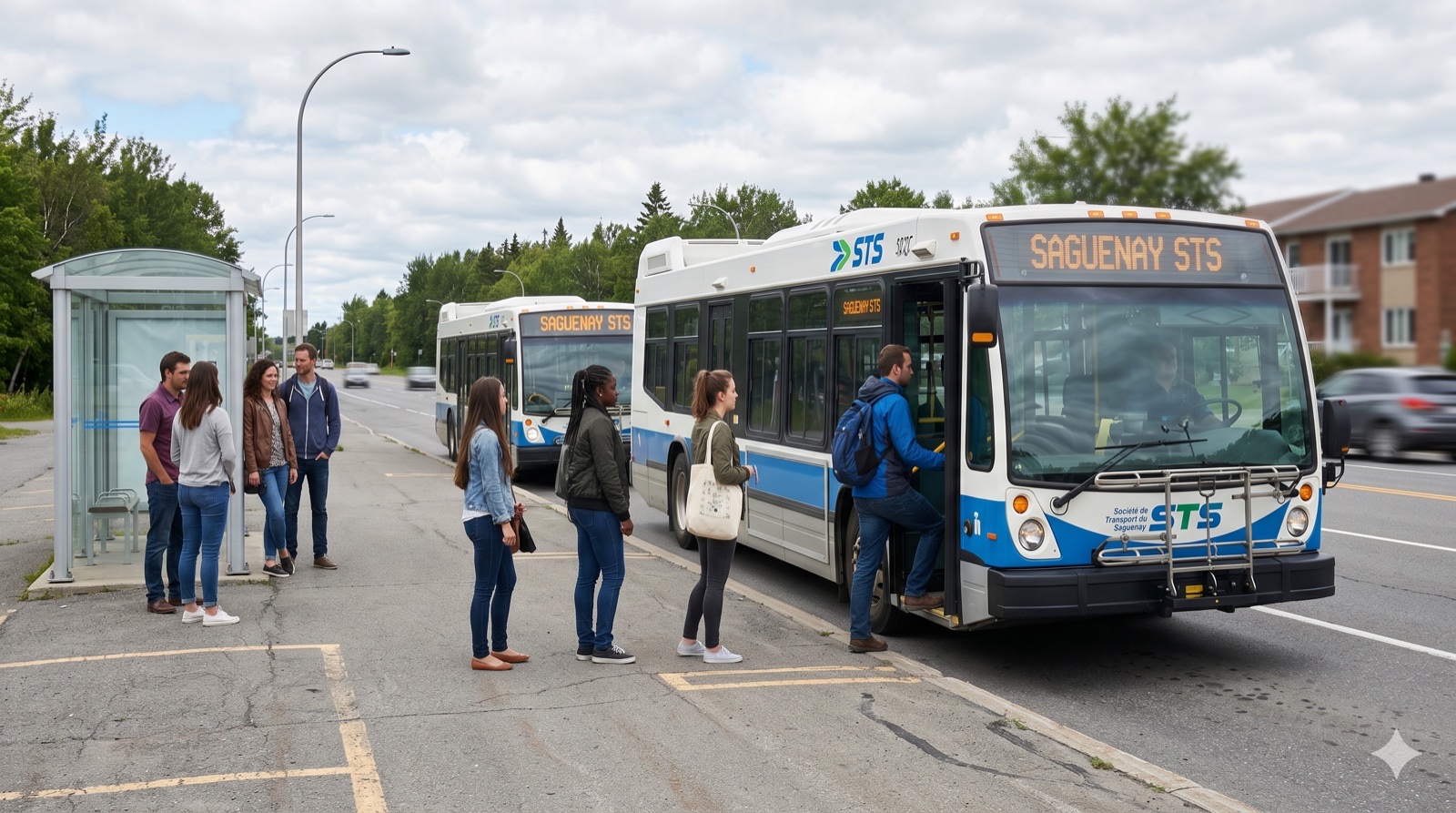
The Société de transport du Saguenay and how to get between Chicoutimi, Jonquière and La Baie.
The Société de transport du Saguenay (STS) runs the bus network linking Chicoutimi, Jonquière and La Baie. Network coverage: About 30 lines Serves: UQAC, Cégep de Chicoutimi, Cégep de Jonquière, Place du Royaume, hospitals in Chicoutimi and La Baie, Rio Tinto Arvida plants Schedules: Monday to Saturday: full service Sunday: reduced service First buses: 6 AM Last buses: 11 PM No night service Ma...
Transit in Terrebonne: exo Mascouche and OPUS
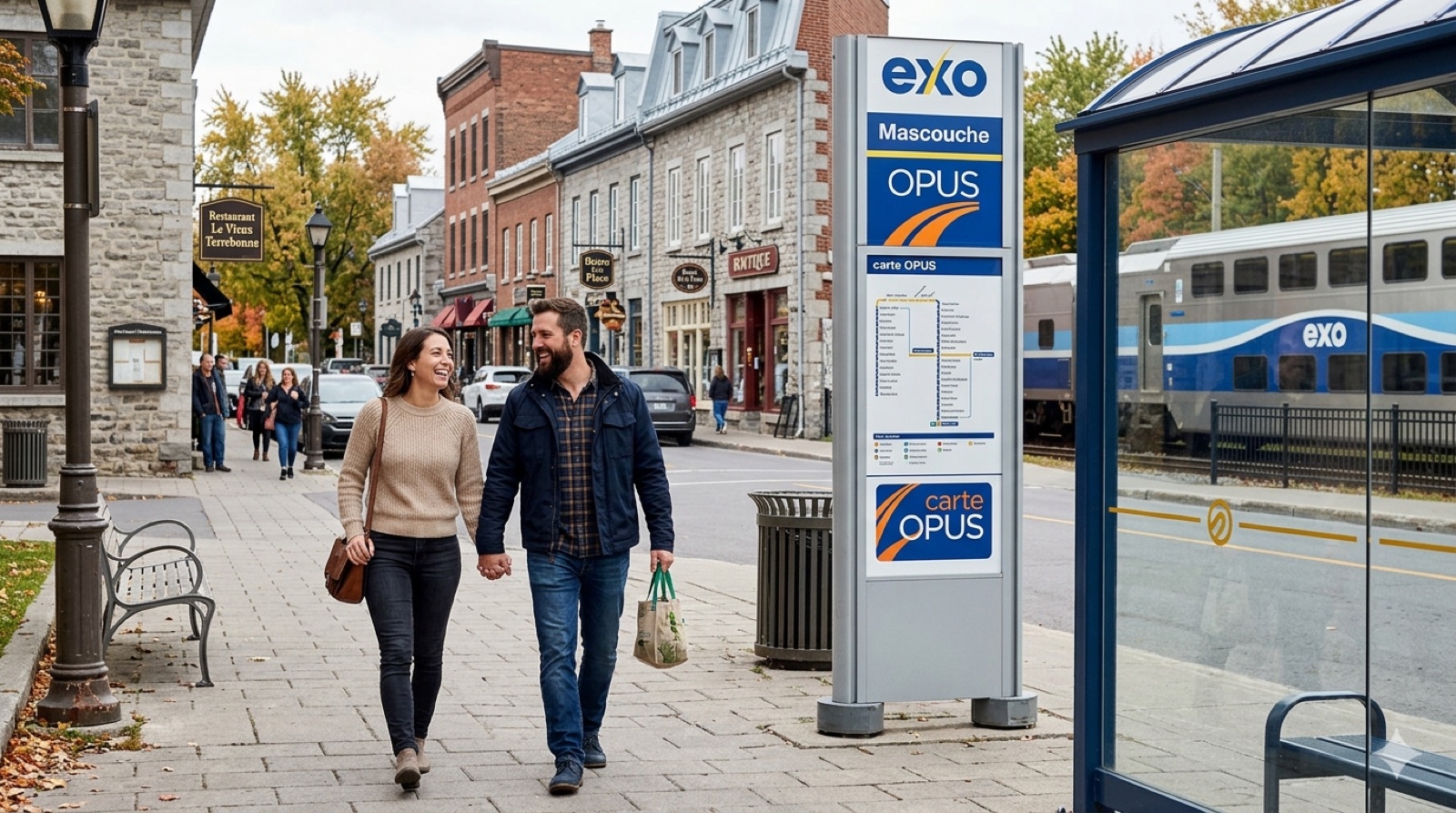
How to use the exo Mascouche train line and local buses to get around Terrebonne and into Montreal.
Terrebonne is served by exo, Greater Montreal's regional train and bus network. The Mascouche train line connects Terrebonne to downtown Montreal in about one hour, with a stop at Central Station. exo also runs several bus routes covering Terrebonne and the north shore. The Mascouche line serves several stations in the area: Terrebonne, Mascouche and Sainte Thérèse. Each station has free park a...
Public Transit in Repentigny: exo and OPUS
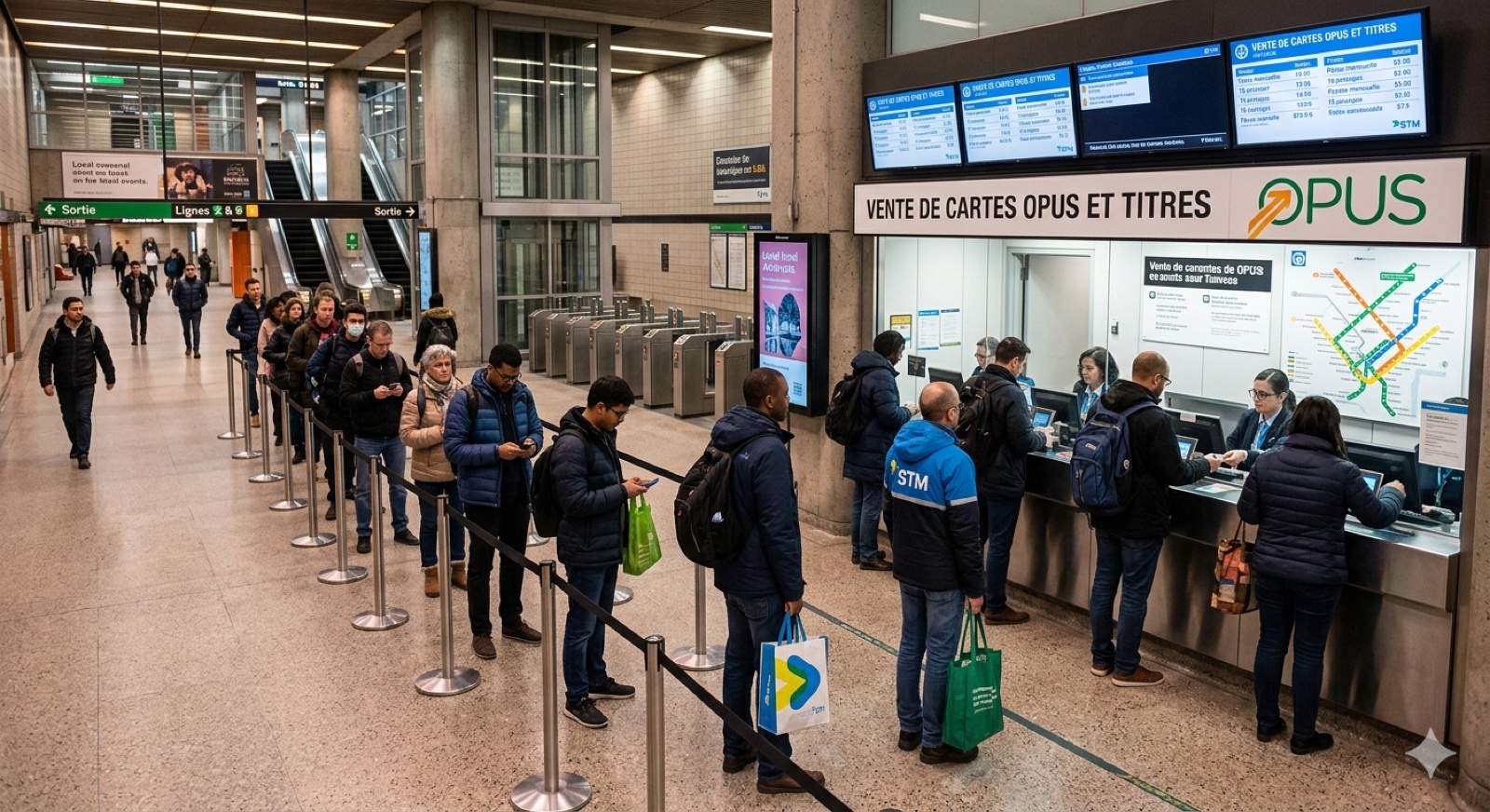
Getting around Repentigny: the exo bus network, fares and passes, and the best options for commuting to Montreal every day.
Repentigny is served by exo, Greater Montreal's regional train and bus network. In Repentigny, service is mainly provided by express bus lines connecting the city to Radisson metro in east end Montreal, in about 30 minutes at rush hour. Several express and local bus routes serve Repentigny. Express buses to Montreal leave from several park and ride lots, notably at exit 22 of Highway 40. Check ...
Getting Around Magog: Transit and Car

Transit options in Magog: rural collective transit, car, bike and shuttle to Sherbrooke.
Magog is primarily a car oriented town. Downtown is easy to cross on foot, but reaching other towns essentially requires a car. The highway network reaches Sherbrooke in 30 minutes and Montreal in 1 hour 30. Transport collectif de la MRC de Memphrémagog offers a shuttle bus to Sherbrooke. Frequencies are limited, especially evenings and weekends. Magog is very well served by bike paths. The Rou...
Getting Around Drummondville: Transit and Car
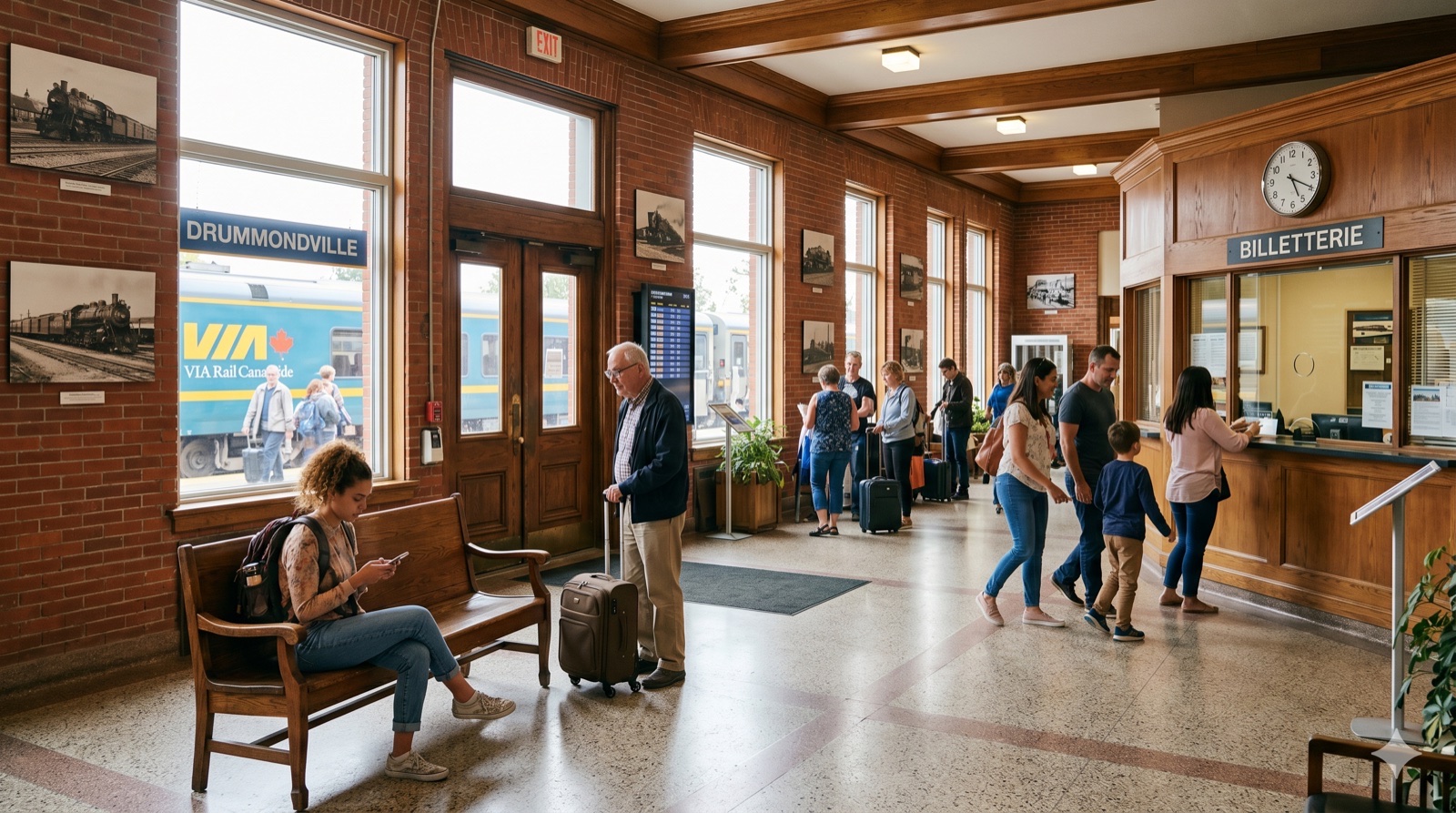
Getting around Drummondville: public transit, driving on Autoroute 20, and bus and train links to Montréal and Québec City.
The Société de transport de Drummondville serves downtown, neighbourhoods, Cégep, industrial parks. Adult cash fare: $3.50 With the reloadable card: $3.00 Adult monthly pass: $59 These are the fares in effect since January 1, 2026 (rates are revised annually). Drummondville is served by VIA Rail. Drummondville ↔ Montreal: about 1h15 on average — the fastest, most direct link Drummondville ↔ Que...
Getting Around Brossard: REM, RTL and OPUS

How to use the REM light metro, RTL buses and the OPUS card to get around Brossard and into Montreal.
In Brossard, three transit networks work together. The REM is the light metro linking Brossard to downtown Montreal in about 18 minutes. The RTL runs the local buses in Brossard and Longueuil. The OPUS card lets you pay on both networks and across the entire metropolitan system. The REM opened in 2023. In Brossard, three stations connect you to the network: Brossard, Du Quartier and Panama. Tra...
Getting Around Bécancour: Transit and Car

Transit options in Bécancour: car, collective transit and connection to Trois-Rivières.
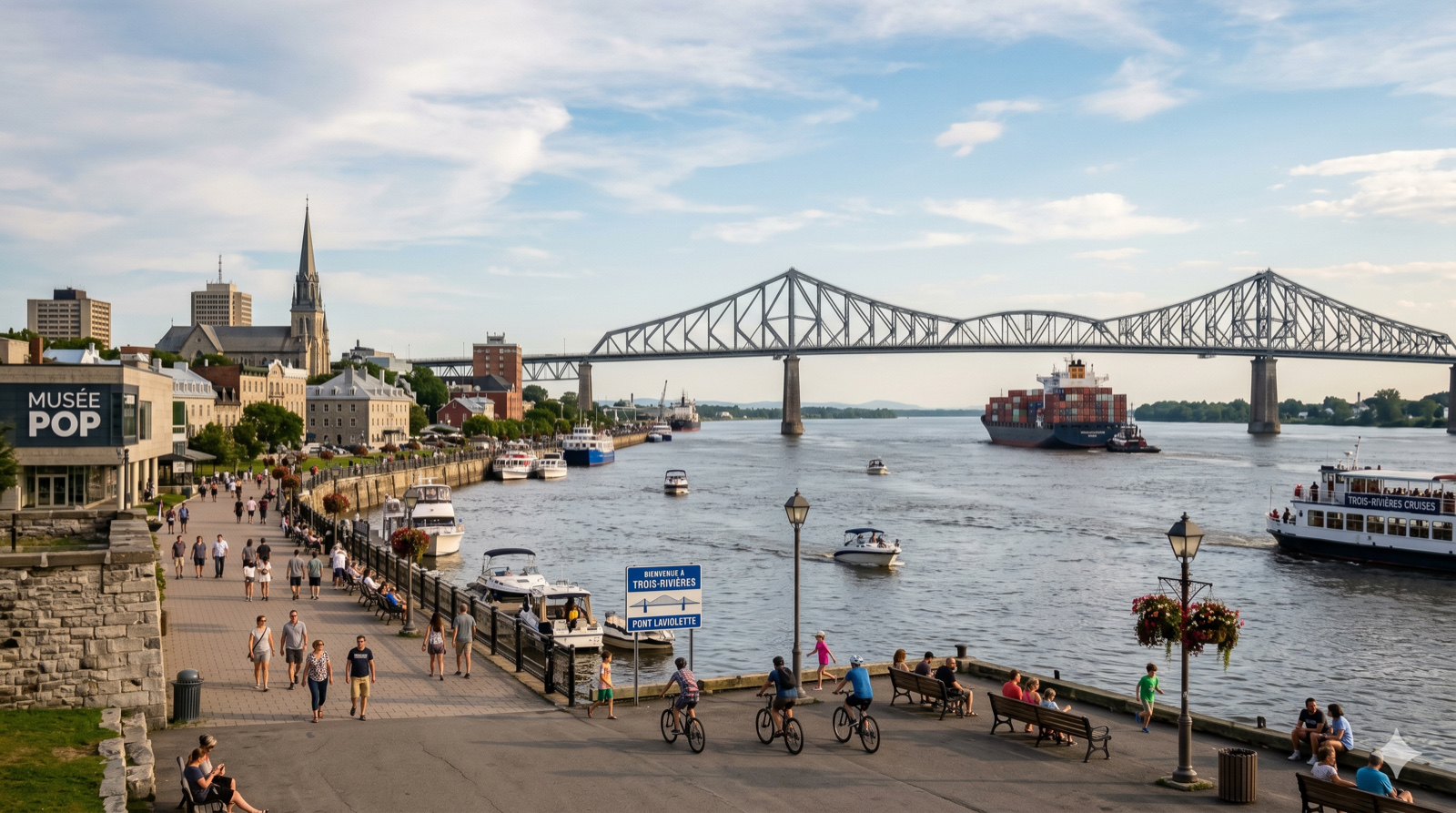
A car is practically essential in Bécancour. The city spans six sectors separated by several kilometres, and services concentrated in Trois Rivières make trips frequent. The Laviolette Bridge, opened in 1967, connects Bécancour to Trois Rivières in 10 to 15 minutes depending on traffic. It's a free bridge — Quebec charges no tolls on provincially operated bridges. Main roads: Route 132: runs al...
Select your region
238 guides across 8 regions — pick yours:
The topic in brief
Getting around Quebec
Public transit. Every city has its own network and its own fares: STM in Montreal, RTC in Quebec City, STL in Laval, RTL in Longueuil, STO in Gatineau, exo in the suburbs, and others. In the Montreal area, the OPUS card holds every type of fare: monthly passes, day passes or books of tickets.
Driving with a foreign licence
You can use your valid foreign licence for the first six months after you settle. After that, it must be exchanged for a Quebec licence at the SAAQ; the rules, with or without exams, depend on your country of origin. Start the process in your first weeks.
Getting a first licence
If you've never driven, the process includes a mandatory driving course, a learner's licence, exams, then a probationary licence.
The car and insurance
Car insurance is a hybrid system: the SAAQ covers injuries, a private insurer covers the car. Before buying, especially used, check the vehicle's history and condition.
Common mistakes to avoid
Letting the six months on a foreign licence run out
After six months, the foreign licence is no longer enough. Start the SAAQ exchange in your first weeks: the rules depend on your country.
Thinking one insurer covers everything
In Quebec, the SAAQ covers injuries and a private insurer covers the car. The two work together.
Buying a used car without checking
Check the vehicle's history and condition before signing, then do the transfer at the SAAQ.
Frequently asked questions
How long can I drive with my foreign licence?
+
How long can I drive with my foreign licence?
+What is the OPUS card?
+
What is the OPUS card?
+How does car insurance work in Quebec?
+
How does car insurance work in Quebec?
+Other topics
Browse all topics
First Steps in Quebec
Your first steps after arrival — housing, SIN, banking, phone.
Explore
Paperwork Simplified
Documents, official cards, government formalities.
Explore
Immigration
Study and work permits, CSQ, permanent residence, citizenship and sponsorship.
Explore
Health
The RAMQ card, finding a doctor, the pharmacy, the dentist and mental health.
Explore
Work & Career
Finding a job, Quebec-style résumé, French interviews.
Explore
Daily Life
Transport, local services, health, everyday life.
Explore
Local Resources
Communities, welcome services, neighborhood resources.
ExploreIn the news
Recent changes that matter to newcomers.

Work Permit Holders: 6-Month Courses, No Study Permit
Since September 4, temporary workers can take a program of six months or less without a study permit or a CAQ, until the end of 2027.

Halloween and Gardens of Light at the Botanical Garden
From October 1 to 31, the Botanical Garden offers Halloween activities for kids, which you can pair with the evening light walk at no extra cost.

Quebec Public Libraries Week: October 17 to 24
For one week, Quebec's public libraries put on extra activities. A good moment to get a library card, which is free.
From Bécancour to Trois-Rivières.
Housing, transit, local schools: every guide also exists for your city, with real addresses and figures.





7 regions · 18 cities
All cities