Before leaving your country, draw up a list of all your belongings in two copies — value, make, model, serial number — split into two sections: what travels with you and what will arrive later. At your first point of entry, the officer uses it to fill out Form BSF186, even if you arrive with no goods. An item left off this list loses its duty- and tax-free entry.
1. Your status decides the customs rules
For Canadian customs, a “settler” is someone who enters Canada for the first time to establish a residence for at least 12 months. That is the situation of most new permanent residents. Their personal belongings are settler's effects, which can come in without duties or taxes if a few conditions are met.
If you come with a study permit, or with a short-term work permit, customs classifies you as a temporary resident instead. Your belongings then follow other rules, explained below.
Careful: your customs status does not always follow your immigration status. A person coming to work for more than 36 months is treated as a settler by customs on arrival, even if they remain a temporary resident for immigration purposes.
2. What you can bring in duty- and tax-free
As a settler, you can import your personal belongings duty- and tax-free. The list accepted by the Canada Border Services Agency (CBSA) is broad: clothing and linen, furniture, appliances, books, personal computers, musical instruments, jewellery, family heirlooms, private collections, hobby tools and even your personal vehicle.
The key condition: each item must have been owned, possessed and used by you abroad before you arrive. Keep your bills of sale and registration documents, which help prove it. A leased item does not count, because the CBSA does not consider that you own it.
Some goods never qualify for this exemption: a house, a large trailer used as a residence and any goods used commercially. They pay the regular duties and taxes.
Once your belongings are in Canada, don't resell them too quickly: if you sell or give away an item within 12 months of importing it, you will have to pay the duties and taxes it was exempted from.
Getting married soon? Your wedding gifts also come in duty- and tax-free if the wedding takes place within three months before or after your arrival. They must belong to you before you arrive, but you do not need to have used them.
3. Preparing your list before you leave
This is the most important step, and it happens at home, before you leave. The CBSA asks for a list of your belongings in two copies, showing for each item its value, make, model and serial number if it has one.
Divide the list into two sections: first the goods travelling with you, then the goods to follow, meaning those that will arrive later, for example with a moving company. A good to follow that is not on this original list loses its right to enter duty- and tax-free.
No need to detail everything: for ordinary household items, the CBSA accepts a group listing with an overall value, for example “kitchen utensils”. For jewellery, do the opposite: describe each piece, ideally using the wording of your insurance policy or an appraisal, and attach photos signed and dated by a jeweller.
To save time, you can fill out Form BSF186, the Personal Effects Accounting Document, in advance. It has a box to say whether there are goods to follow and a section for vehicles.
Print your list and keep it on you with your passport and immigration documents, never in your luggage.
| Goods travelling with you | Goods to follow | |
|---|---|---|
| Where to list them | First section of the list | Second section of the list |
| When they clear customs | On arrival, at your first point of entry | When they arrive, on presentation of your copy of Form BSF186 |
| Deadline to bring them in | — | No time limit if they are on your list |
| Alcohol and tobacco | Eligible within certain limits | Not eligible: they must travel with you |
| Left off the list | — | Regular duties and taxes |
4. Shipping your belongings: the right timing
If you are shipping furniture or boxes, make sure they arrive at the same time as you or after you. Goods that arrive before their owner are held in a sufferance warehouse for only 40 days; after that, they are treated as unclaimed.
If you cannot claim them in time, ask the local CBSA office for an extension before the deadline. According to the CBSA's guidance on settlers' effects, an extension can last up to four years. Without an extension, unclaimed goods end up being forfeited.
When your goods to follow arrive, present your copy of Form BSF186: it is the proof that they were on your first-day list. Keep it with your important documents.
5. Work or study permit: different rules
If you are coming to study, or to work for 36 months or less, your belongings come in on a temporary basis: they are expected to leave with you. The CBSA still advises preparing, before you arrive, a list in duplicate of everything you bring, with approximate values and serial numbers.
If the officer decides your belongings should be tracked to make sure they leave Canada, they may fill out Form E29B, the Temporary Admission Permit, and require a security deposit. You can bring in other non-consumable items after you arrive, but the CBSA recommends keeping them to a minimum.
If you later apply for permanent residence from inside Canada, or if your work in Canada is to last more than 36 months, notify the CBSA right away: your belongings must then be accounted for permanently.
6. What is prohibited or restricted
Some goods are prohibited or subject to the rules of other departments, even if you have owned them for a long time. The main ones to check before you pack:
- Food, plants and animals: you must declare all of them, otherwise the item can be confiscated and you risk a fine or prosecution. The requirements can change from day to day.
- Medications and health products: Canada restricts the quantity and type of products you can bring, and a medication sold without a prescription back home may need one here. Read Health Canada's guidance on health products for personal use before you leave.
- Weapons and firearms: you must declare all of them on arrival; otherwise they can be seized and you can be prosecuted.
- Used mattresses: they only come in with a certificate of cleaning and fumigation done in the exporting country.
- Firewood, explosives, fireworks and certain ammunition: you need a permit or written authorization.
For a pet, the requirements vary by species and country: our guide Vets and pets in Quebec covers it.
7. If you are bringing a vehicle
Your personal car can be part of your settler's effects, but every imported vehicle must meet Transport Canada's requirements, and registration fees may apply. A leased vehicle does not belong to you: like any leased item, it pays the regular duties and taxes.
Restrictions also apply to most used vehicles that are not from the current model year and that come from a country other than the United States. Before shipping a vehicle, the CBSA recommends contacting the Registrar of Imported Vehicles, then the province's registration authority: in Quebec, that is the SAAQ.
8. At the border: your list and your declarations
Even if you arrive empty-handed, hand your list to the border services officer at your first point of entry into Canada. From this list, the officer fills out Form BSF186, gives it a file number and hands you a copy: that is your receipt.
The officer then goes through both your lists and may inspect your luggage. Be ready for their questions: are you carrying live animals or plants, firearms, ammunition or fireworks, meat or dairy products, fresh fruit or vegetables, items from endangered species?
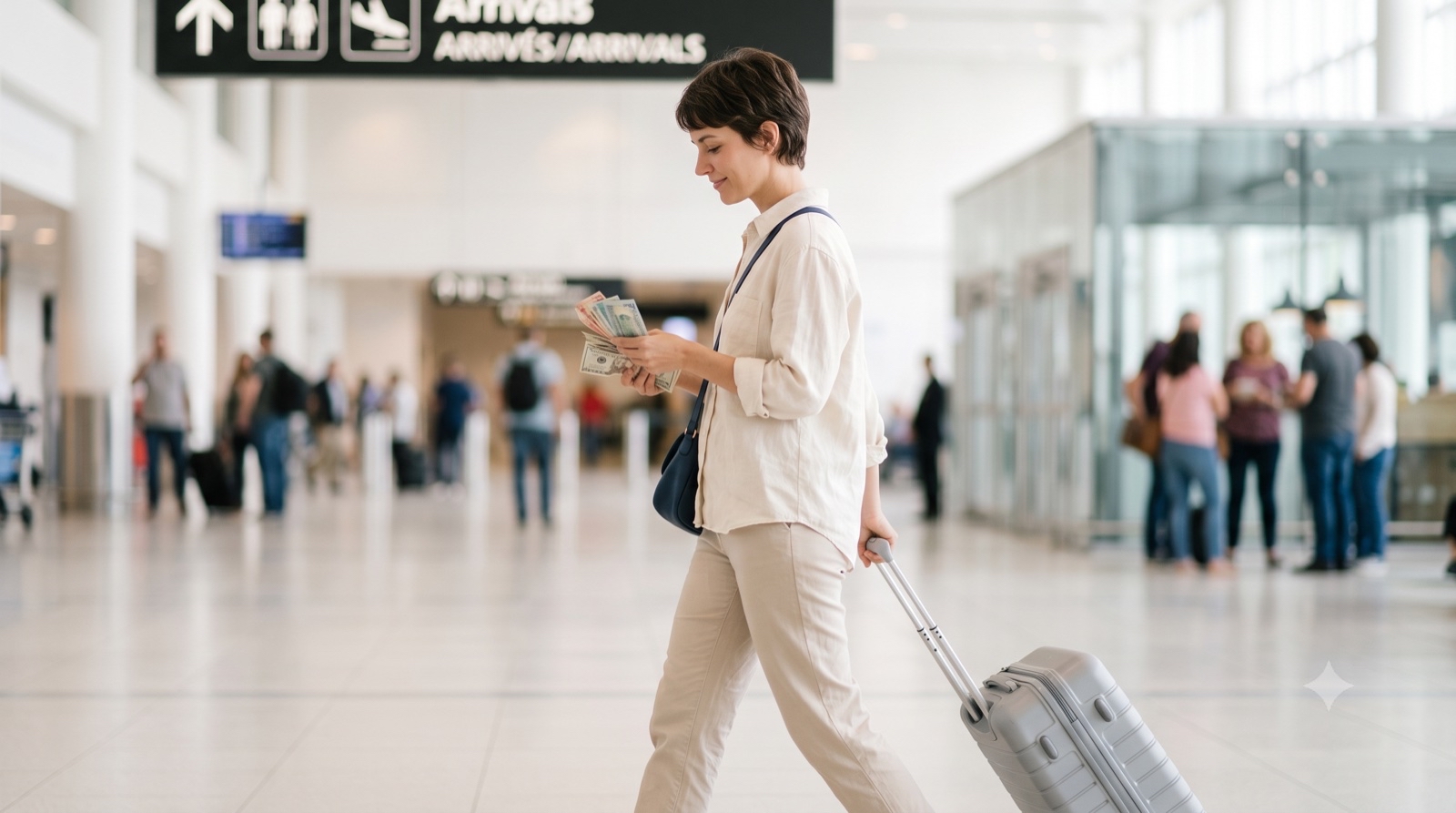
Carrying CAN$10,000 or more in cash or monetary instruments? You must declare it. Our guide on how much money to bring to Canada explains how to do it and how to organize your funds.
9. Your action list
Follow these steps before you leave. Check each box as you go — your progress is saved if you're signed in.
Your action list
0 of 8 done
10. Frequently asked questions
The most common questions about moving your belongings: do you need a list if you arrive with nothing, how long you have to bring in your goods to follow, what changes with a study permit, and whether you can resell a piece of furniture soon after arriving.
I'm arriving with a single suitcase. Do I still need to present a list?
Yes, if other belongings will follow you. The CBSA asks you to hand in your list at your first point of entry even if you have no goods with you. It is this list, recorded on Form BSF186, that later allows your goods to follow to come in duty- and tax-free.
How long do I have to bring in my goods to follow?
According to the CBSA's guidance on settlers' effects, there is no time limit for goods to follow that appear on your original list. What matters is that they are on it, and that you keep your copy of Form BSF186 to present when they arrive.
I'm coming with a study permit. Do the same rules apply?
No. Students are not settlers for customs: their belongings come in on a temporary basis. Still prepare a list in duplicate with values and serial numbers. The officer may record your belongings on a temporary admission permit and ask for a security deposit.
Can I resell a piece of furniture soon after I arrive?
You can, but it has a cost. If you sell or give away a good imported duty- and tax-free within 12 months of importing it, you have to pay the duties and taxes it was exempted from. The same goes if you start using it commercially.
11. See also
These related guides may be useful:
- Preparing your departure for Quebec — the countdown of everything to do before you board the plane.
- Documents to prepare before you leave — the papers to gather in your home country, on top of your list of belongings.
- How much money to bring to Canada — declaring cash at the border and transferring your funds.
- Vets and pets in Quebec — if a pet is part of the trip.
12. Official sources
For official, up-to-date information, see:
Author's Note: A well-made list takes one evening, and it saves you from paying taxes on your own furniture. Write it before you pack the first box: it's easier to note a serial number while the appliance is still on the table.