Quebec rests on five key values that the government asks newcomers to know and respect: French as the common language, democracy, equality between women and men, the rights and freedoms of the Charter, and a secular state. In everyday terms: life happens in French, nobody is above the law, women and men have the same rights, discrimination is forbidden, and the State favours no religion.
1. The key values at a glance
To help you settle in, the Quebec government asks people who move here to know and respect five key values. They are not abstract ideas: they shape very concrete things, like the language spoken at work, who can vote, or how a couple shares decisions. Here is each value in one sentence, with an example from everyday life.
| Value | In one sentence | In real life, it looks like… |
|---|---|---|
| French | The language everyone in Quebec shares | Public services, school and work happen in French |
| Democracy | Power comes from citizens, and nobody is above the law | A Canadian citizen living in Quebec for six months votes, in secret, for their MNA |
| Gender equality | Same rights, same obligations, same responsibilities | Equal pay for equivalent work; in a couple, big decisions are made together |
| Rights and responsibilities | Everyone is equal in worth and dignity, and each person's rights go hand in hand with everyone else's | A landlord cannot refuse you a home because of your origin or your religion |
| Secularism | The State favours no religion | Everyone practises their faith freely; certain State employees in positions of authority wear no religious symbol on duty |
2. French, the language everyone shares
French is the official language of Quebec. It is not only the language of school: it is also the language of the State and the law, of work, of commerce and business, and of communications. The Charter of the French language exists precisely to protect French and make it the common language — the one everybody shares.
Quebec is the only society in North America where most people speak French. For many Quebecers, French is therefore much more than a tool: it is a shared symbol of belonging, a bit like a flag you speak.
In practice, speaking French helps you:
- Understand the cultural reference points and values you hear about on the news or at your children's school;
- Make friends and contacts faster;
- Feel at home;
- Get easier access to education, jobs, culture and public services.
Good news: the Quebec government offers free French courses. Our guide on free francisation with the MIFI explains how to sign up. And if you are aiming for a job governed by a professional order (nursing, engineering, accounting…), you must show a sufficient knowledge of French to obtain your regular licence to practise.
3. Democracy: your voice counts, and the law applies to everyone
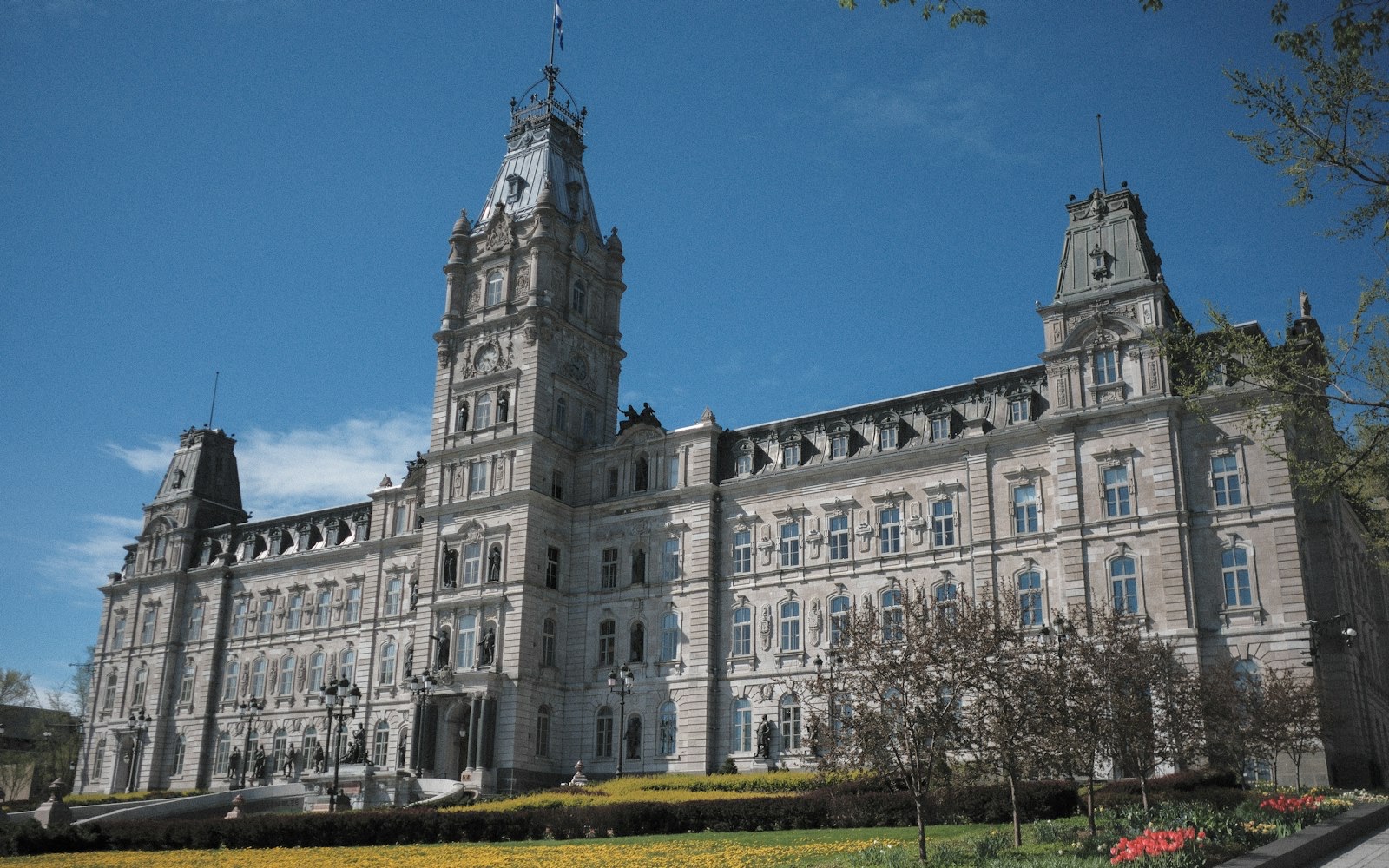
In Quebec, citizens choose who represents them. At each provincial election, people elect MNAs (members of the National Assembly) who sit in the National Assembly. Your MNA is a bit like your spokesperson: they act as the link between the population and the public administration, they study and vote on bills, and they question the government to check what it does. Any citizen can also run as a candidate.
To vote in a Quebec election, you must:
- Be 18 or older;
- Hold Canadian citizenship;
- Have been domiciled in Quebec for six months;
- Meet the other criteria of the Election Act.
Voting is free and confidential: you alone decide, and you don't have to tell anyone who you voted for. Élections Québec explains the steps on its page New Citizens.
Two other pillars of democracy here:
- The rule of law: nobody is above the law — not an influential neighbour, not a police officer, not the government itself. Everyone has the right to the same protection of the law.
- Freedom of expression and association: you can say publicly what you think about politics, and you are encouraged to take part in the life of your community — a tenants' association, a union, the parents' committee at your children's school.
To learn everything about federal, provincial and municipal elections, see our guide Voting in Quebec and Canada.
4. Equality between women and men
This is a fundamental value in Quebec: women and men have the same rights, the same obligations and the same responsibilities, at home as in public life. Here is what it looks like day to day:
- At school: girls and boys sit in the same classes from kindergarten, get into the same programs under the same criteria, and teaching does not push them toward roles for girls or roles for boys.
- At work: the same jobs are open to everyone, and for equivalent work, pay and working conditions are the same. An employer cannot discriminate against you or harass you because of your sex or your gender.
- With money: everyone can earn a living, sign their own contracts, leave a job or start a business, and live alone if they wish.
- In health care: from age 14, each person chooses their own health professional and health facility, and alone agrees to or refuses care.
- In politics: Quebec aims for as many women as men in decision-making roles, at the local, regional and national levels.
Abortion (voluntary termination of pregnancy) is legal in Quebec, as everywhere in Canada, and free for anyone eligible for Quebec health insurance.
Minimum labour standards apply to every job and every status — our guide on labour standards covers them in detail.
5. Single, in a couple, as a family: your choices are yours
In Quebec, you decide about your love life and your family life. Everyone has the right:
- To stay single, with exactly the same rights as everyone else;
- To marry or live as a couple with the person of their choice — marriage can be civil or religious, and can unite two people of different sexes or of the same sex;
- To have children or not.
The minimum age to marry without a court's authorization is 18.
In a couple, both partners have the same rights and the same commitments. Big decisions are made together:
- Money and family property;
- Where you live;
- How the children are raised;
- The family's important values and the house rules.
Example: if one spouse wants to move to another city, it is not up to them alone; the decision is made together.
Anyone can also separate or divorce. In that case, women and men keep the same rights and responsibilities, and both raising the children and parental authority remain shared equally between the parents.
Finally, violence has no place in a couple or a family. Domestic violence in all its forms is forbidden, as are harassment, threats and so-called honour-based violence against a spouse or any family member. If you feel in danger, seek help; our guide Domestic violence: finding help explains the free resources.
One last, gentler example: when a parent grows old or falls ill, the person who looks after them is called a caregiver. Today it is still mostly women who take on this role, and Quebec strongly encourages men to do their share.
6. Your rights… and everyone else's
In Quebec, the Charter of human rights and freedoms applies to everyone who lives here, whatever their beliefs. It says something simple: we are all equal in worth and dignity, and we are entitled to the same protections, no matter:
- Our race, skin colour, or ethnic or national origin;
- Our sex, gender identity or expression, sexual orientation, or a pregnancy;
- Our civil status or age;
- Our religion or political convictions;
- Our language, social condition or a disability.
These rights are not just words. In practice, discrimination is forbidden everywhere in daily life: when you look for a job, rent a home, walk into a store or use a public place.
The Charter also protects your fundamental rights: the right to life, to safety, to integrity, to liberty and to privacy, as well as freedom of conscience, religion, opinion, expression, peaceful assembly and association.
But these freedoms are exercised in society, so they have limits: they must not go against democratic values, the secularism of the State, public order or the well-being of the population. In other words, your freedom goes hand in hand with other people's. You can demonstrate peacefully in the street, but you cannot threaten anyone.
Quebec tolerates no violence, anywhere, whether in private or in public. Sexual violence — assault, sexual or sexist harassment, exploitation — is punishable by law. To find out whether a relationship is healthy or abusive, the government offers a tool: Evaluate the relationship.
7. Secularism: a neutral State, everyone free to believe
The Quebec State and its institutions are secular: their decisions do not depend on any religious authority, and no religion is favoured over another. A simple way to picture it: when you go to a government office or a public school, you are served the same way whether you are a believer or not, and whatever your religion.
Secularism is not aimed at believers. On the contrary, it serves equality: everyone has the right to choose their beliefs, to practise them and to express them, and it is forbidden to discriminate against or harass anyone because of their religion. In the street, at the grocery store, at home or in your place of worship, you live your faith freely.
Secularism is mainly about the State itself. It forbids the wearing of a religious symbol by certain people in positions of authority while they are working, for example:
- New police officers;
- New criminal and penal prosecutors;
- New teachers in public elementary and secondary schools.
These are only examples: the full list is in the Act respecting the laicity of the State, which was extended in 2026, notably to staff of early childhood centres (CPEs) and subsidized daycares. The word “new” matters: people who already held these jobs before the date set by the law can generally keep wearing a religious symbol as long as they stay in the same position at the same organization.
Also, to verify your identity or for security reasons, your face must be uncovered to receive certain government services. Secularism is now written into the Charter of human rights and freedoms.
To find a mosque, temple, synagogue or church near you, see our guide Places of worship and religious practice in Quebec.
8. Frequently asked questions
Here are the questions newcomers most often ask about Quebec's key values.
I don't speak French well yet. Is that a problem?
No, it's normal at the beginning. That's exactly why the Quebec government offers free French courses. The more you progress, the easier it becomes to find a job, make friends and use public services. One important exception: to practise a profession governed by a professional order, you must show a sufficient knowledge of French to obtain a regular licence.
At what age can my child see a doctor on their own?
From age 14, a person can choose their own health professional and health facility, and alone agree to or refuse care. It's one of the concrete ways Quebec respects each person's autonomy.
Can my spouse decide our finances alone?
No. In Quebec, both partners have the same rights and the same commitments, and managing the family's money and property is one of the responsibilities to share. If you feel controlled, threatened or in danger, it is not a private matter: you can ask for help.
Can I wear a religious symbol in Quebec?
Yes. Everyone has the right to practise and express their religion, and it is forbidden to discriminate against you for that reason. The ban only concerns certain people, and only while they are working, such as new police officers, new criminal and penal prosecutors, and new teachers in public elementary and secondary schools.
9. See also
These related guides may be useful:
- Bill 101 and the Charter of the French language — what the law on French means for you, in detail.
- Applying for Canadian citizenship — the step that gives you the right to vote.
- Quebec etiquette and cultural codes — the unwritten rules of everyday life.
- Free legal aid in Quebec — where to turn if your rights are not respected.
10. Official sources
Author's Note: these values can feel like a long list of rules at first. Look at them instead as a promise: whatever your origin, your religion or your gender, you will be treated as an equal here. Learning French, getting involved in your neighbourhood, sharing decisions as a couple — that is how these values become your own, little by little.