The phone call, in French, without the panic. Ready-to-follow scripts — replace the text in [brackets] and keep them in front of you during the call. No invented phone numbers or fees: call the organization for the specifics. Each comes in both English and French.
Calling a government office
For Services Québec, RAMQ, Service Canada — a question or to follow up on a file.
Hello, my name is [your name].
I'd like to [get information about / follow up on] [your request, e.g.: my health-insurance card application].
[If they ask for a file or reference number:]
My file number is [number].
I'm sorry, I speak French but not perfectly yet. Could you speak a little more slowly, please?
Could you repeat that, please?
Could you spell that word for me?
[To confirm what you understood:]
So, if I understand correctly, I need to [restate the step]. Is that right?
Thank you very much for your help. Have a good day!
Have your file number, an ID and something to write with ready before you dial.
Saying upfront that you're learning French usually gets the agent to slow down and speak more clearly — it's normal and welcome.
Write down the agent's name and the time of the call; useful if you have to call back.
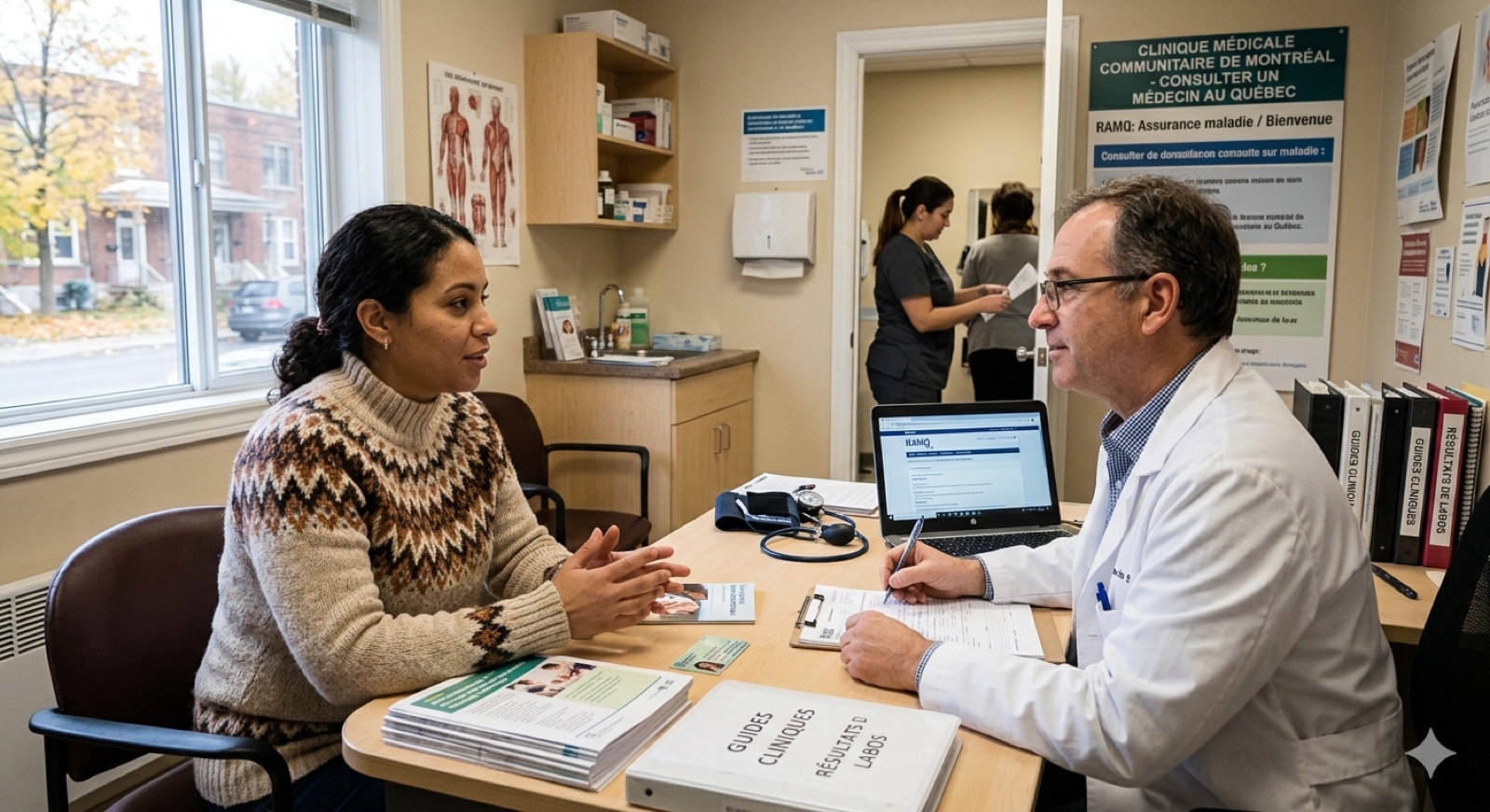
Booking a medical appointment
To call a clinic, a CLSC or a doctor's office to set up an appointment.
Hello, I'd like to book an appointment, please.
It's for [me / my child / a family member]. My name is [your name].
[Briefly state the reason, without unnecessary medical detail:]
I need to see [a doctor / a nurse] for [e.g.: a prescription renewal / a problem that's lasted a few days].
Do you have any availability [this week / in the evening / on the weekend]?
[If they offer a date:]
[Day] at [time] is perfect. / Would you have anything earlier?
What should I bring? Do I need my health-insurance card?
Could you confirm the address, please?
Thank you, see you [day]. Have a good day!
If you don't have a family doctor, ask whether you need to go through the Guichet d'accès à un médecin de famille (GAMF) or call 811 — check the official site for the procedure.
Write the date, time and address down right away during the call.
To cancel, give as much notice as possible: some clinics charge for a no-show.
Cancelling or rescheduling an appointment
When you can't make it and need to give notice ahead of time.
Hello, my name is [your name].
I have an appointment on [day] at [time] [with / for] [specify], and unfortunately I need to [cancel it / reschedule it].
[To reschedule:]
Would it be possible to move it to [another date / later this week]?
[To cancel:]
I wanted to give you notice in advance. Is there anything else I need to do?
I'm sorry for the inconvenience. Thank you for understanding.
Have a good day!
Give notice as soon as you know — it's basic courtesy and, in some cases, avoids a fee.
"Je suis désolé(e) pour le dérangement" (sorry for the inconvenience) is the expected phrase; it's short and always well received.
If they don't offer a new date, ask for one: "Quand auriez-vous de la disponibilité?" (When would you have an opening?)
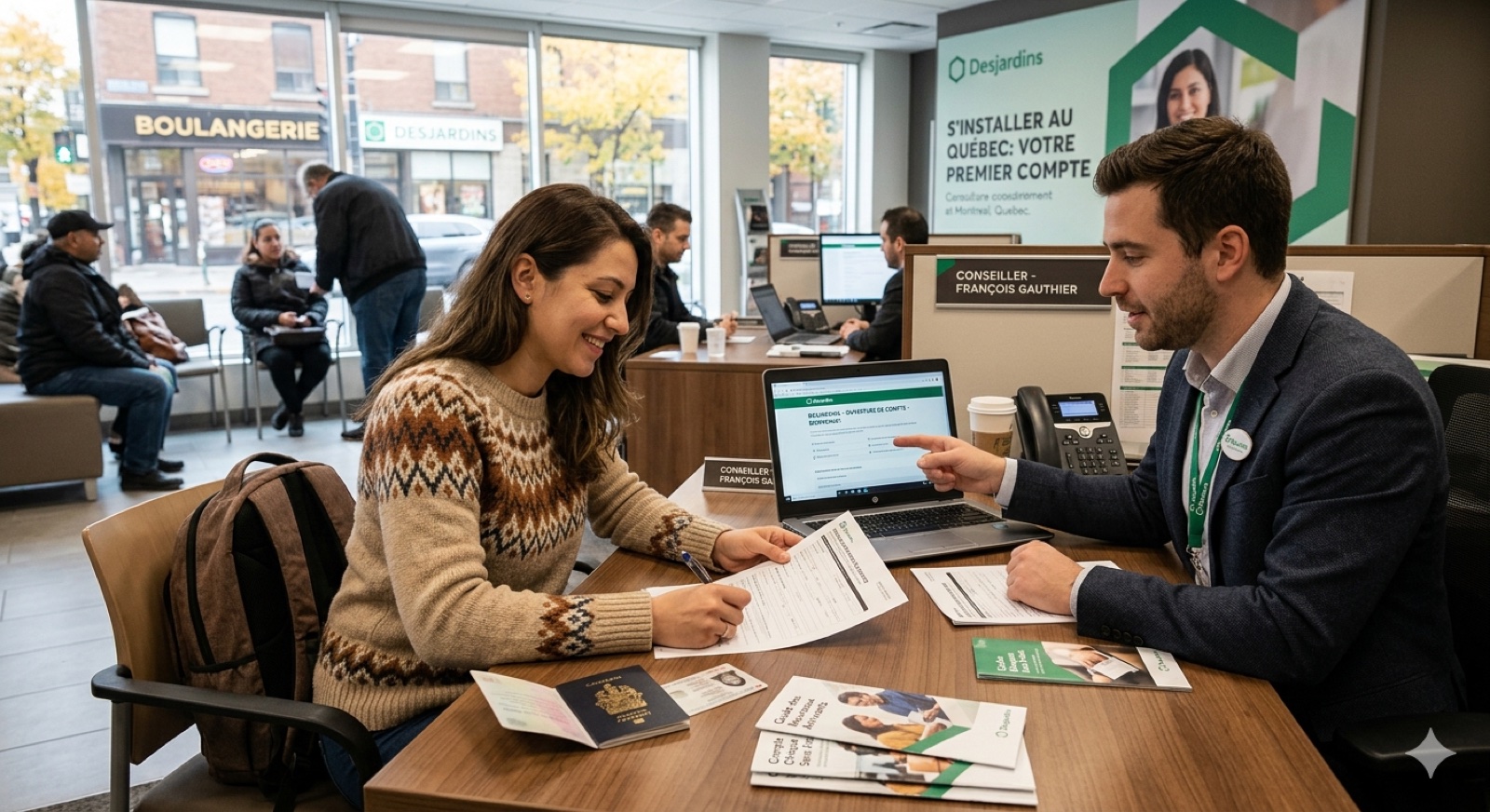
Calling your bank
Blocked card, a suspicious transaction, or a question about your account.
Hello, I'd like to [report a problem with my card / ask a question about my account].
My name is [your name] and I'm a customer of yours.
[They'll ask you to confirm your identity — have your documents ready.]
[Depending on the situation:]
My [debit / credit] card [is blocked / was declined] and I don't understand why.
I see a transaction I don't recognize on my account.
I'd like to understand [a charge / a withdrawal] on my statement.
Can you explain what the next steps are?
Are there any fees for this?
Thank you very much. Have a good day!
The bank will verify your identity: have your customer number, an ID and sometimes recent transaction details ready.
Never give your PIN over the phone — a real bank never asks for it. If in doubt, hang up and call the number on the back of your card.
Note any call reference number they give you.
Calling the landlord (repair)
To report a problem in your unit and request a repair.
Hello [Mr. / Ms. Name], it's [your name], your tenant at [address / apartment number].
I'm calling because there's a problem in the unit: [describe, e.g.: a leaking faucet in the bathroom / the heating isn't working].
The problem started [when] and [is getting worse / is staying the same].
Would it be possible for you to come take a look, or send someone, [this week / as soon as possible]?
[If it's urgent, e.g.: a leak, no heat in winter:]
It's fairly urgent, so I'd appreciate a quick call back.
I can send you a photo by message if that helps.
Thank you very much. Have a good day!
After the call, also send an email or text summarizing the request and the date: a written trace is proof if nothing happens.
Stay factual and polite, even when it's frustrating; it gives your request more weight.
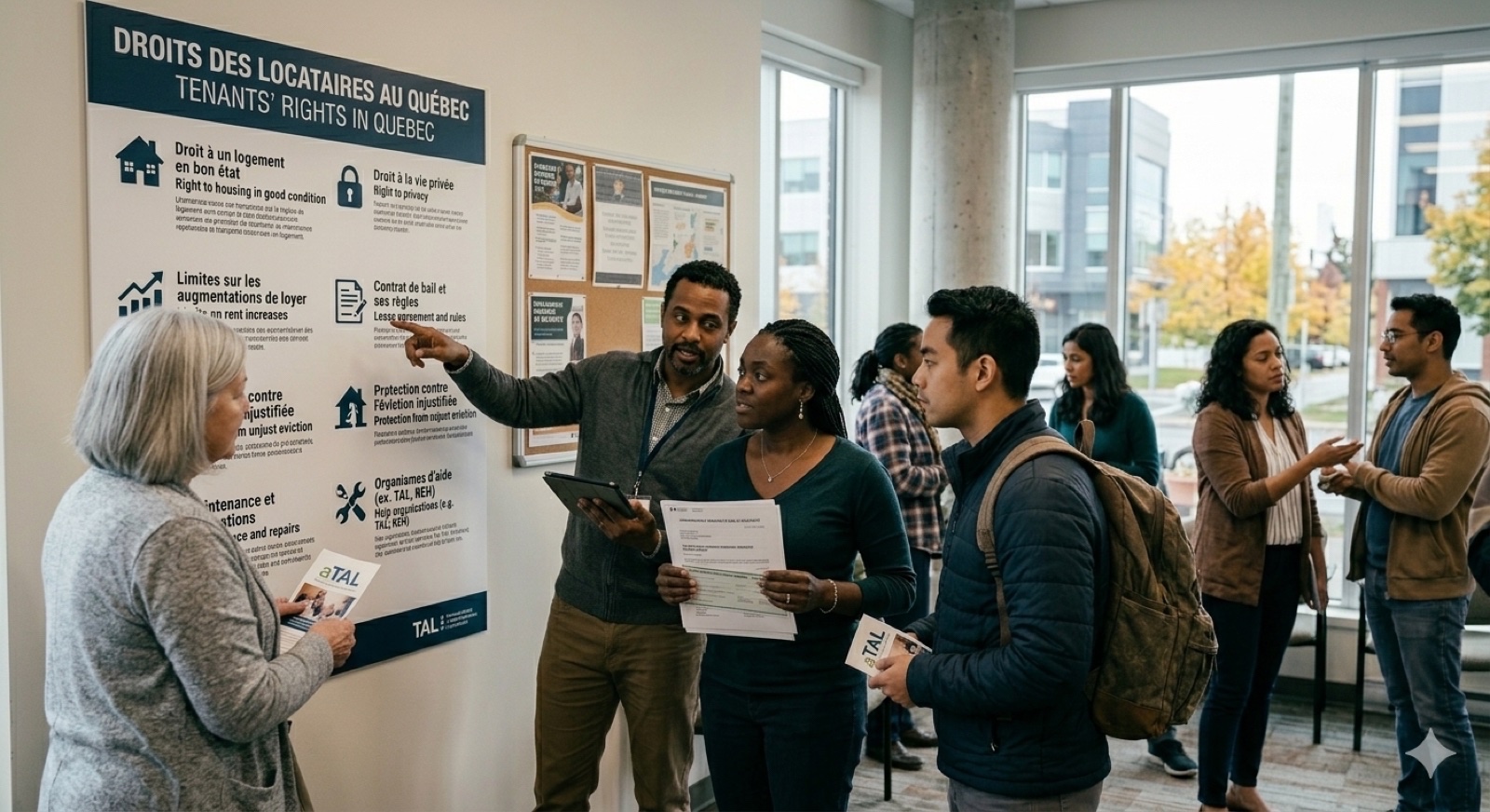
The landlord must keep the unit in good condition. If nothing happens, see the "Tenant rights" guide and the Tribunal administratif du logement (TAL).
Setting up or cancelling a service
Internet, cell phone, electricity — to start a new service or to cancel.
Hello, I'd like to [start a new service / cancel my service / hear about your plans].
My name is [your name].
[For a new installation:]
I just moved to [address] and I'd like [internet / a cell phone plan / to open an electricity account].
What plans do you offer, and what's the all-in price with taxes included?
Are there installation fees or a fixed-term contract?
What's the earliest date for [installation / activation]?
[To cancel:]
I'd like to cancel my service as of [date]. Are there any cancellation fees?
Could you send me a written confirmation (by email)?
Thank you very much. Have a good day!
Always ask for the "all-in, taxes included" price: the advertised price often leaves out taxes and fees.
Ask for written confirmation (email) of the plan, the price and any commitment date — that's your proof.
Note the date, time, agent's name and a reference number; essential if there's a billing dispute.