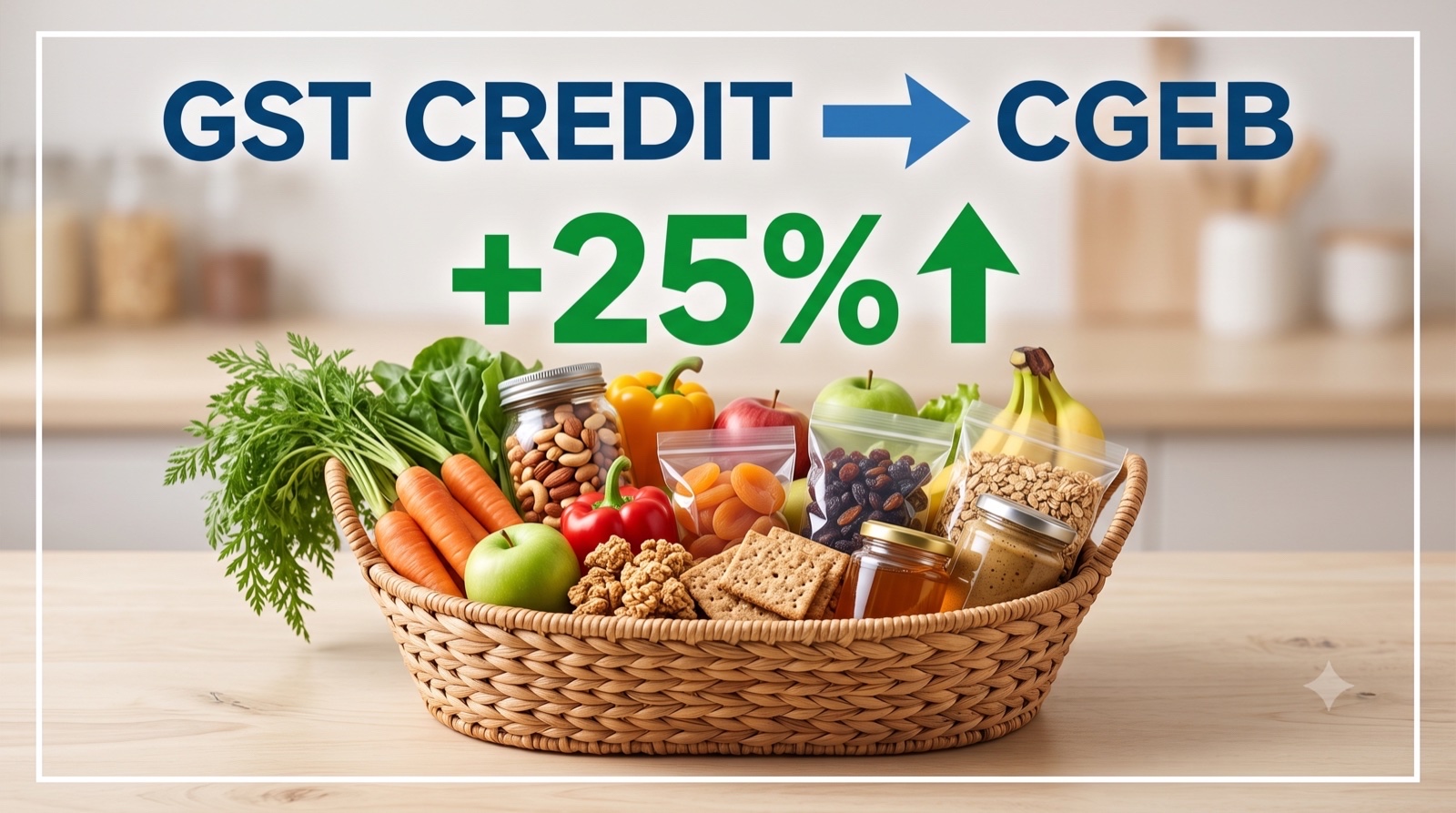
If you were getting the GST/HST credit every three months, stop looking for that name on your bank statement: as of July 2026, it's been replaced by the Canada Groceries and Essentials Benefit (CGEB). The change isn't just a label — the amount goes up.
What changes: +25%. The previous credit is boosted by 25% for the next five years, according to the Canada Revenue Agency. More than 12 million low- and modest-income Canadians are covered. The first payment of the enhanced benefit went out on July 3, 2026 and covers July, August and September, per the CRA payment dates. A one-time top-up payment was also issued in early June, during the transition.
What doesn't change. The mechanics are essentially identical: same general eligibility rules, same calculation based on adjusted family net income and family situation, same quarterly payments from the Canada Revenue Agency. As a rough guide, the threshold sits below $60,012 for a single person with no children, and below $82,952 for a couple with four children, per the CRA income thresholds — the exact amounts vary with each situation.
The exception that concerns you. This is the part not to miss: the benefit is automatic… except for new residents of Canada. For everyone else, the CRA determines eligibility from the income tax return, with no action needed. But a newcomer hasn't filed a Canadian return yet — so they don't exist in the system yet. Without a step on your part, you receive nothing, and nobody will warn you.
How to get on the radar. The route designed for newcomers is Form RC151, to complete as soon as you become a resident of Canada, without waiting for your first tax return, according to Canada.ca. It's exactly the same habit as before for the GST/HST credit: the program's name changed, the way you enter the system didn't.
Good to know for newcomers. Three things. First, if you see "CGEB" rather than "GST/HST credit" on your account, nothing is broken — it's the same money, more of it. Second, this payment is non-taxable and isn't claimed every quarter: your annual tax return is what keeps it alive, even on zero income. Third, sign up for direct deposit: it's faster than a cheque, and it saves you trouble if you move — on July 1 in Quebec, that happens more often than elsewhere. Always check current amounts and thresholds with the CRA rather than a social media summary.