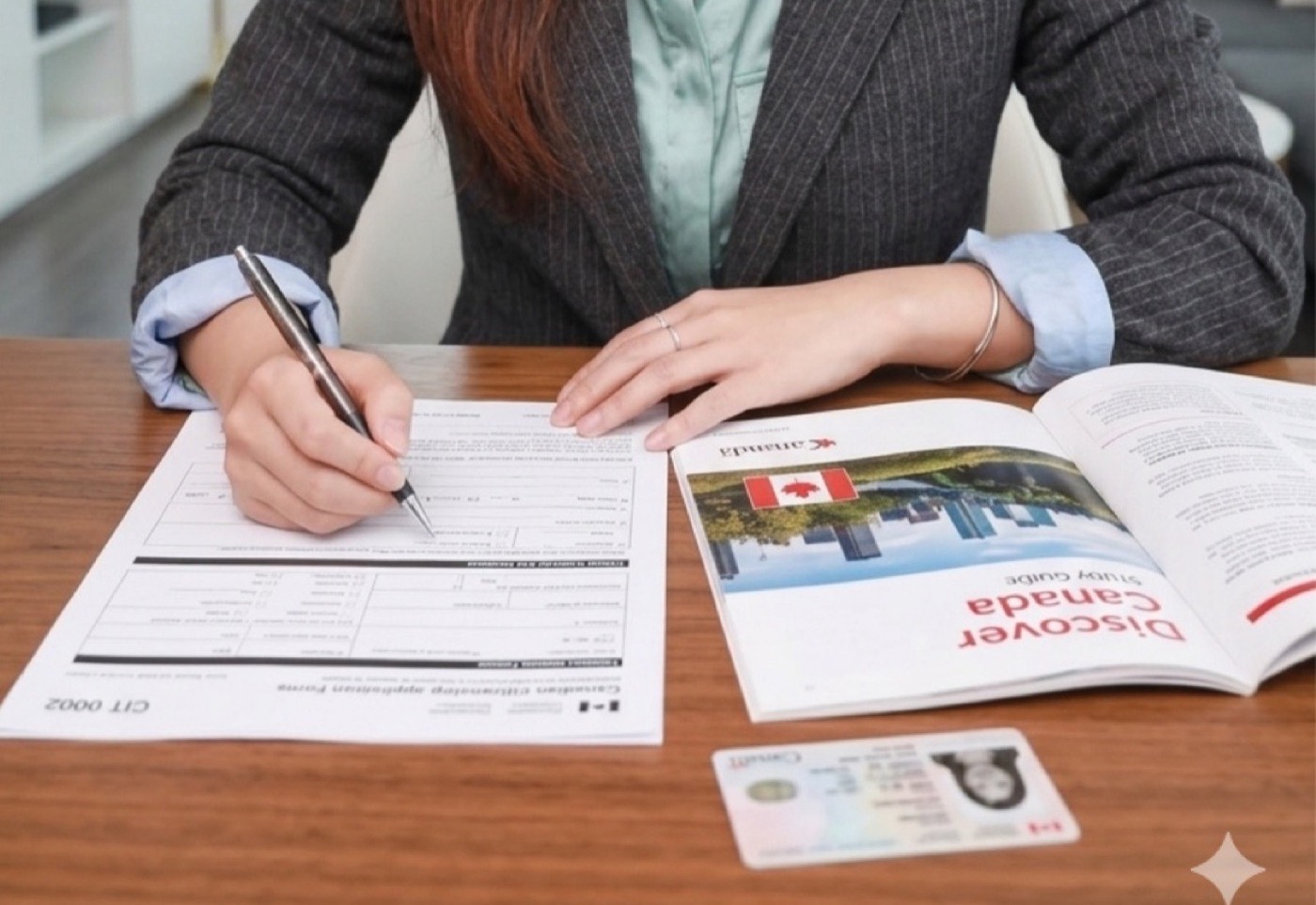
The PR card proves your status in Canada and you need it to return to Canada after travelling — it's valid 5 years, generally. Renew it once it expires in less than 9 months (or after it has expired); always check the date on the back before a trip, since if it expires while you're away you will need a travel document (PRTD) to return to Canada by air.
1. What the PR card is for
The Permanent Resident Card (PR card) proves your status in Canada. You need it to return to Canada after travelling. Validity: 5 years in general.
2. When to renew
Renew your card once it expires in less than 9 months — or after it has expired. This is not a minimum lead time but a ceiling: if it expires in 11 months you cannot file yet (IRCC). Check the date on the back of your card.
3. The residency obligation
To keep your status, you must have spent at least 730 days in Canada during the last 5 years: this is the residency obligation. These 730 days don't need to be continuous. Some of your time outside Canada may count, in the following cases (IRCC):
- You work full-time outside Canada for a Canadian business or organization, or for the federal, provincial or territorial government of Canada
- You travel with your spouse or common-law partner, if they are a Canadian citizen, or a permanent resident who works full-time outside Canada for a Canadian business or one of those governments
- You are a dependent child travelling with your parent, under the same conditions
To quickly estimate whether you reach the 730-day threshold, use our residency-days calculator before renewing your card.
4. How to apply
The application is done online on the IRCC portal:
- Fill in the forms and pay the application fee
- Upload the documents
- Provide 1 digital photo meeting Canadian requirements if you apply online (the 2 identical photos are for the paper route) — IRCC
Fee: $50 per card. Your very first card, though, is sent automatically if you give your Canadian address and a photo within 180 days of becoming a permanent resident — no application needed. The card can only be mailed to an address in Canada.
5. Processing times
The table below summarizes timelines per situation.
If you need to travel urgently, you can request urgent processing — but eligibility turns on the reason for travel, not the proof you hold:
- a job offer;
- travel for your current job;
- your own serious illness;
- the serious illness or death of a family member;
- a card lost or stolen while you were abroad;
- a crisis.
A plane ticket for a holiday does not qualify. Even when you qualify, urgent processing takes at least 3 weeks (IRCC).
| Situation | Document | Typical timeline | Proof required |
|---|---|---|---|
| Standard renewal | PR card | See IRCC's current processing times | None |
| Urgent processing (travel) | PR card | At least 3 weeks | Proof of travel (itinerary, ticket) + proof of the urgent reason; the reason must be on IRCC's list |
| Card expired abroad | PRTD (travel document) | Varies (priority processing) | Online application ($50); usually valid for a single entry |
| Lost, stolen, or destroyed card | PR card (replacement) | See IRCC's current processing times | Police report or incident number, if you have one |
6. Lost, stolen, or destroyed card
If your card is lost, stolen, or destroyed:
- Apply for a new card (if you only want to report the loss or theft, IRCC accepts a solemn declaration)
- Fill out form IMM 5444 — the same one used for a renewal, contrary to a common belief
- Include a copy of the police report or the incident number, if you have one
- If you are outside Canada: first apply for a travel document (PRTD) to return to Canada
7. Frequently asked questions
The most common questions on the PR card: what to do if it expires during travel, whether you can lose PR status, the travel document alternative, the difference with COPR, and what to keep as proof.
What if my card expires while I'm abroad?
The card is required to board a plane, train, bus or ship to Canada. If it expires while you're abroad, you must apply for a Permanent Resident Travel Document (PRTD) — you apply online, it costs $50 and it is usually valid for a single entry (IRCC). Without a valid card or a PRTD, you can only enter Canada by land, in a private vehicle.
Processing time varies (PRTD applications are processed on a priority basis). Plan ahead: the card can only be renewed when it expires in less than 9 months; if it enters that window before you leave, renew it before your trip — it can only be mailed to an address in Canada.
Can I lose my PR status?
Yes. According to IRCC, you only lose PR status if:
- An officer determines, after an inquiry or a PRTD appeal following a refusal, that you are no longer a permanent resident — for example because you do not meet the residency obligation (730 days in Canada over 5 years — 2 out of 5; some time abroad may count, for example if you work full-time outside Canada for a Canadian business or travel with your Canadian-citizen spouse or common-law partner — see section 3)
- A removal order made against you comes into force
- You voluntarily renounce it
- You become a Canadian citizen
The expired card does not end your status — only an official decision does, even if you do not meet the residency obligation. If you're at risk, consult an immigration lawyer BEFORE leaving Canada for extended periods.
What's the difference between the PR card and the COPR?
The COPR (Confirmation of Permanent Residence) is a document issued only once when you become a permanent resident — it's the proof of admission to Canada.
The PR card is the ID received shortly after, used for re-entry to Canada.
Keep your COPR in a safe place even after receiving your PR card — it is your original proof of status — and if you lose it, all is not lost: IRCC issues a Verification of Status (IMM 5545, $30) that contains its information, useful when you must prove your immigration history, such as the date and place you entered Canada.
What documents should I keep to prove my days in Canada?
To keep:
- All passport pages with entry/exit stamps
- Plane tickets and boarding passes
- Canada Revenue Agency (CRA) notices of assessment — IRCC lists them among the documents proving you meet the residency obligation
- Rental leases or mortgage documents
- Employment letters and pay stubs
- Utility bills and Canadian bank statements
No single document settles it: keep several kinds, and log your departures and returns in a travel journal as you go. File your tax return every year, even with zero income, to keep a trace.
Do my children born in Canada need a PR card?
No. Children born in Canada are Canadian citizens by birth — they're entitled to a Canadian passport and a birth certificate, not a PR card.
Their citizenship is independent of yours. If you eventually return to your home country with them and want to come back to Canada, they re-enter as Canadians with their Canadian passport, not a PR document.
8. See also
These related guides may also be useful:
- Canadian citizenship application in Quebec — the natural progression after several years as a permanent resident.
- Apply for a Canadian passport — your travel option once you become a citizen, replacing the PR card.
- Family sponsorship in Quebec — bring a spouse, children, or parents during your PR years.
- Residence days calculator — verify that you meet the 730-day in 5-year residency rule.
- Apostille and Document Authentication in Quebec — how to authenticate foreign documents you may need for your PR and citizenship steps.
9. Official sources
For official information:
- Immigration, Refugees and Citizenship Canada (IRCC)
You can also call IRCC at 1-888-242-2100 (toll-free, from Canada only).
Author's Note: Your PR card is as important as your passport. Photograph it, keep the photo in a secure cloud, and note the expiration date in your calendar.