Aller au contenu

Everyday Life

RAMQ: The Waiting Period and Health Card for Newcomers

Register on arrival, plan for up to three months of waiting, and know who's exempt: the basics of Quebec health insurance.

Vieauqc TeamJuly 22, 2026
Previous
Listen
Next
Listen to the articleParagraph 1 / 8
Speed

The starting point. Quebec's health insurance is run by the Régie de l'assurance maladie du Québec (RAMQ). It covers much of your medical care, but you're not enrolled automatically when you arrive: you have to apply yourself, and the sooner the better.

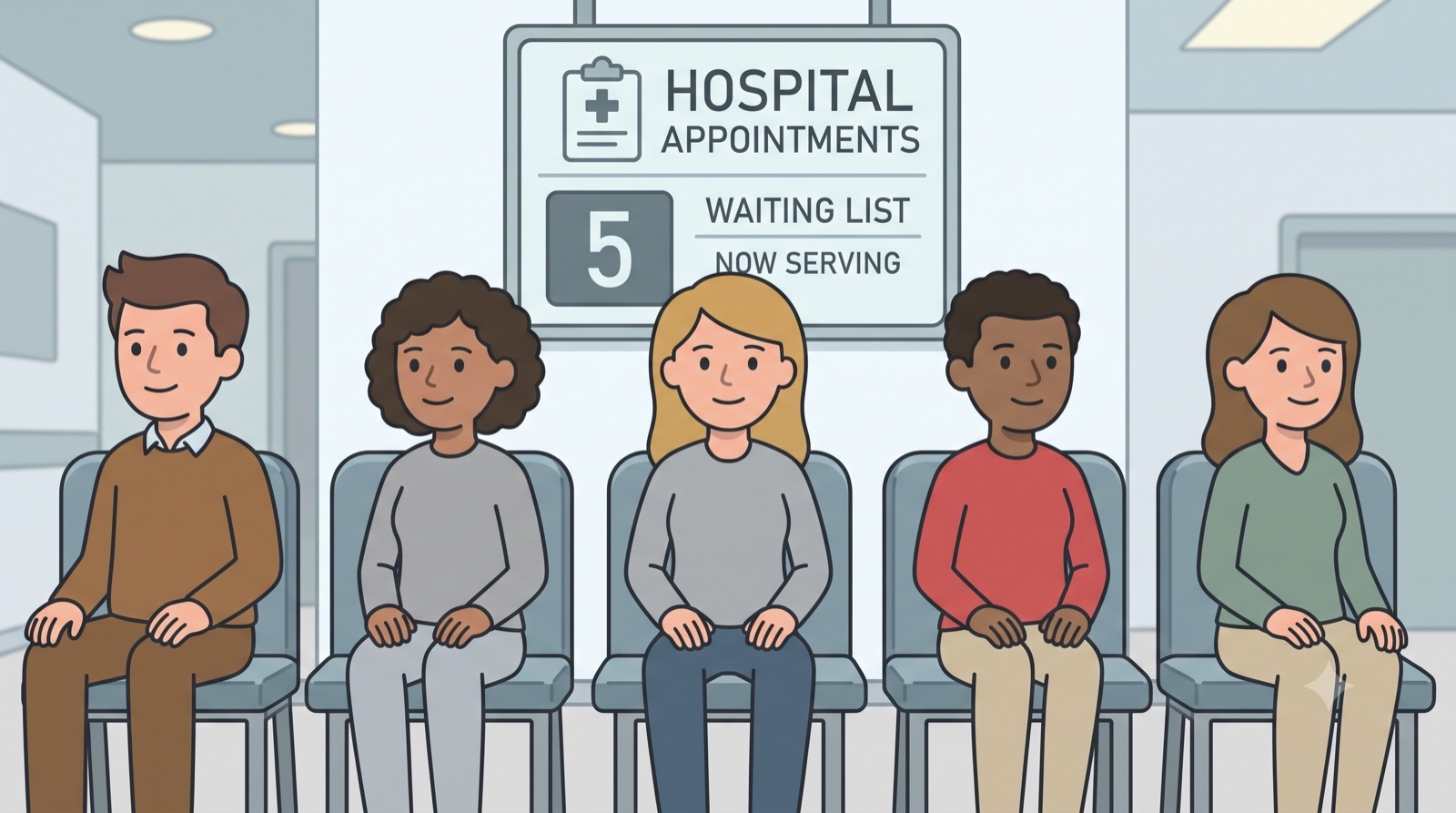
The waiting period. Most new residents must wait before their coverage begins. In general, you become eligible on the first day of the third month following your arrival — a delay that can run up to about three months. It applies even if you're a Canadian citizen.

Who is exempt. Some people are covered as soon as they arrive: this includes minor children and pregnant women. In addition, citizens of countries that have signed a social security agreement with Quebec — such as France or Belgium — can get immediate access, on presentation of proof from their home plan.

Protecting yourself during the wait. While the waiting period runs, you are not covered by RAMQ and care can be expensive. It's strongly advised to take out private health insurance for this stretch so you're never left without protection.

Registering. In most cases you can register online; in certain situations you'll need to call RAMQ at 1-800-561-9749. Prepare your documents according to your status (permanent residence, work permit, and so on), have your photo taken when required, and your card will then be mailed to you.

Renewing. The card has an expiry date. Permanent residents usually receive a renewal notice a few months before it lapses; temporary residents often have to start the process themselves without an automatic notice. Don't let your card expire: a lapsed card can force you to pay for care that's normally covered.

Good to know for newcomers. Register with RAMQ in your very first days in Quebec — the waiting period is already ticking, so every week counts. And keep private insurance until your public coverage actually begins.

Go deeper

Our full guides on this topic

More in Everyday Life

Our other articles in this category

Vieauqc TeamYesterday

Everyday Life

Clocks Fall Back on November 1, 2026 in Quebec

Standard time returns overnight October 31 to November 1, 2026. What to do, and where Quebec's debate on ending the switch stands.

The date. This fall, Quebec returns to Eastern Standard Time overnight from Saturday, October 31 to Sunday, November 1, 2026. At 2 a.m., clocks move back one hour to 1 a.m. Good news for your sleep: you gain an hour that night. The general rule. Quebec follows the North American standard, under which clocks are turned forward on the second Sunday in March and turned back on the first Sunday of November. If you've recently arrived, this is the twice-a-year rhythm nearly all of Canada follows — except Saskatchewan and Yukon, which no longer change their clocks. What actually changes. Most phones, computers and smartwatches adjust automatically. Manual devices — your oven, car, bedside alarm, some thermostats — do not, so set them yourself. Returning to standard time also means darkness falls earlier in the late afternoon. Plan for it in your commute and your lighting at home. A handy safety reminder. Fire departments suggest using the time change to test the batteries in your smoke…

Vieauqc TeamYesterdayMontreal

Everyday Life

Montreal Snow Removal: How to Avoid Getting Towed This Winter

Orange signs announce snow-clearing. Miss the deadline and your car is towed and ticketed. Here's how it works.

Winter's trap. In Montreal, after a good snowfall the city sends crews to load the snow and haul it away. To clear the streets, it temporarily bans parking — and if your vehicle is still there, it gets towed. It's one of the most expensive surprises for a newcomer with a car. The sign to watch for. Temporary orange signs announce the parking ban during snow-removal operations. They go up a few hours before work begins and take priority over permanent signs. Get in the habit of checking both sides of the street every time you park after a storm. Posting deadlines. As a rule, a sign banning parking from 7 a.m. to 7 p.m. goes up the day before, before 8 p.m.; a sign for 7 p.m. to 7 a.m. goes up the same day before 3 p.m. Note that timing varies by borough — in Anjou, for example, signs are posted 8 hours before the ban starts. Read the time and the hours printed on the sign in front of your place. The consequence. If you don't respect the signage in place, your vehicle is towed and…

Vieauqc Team6d ago

Everyday Life

Deposit return: $0.10 or $0.25 per container — and glass joins in 2027

Deposit return: $0.10 or $0.25 per container — and glass joins in 2027

Quebec's deposit system is expanding in three phases. What you're already paying without realizing it, and how to get it back.

You've already paid a deposit — probably without noticing. In Quebec, an amount is added to the price of most beverage containers at purchase, and you get it back when you return the empty. That system is expanding, and the next step has a date on it. How much, exactly. Two amounts: $0.10 for most covered containers, and $0.25 for glass containers of at least 500 ml and no more than 2 litres, according to Consignaction. It isn't a tax: it's a deposit that comes back to you in full when the container is returned. Not returning your containers means leaving that money on the table. Three phases, one still ahead. The expansion happens in stages: - November 1, 2023 — aluminum containers that weren't previously covered (juice cans, sparkling water, and so on) join the beer and soft drink containers already in the system. - March 1, 2025 — all other plastic beverage containers, from 100 ml to 2 litres. - March 1, 2027 — glass, other breakable materials, ferrous metal, multilayer and…

Vieauqc TeamJul 16

Everyday Life

Moving: change your address with 7 agencies at once

Moving: change your address with 7 agencies at once

The Service québécois de changement d'adresse notifies seven departments and agencies in a single free step.

Moving in Quebec also means a long list of people to notify. Good news: for the government side, a single service does the job with several agencies at once. What it is. The Service québécois de changement d'adresse (SQCA) lets you send your new address to seven departments and agencies in a single step, as the Government of Quebec explains. It's free. The seven bodies covered. The SQCA notifies, all at once: Revenu Québec, the Régie de l'assurance maladie du Québec (RAMQ), the Société de l'assurance automobile du Québec (SAAQ), Retraite Québec, the Ministère de l'Emploi et de la Solidarité sociale, the CNESST, and Élections Québec. How to use it. The process is done online, anytime, on the official portal adresse.gouv.qc.ca. Have some identifying information ready (date of birth, social insurance number and, depending on the agency, a file number). Do it as soon as possible after moving — the SAAQ, in particular, must be notified within 30 days. What it does NOT cover. The SQCA…

Vieauqc TeamJul 16

Everyday Life

Mandatory winter tires: what to know before December 1

Mandatory winter tires: what to know before December 1

In Quebec, winter tires are mandatory from December 1 to March 15. Here's the rule and how to comply.

If you drive in Quebec, a rule unique in North America awaits you this winter: winter tires are mandatory. It's still early in July, but it's worth knowing well before the first snow. The dates. According to the Government of Quebec, your vehicle must be fitted with four winter tires from December 1 to March 15. The tires must be installed by December 1 at the latest — book your garage appointment in November, as shops fill up fast. Which tires qualify. A tire designed for winter must carry the official pictogram (a mountain with a snowflake) or be studded. Since 2014, the "M+S" marking alone is no longer enough. The rule applies to all passenger vehicles registered in Quebec, including rental vehicles. The fine. Driving without compliant winter tires during the mandatory period exposes you to a fine of $200 to $300, on top of the very real risk on the road. Preparing the rest of the vehicle. The SAAQ reminds drivers that beyond tires, a Quebec winter means checking the battery,…

Vieauqc TeamJul 16

Everyday Life

Back-to-school 2026: enrolling your child in Quebec

Back-to-school 2026: enrolling your child in Quebec

The 2026-2027 year starts in late August. Here's how to enrol a child in public school as a newcomer.

The new 2026-2027 school year is coming up. For elementary and secondary students, classes usually resume in late August, but the exact date varies from one school service centre (centre de services scolaire, or CSS) to another — check your CSS's calendar for the precise date in your area. Who has to attend. In Quebec, school attendance is compulsory, as the Government of Quebec explains, from the year a child turns 6 until the school year in which they turn 16 (or until they earn a diploma). Kindergarten at age 4 exists but is optional. Where to enrol. Registration is done through the school service centre that serves your neighbourhood, not directly at the school. Each CSS has its own online process and dates. Identify the CSS for your address, then follow its admission steps. Documents to prepare. You'll typically need proof of residence, the child's birth certificate (with an official French or English translation if it's in another language), and the immigration documents of…

RAMQ: The Waiting Period and Health Card for Newcomers | La Vie au Québec