1. Quebec secularism — understanding the context
Quebec is an officially secular society — religion is separated from the state and public institutions. This does not mean religion is absent from Quebec society. There's an important distinction between the public and private spheres.
In the public sphere (public schools, government offices): the State and its institutions stay religiously neutral. The Act respecting the laicity of the State (often called Bill 21) forbids certain people from wearing a religious symbol while working, for example police officers, criminal and penal prosecutors, and principals, vice-principals and teachers in public schools. Amendments adopted in 2026 extended the list, notably to staff of subsidized private schools, early childhood centres (CPEs) and subsidized daycares. People who already held these jobs before the date set by the law (March 27, 2019 for the first categories) can generally keep wearing one as long as they stay in the same position at the same organization. This law is controversial and subject to debate.
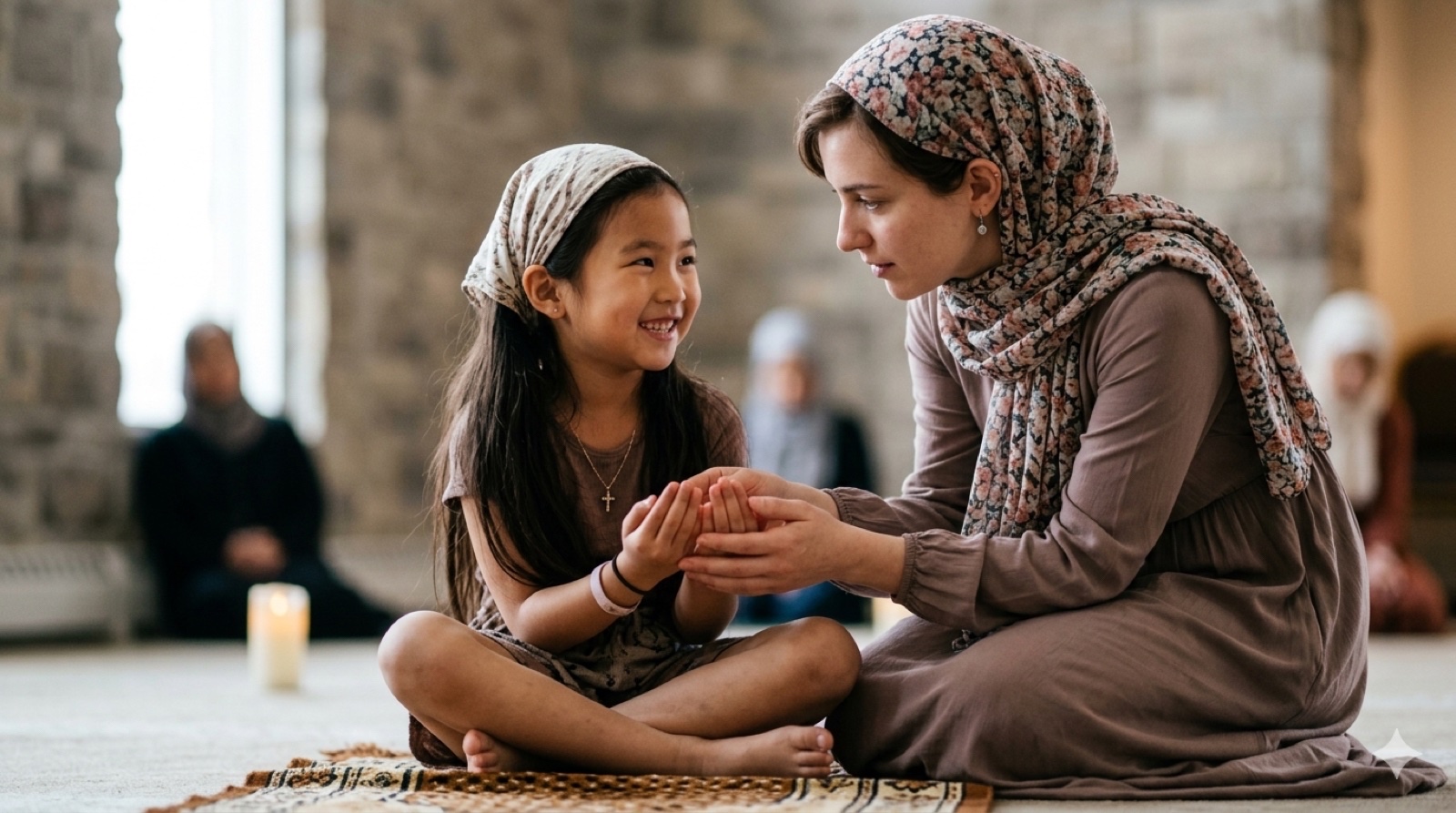
In the private sphere, freedom of religion is total and protected by both Canadian and Quebec charters of rights. You can freely practice your religion, attend your place of worship, observe your dietary and dress traditions in your private life without any constraint.
To understand secularism alongside Quebec's other key values — and what it is not — see our guide Quebec's key values, explained simply.
2. Finding your place of worship in Quebec
Quebec, and particularly Montréal, hosts religious communities from virtually every faith in the world:
| Faith | Presence in Montréal |
|---|---|
| Islam | ~100 mosques and prayer rooms in Montréal alone; major communities in Côte-des-Neiges, Saint-Michel, Parc-Extension |
| Judaism | Synagogues of all branches (Orthodox, Conservative, Reform) in Côte-des-Neiges, Westmount, Côte-Saint-Luc, Outremont |
| Buddhism | Multiple temples in Thai, Tibetan, Vietnamese, Korean traditions |
| Hinduism | Several major temples in LaSalle and Côte-des-Neiges |
| Eastern Christianity | Greek, Russian, Armenian, Coptic Orthodox; various Protestant and Evangelical |
| Catholicism | Historic churches throughout Quebec; many still active for cultural communities |
Best way to find your place: Google Maps (religion + neighbourhood), or your cultural community's Facebook group in Montréal.
4. Frequently asked questions
Common questions about places of worship and religious practice in Quebec.
How do I find a mosque, temple, church or synagogue near me?
The simplest method is to search Google Maps using your faith name + your neighbourhood or city (for example: 'mosquée Côte-des-Neiges', 'temple bouddhiste Laval', 'synagogue Outremont'). Most major cities have communities of all faiths. You can also search Facebook or WhatsApp groups for your cultural community in your city — members usually know every place of worship in the area and will gladly share the information.
Is Quebec society hostile to religion? How is religion viewed publicly?
No — Quebec secularism does not mean hostility to religion. Most Quebecers are very tolerant of their neighbours' private religious practices. You can fast during Ramadan, wear religious dress in your private life, and observe your traditions without social pressure. The debate in Quebec is about the public sphere — specifically, whether civil servants in positions of authority should wear visible religious signs while on duty (Law 21, 2019). In everyday life — at work, in the neighbourhood, in stores — most people make no judgement about your private religious practice.
Are there interfaith or intercultural centres open to newcomers?
Yes. Most large cities have community centres and organizations that welcome people of all faiths and backgrounds, particularly newcomers. These are not religious spaces, but multicultural and interfaith ones — places where you can meet people, find information about services, take French classes, or simply break isolation. Many OBNL (non-profit community organizations) funded by the Quebec government run integration programs that are completely open regardless of religion, culture or origin. Your local CLSC can also refer you to community services near you.
Can places of worship help with settlement and practical support?
Often, yes. Many places of worship — particularly those serving immigrant communities — have informal or organized networks that help newcomers find housing leads, job referrals, administrative guidance, or simply community connections. This support is not systematic at every institution, but it's very common in mosques, temples, synagogues and churches that serve large immigrant populations. Don't hesitate to introduce yourself and explain that you're new — in most religious communities, welcoming newcomers is considered a natural and important responsibility.
5. See also
These related guides may be useful:
- Parent and family groups in Montréal — other socialization spaces.
- Community resources in Quebec — the complete guide to support organizations.
- Sports and amateur clubs in Montréal — meeting people through sport.
6. Official sources
- For understanding religious rights in Quebec: Commission des droits de la personne et des droits de la jeunesse — cdpdj.qc.ca
- For workplace accommodations: cnesst.gouv.qc.ca
Author's Note: Montréal is one of the most multicultural and religiously diverse cities in North America. In the Côte-des-Neiges neighbourhood, it's not unusual to see a mosque, a synagogue, a Hindu temple and a Catholic church within a few blocks. This cohabitation, even imperfect, is one of this city's great riches. Most Montrealers have no issue with their neighbours' private religious practice — what matters is discretion and mutual respect in shared spaces.