1. Activities are integration too
Signing your child up for an activity — soccer, swimming, arts, scouts — does far more than keep them busy. It's often where they make their first friends, practise French in a relaxed setting, and where you, the parent, meet other families. In Quebec many of these activities are surprisingly affordable thanks to city programs, and there's help for families on a tight budget. Money shouldn't be the reason your child sits out.
2. First door: your city's recreation programs
In Quebec it's mainly municipalities that run neighbourhood sports and recreation. Each city or borough publishes a seasonal program — often called the répertoire des loisirs — with reduced-price activities for residents: swimming lessons, skating, soccer, summer day camps, library, youth centres. Resident rates are lower than non-resident rates, so register as a citizen of your city. Search online for your city's name plus loisirs or activités, or drop by the nearest community centre.

3. Minor hockey — Quebec's central sports culture
Ice hockey is a cultural institution in Quebec. For an immigrant child, it's often one of the most effective entry points to local friendships.
Organized by Hockey Québec through hundreds of local associations.
- Registration possible from age 4–6 (hockey initiation — non-competitive)
- Age categories: Initiation → Novice → Atome → Pee-Wee → Bantam → Midget
- Season cost: $400–$1,500 depending on level (not counting equipment)
4. Hockey equipment — buying second-hand
Complete new equipment for a beginner child: $400–$800.
Good news: Quebec has an excellent second-hand equipment market:
- Used equipment exchanges organized by hockey associations (September–October) — best place to buy
- Play It Again Sports: stores specializing in used equipment
- Kijiji and local Facebook groups: constant listings
Buying second-hand for children is the norm, not the exception — they grow fast.
5. Other popular sports for children in Quebec
Other popular sports for Quebec children:
| Sport | Cost (season) | Notes |
|---|---|---|
| Soccer | $150–400 | Most financially accessible; most diverse — strong immigrant family participation |
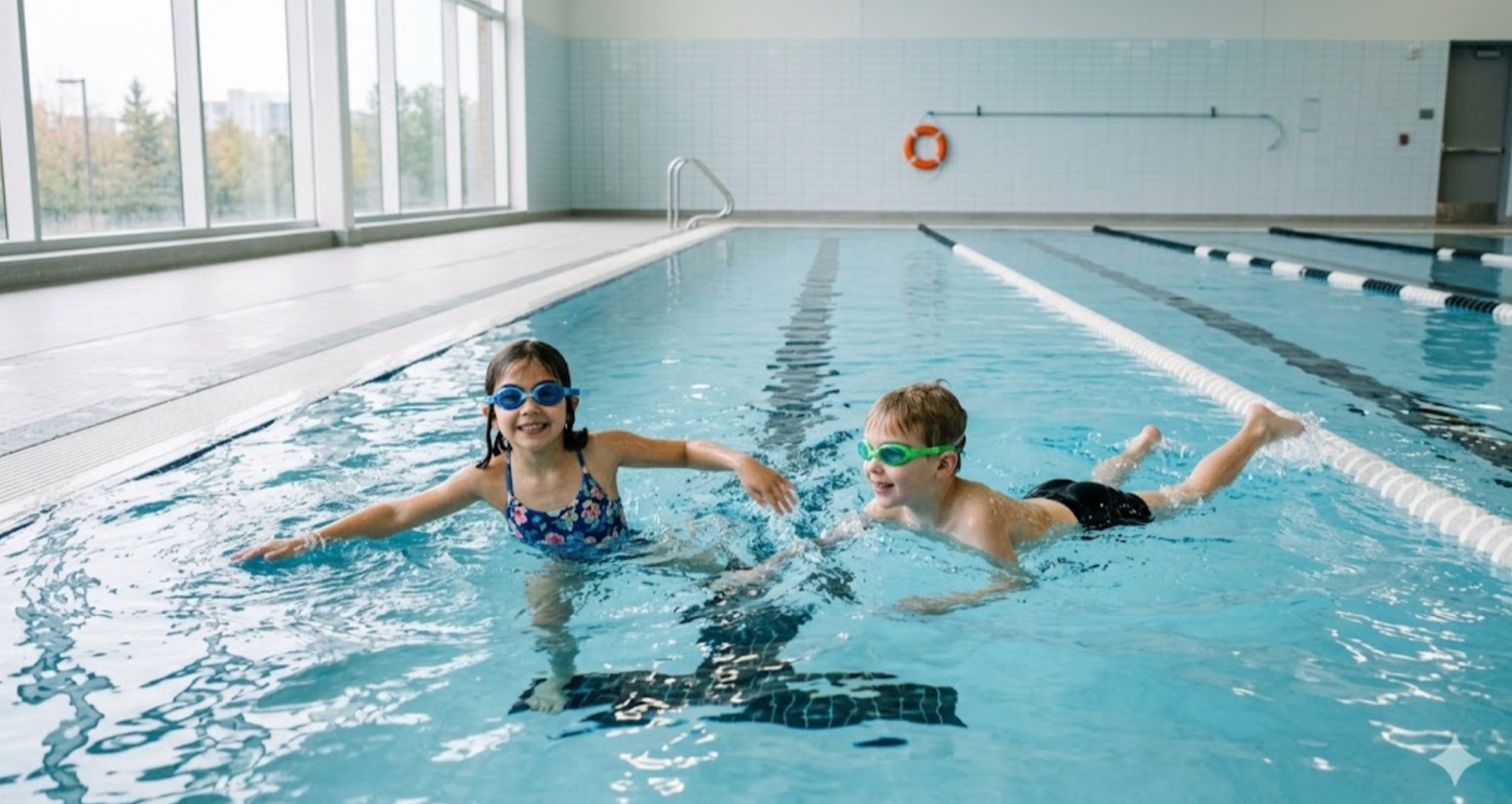
| Swimming | $80–200 (group courses) | Recommended from earliest age; municipal centres offer subsidized rates |
| Gymnastics / dance | $100–300 | Very popular for ages 3–8; YMCA and local clubs accessible |
| Martial arts (karate, judo, taekwondo) | $100–250 | Very widespread; often in community centres |
| Baseball | $100–250 | Traditional Quebec sport; neighbourhood leagues from age 5+ |
6. Types of summer camps in Quebec
There are two main types of summer camps for children in Quebec:
Day camps (camp de jour): the child returns home each evening — similar to a summer daycare. Organized by cities, community organizations, sports centres or private companies. Generally Monday–Friday, 9 am–4 or 5 pm, with extended care available. Children do sports, arts, aquatic activities and outdoor activities.
Overnight camps (camp de vacances / camp de nuit): residential camp where the child lives at camp for one or two weeks. Often in forests or by lakes. Generally for children aged 8–17.
7. Costs and financial aid
Summer camp costs vary by type and organizer:
| Type | Weekly cost |
|---|---|
| Municipal / community day camp (Montréal) | $150–350 |
| Private or specialized day camp (sports, music, arts, science) | $300–600+ |
| Overnight residential camp | $800–2,000/week |
Financial aid available:
- Municipal subsidies — Montréal boroughs offer grants for municipal camps, on request
- Vacation-camp accessibility financial aid (Government of Quebec) — for residential camps certified by the Association des camps du Québec, with support for families facing poverty or children with a disability or special needs
- Federal and provincial tax credits for children's physical and artistic activities
- Community organizations (local Centraide) can help fund camp participation for families in need
- Some residential camps have their own bursary funds — ask directly
8. How to register your child
Registrations for popular summer camps — whether municipal or residential — often begin as early as January or February for the summer season.
For Montréal municipal camps: each borough has its own registration forms and deadlines — the Ville de Montréal website centralizes information by borough.
For residential overnight camps: the Association des camps du Québec (campsquebec.com) lists nearly 500 member camps and offers a search tool by region and by age; family-oriented camp fairs are held in some regions during the year — check locally.
For private camps outside the municipal circuit, search by keywords for your city or check online family-activity directories to compare offers in your area.
Most camps accept children from age 5–6 for day camps and age 7–8 for residential camps.
9. Accès-Loisirs and help for low-income families
If money is tight, Accès-Loisirs is a program to know. It lets people and families in financial difficulty take part in cultural, sports and outdoor activities for free, under certain conditions. To qualify you generally have to show proof of income.
The program works in registration periods and spots go fast, so watch the dates. Accès-Loisirs operates in several Quebec cities; check accesloisirsquebec.com or ask your city. Other organizations and some sports federations also offer grants to cover registration fees or equipment.
If your children attend a daycare or CPE, estimate your place cost with our daycare cost calculator — which accounts for provincial subsidies based on your family income.
| Program | Who can benefit? | Approximate amount |
|---|---|---|
| Allocation famille (Retraite Québec) | Families with children under 18 | Variable by income and number of children |
| Free homework help | School-age children (via school or organization) | Free |
| Subsidized day camps | Low-income families (via some cities or school boards) | Partial or full reduction |
| Reduced library/pool rates | Low-income families (municipal programs) | Free or reduced |
10. Frequently asked questions
Here are the questions parents ask most about the cost of kids' activities: how to find financial help, what to do in summer, and whether free activities are worth it.
How do I know if I qualify for financial help?
Programs like Accès-Loisirs use an income test and usually ask for proof of income. Conditions and thresholds vary by city and program, so don't assume — ask directly. Your city's recreation office, your school, or 211 can point you to the right program for your situation.
What about the summer?
Most cities run summer day camps (camps de jour) at resident rates, and many offer reduced fees or subsidies for lower-income families. Spots fill early — registration often opens in spring. Watch your city's website and ask about financial help when you register.
Are the free activities any good?
Yes — municipal and Accès-Loisirs activities are run by the same clubs and instructors as the paid ones; the difference is the price, not the quality. They're also a great way for your child to meet local kids and practise French. Try one season before assuming you need an expensive private program.
When do summer camp registrations open?
Registrations for the most popular camps — especially municipal borough camps — often open in January or February, several months before summer. Private camps and specialized programs sometimes open registrations in the fall of the previous year. It is important to check the website or social media pages of each camp you are interested in as early as possible, as spots fill up very quickly.
Are municipal day camps cheaper than private ones?
Yes, generally. Municipal camps organized by city boroughs are often significantly less expensive than private or specialized camps. They also offer subsidies or reduced rates for families with lower incomes, upon request. Private or specialized camps (sports academies, language camps, arts camps) offer more specific programming but at a higher cost. For a family on a tight budget, starting with a municipal camp is often the most accessible option.
My child doesn't speak French well yet — can they still go to camp?
Yes. Most day camps and residential camps in Quebec welcome children at all French levels. Children learn the language very quickly in an immersive environment — through play, teamwork and daily interactions with counsellors and other children. Many camps have counsellors who speak other languages (English, Spanish, Arabic) and can support new arrivals. A residential camp, in particular, is often described by immigrant families as one of the most effective environments for a child to gain confidence in French in just a few weeks.
Are there half-day options for younger children?
Some day camps offer half-day programs, especially for the youngest children (ages 4–6). These shorter formats are useful for children who are not yet ready for a full day away from home. Municipal camps and community organizations sometimes offer this option — it is best to ask directly when contacting each camp. Full-day camps generally also offer extended care (before 9 am and after 4 or 5 pm) for families who need it.
Is hockey really that expensive? What should we expect?
Yes — hockey is the most expensive organized sport for Quebec families. Registration fees vary by level and association. Complete equipment (helmet, gloves, skates, pads, stick) represents a significant additional cost.
The good news: buying second-hand is the norm, not the exception — most Quebec families outfit their children at used-equipment exchanges or at second-hand sports stores. Budget also for regular skate sharpening and travel to away games.
Does my child need to know how to skate already to sign up for hockey?
No — many associations offer hockey initiation programs for children who have never put on skates. At the youngest age groups (ages 4–6), the goal is entirely to learn to skate and have fun, not competitive play.
Many municipal arenas also offer group learn-to-skate courses independent of hockey — an excellent first step before committing to a full season.
Are there less expensive sports than hockey to start with?
Absolutely. Soccer is the most financially accessible organized sport in Quebec — minimal equipment (athletic shoes and shin guards) and registration fees generally much lower than hockey.
Swimming at municipal pools is also very affordable, especially with subsidized community rates. Gymnastics, martial arts, and baseball are other popular options at accessible price points. Many families choose soccer or swimming as a first organized sport, then add hockey later if the child shows interest and the budget allows.
11. See also
These related guides may be useful:
- Quebec family allowance — financial help that eases these costs.
- Free homework help — another free family resource.
- Food banks in Quebec — if the family budget is under pressure.
- Childcare cost calculator — to estimate the cost of a CPE or subsidized daycare spot based on your family income.
- Activities for babies and toddlers in Quebec — for children under 3.
- Immigrant family budget — planning activity and camp costs in your budget.
12. Official sources
To find activities and help near you, see:
- Accès-Loisirs Québec
- 211 Québec — resources and help near you
- Your municipality's recreation site (search your city's name + 'loisirs')
- Association des camps du Québec — campsquebec.com
- Vacation-camp accessibility financial aid (quebec.ca)
- Hockey Québec — hockey.qc.ca
- Soccer Québec — soccerquebec.org
- Montréal's Accès-Loisirs program
Author's Note: start with your city's recreation guide and ask, without embarrassment, whether financial help exists — the question is normal and common. One activity per season is enough for your child to make friends and grow in French confidence.