1. Choosing your neighbourhood: the criteria that matter
Montréal is a city of neighbourhoods — each has its own personality, atmosphere, population and prices. When you arrive from outside, it's hard to know where to settle without some reference points. The most important criteria for a newcomer are generally: rent cost, proximity to transit, safety, presence of a familiar cultural community, school quality for families with children, and access to everyday shops and services. This guide presents the neighbourhoods most frequently chosen by newcomers to Montréal, with their strengths and limitations.
2. The neighbourhoods most chosen by immigrants
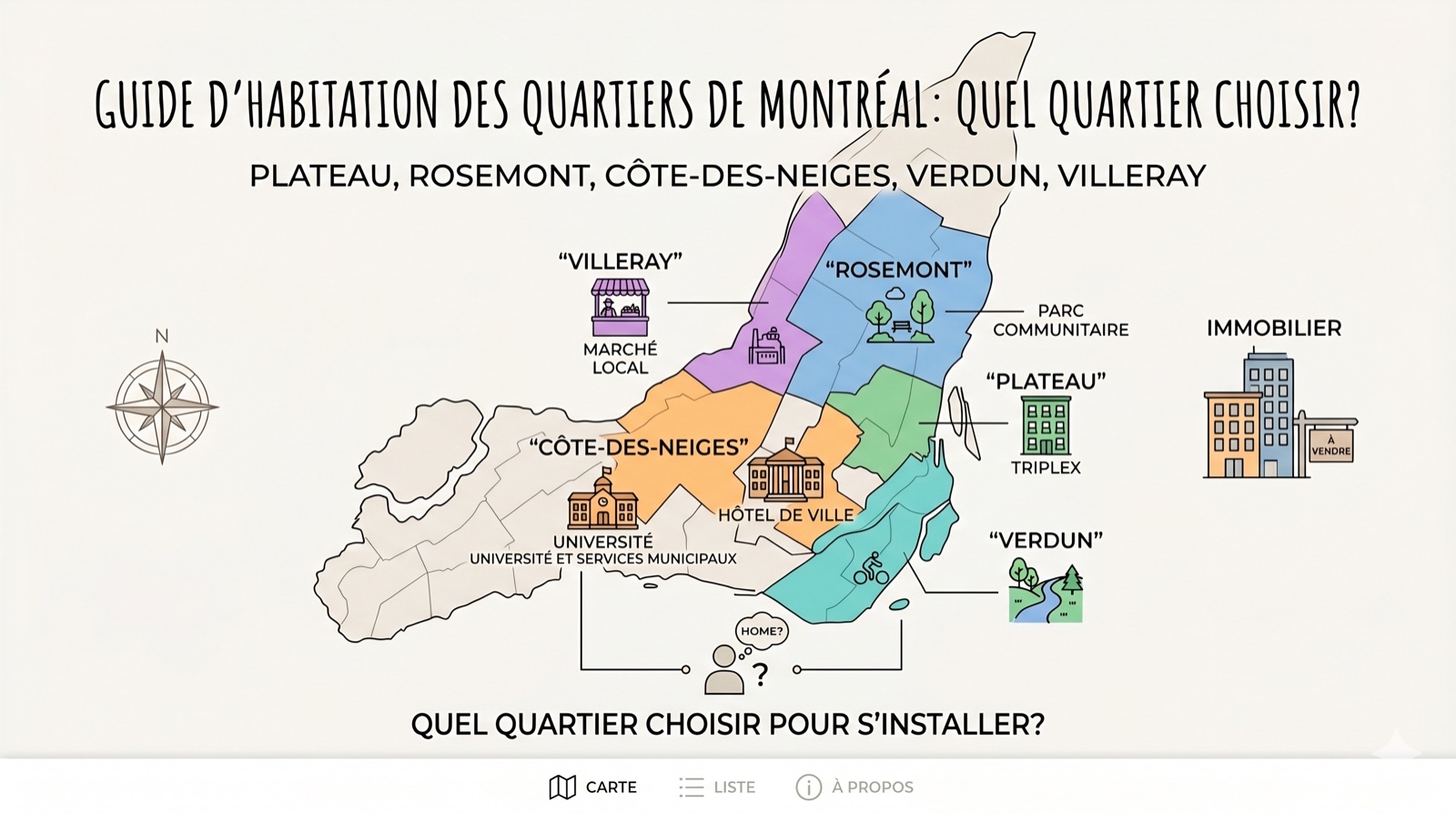
Côte-des-Neiges is Montréal's most multiethnic neighbourhood — with Haitian, Lebanese, Chinese, Indian, African and Latin American communities. It also has the densest concentration of immigrant services: support organizations, ethnic grocers, French classes. Rents are mid-range.
Parc-Extension is the most affordable neighbourhood on the island, very popular with recent immigrants.
Rosemont and Le Plateau-Mont-Royal are very popular but more expensive — better suited for those with a stable income.
Villeray is the compromise — moderate prices, good schools, family-oriented francophone neighbourhood, well-served by transit.
Verdun attracts many families seeking good value on the south side of the Lachine Canal, well served by the green metro line.
Saint-Laurent (west island area) has strong Syrian, Lebanese and Filipino communities.
| Neighbourhood | Typical 4½ rent | Vibe | Communities | Metro |
|---|---|---|---|---|
| Côte-des-Neiges | $1,100–1,400 | Multiethnic, dense services | Haitian, Lebanese, Indian, African | Côte-des-Neiges (blue line) |
| Parc-Extension | $850–1,100 | Very affordable, dense | Bengali, Greek, Sri Lankan | De Castelnau / Parc |
| Villeray | $1,100–1,400 | Family-oriented, francophone | Mixed | Jarry / Fabre |
| Rosemont | $1,200–1,600 | Trendy, family-friendly | Mixed, young | Beaubien / Rosemont |
| Verdun | $1,000–1,300 | Quiet, canalside | Mixed, families | De l'Église / Verdun |
| Saint-Laurent | $1,000–1,300 | Residential, west | Middle Eastern, Filipino | Côte-Vertu (orange line) |
3. What you actually pay for housing
Rental prices in listings are always for the unit alone, before utilities. In Montréal, electricity is often included in the rent for electrically heated units — check the lease. When not included, budget $80–150/month for an average apartment. Internet costs around $60–100/month.
The welcome tax (droit de mutation) applies only to property purchases — not rental.
Security deposits are banned in Quebec: a landlord cannot ask for any deposit other than the first month's rent.
Leases traditionally start on July 1 in Quebec — if you're looking outside that period, the selection is more limited.
4. See also
These related guides may be useful:
- Signing a lease in Quebec — your rights and the clauses to watch for.
- Tenant rights in Quebec — what to do if your landlord fails their obligations.
- Public transit in Quebec — understanding the STM and exo network.
- Free activities in Montréal — enjoying your new neighbourhood.
- Cycling paths and biking in Montréal — getting around your neighbourhood by bike.
5. Official sources
- To search for housing in Montréal: Kijiji, LesPAC and Facebook Marketplace
- For median rents by neighbourhood: the Ville de Montréal open data portal
- For tenant rights: the Tribunal administratif du logement — tal.gouv.qc.ca
Author's Note: if you've just arrived and don't know anyone in Montréal, don't sign a 12-month lease for the first apartment you visit. Start with a sublet or furnished unit for two or three months, to explore neighbourhoods, understand transit and get a concrete sense of where you really want to live. The Montréal rental market is dynamic — you'll find something better once you know the city.