1. Montréal's community gardens: an urban tradition
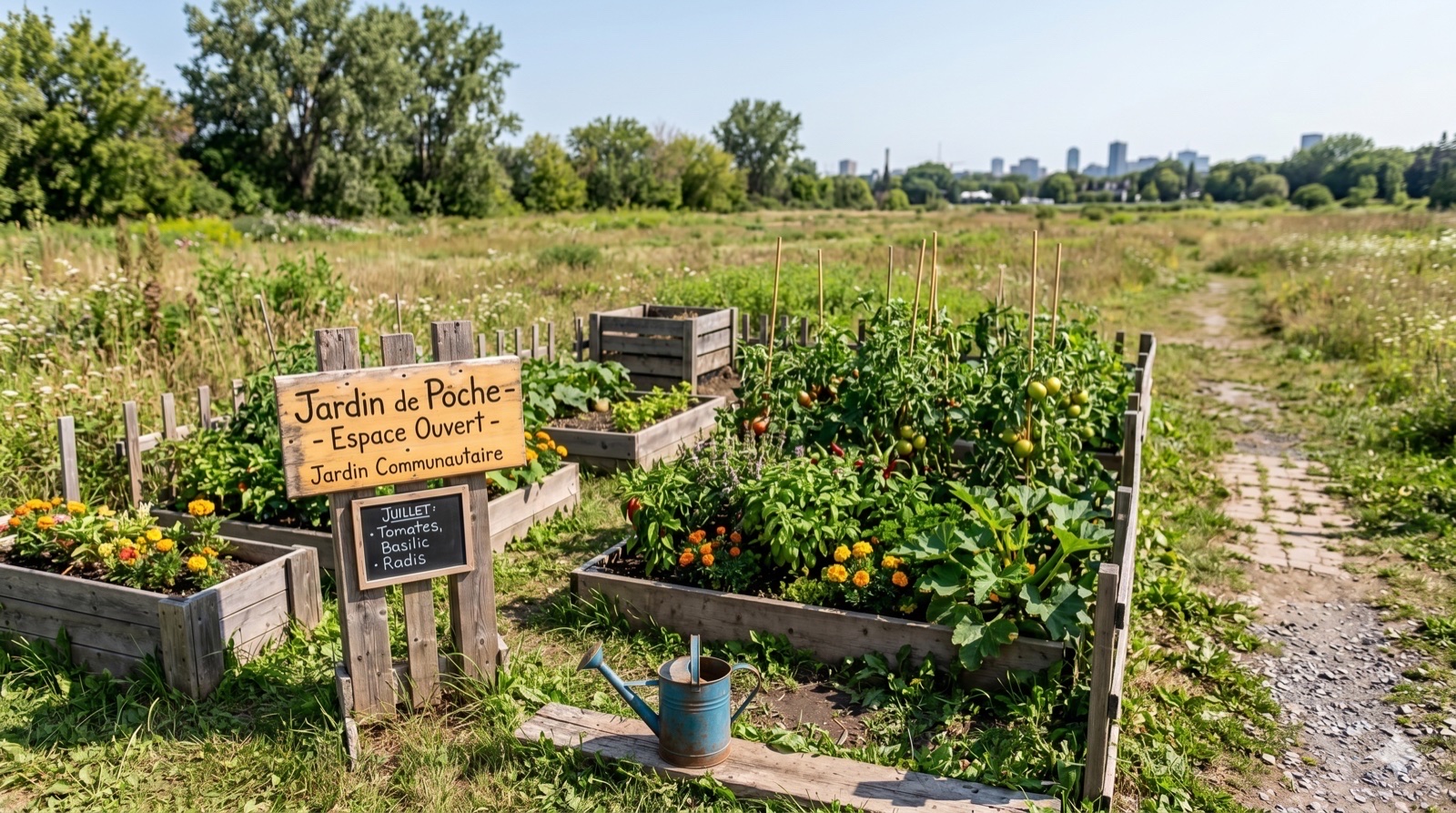
Montréal has one of the largest community garden networks in North America — more than 100 community gardens managed by the City across 19 boroughs, totalling over 8,000 plots.
These gardens allow residents without private outdoor space to grow their own vegetables, herbs and flowers. The annual cost is nominal — typically $5–30 depending on the borough and plot size — and includes access to irrigation water, shared tools and composting space.
For a newcomer, a community garden is much more than a vegetable patch: it's a place to meet neighbours, a way to put down roots in the neighbourhood, and often a source of pride and joy in daily life.
2. How to apply for a plot
The application process varies by borough, but general steps are:
- Identify community gardens in your borough — the garden map is available on the Ville de Montréal website.
- Contact the borough or garden coordinator for registration details. Most registrations happen online in January or February for the season starting in May.
- Waiting lists can be long in popular neighbourhoods (Le Plateau, Rosemont). Register as soon as possible.
- If your wait is long, explore collective gardens and alley gardens — shared spaces without a wait in many neighbourhoods.
Your action list
0 of 4 done
3. What you can grow and the garden rules
Each community garden has its own rules, but common principles include:
- You can grow most vegetables, herbs and annual flowers on your plot.
- Invasive plants and very tall plants are often prohibited — check with your garden.
- You're responsible for maintaining your plot — an abandoned plot can be lost.
- Collective work sessions for common area maintenance — participation is often mandatory or strongly encouraged.
- Chemical products and herbicides are generally prohibited in Montréal community gardens.
4. Frequently asked questions
Common questions from newcomers about Montréal community gardens.
How do I get a plot if the waiting list is long?
Register with every borough office where you'd be willing to garden — you can be on multiple lists simultaneously. Waiting times vary greatly: some boroughs or less central gardens have short waits, while popular neighbourhoods like Le Plateau or Rosemont can mean waiting one to several seasons. While you wait, look into collective gardens (jardins collectifs) where you garden alongside others on a shared plot with no waiting period — many boroughs have at least one.
Is there a fee for a plot?
Yes, but the amount is modest — community garden plots in Montréal cost a small annual fee set by each borough. The fee generally covers water access, shared tools and composting. Check with your specific borough for the current amount, as it may change slightly from year to year.
Do I need gardening experience?
No experience is required. Community gardens welcome complete beginners, and experienced neighbours are often happy to share tips. Many gardens also hold informal workshops at the start of the season. The key is commitment: being present regularly to water and weed matters more than knowing every gardening technique.
What can I grow given Québec's short growing season?
The Montréal growing season runs roughly from mid-May to late September — about four months of frost-free gardening. This is enough time for most vegetables: tomatoes, zucchini, beans, carrots, beets, lettuce, spinach, chard, herbs (basil, parsley, chives) and most annual flowers. Fast-maturing varieties are ideal. Starting seedlings indoors before the season (at home or via community workshops) extends your growing window significantly. Perennial plants like asparagus or fruit trees are not suitable for community garden plots.
5. See also
These related guides may be useful:
- Balcony gardening in Quebec — for those without access to a community garden.
- Free activities in Montréal — other free ways to enjoy the city.
- Montréal public markets — to supplement your garden with local produce.
6. Official sources
- For the community garden map and registration information in Montréal: Ville de Montréal — montreal.ca
Author's Note: the community garden is one of the places in Montréal where you'll meet people from all walks of life — retirees who have gardened for thirty years, young families, students, immigrants from every country. A conversation starting with 'what are you growing there?' can lead to a friendship. It's one of the most naturally multicultural spaces in the city.