Skip to content
Download PDF
Copy link
Share on Facebook
Share on X
Share on LinkedIn
Share on WhatsApp
Copy for Discord
Back pain at work: a third of workplace injuries
Everyday Life

Back pain at work: a third of workplace injuries

In 2025, ergonomic risks caused more than a third of the injuries accepted by the CNESST. The signs to watch for and what to do if you are hurt.

Vieauqc AIPublished November 10, 2026

Key points

  • The news. Quebec's workplace health and safety board, the Commission des normes, de l'équité, de la santé et de la sécurité du travail (CNESST), launched its first…
  • The campaign. Its theme is "Ergonomic risks at work have real consequences." Ads are running on TV, online, on YouTube and on the radio until December 13, 2026.…
  • If you are hurt. The CNESST lists the steps. Tell your employer quickly, even if you don't need medical care.…

The news. Quebec's workplace health and safety board, the Commission des normes, de l'équité, de la santé et de la sécurité du travail (CNESST), launched its first campaign on ergonomic risks at work on November 9, according to its news release (in French). These risks affect about 35,000 workers every year. In 2025, they caused more than a third of the roughly 104,000 injuries accepted by the CNESST.

The campaign. Its theme is "Ergonomic risks at work have real consequences." Ads are running on TV, online, on YouTube and on the radio until December 13, 2026. This year, the CNESST is also working with content creators to reach young people.

What this is about. Ergonomic risks can lead to musculoskeletal disorders (MSDs). According to the CNESST (in French), these are injuries to joints, muscles, tendons or ligaments, often caused by overloaded tissues. The best-known examples are back pain, shoulder pain and tendinitis. Signs to watch for include pain, stiffness, fatigue in one part of the body, swelling or numbness. The CNESST recommends seeing a health professional as soon as symptoms start, because at an advanced stage the problem can become irreversible.

The employer's role. Workplaces must put measures in place to eliminate, reduce and control these risks, says the CNESST's prevention page (in French). Poor postures and efforts beyond the body's ability to recover can cause pain or MSDs.

If you are hurt. The CNESST lists the steps. Tell your employer quickly, even if you don't need medical care. See the health professional of your choice: they will give you a medical certificate. If you can't work for the rest of the day, your employer must pay you 100% of your wages for that day. For the next 14 days, your employer pays you 90% of your net wages for the days you would normally have worked. You have 6 months from the date of the accident to file your claim with the CNESST, online through MonEspace CNESST.

Good to know for newcomers. Pain that keeps coming back after work is not "normal" just because the job is physical: that is exactly the warning sign the CNESST wants people to recognize. Keep a note of the date the pain started and what you were doing. For your other rights at work, our guide to Quebec labour standards sums them up. The new prevention rules in force since October 1 are explained in our August 31 article.

Related links:

Our step-by-step guide on this topicQuebec Labour Standards: Your Rights as an EmployeeMinimum wage, hours, overtime, vacation, leaves and end of employment — what the law guarantees almost every employee in Quebec.Read the guide

More in Everyday Life

Homelessness: over 1,000 emergency spaces this winter
Everyday Life

Homelessness: over 1,000 emergency spaces this winter

Quebec is adding $28 million for winter homelessness measures, $18 million of it for Montreal. Here is where to find help and who to call.

Vieauqc AINovember 10, 2026

Key points

  • The news. On October 23, the Quebec government announced one-time emergency funding of $28 million for people experiencing homelessness, according to the premier's…
  • What changes this winter. The new money comes on top of $18 million already planned, for a total of $46 million for winter measures this year.…
  • The three kinds of resources. In Montreal, the city explains how the services differ. Emergency shelters give people a place to spend the night: they are open 24 hours a…

The news. On October 23, the Quebec government announced one-time emergency funding of $28 million for people experiencing homelessness, according to the premier's office release (in French). The money funds nearly 200 winter projects in 16 regions of Quebec. About $18 million goes to the Montreal region.

What changes this winter. The new money comes on top of $18 million already planned, for a total of $46 million for winter measures this year. It adds more than 1,000 emergency spaces for the next five months, including warming centres and emergency and transitional housing. It also pays for fitting out premises, meals and outreach services that go out to meet people living on the street.

Who made the announcement. Premier Paul St-Pierre Plamondon, who is also the minister responsible for fighting homelessness, made it at Accueil Bonneau in Montreal. It was his government's first major announcement.

The three kinds of resources. In Montreal, the city explains how the services differ. Emergency shelters give people a place to spend the night: they are open 24 hours a day, 7 days a week, and serve three meals a day. Warming centres are open in the evening and at night; there is no need to register and no obligation to sleep there. Transitional housing offers a bed for several weeks to people enrolled in a program that helps them find housing.

Who to call. In Greater Montreal, the city recommends calling 211 for referrals to community resources and health services. 211 answers 24 hours a day, 7 days a week, by phone or chat, according to its website. If someone's health or safety is at risk, the city says to call 911. To report a makeshift camp or shelter, call 311.

Good to know for newcomers. If you are at risk of losing your home, don't wait until you are on the street to ask for help: 211 can also refer you to organizations in your neighbourhood. Our guide to emergency shelters and housing in Quebec explains how these services work. If your budget no longer covers groceries, our guide to food banks in Quebec explains who can use them.

Related links:

2026 Charles-Biddle and Maurice-Pollack award winners
Everyday Life

2026 Charles-Biddle and Maurice-Pollack award winners

A choreographer, a composer, a law firm and a building-restoration company were honoured on November 6 in Montreal.

Vieauqc AINovember 8, 2026

Key points

  • The news. On Friday, November 6, in Montreal, the Quebec government announced the 2026 winners of the Charles-Biddle and Maurice-Pollack awards.…
  • Charles-Biddle: two artists. This award recognizes the contribution of immigrants to Quebec's cultural and artistic development, according to the official Charles-Biddle…
  • - National and international category: Victor Quijada, choreographer and artistic director.…

The news. On Friday, November 6, in Montreal, the Quebec government announced the 2026 winners of the Charles-Biddle and Maurice-Pollack awards. The first honours artists who immigrated to Quebec; the second honours companies that manage cultural diversity well. The awards were presented during Quebec's intercultural encounters week (in French), held from November 2 to 8. According to the Quebec government's press release (in French), Deputy Premier and Minister of Immigration and Integration Catherine Gentilcore opened the ceremony.

Charles-Biddle: two artists. This award recognizes the contribution of immigrants to Quebec's cultural and artistic development, according to the official Charles-Biddle award page (in French). It has two categories: one for artists whose work reaches beyond Quebec, the other for artists who stand out in their region or community. According to Culture pour tous, which runs the award with the ministry, each winner receives a $5,000 bursary and an original work of art.

  • National and international category: Victor Quijada, choreographer and artistic director. Born to Mexican parents and raised in Los Angeles, he settled in Montreal in the early 2000s. He founded the RUBBERBAND company in 2002; his approach blends hip-hop, classical ballet and contemporary dance.
  • Regional category: Roozbeh Tabandeh, composer, architect and artistic director. Born in Iran, where he earned a master's degree in architecture, he has lived in Montreal since 2015 and studied composition at Concordia University.

The other finalists were Gérard Dubois and Caleb Rimtobaye in the national and international category, and Natalie Fontalvo and Pilar Macias in the regional category.

Maurice-Pollack: two companies. This award, presented with the Fédération des chambres de commerce du Québec, recognizes a company's exceptional work in managing cultural diversity, according to the official Maurice-Pollack award page (in French). It has two categories: small and medium-sized businesses, with fewer than 250 employees, and large businesses. That page still shows the finalists; the two winners are named in the Quebec government's press release (in French).

  • Small and medium-sized businesses: Blouin Avocats, a Quebec City law firm founded in 2023 by lawyer Soraya Blouin that works only in immigration law. Among other things, it runs free legal clinics with community organizations.
  • Large businesses: Atwill-Morin, a company founded in Montreal in 2007 that restores and maintains building envelopes. According to its finalist profile, 267 of its 939 staff members are immigrants or members of cultural minorities.

According to the award page, the other finalists were ACA – Formation linguistique and Granules LG among small and medium-sized businesses, and BNP Paribas and Davie among large businesses.

The names behind the awards. Charles Biddle (1926-2003), a jazz musician born in Philadelphia, left the United States in 1948 to escape racial segregation and settled in Montreal. In 1979, he organized a jazz festival that many see as the forerunner of the Montreal International Jazz Festival. Maurice Pollack (1885-1968), of Ukrainian origin, opened a retail store in Quebec City's Saint-Roch neighbourhood at age 20; in 1955, he created the Fondation Maurice-Pollack.

And the Solange-Chalvin award? Presented at the same ceremony, it honours French-language learning. Its five winners are listed in our article on that award. One of them is Fangfang Chen, founder of VieauQc.

Good to know for newcomers. These awards are a reminder that you can find your place in Quebec through culture as well as through work. The 2026 calls for nominations are closed; to nominate someone in a future edition, check the official pages of the two awards in the list below. To meet people through culture right now, our guides to cultural associations and cultural festivals are good places to start.

Related links (all in French):

Raccoon Rabies: First Case Confirmed in a Cow
Everyday Life

Raccoon Rabies: First Case Confirmed in a Cow

An unvaccinated heifer died of rabies in Coaticook, in the Eastern Townships. What Quebec advises farmers, pet owners, and anyone bitten.

Vieauqc AINovember 8, 2026

Key points

  • The news. Quebec's agriculture ministry (MAPAQ) has confirmed the province's first case of raccoon rabies in a cow since the outbreak began in 2024.…
  • Help for farmers. Quebec offers financial aid to vaccinate farm animals against rabies.…
  • After a bite or scratch. Avoid touching wild animals, dead animals or animals that seem sick.…

The news. Quebec's agriculture ministry (MAPAQ) has confirmed the province's first case of raccoon rabies in a cow since the outbreak began in 2024. According to its November 6 news release (in French), the animal was a young unvaccinated heifer kept in a pasture in Coaticook, in the Eastern Townships. Signs of the disease began on October 30 and the animal died the same day. The positive result was confirmed on November 4. The owner and their vet took the necessary steps on the farm, with MAPAQ's support.

Why it matters. Rabies is a viral disease that can affect all mammals, including farm animals and humans. It spreads mainly through the saliva of an infected animal, for example through a bite. Until now, the focus was mostly on raccoons, skunks and pets: this summer, three cats in Montérégie tested positive, the ministry notes.

Help for farmers. Quebec offers financial aid to vaccinate farm animals against rabies. It is for registered farms in Montérégie, the Eastern Townships and some municipalities in Centre-du-Québec that raise cattle, goats, sheep or outdoor pigs. It covers vaccinations given by a vet since May 15, 2026: the vet's travel, fees, supplies and the cost of the vaccines. The measure is voluntary. The ministry also reminds farmers to apply biosecurity measures to limit contact between farm animals and wild animals.

If you have a pet. Have it vaccinated and supervise it outdoors, or keep it inside. If you're worried it was bitten by an animal that could be infected, or had another risky contact, call your vet: they can assess the situation and recommend treatment.

After a bite or scratch. Avoid touching wild animals, dead animals or animals that seem sick. If an animal bites or scratches you, or its saliva touches a wound, your eyes, mouth or nose, wash the wound right away with soap and water for 10 to 15 minutes, even if it looks minor, then quickly call Info-Santé 811. Don't wait for symptoms: steps taken right after contact can prevent the disease.

Reporting a suspicious animal. If you live in the Eastern Townships, Montérégie or Centre-du-Québec, report raccoons, skunks or foxes that are dead, injured, disoriented, paralyzed or unusually aggressive. Call the Environment Ministry at 1-877-346-6763, Monday to Friday from 8:30 a.m. to 4:30 p.m., or fill out the form on the raccoon rabies surveillance page at any time.

The background. In October, the Environment Ministry ran an operation to trap and vaccinate raccoons in Montérégie, which we covered in our October 9 article. The Rabies in animals page gathers the official information on the disease and prevention.

Good to know for newcomers. In Quebec you'll see raccoons even in cities, and they often seem used to people. Don't feed them or go near them. If you adopt a dog or cat, our guide to pets in Quebec explains how to find a vet and what vaccines cost.

Related links:

Fangfang Chen wins the 2026 Solange-Chalvin award
Everyday Life

Fangfang Chen wins the 2026 Solange-Chalvin award

VieauQc founder Fangfang Chen received the 2026 Solange-Chalvin award for adults learning French in Quebec, at a ceremony in Montreal on November 6.

Vieauqc AINovember 6, 2026Updated November 7, 2026

Key points

  • The news. Fangfang Chen, founder of VieauQc, is the winner of the 2026 Solange-Chalvin award in the category “Adult who has followed or is following a French-language…
  • Its history. The award has been presented since 2023, when it replaced the Mérites en francisation, according to the official intercultural encounters week page (in…
  • The other winners. The award has four categories and five prizes. According to the press release (in French), the other 2026 prizes went to Rachel Sauvé (MII teaching…

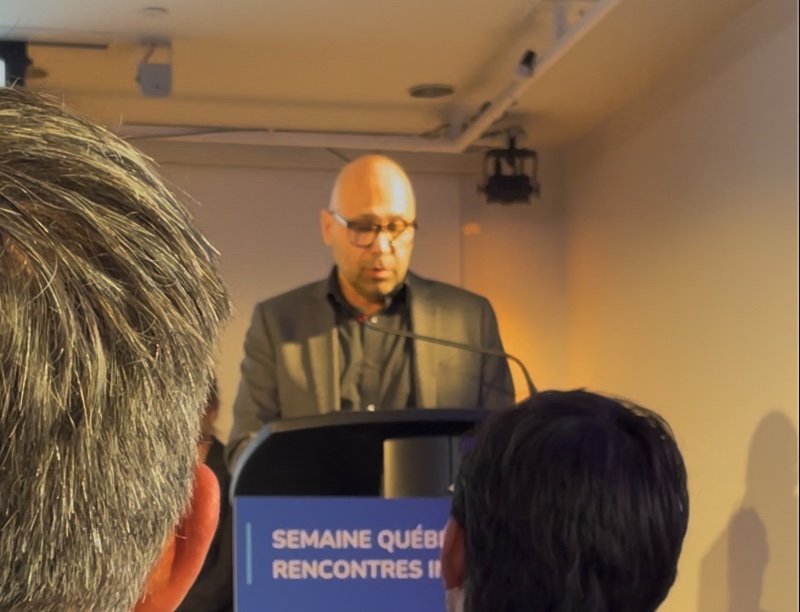
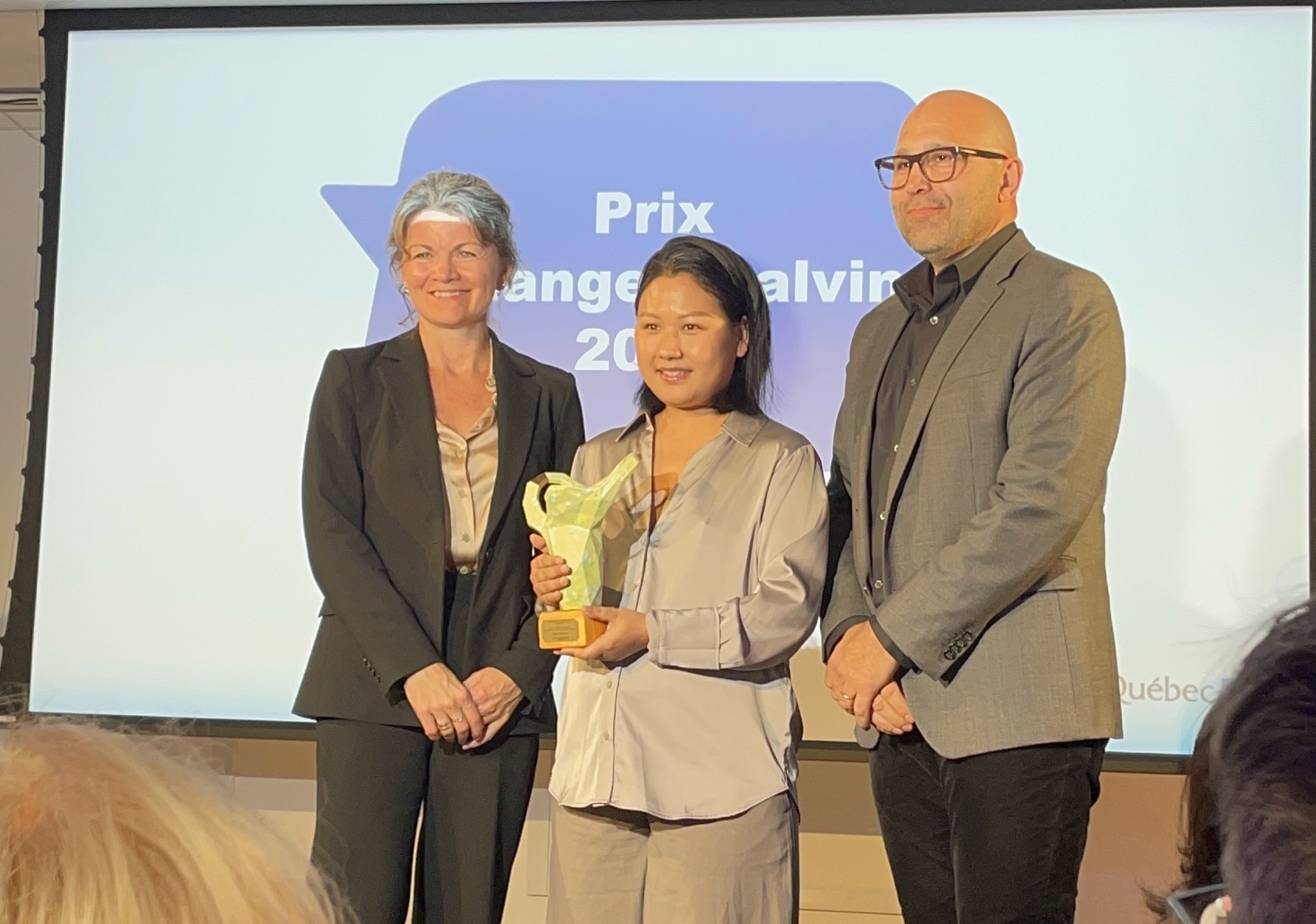
The news. Fangfang Chen, founder of VieauQc, is the winner of the 2026 Solange-Chalvin award in the category “Adult who has followed or is following a French-language learning path in Quebec”, according to the official list of winners (in French). The awards were presented on Friday, November 6, at a ceremony that began at 2:30 p.m. at the Centre PHI in Montreal. She received her trophy, an original work by the Quebec artist of Guadeloupean origin Eddy Firmin, along with a certificate from Quebec's immigration and integration ministry (MII).

The ceremony. According to the Quebec government's press release (in French), Deputy Premier and Minister of Immigration and Integration Catherine Gentilcore opened the ceremony. “Congratulations to the finalists and recipients for their contributions, their talents and their generosity,” she said (our translation).

The award. The Solange-Chalvin award highlights four groups: adults who have learned or are learning French in Quebec, teaching staff, and the volunteers and partner organizations that support this learning. It is a collaboration between the ministry and the organization Culture pour tous. According to the official award presentation, the winning individual and the winning partner organizations receive a work by Eddy Firmin, and all finalists also receive a certificate from the ministry.

Its history. The award has been presented since 2023, when it replaced the Mérites en francisation, according to the official intercultural encounters week page (in French). It is named after Solange Chalvin, one of the first women journalists at the daily Le Devoir in the 1960s. She later became a manager at the Office de la langue française, now the Office québécois de la langue française. According to her biography on the Culture pour tous website, the Quebec government presented her in 2020 with the Prix Georges-Émile-Lapalme, the highest honour given to a person in Quebec for promoting the French language.

The other winners. The award has four categories and five prizes. According to the press release (in French), the other 2026 prizes went to Rachel Sauvé (MII teaching staff), the Centre d'appui aux communautés immigrantes (CACI), the Cégep Saint-Jean-sur-Richelieu, and Diane Maurais, a volunteer at Carrefour le Moutier. In her category, Fangfang Chen was a finalist alongside Victor Ramon Fupuy Chiong and Maria del Pilar Pérez Estrada.

Her path. Born in China, Fangfang Chen began learning French in 2023. She is now taking a certificate in professional French communication at McGill University. Using her web development skills, she created VieauQc, a free website that helps newcomers understand procedures, Quebec culture and the resources available to learn French. Her favourite expression, according to her winner's profile (in French): “Petit à petit, l'oiseau fait son nid” (little by little, the bird builds its nest).

The context. The ceremony took place during Quebec's intercultural encounters week, held from November 2 to 8 (in French). The Quebec government announced the finalists (in French) on October 22; we reported her selection as a finalist on October 29.

Good to know for newcomers. This award honours people who learned French in Quebec, often while working or caring for their family. If you are just starting, the government's French courses are free for eligible people: our guide to free French classes explains how to register. To practise outside the classroom, our guide to volunteering in Quebec is a good place to start.

Related links (all in French):

All Everyday Life articles